
Executive Overview
In an era defined by hyper-commercialized music festivals and cookie-cutter touring footprints, pop music icon Olivia Rodrigo has permanently altered the cultural landscape. Over the weekend, at the sprawling Great Park in Irvine, California, the multi-Grammy Award-winning singer-songwriter inaugurated her vision of a radically inclusive, woman-led festival: Daisy Chain Fields. Designed from the ground up to celebrate women in the music industry while simultaneously channeling vital resources into advocacy organizations supporting women and girls, the event shattered expectations. It offered an unforgettable weekend of generational performances and galvanized the global music community.
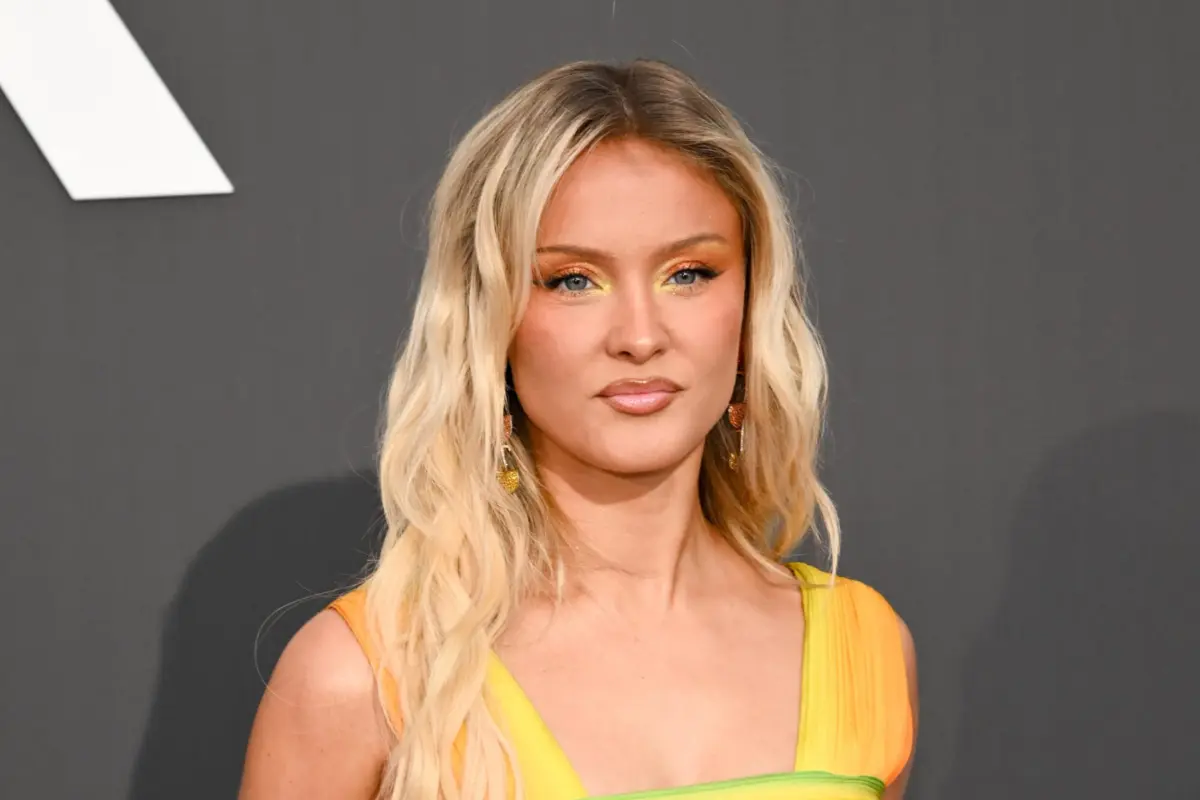
The reverberations of the festival extended far beyond the stage lights of Irvine. On Monday, Swedish pop powerhouse Zara Larsson took to her Instagram Story to heap glowing praise on Rodrigo, expressing profound admiration for her peer’s integrity, artistry, and humanitarian vision. “So in awe of this young woman,” Larsson wrote. “What an amazing person! I’m such a fan of everything she is and stands for. Inspiring! Fantastic! A brilliant talent with a beautiful heart! Olivia, the world LOVES you.”
This public display of cross-industry solidarity underscores a broader cultural paradigm shift currently sweeping through the music business. Female artists are increasingly seizing institutional power, bypassing traditional gatekeeping mechanisms, and rewriting the rules of what pop stardom looks like in the 21st century. By pairing an all-star, woman-dominated lineup—featuring luminaries such as Stevie Nicks, Chappell Roan, Mitski, Doechii, and Sarah McLachlan—with a staggering $30 million philanthropic injection, Daisy Chain Fields has established a new gold standard for how contemporary superstars can leverage their platform to enact systemic change.
Detailed Chronology: The Weekend That Changed Everything
The Genesis of a Movement
Planning for Daisy Chain Fields began quietly over a year prior to its inaugural weekend, conceived by Rodrigo and her core management team as a direct counter-narrative to male-dominated festival bills that have historically dominated the summer amphitheater circuit. Rodrigo, whose meteoric rise to fame with albums SOUR and GUTS has been marked by a fierce commitment to bodily autonomy and young women’s rights, wanted to build a physical space that mirrored her ethos: safe, joyous, unapologetically feminine, and fiercely supportive of community organizations.
Great Park in Irvine, California, was selected for its expansive acreage and accessibility to the Southern California music community. Over the course of months, production crews constructed multi-tiered stages adorned with wildflower motifs, interactive non-profit installations, and wellness tents. The goal was to dismantle the often grueling, transactional nature of the traditional music festival experience and replace it with an atmosphere of communal healing and celebration.
Day One: Setting the Tone
Gates opened under a brilliant Southern California sun on Saturday morning, welcoming tens of thousands of attendees donning vintage band tees, cowboy boots, and shimmering pastel aesthetics. The early afternoon slots showcased the breathtaking breadth of modern alternative and pop music, with boundary-pushing artists commanding eager crowds.
As dusk fell, the energy shifted toward high-octane theatricality and emotional catharsis. Rising phenomenon Chappell Roan delivered a career-defining, camp-infused masterclass that had the entire field chanting in unison. Following Roan, veteran songstress Sarah McLachlan—whose pioneering work with the historic Lilith Fair festival laid the original groundwork for all-female festival lineups decades prior—performed a stirring piano-driven set that bridged generational divides.
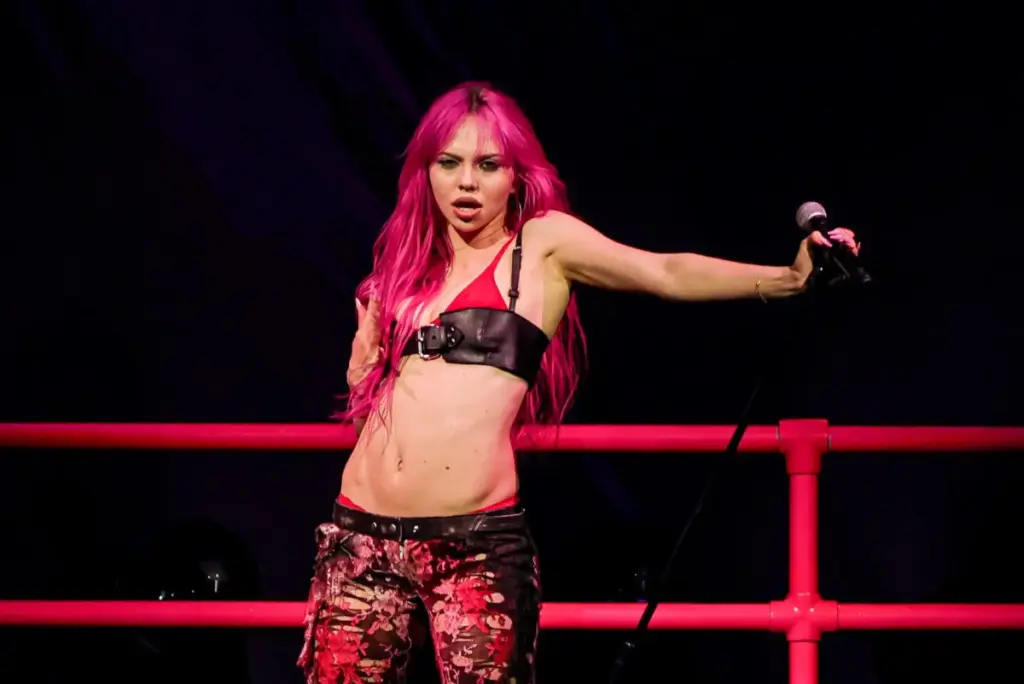
When Olivia Rodrigo finally ascended to the headlining spot on Saturday night, the reception was seismic. Flanked by an all-female backing band, Rodrigo tore through a relentless setlist of emotional anthems and high-energy pop-punk tracks, cementing her status as one of the definitive live performers of her generation.
Day Two: The Philanthropic Pinnacle and Passing the Torch
Sunday’s lineup proved equally formidable, anchored by genre-defying performances from Doechii’s razor-sharp hip-hop precision and Mitski’s hauntingly poetic indie rock artistry. However, the emotional climax of the weekend arrived midway through Sunday evening when rock legend Stevie Nicks joined Rodrigo on stage. The cross-generational pairing performed a breathtaking duet that sent shockwaves through the thousands in attendance, symbolizing the enduring lineage of women who have fought for creative autonomy in rock and pop.
The true watershed moment of the weekend, however, transcended the music itself. During a poignant mid-evening address, Rodrigo invited philanthropist Melinda French Gates onto the stage to announce a historic philanthropic initiative. Against the backdrop of cheering fans, Rodrigo revealed that Daisy Chain Fields would immediately disburse a $20 million donation divided equally among 10 frontline nonprofit organizations dedicated to women’s health, education, and legal rights.
Instantly elevating the impact, French Gates pledged an additional $10 million in matching funds, bringing the grand total of the weekend’s charitable mobilization to an astounding $30 million. The announcement transformed Daisy Chain Fields from a mere music festival into a historic exercise in radical wealth redistribution and social justice.
Supporting Context & Metrics: A Banner Year for Women in Pop
To view Daisy Chain Fields as an isolated event is to miss the broader macroeconomic and cultural context in which it occurred. The festival represents the apex of a dominant commercial wave led by women throughout 2025 and 2026.
Rodrigo’s Unstoppable Commercial Momentum
Olivia Rodrigo’s festival triumphs are underscored by unprecedented career metrics. Following the massive global success of her sophomore album, Rodrigo shattered chart records with her third consecutive No. 1 debut on the Billboard 200 chart with her latest LP, You Seem Pretty Sad for a Girl So in Love. The record proved that her artistic evolution—trading some of the teenage angst of her debut for nuanced, genre-fluid lyricism—resonates deeply with an expanding demographic of listeners.
Her ability to translate this recorded success into a massive, socially conscious live enterprise positions her alongside historical figures who successfully leveraged commercial dominance for structural industry reform.
Zara Larsson’s Historic Chart Milestone
While Rodrigo was conquering the live and philanthropic spheres, Swedish pop sensation Zara Larsson was busy shattering radio airplay records of her own. In June, Larsson’s infectious dance-pop anthem "Midnight Sun" climbed to No. 1 on Billboard’s Pop Airplay chart, marking her second career leader on the list.
Remarkably, this achievement came just one week after her collaboration with PinkPantheress, "Stateside," also claimed the top spot on the same chart. With this back-to-back feat, Larsson made chart history as the first artist ever to post two initial No. 1 singles in consecutive weeks since the inception of the Pop Airplay chart in October 1992.
The mutual admiration between Larsson and Rodrigo—highlighted by Larsson’s public Instagram tribute—spotlights a vital cultural shift: contemporary female pop stars are actively championing one another rather than participating in the manufactured rivalries historically pushed by male-dominated media outlets.
Official Statements and Industry Reactions
The ripples of Daisy Chain Fields and its surrounding goodwill have prompted widespread commentary from industry executives, nonprofit leaders, and fellow musicians alike.
In her viral Instagram Story post, Zara Larsson captured the emotional sentiment of her peers:
"So in awe of this young woman. What an amazing person! I’m such a fan of everything she is and stands for. Inspiring! Fantastic! A brilliant talent with a beautiful heart! Olivia, the world LOVES you."
Melinda French Gates, whose philanthropic organization partnered with the festival to distribute the $30 million relief and advocacy fund, spoke passionately during her onstage appearance about the necessity of direct-action funding for women and girls:
"We cannot talk about equality while starving the grassroots organizations that do the heavy lifting every single day. What Olivia has built here is proof that joy and political efficacy are not mutually exclusive. By centering women on this stage, we are channeling resources where they matter most—back into the hands of the women who are building our collective future."
Music industry analysts have also noted the economic viability of female-centric spaces. For decades, festival promoters argued that lineups dominated by women could not headline major multi-day events or draw the necessary capital investment. Daisy Chain Fields has decisively dismantled that archaic narrative, proving that authenticity, inclusivity, and progressive values are profound commercial drivers.
Future Outlook: The Legacy of Daisy Chain Fields
As the dust settles on the Great Park grounds in Irvine and the infrastructure of Daisy Chain Fields is dismantled, the true work begins. The $30 million injected into grassroots nonprofits will immediately fund legal defense funds for reproductive rights, educational scholarships for young women in STEM and the arts, and domestic violence support networks across the globe.
Industry insiders are already speculating on the longevity of the festival. Given the immediate sell-out status of the inaugural event and the overwhelming corporate and philanthropic backing it secured, Daisy Chain Fields is widely expected to transition into an annual flagship event, potentially expanding into a multi-city touring franchise in the coming years.
Furthermore, the public endorsement from artists like Zara Larsson signals a unified front among top-tier pop talent. As these women continue to break records on the Billboard charts—whether through historic radio airplay streaks or record-breaking album debuts—they are systematically reshaping the power dynamics of the global entertainment complex.
Olivia Rodrigo set out to build a space where women could perform safely, loudly, and collaboratively. In doing so, she did not just throw a music festival; she sparked a cultural movement that will reverberate through the halls of the music industry for generations to come.