
Executive Overview
The contemporary British underground music scene is currently witnessing a fascinating dual evolution. At the vanguard of this movement is Nina Winder-Lind, a Swedish-born, Brighton-based multi-instrumentalist whose artistic footprint is rapidly expanding. Best known as one of the driving creative forces behind The New Eves—the pagan-folk ensemble whose self-described "Hagstone rock" and transcendental chants have captivated critics—Winder-Lind has recently ventured into deeply personal territory. Her debut solo studio album, Wild Love, released via Transgressive Records, marks a stark stylistic departure from the esoteric communal rituals of her primary band.
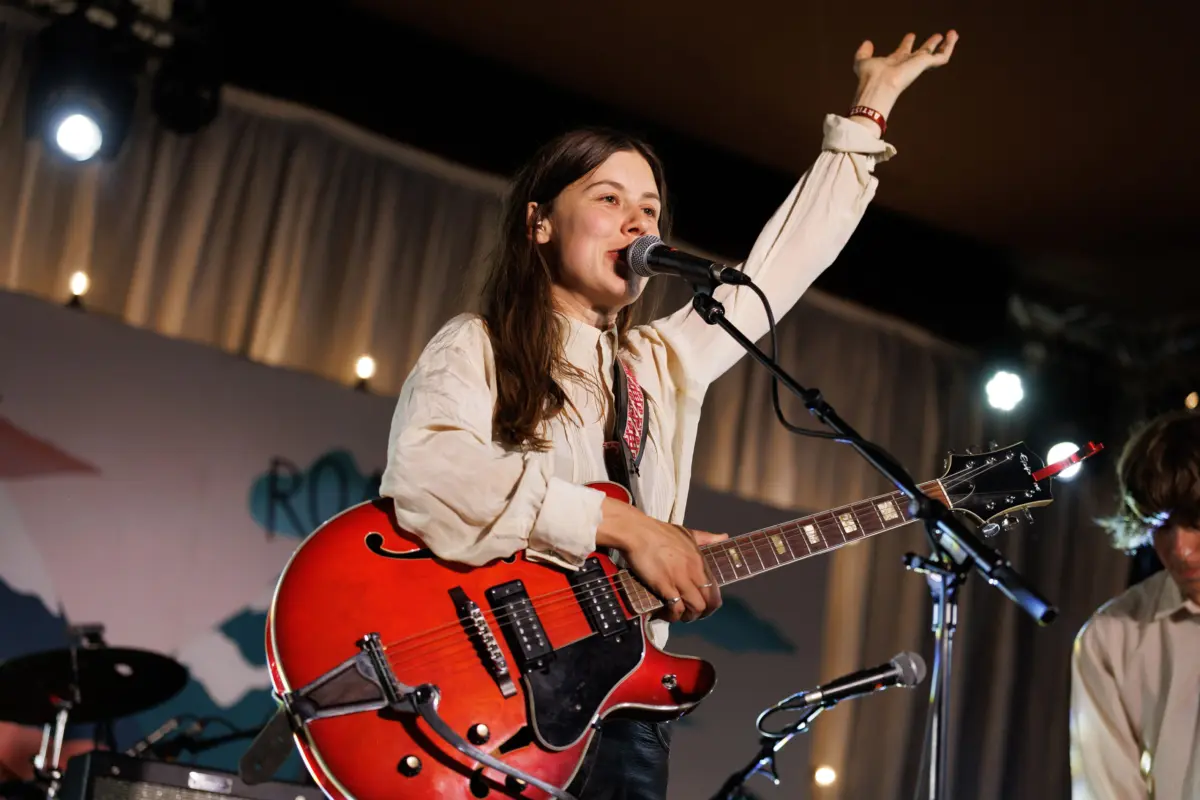
Trading chanting choruses for the gritty, street-level swagger of 1970s downtown New York rock and roll, Wild Love serves as both a retrospective journey and an artistic rebirth. Winder-Lind’s recent live performances supporting the album have laid bare the raw nerves of an artist navigating the treacherous waters of a solo career. Leading a dynamic, shape-shifting backing ensemble—featuring her New Eves bandmate Ella Oona Russell and lead guitarist Finlay Burrows—Winder-Lind has brought the 11-track record to life on stage, navigating an intricate rotation of cornets, saxophones, trombones, flutes, pianos, and guitars.
This comprehensive report examines Winder-Lind’s transition from the mystical woodlands of her Swedish upbringing and the coastal bohemianism of Brighton to the hallowed recording spaces of Bristol. We explore the sonic architecture of Wild Love, contextualize her work within the burgeoning Transgressive Records roster, analyze the cultural impact of The New Eves, and project the trajectory of an artist who is actively redefining the parameters of modern indie rock.
Detailed Chronology
Roots in the Swedish Countryside and the Migration to Brighton
To understand the intricate sonic tapestry of Wild Love, one must trace the geographical and psychological trajectory of its creator. Nina Winder-Lind’s musical sensibility was initially forged far away from the urban grit of downtown Manhattan or the bustling indie hubs of the United Kingdom. Growing up in the sparse, contemplative expanses of the Swedish countryside, her early relationship with sound was deeply intertwined with the natural world. The quietude of rural Sweden fostered an internal monologue that would eventually find expression in her deeply evocative lyricism.
Seeking a more vibrant artistic community, Winder-Lind eventually relocated to the United Kingdom, settling in Brighton. A historic haven for bohemians, musicians, and free-thinkers, Brighton provided the fertile ground necessary for her musical ambitions to blossom. It was within this coastal enclave that she began forging the collaborative relationships that would define her early career, most notably her integration into the collective consciousness of The New Eves.
The Genesis of "Hagstone Rock" and The New Eves Phenomenon
Before stepping out as a solo artist, Winder-Lind carved out a formidable reputation as a guitarist, vocalist, and cellist for The New Eves. The band quickly became one of the most talked-about live acts in the UK underground, a reputation cemented by their landmark debut at the End of the Road Festival. Their performance on the festival’s prestigious Woods stage coincided perfectly with the release of their critically acclaimed debut album, The New Eve Is Rising, which dropped via Transgressive Records just a month prior.
The New Eves operate under a distinct artistic philosophy. Their sound—dubbed "Hagstone rock"—is a hypnotic blend of pagan mysticism, primal chants, avant-garde folk, and explosive rock instrumentation. It is a communal, ritualistic experience where boundaries between performer and audience dissolve. Yet, even within such a collaborative and distinctive framework, Winder-Lind harbored a distinct internal voice that yearned for a different kind of outlet—one rooted not in ancient pagan rituals, but in the urban pulse of 1970s New York.
The Pilgrimage to Bristol: Recording Wild Love
When the time came to record her debut solo project, Winder-Lind bypassed the familiar studios of London and Brighton, heading instead to the vibrant cultural hub of Bristol. The city’s storied musical history provided an ideal backdrop for an album that sought to marry retro-urban grit with spacious, organic acoustics.
The production of Wild Love was split across two distinct, atmospheric locations in Bristol:
- Beneath The Louisiana: Sessions partly took place in the subterranean spaces beneath Bristol’s fabled Louisiana venue—a legendary grassroots music pub known for hosting iconic acts early in their careers. The subterranean environment imbued the recordings with a claustrophobic, intimate intensity reminiscent of classic Lower East Side rock clubs.
- A Nearby Historic Church: In stark contrast to the basement grit, other portions of the record were captured inside a local church boasting soaring high ceilings and an eclectic selection of traditional organs. This architectural duality allowed Winder-Lind to merge the secular, driving energy of downtown rock with the cathedral-like resonance of her Scandinavian folk roots.
Bringing Wild Love to the Stage
The transition from a secluded studio process to the live performance arena was met with understandable anxiety. Stepping away from the communal safety net of The New Eves to front her own band proved to be a daunting psychological hurdle.
During a recent high-profile live set showcasing the album, Winder-Lind candidly addressed the audience, capturing the raw emotional undercurrent of the evening:
"I was really nervous today… Everything is still very fresh and exciting and scary."
The performance itself was a masterclass in dynamic musicianship. Winder-Lind fronted a versatile ensemble of six players who frequently shuffled instruments between songs, creating an organic, fluid sonic environment. The lineup featured Finlay Burrows on searing lead guitar, her New Eves bandmate Ella Oona Russell playing "everything" required to fill out the arrangement, and Winder-Lind herself seamlessly alternating between driving electric guitars and expressive acoustic piano. Additional instrumentation—including cornet, saxophone, trombone, and flute—pushed the performance far beyond the standard indie-rock template, echoing the eclectic instrumentation found on the record.
Supporting Context & Metrics
Musical Analysis: Wild Love vs. The New Eves
To fully appreciate Winder-Lind’s dual output, one must analyze the stark stylistic divergence between her solo work and her contributions to The New Eves.
| Metric / Feature | Wild Love (Solo Debut) | The New Eve Is Rising (The New Eves) |
|---|---|---|
| Primary Genre | ’70s-Downtown-New-York-esque Rock & Roll | Pagan Folk / "Hagstone Rock" |
| Primary Label | Transgressive Records | Transgressive Records |
| Vocal Style | Direct, narrative, gritty, confessional | Chanted, harmonic, ritualistic, incantatory |
| Lyrical Themes | Generational legacy, personal vulnerability, land stewardship | Esoteric mythology, nature worship, collective history |
| Instrumentation | Guitars, piano, cornet, saxophone, trombone, flute | Cello, tribal percussion, acoustic guitars, vocal chants |
| Production Environment | Bristol basement studio & resonant church organs | Organic, immersive ensemble tracking |
While The New Eve Is Rising looks backward into mythical, pre-Christian pasts and communal spirituality, Wild Love looks back into a secular, asphalt-and-neon history. The album’s 11 tracks evoke the timeless cool of Patti Smith, Lou Reed, and Television, filtered through the lens of a modern European songwriter living in contemporary Britain.
Key Singles and Album Architecture
The promotional rollout for Wild Love introduced listeners to Winder-Lind’s multifaceted songwriting through a carefully curated sequence of singles:
- "This Is Our Life": An anthemic statement of presence and urgency that establishes the album’s driving rhythmic core.
- "Girls": A nuanced exploration of identity, social expectations, and modern womanhood, delivered with deadpan wit and melodic bite.
- "Headfirst": A high-velocity track that showcases Finlay Burrows’ blistering lead guitar work alongside Winder-Lind’s breathless vocal delivery.
- "Foremothers": The sweeping, emotional centerpiece and album closer that ties the entire artistic statement together.
The Transgressive Records Ecosystem
Both Nina Winder-Lind’s solo work and her projects with The New Eves are housed under the umbrella of Transgressive Records. Founded in 2004, the independent label has established itself as one of the most culturally vital imprints in the UK music industry, historically launching and nurturing acts such as Foals, Arlo Parks, Burna Boy, and Flume.
Transgressive’s decision to back both The New Eve Is Rising and Wild Love within months of each other underscores the label’s commitment to bold, uncompromising artistry. For Winder-Lind, having the institutional backing of an independent powerhouse has afforded her the creative freedom to explore divergent musical personas without commercial compromise.
Official Statements & Artistic Intent
The Philosophy Behind "Foremothers"
At the heart of Wild Love lies a profound sense of historical and ancestral responsibility. This is most clearly articulated in the album’s closing track, "Foremothers," a song that serves as both a historical reckoning and a personal expression of gratitude.
In a recent feature interview with Harry Edmundson, Winder-Lind shed light on the deeper motivations behind the track:
The song is dedicated directly to the generations of women who "fought and grew food and looked after the land" so that she and her contemporaries could exist in the present moment.
Far from being a standard indie-rock ballad, "Foremothers" functions as a secular hymn. It bridges the gap between her upbringing in the rural landscapes of Sweden and her current life in urban Britain, anchoring her frantic, ’70s-inspired rock arrangements in a deep, ecological reverence. The land is not merely a backdrop for Winder-Lind; it is an active participant in human survival, tended to by generations of uncredited women whose labor made modern artistic expression possible.
Navigating Vulnerability and Public Scrutiny
Stepping out from behind the communal shield of a band to assume the mantle of a solo artist requires a fundamental shift in psychological armor. For Winder-Lind, the transition has been characterized by an acute awareness of exposure.
Reflecting on her recent live performances, her admission that "Everything is still very fresh and exciting and scary" highlights the delicate tightrope walk artists perform when debuting deeply personal material. Unlike the shared responsibility of a four-piece or five-piece folk collective, solo performance places the artist’s internal landscape directly in the crosshairs of public critique. Yet, it is precisely this vulnerability that imbues her current live shows with an electrifying, unpredictable edge. Audiences are not just witnessing a musical recital; they are watching an artist assemble her identity in real-time.
Future Outlook
The Road Ahead for Winder-Lind and The New Eves
As the dust settles on the release of Wild Love and the critical triumph of The New Eve Is Rising, Nina Winder-Lind stands at an enviable yet demanding professional crossroads. The immediate future promises an intense touring schedule as she balances festival appearances and headline club dates for her solo material alongside ongoing commitments to The New Eves.
Industry analysts and critics are watching closely to see how Winder-Lind will manage this dual identity. In an era where music industry executives frequently pressure artists to streamline their brand into a singular, easily marketable package, Winder-Lind’s refusal to choose between pagan folk and downtown rock and roll is both refreshing and daring.
Long-Term Industry Implications
Winder-Lind’s trajectory offers several key insights into the modern landscape of independent music:
- Genre Fluidity as Survival: Modern musicians are increasingly rejecting rigid genre silos. The ability to pivot seamlessly from chanting pagan folk with The New Eves to playing gritty, urban rock and roll as a solo artist demonstrates a versatile musicianship that is highly resilient in a shifting media landscape.
- The Resurgence of Collaborative Live Ensembles: By utilizing a fluid backing band capable of swapping instruments mid-set (from cornets to flutes to pianos), Winder-Lind is helping to revitalize the concept of the live rock ensemble, moving away from backing tracks toward organic, communal musicianship.
- The Importance of Independent Infrastructure: The sustained backing of independent labels like Transgressive proves that commercial viability can still be achieved by supporting niche, deeply artistic projects that prioritize creative integrity over algorithm-driven homogeneity.
Conclusion
Nina Winder-Lind has successfully proven that she is much more than a footnote in the burgeoning UK pagan-folk revival. With Wild Love, she has carved out a distinct, compelling space for herself within the lineage of downtown rock and roll, all while honoring the generational sacrifices of the women who came before her. As she continues to navigate the exhilarating and terrifying landscape of her solo career, one thing is certain: Winder-Lind’s artistic voice—whether whispered through an ancient folk chant or driven by a distorted ’70s guitar riff—is an indispensable addition to the modern musical canon.