
By Francisco Salazar
Published by Special Arrangement
Executive Overview
In the contemporary cultural landscape, the traditional boundaries separating high art from everyday commerce are increasingly porous. On September 20, the historic Regina Opera Company—a stalwart of New York City’s classical music scene for more than half a century—will embark on a fascinating spatial experiment. The organization will mount a completely free, two-hour gala concert inside the cavernous, brightly lit confines of the Raymour & Flanigan Furniture Showroom, situated within the Metro Mall in Middle Village, Queens.
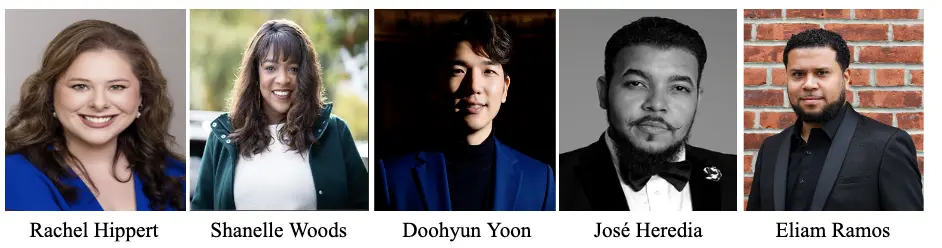
For purists, the juxtaposition of soaring Puccini and soaring sectionals might initially jar the senses. Yet, this upcoming performance represents a bold, calculated maneuver in the ongoing democratization of classical music. By transplanting an elite roster of vocal soloists—featuring soprano Rachel Hippert, mezzo-soprano Shanelle Woods, lyric tenor Doohyun Yoon, tenor José Heredia, and baritone Eliam Ramos—from traditional auditoriums into a retail environment, the Regina Opera is directly addressing one of the modern arts sector’s most pressing challenges: audience development and geographical accessibility.
This special engagement is far more than a mere marketing novelty or an acoustic curiosity; it is a manifestation of grass-roots cultural tenacity. Founded in 1970 during an era of profound economic and social shift in New York City, the Regina Opera has continuously reinvented its operational blueprint to survive. As performing arts institutions across the United States grapple with post-pandemic attendance fluctuations and the contraction of philanthropic funding, the company’s venture into a Middle Village furniture showroom offers an instructive case study in community-centric arts administration. This report examines the mechanics of this unusual pairing, traces the institutional lineage of the Regina Opera, profiles the rising talent gracing the showroom floor, and analyzes the broader socio-cultural implications of staging grand opera amid modern domestic furnishings.
Detailed Chronology: From Grassroots Recitals to Retail Spaces
To fully appreciate the cultural weight of the September 20 concert, one must trace the evolutionary trajectory of the Regina Opera Company. Its origins are rooted in the DIY ethos of 1970s New York, a period defined by urban fiscal crisis balanced against a vibrant, neighborhood-level artistic renaissance.
The Cantoni-Tierno Era and Early Foundations
In 1970, visionaries Marie Cantoni and Nicholas Tierno established the Regina Opera with a singular, unpretentious mission: to make grand opera accessible, affordable, and approachable for everyday working-class New Yorkers who might otherwise find Lincoln Park or the Metropolitan Opera financially or socially out of reach. Operating initially as a modest collective of passionate, classically trained vocalists, the founders relied on sparse piano accompaniments to deliver curated recitals across Brooklyn and Queens.
During its formative decades, the company operated as an itinerant community troupe, securing performance slots wherever willing landlords, churches, or community centers would host them. These early years forged the company’s DNA. Unlike major institutional houses driven by blockbuster ticket sales and international tourism, the Regina Opera’s survival was tethered directly to the civic fabric of the outer boroughs. The artists were neighbors, teachers, and local enthusiasts who shared a fierce devotion to the bel canto and verismo traditions.
The 2012 Relocation and Institutional Stability
As decades passed, the company expanded its artistic ambitions, eventually mounting fully staged productions complete with orchestras, elaborate costume designs, and traditional set pieces. For many years, its spiritual and operational home was anchored in Sunset Park, Brooklyn. However, the shifting real estate landscape of New York City necessitated a pivotal migration.
In 2012, facing infrastructural transitions and the need for a reliable, acoustically viable performance space, the Regina Opera transitioned its primary operations to the auditorium of Our Lady of Perpetual Help School. This move provided the stability required to sustain a regular season of operas and concerts, cementing its reputation as Brooklyn and Queens’ premier grass-roots opera company. Yet, stability has never meant stagnation for the leadership. Recognizing that traditional auditorium seats do not capture the entirety of the modern demographic, the company has increasingly looked outward, seeking unconventional public and commercial spaces to engage new audiences.
The Genesis of the Raymour & Flanigan Collaboration
The upcoming September 20 concert inside the Raymour & Flanigan Furniture Showroom in Middle Village represents the next logical step in this outward expansion. The partnership bridges two distinct worlds: a national furniture retailer seeking community-facing civic engagement and a venerable arts institution looking to lower the psychological barriers associated with classical music appreciation.
Preparations for the two-hour event have required meticulous logistical choreography. Unlike a dedicated concert hall equipped with acoustic shells, proscenium arches, and fly lofts, a furniture showroom presents distinct architectural variables. Hardwood flooring, plush upholstery, and expansive glass facades create unique acoustic reflections and damping effects. Sound projection must be calibrated meticulously to ensure that the unamplified human voices of Hippert, Woods, Yoon, Heredia, and Ramos fill the retail floor without overwhelming listeners browsing nearby living room sets.
Artist Profiles: The Vocal Vanguard of the Showroom
The success of any operatic endeavor—regardless of whether it occurs on the stage of the Metropolitan Opera House or surrounded by sectional sofas in Queens—ultimately rests upon the vocal health, technical mastery, and communicative power of its interpreters. The Regina Opera has assembled a formidable quintet of soloists for the Middle Village engagement, blending diverse vocal timbres, dramatic intensity, and rising industry credentials.
Rachel Hippert (Soprano)
Known for her luminous tone and crystalline upper register, soprano Rachel Hippert has steadily carved out a reputation as a versatile interpreter of lyric repertoire. Her ability to project subtle emotional nuance across varied acoustic environments makes her uniquely suited for the intimate, conversational nature of a showroom recital. Hippert’s approach to vocalism emphasizes text-driven interpretation, ensuring that operatic arias sung in Italian, French, or German resonate with audiences who may be experiencing live opera for the very first time.
Shanelle Woods (Mezzo-Soprano)
Mezzo-soprano Shanelle Woods brings a rich, velvety resonance and commanding stage presence to the ensemble. Capable of navigating both the sultry depths of dramatic mezzo roles and the brisk agility of trouser parts, Woods’ vocal color adds essential warmth and emotional complexity to the afternoon’s program. Her inclusion ensures that the lower-middle registers of the vocal spectrum are represented with gravitas and theatrical flair.

Doohyun Yoon (Lyric Tenor)
Lyric tenor Doohyun Yoon possesses the soaring, honeyed tones essential for standard operatic romantic leads. Trained rigorously in classical vocal technique, Yoon’s ability to sustain long, breath-controlled musical phrases while maintaining a vibrant timbre has earned him acclaim across regional stages. His interpretation of classic tenor showstoppers will undoubtedly form a emotional centerpiece for the two-hour program.
José Heredia (Tenor)
Tenor José Heredia complements the vocal lineup with a dynamic, energetic projection and a bright, Italianate ring. Heredia’s vocal agility and passionate delivery make him particularly adept at navigating the demanding high-lying passages characteristic of nineteenth-century masterworks. His dynamic stage energy will serve as a vital bridge between the performers and the seated public gathered among the home furnishings.
Eliam Ramos (Baritone)
Rounding out the quintet is baritone Eliam Ramos, whose dark, resonant instrument anchors the ensemble’s harmonic foundations. Baritone repertoire often occupies the psychological space of the confidant, the rival, or the authoritative patriarch. Ramos brings a dramatic weight and sophisticated phrasing to the stage, grounding the lighter lyric moments with seasoned authority and theatrical gravity.
Supporting Context & Metrics: The Socio-Economic Landscape of Queens Arts
To understand the true significance of the Regina Opera’s upcoming performance, one must analyze the broader demographic, economic, and cultural metrics governing the borough of Queens.
The Cultural Diversity and Accessibility Index of Queens
Queens is widely celebrated as one of the most ethnically and linguistically diverse urban areas on the planet. Home to communities originating from every corner of the globe, the borough boasts a rich tapestry of traditional performance arts. However, formal Western classical music and opera have historically struggled with structural and economic barriers to entry. High ticket prices, formal dress codes, transportation challenges to Manhattan institutions, and the perceived elitism of the art form have traditionally marginalized outer-borough residents.
By staging a free, two-hour concert inside a centrally located retail hub like the Metro Mall in Middle Village, the Regina Opera actively addresses these disparities. The location is easily accessible via public transit and major thoroughfares, neutralizing the logistical hurdles that often deter casual culture-seekers. Furthermore, the absence of a financial admission fee eliminates economic gatekeeping entirely.
[Traditional Opera Model]              [Regina Opera Retail Model]
- High ticket costs ($50 - $300+)     - 100% Free Admission
- Centralized Manhattan venues         - Outer-borough commercial hubs (Queens)
- Formal dress expectations            - Casual, accessible public spaces
- Insular, traditional audiences       - Diverse, walk-in community footprint
The Economics of Non-Profit Opera
The financial realities facing American opera companies in the post-pandemic era are stark. According to industry analyses by organizations such as OPERA America, mid-sized and small opera companies operate on razor-thin margins, relying heavily on a combination of earned revenue (ticket sales), individual philanthropy, corporate sponsorships, and municipal cultural grants.
When traditional theater rentals skyrocket and donor bases fluctuate, institutional survival requires creative asset utilization. Partnering with commercial entities like Raymour & Flanigan offers a symbiotic economic framework:
- For the Retailer: The showroom gains vibrant foot traffic, positive community goodwill, and association with a prestigious, long-standing cultural institution.
- For the Opera Company: The organization avoids expensive theater rental overhead while securing a novel, built-in audience of curious shoppers and local residents who might never have purchased a ticket to a traditional venue.
Official Statements and Institutional Vision
While specific quotes from the corporate leadership of Raymour & Flanigan and the artistic directors of the Regina Opera highlight the cooperative spirit of the event, the underlying philosophy is clear: art must meet people where they live, work, and shop.
In various promotional communications regarding the September 20 engagement, organizers have emphasized that the primary objective is community outreach and artistic vitality. The decision to select familiar, high-traffic commercial environments reflects a growing global trend among performing arts organizations. Symphony orchestras playing in public parks, ballet companies staging pop-up performances in train stations, and opera troupes singing in furniture showrooms are all part of a larger paradigm shift. This movement rejects the notion that high art requires a hermetically sealed, hushed environment to be appreciated. Instead, it posits that the intrinsic beauty of the human voice possesses the power to transform any space—even a showroom floor displaying sectionals and dining room sets—into a temporary cathedral of sound.
Future Outlook: The Evolution of Outer-Borough Performance
As the Regina Opera prepares for its September 20 showcase at the Metro Mall, industry observers are closely watching to see how this model might influence future programming cycles. The success of the Middle Village concert could serve as a blueprint for expanded outer-borough tours, proving that classical music does not need to retreat to ivory towers to maintain its artistic integrity.
Scaling Community-Centric Engagement
The integration of non-traditional spaces into classical music programming points toward a sustainable future for regional arts organizations. By breaking free from the physical constraints of traditional auditoriums, companies like the Regina Opera can cultivate entirely new demographics of patrons. A shopper who stops to listen to Rachel Hippert and Doohyun Yoon perform a soaring duet among the display models may well become a dedicated subscriber to the company’s future fully staged productions at Our Lady of Perpetual Help School or beyond.
Preserving a 54-Year Legacy
Ultimately, the longevity of the Regina Opera—spanning more than half a century from its humble 1970 beginnings under Marie Cantoni and Nicholas Tierno to its modern incarnation—is a testament to adaptability. Cultural institutions survive not by remaining static, but by continually renegotiating their contract with the communities they serve.
On September 20, when the first notes of standard opera favorites ring out across the Raymour & Flanigan Furniture Showroom, it will mark a triumph of resilience over convention. It will demonstrate that whether performed beneath the gilded proscenium arches of a European opera house or under the recessed lighting of a Queens retail center, great art retains its capacity to elevate, surprise, and unite humanity.