
Executive Overview
In a strategic bid to redefine how music lovers and concert-goers interact with live entertainment, Ticketmaster has announced a sweeping global overhaul of its mobile application. Rolling out across 21 countries, the platform update represents one of the most substantial user-interface and algorithmic shifts the ticketing giant has undertaken in recent years.
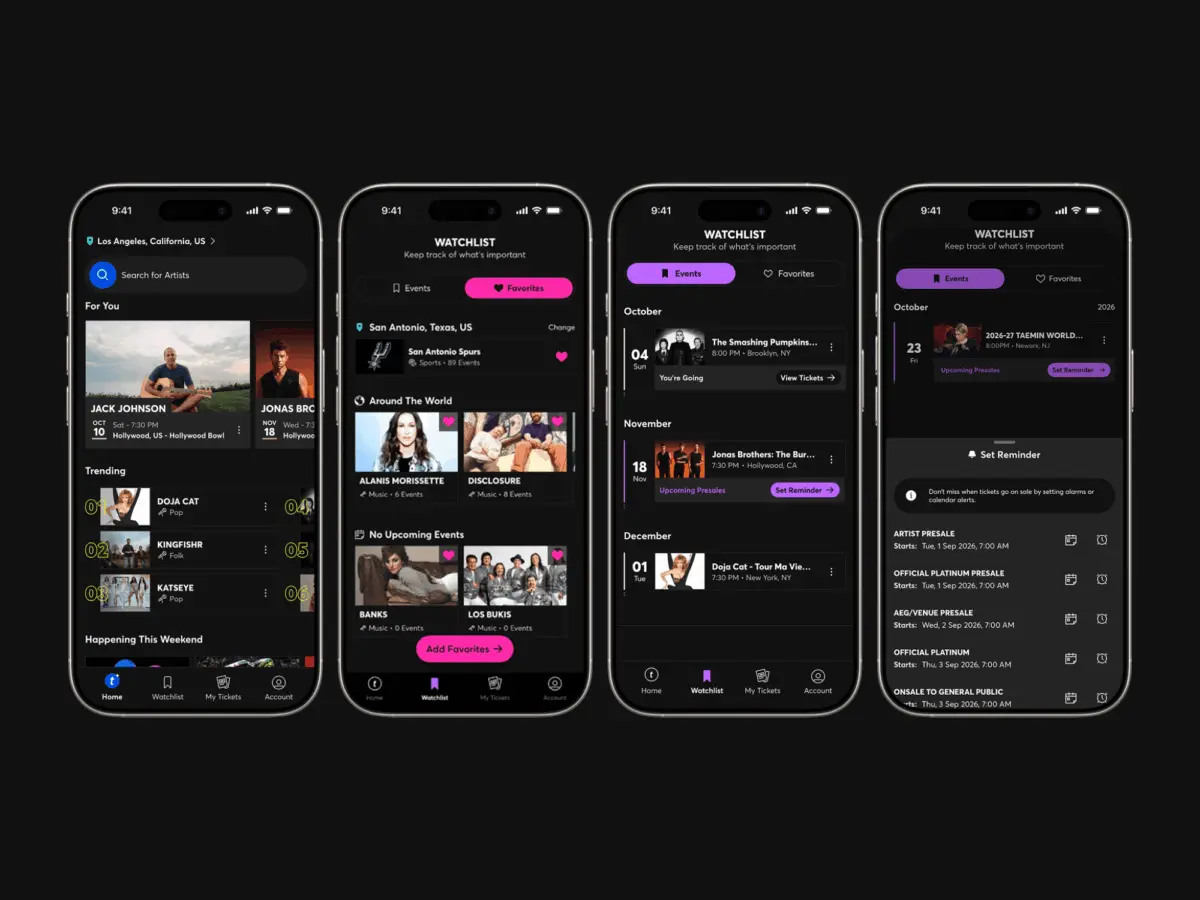
At the heart of this digital transformation is a heavy pivot toward hyper-personalized recommendations, curated event feeds, and a new "watchlist" feature designed to keep users seamlessly informed about upcoming tours and performances. By reimagining the mobile homepage to feature distinct algorithmic segments such as "For You," "Trending," and "Last Minute," Ticketmaster is attempting to bridge the gap between passive music discovery and active ticket purchasing.
However, this move is not merely an internal technological upgrade; it is happening against a backdrop of fierce market competition. Industry observers have been quick to point out that Ticketmaster’s new personalized discovery-first framework bears a striking resemblance to the UI and UX philosophies pioneered by rival ticketing disrupter Dice. Furthermore, the timing coincides with intense market consolidation—highlighted by Fever’s acquisition of Dice last year and Dice’s subsequent aggressive expansion into the United States, long considered Ticketmaster’s home turf.
While industry insiders debate whether Ticketmaster is playing catch-up or cementing its dominance, company executives maintain that the update is rooted in fundamental consumer data. According to Ticketmaster research cited during the rollout, roughly 40% of live-event fans miss out on concerts simply because they are unaware that an event is happening in their area. By tackling this information deficit head-on, Ticketmaster hopes to drive higher conversion rates, boost venue sales, and ultimately create a more sticky, end-to-end entertainment ecosystem.
Detailed Chronology of the App Redesign
To understand the scope of Ticketmaster’s latest mobile update, it is necessary to trace the convergence of evolving consumer expectations, technological upgrades, and competitive pressures that led to the rollout.
Phase 1: Identifying the Discovery Gap
For years, Ticketmaster functioned primarily as a transactional utility—a digital box office where consumers went only after they had already decided to attend a specific concert and secured a presale code or general-admission ticket. Discovery happened elsewhere: on social media platforms like TikTok and Instagram, through streaming apps like Spotify and Apple Music, or via specialized gig-guide websites.
Internal analytics began to reveal a glaring flaw in this traditional funnel. Ticketmaster’s research indicated that an astounding 40% of prospective live-event attendees failed to purchase tickets simply because they missed the announcement window entirely. This revelation exposed a massive pool of unrealized revenue for artists, promoters, and venues, prompting the company’s product and engineering teams to rethink the app’s foundational purpose.
Phase 2: Algorithmic Overhaul and Interface Rejuggling
The development cycle focused heavily on replacing static event lists with dynamic, data-driven interfaces. The home page of the mobile app was completely dismantled and rebuilt.
- The "For You" Section: Designed to ingest a user’s historical purchase data, location, and potentially integrated streaming habits, this feed surfaces tailored concert suggestions.
- The "Trending" Feed: Highlights hyper-local and national events experiencing sudden spikes in search volume and ticket demand.
- The "Last Minute" Section: Caters to spontaneous buyers looking for events happening within days or hours, maximizing yield for venues with remaining inventory.
Phase 3: Introduction of the ‘Watchlist’
Recognizing that fans often track artists months before tours are officially announced or tickets go on sale, Ticketmaster introduced the "Watchlist" feature. This tool allows users to pin specific artists, teams, or venues, establishing a direct notification pipeline. When a tour date drops, the user receives an alert, effectively shortening the distance between artist intent and consumer action.
Phase 4: Global Multi-Region Rollout
Rather than deploying the update in a single test market, Ticketmaster executed a synchronized launch across 21 countries simultaneously. This cross-territory strategy ensured that international markets—where alternative ticketing apps have historically gained faster traction—received the new features at the same time as core Western markets, establishing a unified global user experience for the platform.
Supporting Context & Metrics: The Battle for the Live Discovery Market
Ticketmaster’s app update does not exist in a vacuum. It represents a critical front in an ongoing war for dominance over the live-events discovery pipeline.
The Rise of Discovery-First Ticketing
For over a decade, challenger brands have sought to dethrone legacy ticketing monoliths by placing user experience and curation at the forefront. Chief among these was Dice, which launched with a minimalist, smartphone-only interface designed to make browsing and buying tickets as frictionless as scrolling through a social media feed. Dice’s anti-scalping stance and focus on personalized gig recommendations built a fiercely loyal demographic among younger, indie-music-loving consumers.
However, the competitive landscape shifted dramatically when live-events discovery and booking platform Fever acquired Dice. This consolidation supercharged Dice’s financial and logistical backing, enabling an aggressive expansion campaign into the United States—the undisputed heartland of Live Nation and Ticketmaster’s global operations. As Dice signs up more US venues and independent promoters, Ticketmaster’s monopoly over domestic ticket infrastructure faces a cultural and technological challenge.
Consumer Behavior and the 40% Problem
Ticketmaster’s justification for the redesign relies heavily on consumer psychology metrics. The finding that 40% of fans miss events due to sheer lack of awareness highlights a systemic inefficiency in how tour marketing operates.
| Metric / Insight | Traditional Ticketing Model | New Ticketmaster Personalized Model |
|---|---|---|
| Primary User Journey | Transactional (Search & Buy) | Discovery + Transactional (Browse, Watch, Buy) |
| Information Delivery | Push-based (Email blasts, static lists) | Algorithmic (Tailored "For You" & "Trending" feeds) |
| Fan Awareness Gap | High (40% miss events due to poor visibility) | Mitigated via real-time "Watchlist" alerts |
| Retention Strategy | Periodic app visits per major tour purchase | Daily/weekly engagement via personalized curation |
By transforming the app from a digital wallet into an active discovery hub, Ticketmaster is attempting to capture users earlier in the entertainment lifecycle—long before they even enter the purchasing funnel.
Official Statements and Industry Perspective
The rollout has sparked significant commentary across the music tech and live entertainment sectors, drawing attention to the balance between corporate ambition and fan experience.
Corporate Vision
Addressing the strategic motivations behind the global app refresh, Saumil Mehta, Global President of Ticketmaster, emphasized that the update is merely the first step in a much larger modernization effort.
"It’s the beginning of a broader effort to build more fan-inspired experiences that make discovering, following, and enjoying live events feel more personal every step of the way," Mehta stated during the release of the company’s official announcement.
The sentiment underscores a corporate realization that customer loyalty can no longer be taken for granted. In an era where consumers are inundated with subscription services, social media feeds, and entertainment options, a ticketing app must offer value beyond simply holding a barcode on a smartphone screen.
Independent Market Reactions
Industry analysts have offered mixed interpretations of the move. On one hand, consumer advocacy groups and frequent gig-goers have long criticized Ticketmaster interfaces for being cluttered, transactional, and overly complex. A streamlined, personalized homepage is widely seen as a long-overdue upgrade.
On the other hand, tech commentators have been quick to draw parallels to competing platforms. The integration of personalized feeds, artist watchlists, and trending metrics mirrors features that alternative apps have utilized for years. Skeptics argue that while Ticketmaster’s massive inventory gives it an inherent advantage, the app’s new look is an inevitable reaction to the market share carved out by disrupters like Dice and Fever.
Future Outlook: What Lies Ahead for Live Ticketing Tech
As the dust settles on the initial 21-country rollout, the long-term implications of Ticketmaster’s app refresh will depend on execution, algorithm accuracy, and consumer reception.
1. The Integration of Artificial Intelligence and Streaming Data
As live-entertainment platforms vie for user attention, the next frontier in personalization will likely involve deeper integrations with streaming giants (such as Spotify, Apple Music, and YouTube Music) and AI-driven predictive modeling. If Ticketmaster can accurately anticipate a user’s musical tastes based on real-time listening habits and automatically surface local tour dates before tickets go on public sale, it could effectively neutralize the discovery advantage currently held by boutique apps.
2. Escalating Competition in the US Market
With Fever and Dice pressing deeper into US metropolitan venues, Ticketmaster cannot rely solely on its exclusive venue contracts and primary market dominance. The company must prove that its newly personalized app can keep younger, digitally native demographics engaged. If the "Watchlist" and "Trending" feeds successfully convert passive browsers into active buyers, Ticketmaster will strengthen its defense against insurgent ticketing platforms.
3. The Ongoing Quest for Fan Trust
Ultimately, technological sophistication must be matched by consumer goodwill. While a personalized app solves the discovery and awareness gap, Ticketmaster continues to navigate broader industry scrutiny regarding service fees, dynamic pricing controversies, and secondary market access. Whether a sleek new user interface is enough to win over skeptics remains to be seen, but one thing is clear: the battle for the live-music fan’s smartphone screen has officially entered a new, highly competitive phase.