
Executive Overview
In an era defined by rapid technological advancements in sanctuary audio-visual integration, one demographic has frequently remained on the periphery of the worship experience: individuals with hearing impairments. For millions of congregants globally, attending a traditional Sunday service or community worship event is not an experience defined by the inspirational cadence of a sermon or the soaring harmonies of a choir. Instead, it is an exercise in frustration marked by acoustic reverberation, background noise, and muffled dialogue.
Houses of worship are inherently challenging acoustic environments. Vaulted ceilings, hard reflective surfaces like stone and hardwood, and expansive architectural footprints designed to evoke awe often create reverberation times that degrade speech intelligibility. While high-end line-array speaker systems and digital mixing consoles have revolutionized front-of-house sound for the general public, they rarely solve the underlying accessibility challenges faced by the hard of hearing.
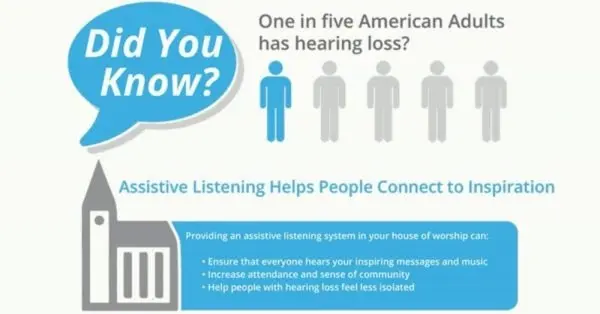
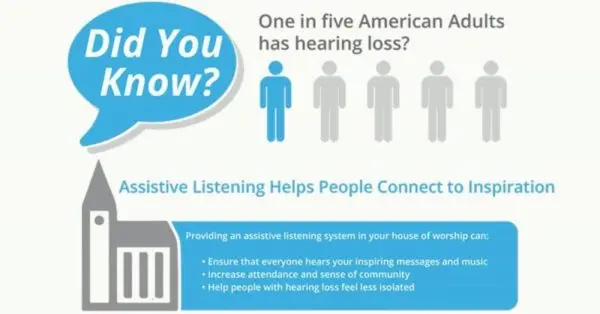
To combat this, religious institutions are increasingly turning to Assistive Listening Systems (ALS). These specialized technologies transmit audio directly from the soundboard to a listener’s hearing aid, cochlear implant, or dedicated pocket receiver, bypassing the ambient acoustics of the room entirely.
However, implementing an ALS requires more than simply purchasing equipment and plugging it into a sound system. A successful rollout demands a strategic, multi-phased approach that encompasses congregation assessment, budget forecasting, staff training, and aggressive community outreach. This report provides an authoritative blueprint for faith-based organizations seeking to evaluate, procure, and deploy an Assistive Listening System, ensuring that every member of the community can fully participate in the life of the church.
Detailed Chronology: The Four-Step Implementation Framework
Integrating an Assistive Listening System into an existing or newly constructed house of worship requires a methodical approach. Industry experts and audio specialists recommend a four-stage implementation lifecycle to maximize return on investment and ensure high adoption rates among congregants.
Phase 1: Understanding Congregation Needs and Baseline Assessment
The foundational misstep many religious organizations make is purchasing hardware before understanding their specific demographic requirements. Every congregation has a unique profile regarding age distribution, existing hearing aid adoption, and acoustic challenges.
- Conducting the Needs Assessment Survey: The most effective starting point is a comprehensive survey distributed to the congregation. This survey should capture quantitative and qualitative data regarding members’ experiences during services. Questions should explicitly address whether respondents struggle to hear the sermon, whether they currently utilize hearing aids, and crucially, whether those hearing aids are equipped with telecoils (t-coils).
- Analyzing Technical Capabilities: Understanding whether congregants use t-coil compatible devices dictates the type of ALS technology required—whether an induction loop system, an FM system, or an infrared system is most appropriate.
- Acoustic Mapping: Alongside demographic surveys, leadership should consult with audio professionals to map dead zones within the sanctuary where sound intelligibility drops significantly, ensuring that the ALS addresses both individual physiological needs and spatial acoustic deficiencies.
Phase 2: Financial Planning, Budgeting, and Procurement
Once the scope of the congregation’s needs is established, leadership must evaluate financial options and hardware configurations.
- Estimating Costs: Expenses vary widely based on sanctuary size, the chosen technology, and the number of receivers required by the Americans with Disabilities Act (ADA) or local accessibility mandates. Specialty audio integrators, such as CCI Solutions, provide targeted assistance in estimating equipment costs and offer free consultations to help ministries navigate budgetary constraints.
- Exploring Funding Avenues: Because capital improvement budgets are often tight, churches frequently look beyond general operational funds. Creative fundraising campaigns, memorial gifts, targeted capital drives, and grants specifically earmarked for accessibility and disability inclusion can offset the financial footprint of an ALS installation.
- Balancing Scale and Scalability: Leadership should avoid under-purchasing receivers. It is vital to procure a sufficient quantity of devices to accommodate peak attendance, factoring in potential future growth in senior and hard-of-hearing ministries.
Phase 3: Operational Readiness and Staff Training
Hardware is only as effective as the personnel operating it. Even the most sophisticated ALS will fail if staff and volunteers do not know how to maintain, distribute, and troubleshoot the equipment.
- Appointing "Assisted Listening Ambassadors": Sanctuary ushers, welcome desk volunteers, and audio-visual technicians must be designated as champions of the new technology. Comprehensive training sessions should cover how to power on receivers, sanitize earpieces, pair devices with t-coils, and troubleshoot common connection dropouts.
- Personalized User Instruction: When a congregant checks out a device, the interaction should not be a silent handoff. Volunteers must take the time to instruct users on device functionality, volume controls, and proper positioning.
- Creating Job Aids: To ensure consistency during high-traffic Sunday mornings, facilities should maintain a laminated, quick-reference guide featuring Frequently Asked Questions (FAQs) at the distribution desk. This minimizes friction and builds confidence among volunteer teams.
Phase 4: Cultivating Awareness and Community Outreach
An ALS cannot serve its purpose if the congregation and the surrounding community are unaware of its existence. A robust marketing and communication strategy is mandatory.
- Signage and Visual Cues: Clear, universally recognized international symbols for accessibility should be placed at all primary entrances, welcome desks, and sanctuary doors, indicating that Assisted Listening Devices are available and directing patrons to where they can be acquired.
- Multi-Channel Reminders: Every weekly bulletin, digital newsletter, and pre-service slide presentation should feature a brief reminder regarding the availability of the system.
- Live Demonstrations and Training: To break down technological intimidation, churches should host a dedicated live training session or orientation during a fellowship hour. Allowing congregants to test the receivers in a low-pressure environment significantly increases adoption rates.
- Community-Facing Campaigns: Outreach should extend beyond current members. Advertising the availability of an ALS to the surrounding geographic community signals a deep institutional commitment to radical hospitality, drawing in individuals who may have previously abandoned corporate worship due to accessibility barriers.
Supporting Context & Metrics: The Imperative of Inclusion
The push for Assistive Listening Systems in houses of worship is underpinned by profound demographic shifts and public health data regarding hearing loss.
According to data from the World Health Organization (WHO) and the U.S. Centers for Disease Control and Prevention (CDC), hearing loss is one of the most prevalent chronic conditions affecting adults. Approximately 15% of American adults report some trouble hearing, with the prevalence scaling dramatically among older demographics—the very demographic that forms the core membership of many traditional and contemporary congregations.
| Metric Indicator | Statistical Baseline / Data Point | Primary Implication for Worship Facilities |
|---|---|---|
| Adults Affected | ~37 million American adults (approx. 15%) | Hearing impairment is a mass-market issue, not a fringe concern. |
| Age Correlation | 1 in 3 people over age 65 experience hearing loss | Core church demographics align heavily with high-risk hearing loss cohorts. |
| Hearing Aid Adoption | Less than 30% of those who could benefit use hearing aids | Amplifying house sound via standard speakers is insufficient for most impaired listeners. |
| Acoustic Challenge | Reverberation times in churches often exceed 1.5 to 2.5 seconds | Architectural design inherently scrambles speech intelligibility, making ALS critical. |
The Psychological Cost of Isolation
Beyond the physical inability to process sound, hearing loss carries a severe psychological toll. Studies in gerontology and audiology consistently link unaddressed hearing impairment to social isolation, depression, cognitive decline, and anxiety.
When an individual can no longer comprehend the spoken word during a worship service, they often quietly withdraw from the community. They stop attending fellowship events, cease volunteering, and ultimately drift away from the spiritual home that once anchored their lives.

Installing an ALS is therefore far more than a compliance measure or an acoustic upgrade; it is a profound pastoral intervention. By restoring the clarity of the spoken word, churches reclaim members from the margins of isolation, restoring their agency, dignity, and active status within the body of believers.
Official Statements and Industry Insights
Audio-visual integration experts and accessibility advocates emphasize that technology must serve a theological purpose: the unhindered sharing of the message.
Industry leaders in assistive listening technology, such as Listen Technologies, emphasize that modern houses of worship must look at accessibility through an integrated lens. In their benchmark industry literature, including the House of Worship Assistive Listening Toolkit, experts note:
"Reaching out to those who feel disconnected from your community due to hearing loss is central to sharing the message of inclusion. Genuinely compassionate service involves being aware of and caring for the needs of everyone, especially those dealing with impairments. Make sure they are able to hear the beauty and emotion of the spoken word in your church by providing them with the equipment they need to stay connected."
Furthermore, AV integration specialists point out that the legal and ethical landscape surrounding public spaces is shifting. While houses of worship have historically enjoyed certain exemptions under specific accessibility laws depending on their legal structure and jurisdiction, the moral imperative for absolute inclusion has never been stronger.
Modern congregants expect the same standard of accessibility in a sanctuary that they experience in a theater, courtroom, or academic lecture hall. Forward-thinking church leadership teams recognize that investing in assistive listening is an investment in generational longevity, signaling to younger and older generations alike that the institution values every human soul that crosses its threshold.
Future Outlook: The Next Wave of Acoustic Accessibility
As audio engineering continues to evolve, the future of Assistive Listening Systems in houses of worship points toward hyper-personalization, wireless integration, and the reduction of hardware friction.
The Rise of Wi-Fi and Streaming Audio Solutions
While traditional RF (Radio Frequency) and Infrared systems remain staples, the industry is experiencing a massive pivot toward Wi-Fi-based assistive listening. These systems leverage the sanctuary’s existing wireless network to stream ultra-low-latency audio directly to smartphones and smart devices via dedicated applications.
This technological shift offers several distinct advantages for modern ministries:
- Reduced Hardware Overhead: Churches no longer need to manage, sanitize, and store dozens of dedicated pocket receivers. Congregants simply download an app and use their own smartphones and personal earbuds or hearing aid connections.
- Decreased Stigma: In the past, some congregants resisted using ALS devices because checking out a receiver at a welcome desk felt publicly stigmatizing. Utilizing personal smartphones eliminates this psychological barrier entirely.
- Multilingual Capabilities: Advanced IP-based streaming platforms also enable simultaneous translation, allowing churches to broadcast multiple audio feeds (e.g., Spanish, Mandarin, or interpreted audio descriptions) across the same network infrastructure.
The Integration of Bluetooth Low Energy (BLE) and Auracast
Looking further down the horizon, the advent of Bluetooth Low Energy (BLE) audio standards, specifically Auracast broadcast audio, promises to redefine accessibility. Auracast will allow audio transmitters in sanctuaries to broadcast crystal-clear sound directly to an unlimited number of compatible hearing aids, cochlear implants, and earbud devices simultaneously, completely untethered from proprietary apps or hardware receivers.
For houses of worship, preparing for this future begins today. By conducting comprehensive needs assessments, engaging in sound fiscal planning, training volunteer ambassadors, and aggressively marketing current accessibility initiatives, churches lay the operational groundwork required to adopt next-generation technologies seamlessly.
Conclusion
The ultimate metric of a successful worship service is not merely the volume of the music or the eloquence of the sermon, but the depth of connection experienced by every soul in attendance. By bridging the acoustic divide through the deliberate implementation of an Assistive Listening System, houses of worship ensure that the transformative power of the spoken word reaches every ear, leaving no one behind in silence.
For detailed guidance, sample congregation surveys, signage templates, and promotional announcements to ensure your ministry’s success, leadership teams are encouraged to download comprehensive resources such as the Listen Technologies Church Assistive Listening Toolkit.