
Executive Overview
Pop history is filled with reinventions, but few groups have managed to maintain a culturally dominant footprint spanning three decades quite like the Backstreet Boys. Now, the best-selling boy band of all time is trading synchronized choreography for tactical headsets, announcing their official foray into the hyper-competitive world of professional esports.
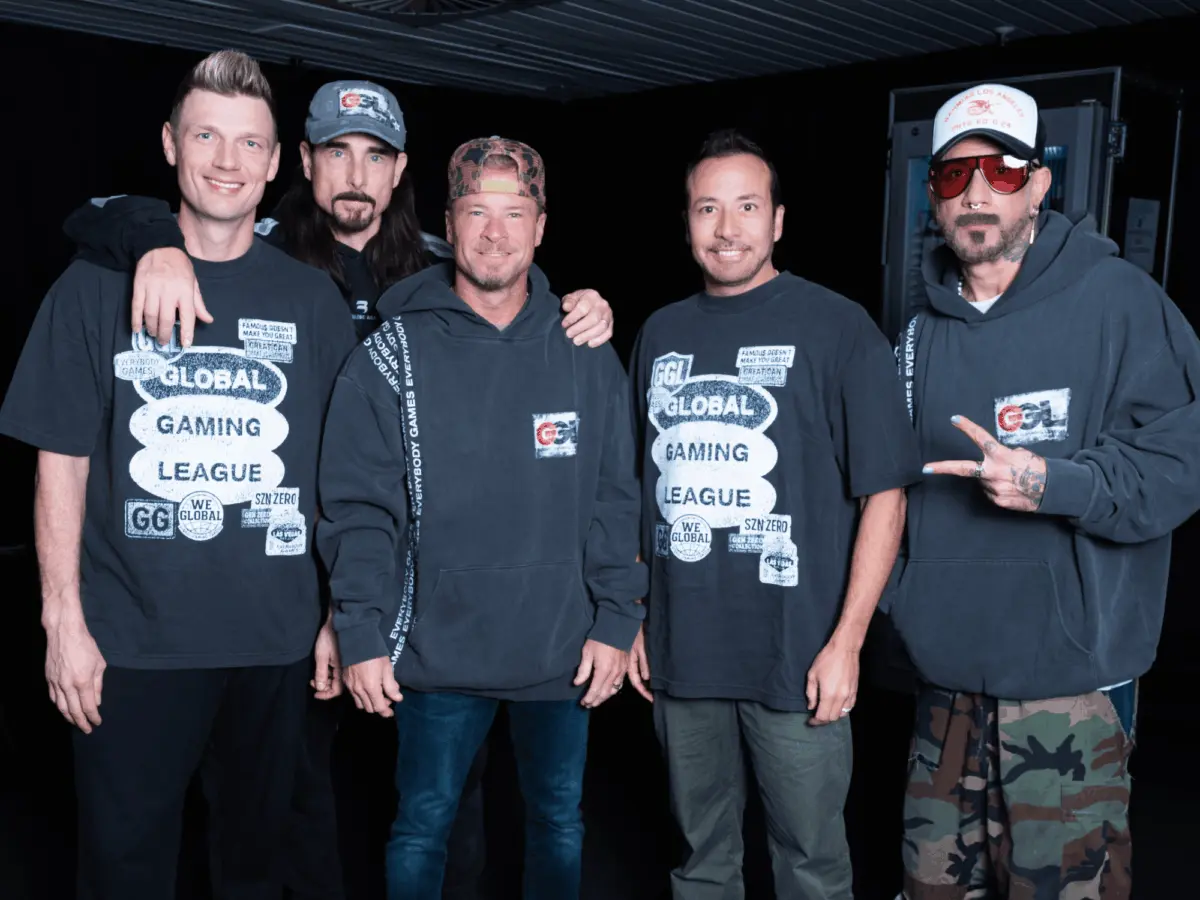
In a surprising yet calculated crossover between pop nostalgia and competitive gaming, the group has launched a dedicated professional esports team christened Backstreet Gamers (BSG). Developed in strategic partnership with the Global Gaming League (GGL), BSG places the legendary vocal harmony group shoulder-to-shoulder with a growing roster of iconic entertainers who have transitioned into digital team ownership, including hip-hop and R&B heavyweights T-Pain, Ne-Yo, and Flavor Flav of Public Enemy.
Unlike traditional celebrity brand endorsements that rely purely on vanity metrics, the Backstreet Boys and GGL are rolling out a functional, highly competitive operational framework. The initiative centers on a global talent search designed to recruit professional-caliber gamers—with a notable emphasis on inclusivity and gender diversity—offering everyday players a tangible pathway to a professional roster.
As the global esports economy projects robust financial growth over the next decade, this partnership underscores a broader industry truth: the monetization models of entertainment, music fandom, and competitive gaming are permanently converging. This report provides an in-depth analysis of the launch, the structural framework of the team, the economic landscape of modern esports, and what this unexpected union means for the future of fan engagement.
Detailed Chronology: From Boy Band Stardom to Digital Battlegrounds
The genesis of Backstreet Gamers did not happen overnight; it is the culmination of years of shifting paradigms within both the music and gaming industries. To understand the gravity of BSG’s market entry, one must look closely at how the intersection of pop culture and competitive gaming has evolved.
Phase 1: The Convergence of Music and Gaming Culture
For decades, the music industry viewed video games primarily as a secondary licensing market—a place to drop a synchronized track on a sports game soundtrack or release a branded rhythm game. However, as gaming evolved into an interactive social network, artists realized that digital virtual spaces were the new concert arenas.
By the late 2010s, major labels began experimenting heavily with esports crossovers. Initiatives like Universal Music Group’s partnership with ESL to launch an esports-focused music label signaled that record executives saw competitive gaming as a goldmine for youth demographic reach. Yet, while record labels experimented with corporate partnerships, artists themselves began recognizing the power of direct ownership.
Phase 2: The Celebrity-Driven Esports Boom
As streaming platforms like Twitch and YouTube Gaming transformed pro players and content creators into mainstream celebrities, legacy musicians began taking notice. Figures from the hip-hop and R&B communities—such as T-Pain, who famously built a massive streaming community on Twitch, and Flavor Flav—began investing in or partnering with esports organizations to bridge the gap between urban music culture and competitive gaming.
Recognizing this fertile ground, the Global Gaming League (GGL) positioned itself as the premier bridge builder, creating pathways for mainstream cultural icons to integrate seamlessly into competitive gaming ecosystems.
Phase 3: The Birth of Backstreet Gamers (BSG)
The announcement of Backstreet Gamers marks the Backstreet Boys’ formal entry into this space. Rather than merely lending their likeness to a campaign, the group—known for timeless global anthems like I Want It That Way and Everybody (Backstreet’s Back)—has committed to building an active competitive entity.
Partnering with GGL, the group aims to leverage their masterclass in community building—honed over 30 years of global touring and dedicated fan loyalty—and apply those exact community-first principles to the esports arena. The launch immediately positions BSG as one of the most culturally intriguing up-and-coming rosters in the league, capturing headlines across both entertainment and tech trades globally.
Supporting Context & Metrics: The Economics of Esports and Fandom
To fully grasp the viability and strategic brilliance of the Backstreet Boys’ move into esports, one must analyze the numbers driving the modern digital gaming landscape.
Financial Projections for the Global Esports Market
While the explosive, venture-capital-fueled hyper-growth bubble of mid-2010s esports has matured into a more disciplined, revenue-focused market, the sector’s financial trajectory remains exceptionally strong.
- Current Market Valuation: Recent market research and industry estimates project that the global esports market will pull in approximately $3.3 billion this year.
- Long-Term Projections: Analysts forecast that the market will maintain a powerful Compound Annual Growth Rate (CAGR), scaling to an estimated $12 billion by 2033.
This financial resilience is driven by diversified revenue streams, including global brand sponsorships, media rights, direct-to-consumer digital merchandise, and in-game integrations. For legacy music acts looking to future-proof their brand portfolios, aligning with an industry scaling toward a $12 billion valuation is a savvy business diversification play.
The Power of Multi-Generational Community Building
The Backstreet Boys possess an asset that most native esports organizations spend decades trying to cultivate: loyal, multi-generational community engagement.
The group’s core fanbase—who originally rushed record stores in the late 1990s and early 2000s—now commands significant household disposable income. Simultaneously, many of these fans have children who are active participants in modern gaming ecosystems. By launching Backstreet Gamers, the group is uniquely positioned to bridge this demographic gap, engaging nostalgic parents and digital-native youth under a single unified banner.
Inclusivity and the GGL Primes Platform
A critical component of the BSG launch strategy is its democratic approach to roster building. Through the GGL Primes platform, the organization has initiated an open call for talented gamers worldwide.
Crucially, this recruitment drive explicitly emphasizes the inclusion of both male and female competitors. Historically, competitive esports has struggled with gender representation at the professional tier. By utilizing their massive platform to spotlight talent regardless of gender, Backstreet Gamers and GGL are actively working to build a more inclusive, merit-based competitive pipeline.
Official Statements and Industry Insights
The announcement has generated significant buzz across the entertainment and esports sectors. Key executives and stakeholders have shared their perspectives on what this cross-industry collaboration represents.
Clinton Sparks, CEO of the Global Gaming League (GGL), highlighted the psychological and communal parallels between music fandom and esports team loyalty:
"The Backstreet Boys know how to turn fans into a community that lasts for decades. Now imagine giving that community a team to root for, rivals to beat, and a real opportunity to earn a spot on the roster."
Sparks’ insight strikes at the heart of modern sports and entertainment marketing. Fandom in the 21st century is participatory. Fans no longer want to be passive consumers watching from the bleachers; they want to engage, influence, and feel a sense of shared ownership in their chosen community’s triumphs and struggles.
Industry analysts have similarly noted that while music acts entering esports was once viewed as a novelty, the longevity of these ventures depends entirely on infrastructure. By tying BSG directly into GGL’s established competitive architecture and talent pipelines, the Backstreet Boys have bypassed the foundational growing pains that doomed early, uncoordinated celebrity gaming ventures.
Future Outlook: What’s Next for Backstreet Gamers?
As the ink dries on the partnership between the Backstreet Boys and the Global Gaming League, the immediate future of Backstreet Gamers (BSG) points toward rapid expansion, competitive debuts, and innovative fan activations.
1. Roster Finalization and Competitive Debuts
The primary milestone on the horizon is the conclusion of the open recruitment phase via GGL Primes. As aspiring professional gamers—both men and women—submit their qualifications, the organization will face the high-stakes task of filtering and drafting its inaugural competitive roster. Once finalized, BSG will enter active league play, where fans will watch to see if the team can match its iconic namesake’s legendary track record by securing championship titles.
2. Merchandising and Digital Activations
Given the pop-culture heritage of the Backstreet Boys, the intersection of streetwear, gaming culture, and team merchandise represents an immediate commercial goldmine. Expect to see limited-edition BSG apparel lines that seamlessly blend 90s boy-band nostalgia with modern cyber-aesthetic design. Furthermore, virtual world activations, custom in-game skins, and interactive streaming events featuring both the pro players and the band members themselves are expected to roll out over the coming quarters.
3. A New Blueprint for Legacy Artists
If Backstreet Gamers proves to be a commercial and competitive success, it will serve as a definitive blueprint for other legacy acts seeking to monetize their intellectual property outside of traditional touring and streaming royalties. In an era where digital engagement dictates cultural relevance, the Backstreet Boys have proven once again that they are entirely willing to play the game—on their own terms, in a brand-new arena.