
Executive Overview
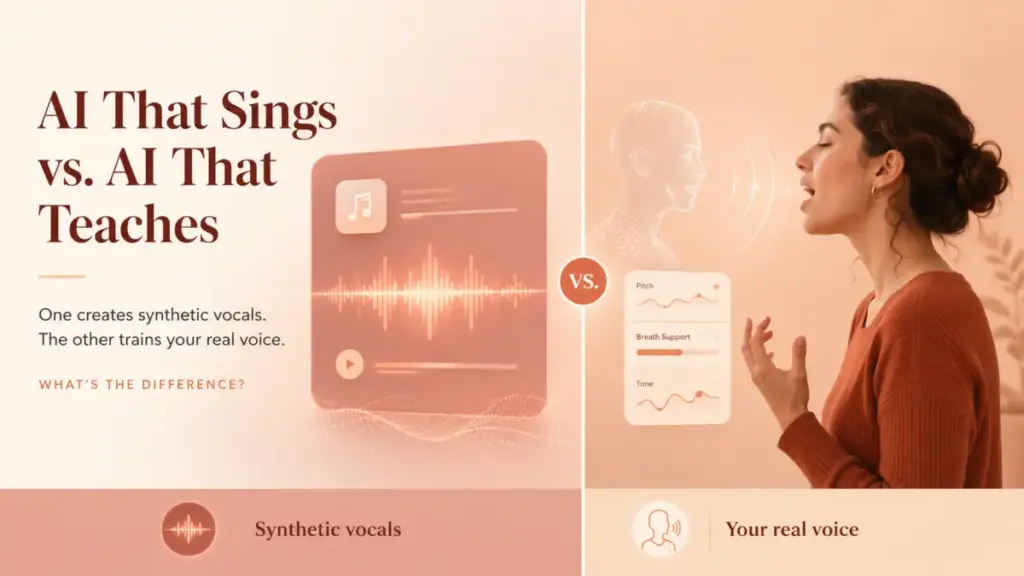
The landscape of vocal education is undergoing a quiet but profound digital transformation. For generations, voice training was a privilege reserved for those with the financial means to afford private instructors, or the geographic proximity to conservatory-level training. However, the emergence of artificial intelligence (AI) vocal coaches is democratizing this elite discipline, shifting the paradigm from intermittent, high-cost lessons to continuous, data-driven micro-practice.
A longitudinal study and user-behavior analysis conducted by the digital training platform Singing Carrots reveals a striking trend: the difference between rapid vocal development and frustrating stagnation rarely hinges on innate talent or sheer practice volume. Instead, it is determined by the methodology of the practice session itself.
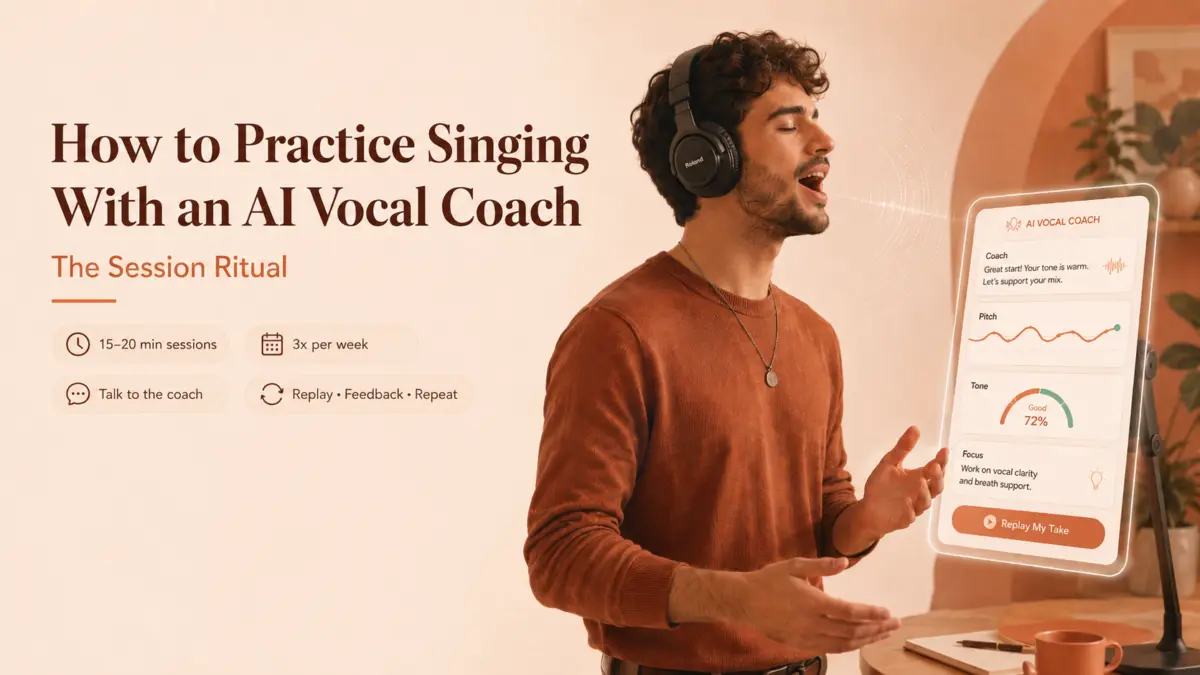
By analyzing thousands of practicing singers, researchers identified a highly optimized practice ritual—centered around brief, high-frequency sessions of 15 to 20 minutes, three times a week—that yields exponential progress. Most notably, the integration of conversational AI with vocal exercises has proven to be a catalyst for physical adaptation. Singers who actively converse with their AI coach, question the utility of specific exercises, and integrate custom instructions from human teachers experienced range expansions of up to 4.4 semitones over a seven-month period.
This investigative report explores the mechanics of AI-assisted vocal training, details the step-by-step practice ritual recommended by vocal experts, examines the empirical metrics behind vocal habit formation, and outlines how AI is being used not to replace, but to supercharge traditional human instruction.
Detailed Chronology: The Anatomy of an Optimal AI Practice Session
To understand why AI-guided practice is proving so effective, we must look at the specific chronological structure of a high-performance practice session. According to data from Singing Carrots, the ideal session is not a grueling marathon, but a highly focused 15-to-20-minute cycle.
Below is the chronological breakdown of the recommended six-step "practice ritual," divided into pre-singing configuration, active execution, and post-session calibration.
+-----------------------------------------------------------------------------+
|                     THE 20-MINUTE AI PRACTICE TIMELINE                      |
+-----------------------------------------------------------------------------+
|                                                                             |
|  [Min 0-2]        [Min 2-15]                        [Min 15-20]             |
|  PRE-SESSION      ACTIVE SINGING & DIALOGUE         POST-SESSION            |
|  +------------+   +-----------------------------+   +--------------------+  |
|  | Set Goal / |-->| Execute Vocal Drills        |-->| Replay Key Take    |  |
|  | Input Tech |   | Ask AI "Why?" & "Go Easier" |   | Provide Feedback   |  |
|  +------------+   +-----------------------------+   +--------------------+  |
|                                                                             |
+-----------------------------------------------------------------------------+
Phase 1: Pre-Session Configuration (Minutes 0–2)
- Step 1: Establishing the Session Intent: Before emitting a single note, the singer must define the parameters of the session. Rather than singing aimlessly, the user instructs the AI on their immediate physical or stylistic goal—for example, "I want to work on reaching high notes today without laryngeal constriction." If the user has no specific goal, they can allow the AI’s algorithm to analyze historical performance data and lead the session.
- Step 2: Integrating External Pedagogy: For singers working with a human teacher, this step involves inputting their teacher’s specific homework or stylistic guidance into the AI’s custom-instructions field. This crucial step bridges the gap between traditional lessons and digital practice, converting the AI into an automated supervisor that enforces the human coach’s parameters.
Phase 2: Active Singing and Dialogic Feedback (Minutes 2–15)
- Step 3: Interactive Vocalization: The singer begins the vocal exercises. Unlike traditional static audio accompaniment (such as practicing to a scale on a piano or a pre-recorded CD), the AI dynamically adjusts pitch, tempo, and key based on real-time pitch-tracking technology.
- Step 4: The Dialogic Loop (The Most Underused Feature): During the active singing phase, the most successful users do not remain silent between exercises. They actively converse with the AI. When an exercise feels physically uncomfortable, singers are encouraged to ask questions like: "Why are we doing this specific semi-occluded vocal tract exercise?" or "Can we lower the difficulty or change the vowel shape to make this easier?" This real-time modification prevents the reinforcement of poor physical habits.
Phase 3: Post-Session Calibration (Minutes 15–20)
- Step 5: Auditory Replay and Objective Critique: Upon completing the vocal drills, the user replays at least one recorded take from the session. Human self-perception while singing is notoriously distorted by bone conduction (the transmission of sound waves through the skull). Listening to an objective playback allows the singer to reconcile what they felt with what was actually heard.
- Step 6: Loop Closure and Algorithmic Feeding: The session concludes with the user leaving qualitative feedback for the AI (e.g., "My throat felt tight during the arpeggios"). This feedback recalibrates the machine-learning model for the next session. Finally, the user schedules their next 20-minute session to lock in behavioral consistency.
Supporting Context & Metrics: Why Frequency Beats Duration
The recommendation of 15-to-20-minute sessions is not arbitrary; it is rooted in vocal physiology and behavioral psychology. In the realm of vocal training, frequency of stimulation decisively defeats session duration.
The Physiological Limits of the Larynx
The human larynx is controlled by delicate intrinsic muscles, including the thyroarytenoid (TA) and cricothyroid (CT) muscles. Like any fine-motor muscle group, these tissues are highly susceptible to fatigue, swelling, and micro-trauma when overexerted.
A single, grueling 60-minute session per week poses several distinct dangers:
- Vocal Fatigue: After approximately 30 minutes of continuous, unhabituated singing, vocal efficiency drops, leading to compensatory muscle tension (using neck and jaw muscles to force pitch).
- Diminishing Returns: Once compensatory tension begins, the singer is no longer practicing healthy vocal production; instead, they are reinforcing damaging neuromuscular pathways.
- The "Perfect Session" Procrastination Trap: Psychologically, scheduling a monumental one-hour practice block creates high friction. It is easily postponed or abandoned. Conversely, a 15-minute block is easy to integrate into a daily routine.
The Empirical Evidence: Range Expansion Data
To validate these principles, Singing Carrots analyzed user development data over a seven-month period. The study tracked vocal range expansion—measured in semitones—across different user groups based on practice consistency.
| Metric | Low-Consistency Group ($le$ 5 Total Sessions) | High-Consistency Group (6+ Regular Sessions) |
|---|---|---|
| Vocal Range Gain | 0.9 Semitones | 3.6 to 4.4 Semitones |
| Retention at 3 Months | Low / Regressive | High / Stable |
| Primary Failure Mode | Physical fatigue & habit abandonment | Scheduling conflicts (mitigated by micro-sessions) |
    Vocal Range Expansion after 7 Months (in Semitones)

    Low Consistency (<=5 sessions):  [██] 0.9 Semitones

    High Consistency (6+ sessions):  [████████████████████] 3.6 - 4.4 Semitones
The data demonstrates that singers who completed six or more structured, consistent sessions expanded their vocal range by an average of 3.6 to 4.4 semitones. In contrast, those who stopped at five or fewer sessions saw negligible gains of only 0.9 semitones, with their minimal progress largely fading by the three-month mark due to a lack of muscular consolidation.
Official Statements and Pedagogical Synthesis
The rise of AI vocal coaching has historically been met with skepticism by traditional singing teachers, many of whom feared that automated tools would lead to improper technique or injury. However, a modern pedagogical synthesis is emerging, framing AI not as a competitor to human instructors, but as an indispensable tool for home practice.
The Asynchronous Supervision Paradigm
In a traditional voice lesson structure, a student meets with their teacher once a week for an hour, then is left to practice unsupervised for the remaining six days. This unsupervised gap is where bad habits often form, as students struggle to remember specific physical adjustments or vocal cues.
By utilizing the "Custom Instructions" feature of modern AI coaches, human teachers can now bridge this gap. A student can paste their teacher’s post-lesson notes directly into the AI’s interface:
"Focus on keeping the soft palate raised during the transitions in the middle register. Prevent the tongue from pulling back on the ‘AH’ vowel."
The AI then adapts its real-time feedback and exercise selection to enforce these specific parameters during the week. This turns the AI coach into a highly structured, interactive practice log that ensures the student returns to their next human lesson having made measurable, technically sound progress.
Future Outlook: The Next Generation of Vocal Technology
As artificial intelligence models grow more sophisticated, the capabilities of AI vocal coaches will expand far beyond simple pitch-tracking and basic conversational prompts. The intersection of vocal acoustics, machine learning, and consumer hardware points to several imminent developments:
- Formant Tracking and Vowel Tuning: Future iterations of AI coaches will analyze the relationship between fundamental frequencies ($F_0$) and vocal tract resonances (formants). This will allow the AI to give real-time instructions on how to adjust vowel shapes to maximize vocal resonance and projection without physical strain.
- Physiological Fatigue Prediction: By analyzing subtle micro-fluctuations in a singer’s vocal fold closure and harmonic-to-noise ratio, AI algorithms will soon be able to detect early-onset vocal fatigue before the singer physically feels it, proactively prompting them to rest or shift to cool-down exercises.
- Generative Custom Vocalises: Instead of pulling from a pre-recorded library of scales, future AI coaches will dynamically generate custom vocal exercises in real-time, tailoring the key, tempo, and intervals to the singer’s immediate physical performance and emotional state.
Ultimately, the goal of these technological advancements is not to replace the artistry of the human voice, but to dismantle the barriers to master-level vocal health and agility. By establishing a consistent, highly communicative practice ritual of just 15 to 20 minutes, three times a week, modern singers are proving that the path to vocal mastery is no longer defined by financial privilege, but by the strategic application of technology.