
By Francisco Salazar
Published by OperaWire
Executive Overview
The classical music world is already turning its gaze toward the autumn of 2026, as the Boston Modern Orchestra Project (BMOP)—under the visionary leadership of founder and artistic director Gil Rose—prepares to launch its much-anticipated concert season. On November 6, 2026, the prestigious New England Conservatory’s (NEC) Jordan Hall in Boston will play host to a tour-de-force opening night performance that bridges the American pastoral, contemporary vocal innovation, literary homage, and classical deconstruction.
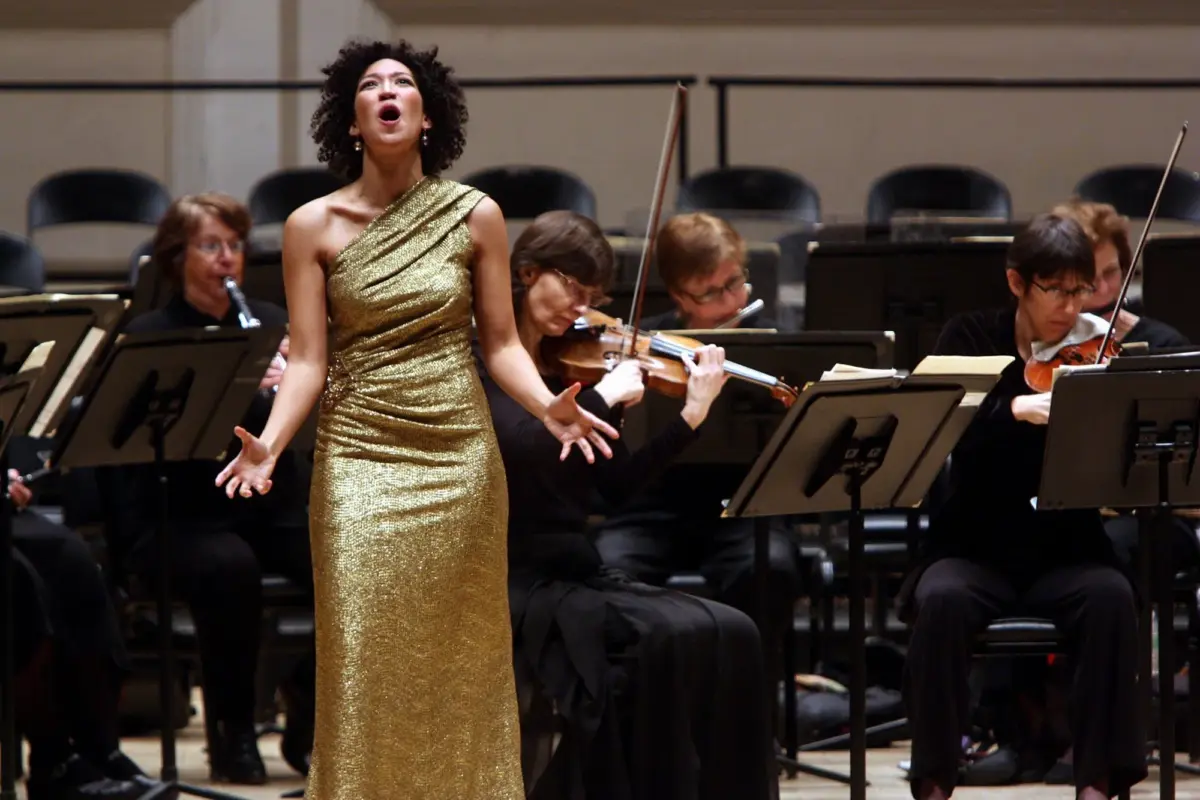
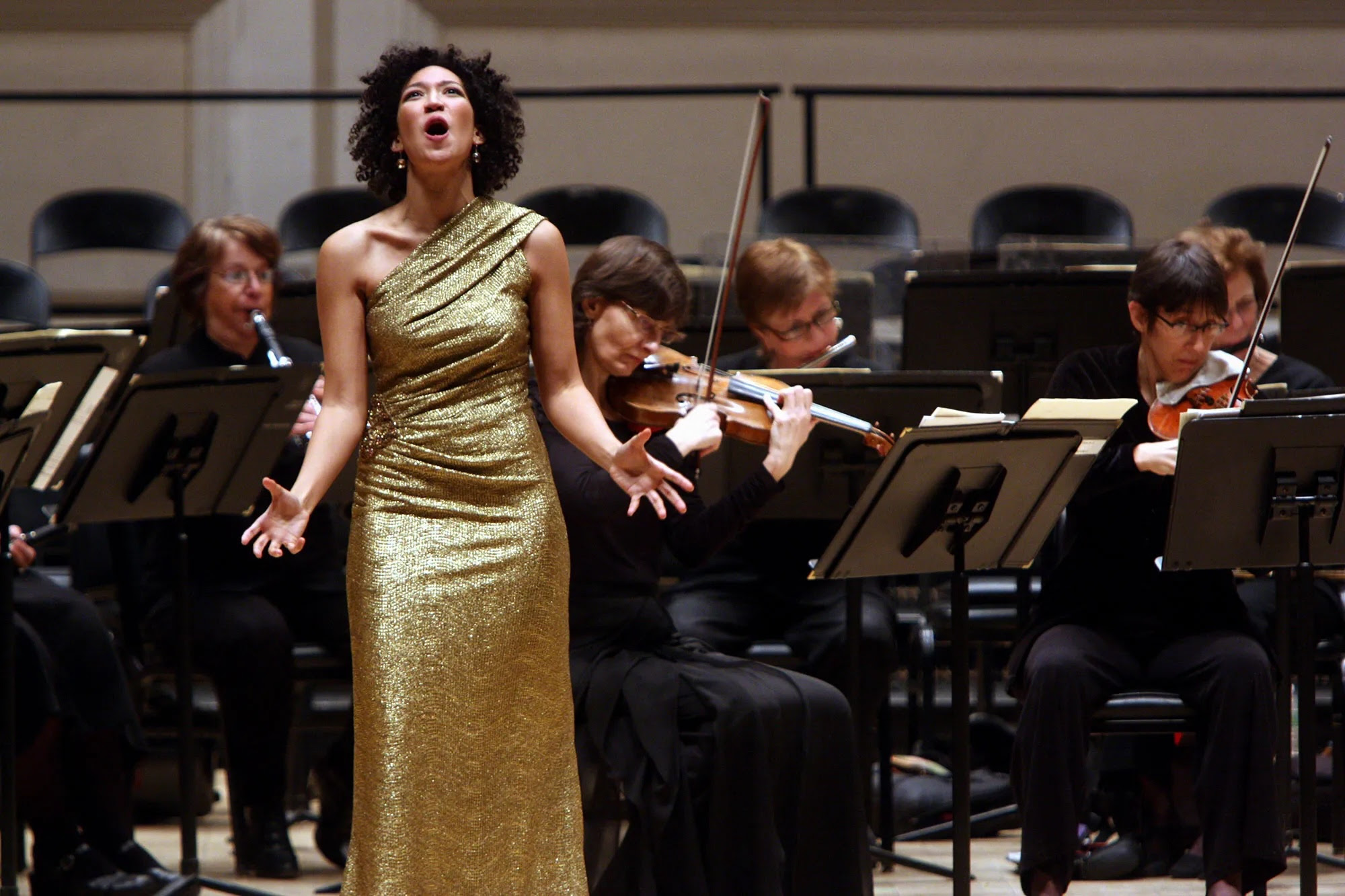
The crown jewel of the evening is the highly anticipated BMOP debut of internationally acclaimed soprano Julia Bullock. Renowned for her luminous tone, profound intellectual engagement with text, and magnetic stage presence, Bullock will lend her voice to two distinct artistic expressions of memory and poetry: Samuel Barber’s iconic, nostalgic masterwork Knoxville: Summer of 1915, and two deeply evocative movements from Matt Aucoin’s haunting contemporary cycle, The No One’s Rose.
Beyond these vocal centerpieces, the program underscores BMOP’s steadfast commitment to expanding the boundaries of contemporary orchestral literature. The evening will feature the world premiere of Anthony De Ritis’s “Jiggedy, Jingle, Jaunty, Jaunty,” an intricate cross-temporal dialogue celebrating the artistic spirits of literary giant James Joyce and avant-garde iconoclast Luciano Berio. The concert will reach its grand crescendo with Charles Wuorinen’s Delight of the Muses, a brilliant, prismatic tribute to Wolfgang Amadeus Mozart constructed from thematic materials drawn directly from Don Giovanni.
Commencing at 7:30 p.m. local time, this opening showcase is more than merely a seasonal curtain-raiser; it is a meticulously curated auditory journey that positions BMOP at the bleeding edge of modern orchestral programming. As the organization continues to cement its reputation as America’s premier ensemble dedicated exclusively to symphonic twentieth- and twenty-first-century music, this upcoming program promises to be a defining milestone in Boston’s rich cultural calendar.
Detailed Chronology & Program Breakdown
To fully appreciate the weight of the November 6, 2026 season opener, one must examine the intricate architecture of the program assembled by Gil Rose. Every work on the bill has been selected not only for its individual brilliance but for how it converses with the surrounding pieces, creating an overarching narrative of time, memory, influence, and reinvention.
Act I: Nostalgia and Modernist Reflection
The evening opens with a deliberate juxtaposition of American lyrical nostalgia and contemporary angst.
1. Samuel Barber – Knoxville: Summer of 1915
Written in 1947 and set to James Agee’s exquisite prose prologue from his posthumously Pulitzer Prize-winning novel A Death in the Family, Barber’s work stands as a cornerstone of American vocal-orchestral literature. The piece captures an idyllic, suspended moment of childhood innocence in pre-World War I Tennessee, observed through the dual lens of a child lying on a blanket in the grass and an adult looking back across an irrevocable chasm of time.
For Julia Bullock, whose interpretations are invariably marked by an uncanny ability to burrow into the psychological core of a text, this piece represents a natural yet fresh vehicle. Her voice—capable of both gossamer delicacy and devastating emotional weight—is uniquely suited to navigate the undulating, lush string textures that Rose and the BMOP musicians will summon in Jordan Hall. The performance marks a major milestone for Boston audiences, who will witness Bullock tackle one of the most demanding and beloved canvases in the soprano repertoire in her debut with the ensemble.
2. Matt Aucoin – The No One’s Rose (Selected Movements)
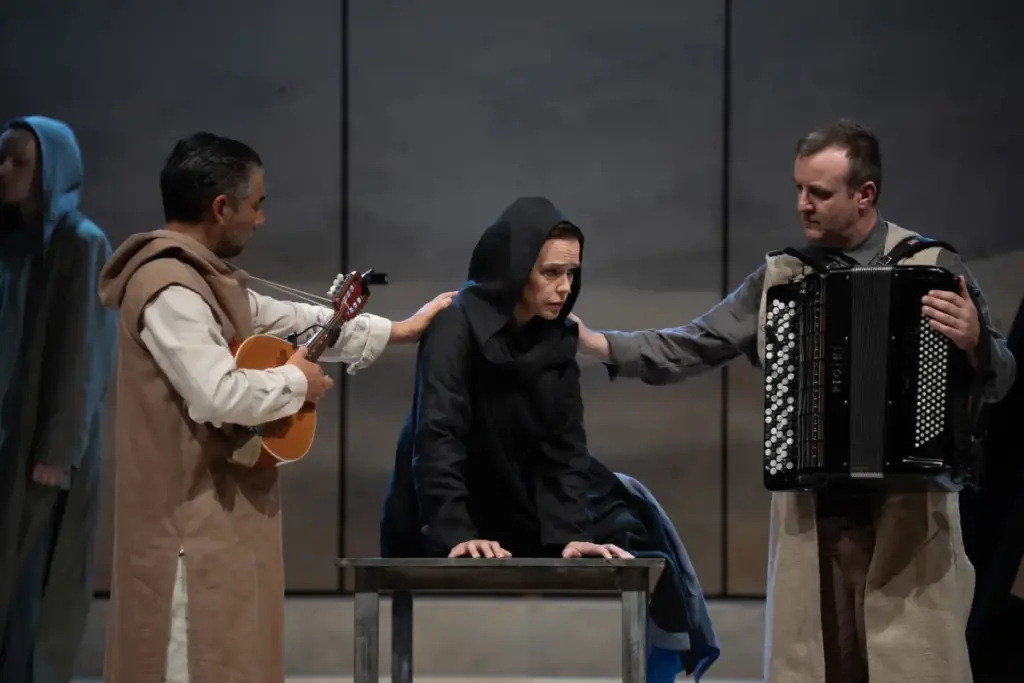
Immediately following Barber’s vision of 1915, the program leaps forward into the hyper-literary, complex soundscape of contemporary composer Matt Aucoin. The No One’s Rose, a theatrical and concert work deeply indebted to the poetry of Paul Celan and Friedrich Hölderlin, wrestles with the trauma of twentieth-century history, the fragility of human communication, and the persistence of art in the wake of catastrophe.
By programming two movements from this cycle, Rose and Bullock are deliberately contrasting Barber’s luminous, tonal yearning with Aucoin’s jagged, questioning, and razor-sharp modernism. Bullock’s advocacy for new music is well-documented; her ability to make avant-garde vocal lines sound entirely natural and organic will be on full display as she navigates Aucoin’s demanding writing, bringing profound humanity to the composer’s philosophical inquiries.
Act II: Across Time and Tradition
The second half of the program shifts from vocal-centric introspection to orchestral innovation, pyrotechnics, and historical dialogue.
3. Anthony De Ritis – “Jiggedy, Jingle, Jaunty, Jaunty” (World Premiere)
The undisputed focal point of the evening’s contemporary offerings is the world premiere of Anthony De Ritis’s “Jiggedy, Jingle, Jaunty, Jaunty.” De Ritis, a composer celebrated for his fearless integration of acoustic orchestration with electronic media and his mastery of stylistic synthesis, has crafted a work that serves as a bridge across decades.
The piece pays explicit homage to two towering figures of modernist experimentation: Irish novelist James Joyce and Italian composer Luciano Berio. Joyce’s radical linguistic play, rhythmic prose, and fractured narratives find a direct sonic analog in Berio’s pioneering work with collage, quotation, and stylistic metamorphosis (most notably in works like Sinfonia). De Ritis takes these twin inspirations and spins them into a vibrant, multi-layered dialogue that stretches across time, challenging the BMOP ensemble to execute intricate rhythmic shifts, witty motivic transmutations, and dazzling orchestral colors. As a world premiere, this performance will be heavily scrutinized by critics and scholars eager to hear how modern American composition continues to converse with the avant-garde canon.
4. Charles Wuorinen – Delight of the Muses
The evening reaches its monumental conclusion with Charles Wuorinen’s Delight of the Muses (1991). Wuorinen, a towering figure of American serialism and a fiercely uncompromising intellect, composed this work as a direct homage to Wolfgang Amadeus Mozart. Rather than relying on simple pastiche or polite neo-classicism, Wuorinen subjects musical material drawn from Don Giovanni to his own rigorous, highly complex structural framework.
The result is a thrillingly tense alchemical reaction: the elegance and demonic energy of Mozart’s opera are refracted through late-twentieth-century modernism, resulting in a sound world that is simultaneously ancient and entirely futuristic. For Gil Rose and the Boston Modern Orchestra Project—an ensemble with decades of experience unravelling the most intricate scores written—Delight of the Muses serves as a magnificent showcase for virtuosic orchestral execution, precision, and raw sonic power.
Supporting Context & Metrics: The BMOP Legacy and Jordan Hall
To understand the magnitude of the November 6, 2026 concert, one must contextualize it within the broader ecosystem of the Boston Modern Orchestra Project and its home venue.
The Boston Modern Orchestra Project (BMOP)
Founded in 1996 by Gil Rose, BMOP has spent nearly three decades operating as a singular force in the international classical music landscape. While major symphony orchestras across the globe increasingly relegate contemporary music to brief token slots at the beginning of programs, BMOP was built from the ground up to place contemporary orchestral music front and center.
- Discography & Recordings: BMOP has released over 120 commercial recordings on its in-house label, BMOP/sound, earning numerous Grammy nominations and a Grammy Award victory. It stands as the single most prolific label dedicated entirely to symphonic new music in the world.
- Commissions & Premieres: The organization has championed hundreds of world premieres, giving voice to generations of American and international composers whose works might otherwise have gone unheard on major stages.
- Educational & Community Outreach: Beyond its subscription series, BMOP maintains a rigorous commitment to cultivating the next generation of listeners and practitioners through youth initiatives, open rehearsals, and deep academic partnerships within the Boston metropolitan area.
Gil Rose: The Maestro of Modernism
At the heart of BMOP’s enduring success is Gil Rose. Widely recognized as a champion of American composers, Rose has built a career defined by fearless curiosity, uncompromising artistic standards, and an encyclopedic knowledge of twentieth- and twenty-first-century scores. His baton has guided over a thousand premieres, and his tireless advocacy has reshaped the cultural footprint of Boston’s classical music scene. Under his leadership, concerts are never merely passive listening experiences; they are intellectual voyages designed to challenge, provoke, and elevate the listener.
NEC’s Jordan Hall: The Acoustic Cathedral
The choice of venue is equally crucial to the event’s prestige. Opened in 1903 and designated a National Historic Landmark, New England Conservatory’s Jordan Hall is universally revered by musicians, acoustic engineers, and audiences alike as one of the finest chamber and orchestral halls in the world.
Renowned for its warm, transparent acoustics, Jordan Hall allows every subtle nuance of a score—from the whisper of a solo string line to the soaring apex of a soprano’s register—to reach the listener with absolute clarity. For a program that spans the delicate pastoral intimacy of Barber to the thunderous modernism of Wuorinen, Jordan Hall provides the ultimate acoustic canvas.
Official Statements & Industry Perspectives
While formal press releases from cultural institutions often lean heavily on hyperbolic marketing, the partnership between Gil Rose, BMOP, and soprano Julia Bullock represents a genuinely rare convergence of artistic titans.
Industry analysts and classical music critics have already begun weighing in on the significance of the upcoming 2026 season opener:
- On Julia Bullock’s BMOP Debut: Prominent vocal arts critics have long noted Bullock’s unique capacity to transcend genre boundaries. Having conquered operatic stages from San Francisco to Paris, and having curated critically acclaimed recital programs that explore the intersections of American identity, race, and gender, her entry into the BMOP fold is seen as a watershed moment. Her interpretation of Knoxville: Summer of 1915 is anticipated to offer a fresh psychological depth, moving beyond standard romanticized nostalgia to unearth the underlying melancholy of Agee’s text.
- On Anthony De Ritis’s World Premiere: Contemporary music circles are buzzing regarding the inclusion of “Jiggedy, Jingle, Jaunty, Jaunty.” De Ritis, who serves as Professor of Music at Northeastern University, has long explored the intersection of algorithmic composition, acoustic instruments, and cultural history. Theorists point out that tying James Joyce’s stream-of-consciousness techniques directly to Luciano Berio’s landmark modernist collage methods requires a composer of immense technical command. The world premiere will serve as a vital litmus test for how contemporary American music continues to mine the avant-garde historical archive for new expressive pathways.
- On Gil Rose’s Programming Strategy: Observers of BMOP’s multi-decade trajectory frequently praise Rose’s ability to construct cohesive thematic threads across disparate aesthetic traditions. By pairing Barber and Aucoin in the first half—both dealing with memory, loss, and American identity—and balancing De Ritis and Wuorinen in the second—both engaging in historical dialogue with past masters—Rose has crafted a masterclass in concert dramaturgy.
Future Outlook: Setting the Tone for the 2026–2027 Season
As the Boston Modern Orchestra Project looks toward November 6, 2026, the season opener at Jordan Hall is poised to set an exceptionally high bar for the remainder of the classical calendar. In an era where performing arts organizations face continuous financial pressures, audience retention hurdles, and debates over relevance, BMOP continues to thrive precisely because it refuses to compromise its artistic mission.
By bringing together a world-class soprano of Julia Bullock’s caliber, celebrating the continued vitality of veteran American modernists like Charles Wuorinen, showcasing the cutting-edge voice of Matt Aucoin, and unveiling a brand-new orchestral statement by Anthony De Ritis, Gil Rose and BMOP are making a bold statement about the health and future of orchestral music.
Tickets for the November 6, 2026 showcase—kicking off at 7:30 p.m. local time at NEC’s Jordan Hall—are expected to face unprecedented demand from both local patrons and destination concertgoers. For those tracking the evolution of twenty-first-century classical music, Boston will undoubtedly be the epicenter of the orchestral world on that autumn evening, as past and future converse under the precise direction of Gil Rose.