
Executive Overview
In the fast-paced ecosystem of digital journalism, few platforms manage to sustain a quarter-century of independent voice without corporate backing, institutional grants, or intrusive paywalls. Yet, for more than thirty years, Classical Source has stood as a beacon of uncompromising music criticism, championing the breadth and depth of classical music and dance. At the heart of this enduring enterprise is its co-founder, Managing Director, and technical backbone, Chris Caspell.
As Caspell marks his landmark 60th birthday—celebrated affectionately by colleagues as being "60 not out" at the wicket—the classical music community pauses to reflect not only on a life dedicated to the arts, but on a digital publishing triumph. Long before the era of algorithmic feeds and content farming, Caspell foresaw the liberating potential of the internet. Alongside co-founders who launched the site at the height of the dot-com boom in 1999, he carved out a digital sanctuary where long-form criticism thrived, reviews were unconstrained by arbitrary word counts, and both emerging artists at the Wigmore Hall and titan performers at the Royal Festival Hall received equal, serious consideration.
Though the site faced existential questions last year—briefly confronting the prospect of a quiet fade-out—an outpouring of support from reviewers, readers, and industry insiders sparked a revitalized mission to preserve and relaunch its rich archive. Today, as Caspell steps into his sixtieth year, this profile explores his multifaceted life as a musician, entrepreneur, and digital pioneer, while charting the monumental trajectory of Classical Source against the shifting sands of modern arts journalism.
Detailed Chronology: From Dot-Com Dawn to Digital Resilience
The Genesis of a Digital Sanctuary (1990s–1999)
The late 1990s represented a period of profound technological and cultural anxiety for traditional print media. Print magazines were experiencing a steady downward trajectory, while nascent electronic zines began testing the digital waters. It was within this turbulent landscape—specifically in 1999, a watershed year defined by the dot-com boom, the emergence of Napster, and the ubiquitous rise of the BlackBerry—that Chris Caspell and his co-founders conceived Classical Source.
Operating entirely independently and without the safety net of major arts funding, institutional backing, or subscription paywalls, the site spearheaded a pioneering wave of UK digital music journalism. While platforms like Len Mullinger’s MusicWeb International (1995) and Basil Ramsey and Keith Bramich’s Music & Vision (1999) were similarly blazing trails, Classical Source established a distinct editorial identity that prioritized comprehensive coverage over clickbait metrics. Later digital initiatives, such as Bachtrack (2008) and The Arts Desk (2009), would eventually follow the pioneering path that Caspell and his colleagues had mapped out a decade prior.
The Golden Age of Unabridged Criticism (2000s–2010s)
In its heyday, Classical Source served as a vital corrective to the shrinking cultural space within mainstream broadsheets. As newspapers slashed their arts budgets, reduced column inches, and subjected reviews to aggressive sub-editing, Caspell offered writers something revolutionary: absolute editorial freedom.
Under this model, length was never an issue, and there were no bureaucratic restrictions on the number of concerts or compact discs a critic could review. This editorial philosophy effectively resurrected the golden age of post-war daily journalism, when critics possessed the space to unpack complex musical arguments and offer nuanced contextual analysis.
The classical music industry quickly took notice. Promoters, artist management agencies, major London orchestras, and the BBC Proms lent their enthusiastic support to the platform. By March 2017, the site’s influence was clearly reflected in its metrics, recording 59,492 page views—with an impressive 46.3% returning visitor rate—and sustaining an active community boasting up to three reviews published daily and an audience of 18,000 followers on Twitter (now X).
Navigating Adversity and the Near-Eclipse (2020–2024)
The journey, however, was not without its trials. The unprecedented disruptions of the COVID-19 pandemic placed immense operational pressure on independent digital publishers. Furthermore, the classical music community suffered a profound emotional and intellectual blow in 2023 with the passing of Kevin Rogers, a chemistry teacher at the City of London School for Boys who had joined Classical Source as its media-savvy Deputy Editor in 2007, leaving an indelible mark on the publication.
Compounding these structural and personal losses, a shifting digital economy led to a gradual contraction in readership. In February of last year, an announcement came completely out of the blue: the site indicated it might be forced to disband. Caspell candidly noted at the time that readership had inevitably declined, writing that a quiet fade-out was "not a fitting end to something that achieved so much, with so little, for so long."
The Relaunch and Preservation Era (2024–Present)
True to the resilient spirit that had kept the site afloat for decades, the announcement triggered an immediate, impassioned response from the international network of critics, musicians, and devoted readers who had grown up alongside the platform. By April, collaborative plans to safeguard the extensive historical archive and engineer a strategic relaunch galvanized the community, infusing the project with renewed energy and purpose.
Supporting Context & Metrics: The Architecture of an Independent Voice
To fully appreciate the longevity of Classical Source, one must examine the unique infrastructure that Chris Caspell built and maintained. While many digital startups prioritised rapid commercial monetization, Caspell approached the platform as a labor of love, applying his technical acumen (serving as the site’s de facto "techie" and Managing Director) to ensure its operational stability.
The Anatomy of Independent Longevity
- Zero Paywall Philosophy: Eschewing subscription models ensured that musical criticism remained democratically accessible to students, researchers, and global enthusiasts alike.
- Archival Value: Over 25 years, the platform accumulated an irreplaceable digital archive documenting London’s concert life—capturing debut performances at Wigmore Hall, landmark cycles at the Southbank Centre, and the day-to-day ecosystem of the classical music world in granular detail.
- Editorial Autonomy: By granting lay and professional writers alike the freedom to explore diverse opinions, the site cultivated a distinct literary voice that stood in sharp contrast to corporate press releases and promotional copy.
Official Statements: Tributes from Reviewers and Colleagues
As Chris Caspell reaches his milestone sixtieth birthday, leading figures from the Classical Source family have shared personal reflections honoring his enduring commitment, character, and vision:
"Congratulations to Chris on his 60th birthday. His personal and financial support of Classical Source has ensured that it has made a substantial contribution to the world of classical music and dance. I look forward to working with him over the coming years as the site develops and further improves the service it offers to the world’s classical music community."
— Rob Pennock"Chris, I send my warmest wishes to you on your sixtieth birthday. Your tireless efforts to maintain and sustain The Classical Source over the years are deeply appreciated, as is the guidance you have provided to me on numerous occasions. Happy Birthday!"
— David Rice"Wishing you a fabulous significant birthday. We may be living through an age of uncertainty in so many ways but now is not the time to underestimate the achievements, nor the joy and support you have given to others over the years. Take care and all the very best."
— David Gutman"Happy Birthday! Wishing you a truly wonderful day and every happiness in the year ahead. Your passion and commitment to sharing classical music with so many people is inspiring, and I hope this year brings you continued success, good health, and many reasons to celebrate. Have a fantastic birthday!"
— Lisa Stone-Ford"Very best wishes on your milestone, and for taking Classical Source through to its next phase."
— Curtis Rogers"Happy 60th Chris! I can well remember meeting you with Colin at the launch, and look back in amazement at the coverage Classical Source has amassed. What an archive of particularly London concert life. Thank you for your enthusiasm and your commitment. Long may it continue!"
— Nick Breckenfield"Once you marry music, she is your forever lasting love — Piazzolla. Critics lead many lives. Chris isn’t a music professional, but a committed influencer in Britain’s musical arena post-9/11… Pragmatic and focussed, may he remain a guiding star. Happy Sixtieth Chris."
— Ates Orga
Adding his own sporting metaphor to the celebrations, long-time collaborator Colin Anderson remarked:
"Thank-you Chris for remaining at the wicket, despite some googlies along the way, and a very happy birthday to you."
Future Outlook: A Renaissance for Classical Source
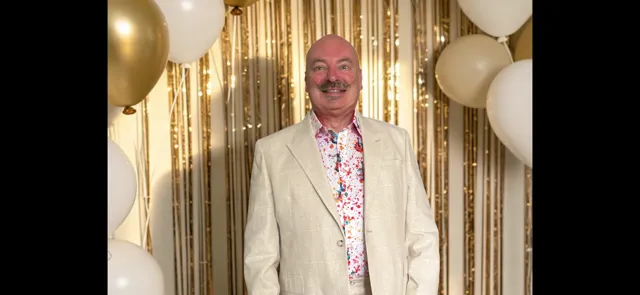
Away from the demanding technicalities of web management and publishing, Chris Caspell’s life remains deeply intertwined with music and movement. An accomplished viola player, conductor, and entrepreneur, he is also an active choral singer who performs regularly in church choirs. True to form—and displaying a flair that matches his unmissable moustache, which famously twirls a Tango with absolute distinction—Caspell approaches life with a dancer’s grace, channeling the spirit of Fred Astaire.
As Classical Source navigates its post-relaunch era, the challenges facing independent arts journalism remain acute. In an age dominated by short-form social media content, AI-generated summaries, and diminishing institutional support for the arts, platforms like Classical Source are more vital than ever.
The collective rallying of its contributors and readership proves that authentic, passionate, human-led criticism cannot easily be replaced. With Chris Caspell firmly at the helm—continuing to bat for the site’s cause with characteristic resilience—the platform enters its next chapter poised to inspire a new generation of music lovers, ensuring that the rich tapestry of classical performance continues to be documented with intelligence, depth, and unwavering integrity.