
Executive Overview
In an era defined by rapid technological advancements and the globalization of medical education, specialized surgical fields must continuously adapt to disseminate knowledge efficiently. Laryngology and phonosurgery—disciplines dedicated to the preservation, restoration, and enhancement of the human voice—represent a complex intersection of microsurgical precision, acoustic science, and patient-centered rehabilitation. To address the evolving educational needs of otolaryngologists, speech-language pathologists (SLPs), and voice scientists worldwide, the medical community convened for a landmark event: the 17th Phonosurgery Course and International Workshop, held on October 28th and 29th, 2023.
Designed around an innovative hybrid format, this educational symposium broke conventional molds by merging virtual global participation with intensive, hands-on clinical training. Organized under the visionary leadership of Prof. V. Phaniendrakumar, Emeritus Professor of ENT, Organizing Chairman, and Course Director, the event served as a melting pot of international expertise. The workshop was proudly hosted in association with prestigious organizations, including the Association of Phonosurgeons of India (APSI), the India Chapter of The Voice Foundation (USA), AOI Telangana, the Hyderabad Telangana SLP Association, the Sri Sathya Sai Institute of ENT, and the Melody Voice Clinic of Guntur, Andhra Pradesh.
This report provides an in-depth examination of the 17th Phonosurgery Course, detailing its pioneering hybrid structure, the clinical significance of the procedures demonstrated, the collaborative institutional framework that made it possible, and its long-term implications for the future of global otolaryngology training.
Detailed Chronology and Event Architecture
The 2023 symposium was meticulously structured over two distinct, action-packed days, each tailored to maximize the educational yield for delegates while minimizing logistical and financial burdens.
Day 1: Virtual Academic Immersion and Live Surgical Demonstrations (October 28, 2023)
The first day of the symposium utilized a virtual delivery model via Zoom, allowing hundreds of delegates from across India and around the globe to participate without the immediate need for extensive travel. This digital-first approach democratized access to world-class medical education, bringing international pioneers directly to the screens of practicing surgeons and residents.
- Global Faculty Presentations: The morning session featured a series of high-level lectures delivered by an eminent roster of national and international faculty members. Topics ranged from the nuanced diagnosis of vocal fold pathologies to advanced aerodynamic assessments and the psychological impacts of dysphonia.
- Live Surgical Demonstrations: A cornerstone of Day 1 was the real-time broadcast of complex surgical procedures. Delegates were given an unvarnished, high-definition look into the operating theater, observing:
- Office-Based Laryngeal Surgeries: Demonstrating minimally invasive interventions performed under local anesthesia, highlighting patient comfort, cost-effectiveness, and rapid recovery times.
- Phonomicrosurgeries: Showcasing the delicate use of micro-instrumentation and lasers under microscopic visualization to excise benign vocal fold lesions while strictly preserving the mucosal wave—the biomechanical foundation of human phonation.
Day 2: Intensive Hands-On Training and Clinical Masterclasses (October 29, 2023)
Transitioning from theoretical observation to tactile mastery, Day 2 brought delegates to the state-of-the-art facilities at Century Hospital, Road No. 12, Banjara Hills, Hyderabad. Recognizing that surgical proficiency cannot be achieved through observation alone, the organizing committee curated a rigorous, practical training module.
- Wet Lab Simulations (Goat Larynx Model): Delegates engaged in supervised, step-by-step dissection and procedural practice using specialized animal tissue models that closely replicate human laryngeal anatomy.
- Thyroplasty with Arytenoid Adduction: Participants mastered medialization laryngoplasty, a sophisticated procedure designed to close glottic gaps in patients suffering from vocal fold paralysis. The inclusion of the arytenoid adduction technique taught attendees how to correct posterior glottic gaps that simple medialization alone cannot resolve, thereby achieving superior voice closure and projection.
- Injection Laryngoplasty: A comprehensive session on the transoral and percutaneous delivery of various augmentation materials (such as hyaluronic acid, calcium hydroxylapatite, and autologous fat) to temporarily or permanently bulk paralyzed or atrophic vocal folds.
- Office-Based Laryngeal Procedures: Hands-on tutorials regarding the setup, patient selection, and execution of in-office procedures, equipping practitioners with the skills to perform minor interventions outside the traditional operating room environment.
Supporting Context and Metrics: The Evolution of Phonosurgery in India
To fully appreciate the significance of the 17th Phonosurgery Course, one must examine the broader historical and infrastructural context of voice care in South Asia.

The Paradigm Shift to Hybrid Learning
Traditionally, surgical workshops required attendees to travel to a centralized hub, incur significant travel and lodging expenses, and compete for limited lines of sight in crowded operating theaters. By pioneering a dual-format structure—combining a virtual Day 1 for high-yield lectures and live-streamed surgeries with a localized, high-impact Day 2 wet lab—Prof. V. Phaniendrakumar and his team established a new benchmark for medical conferences.
- Cost and Time Efficiency: Early feedback from delegates indicated that the hybrid model reduced participation costs by an estimated 40% compared to traditional multi-day physical conferences.
- Scalability: While physical hands-on slots were capped to ensure a low student-to-instructor ratio, the virtual platform allowed an unrestricted number of residents and international observers to access cutting-edge academic content.
The Interdisciplinary Collaboration
Voice disorders do not exist in a vacuum; their successful management requires a tightly coordinated multidisciplinary team. A critical strength of the 2023 workshop was its intentional inclusion of diverse professional bodies:
- Otolaryngologists (ENT Surgeons): Responsible for the surgical diagnosis and execution of laryngeal reconstructions.
- Speech-Language Pathologists (SLPs): Vital partners in pre-operative evaluation and post-operative acoustic and behavioral voice therapy.
- International Academic Bodies: The involvement of the India Chapter of The Voice Foundation (USA) bridged Western academic standards with South Asian clinical practice, fostering cross-border research and standardization of care.
Official Statements and Leadership Vision
The enduring impact of the symposium is deeply rooted in the philosophy and dedication of its founders and participating leaders.
Reflecting on the milestone 17th iteration of the course, Prof. V. Phaniendrakumar emphasized the core mission of the event:
"With all our sincere efforts and your co-operation, we hope we can make this Course a memorable scientific event. Looking forward to your gracious participation."
As the Emeritus Professor of ENT, Founder President of the Association of Phonosurgeons of India (APSI), and President of the India Chapter of The Voice Foundation, Prof. Phaniendrakumar has spent decades elevating the standards of laryngeal surgery across the subcontinent. His leadership at the helm of the Sri Sathya Sai ENT & Melody Voice Clinic (with facilities in Guntur, Andhra Pradesh, and Hyderabad, Telangana) has transformed these centers into beacons of clinical excellence and specialized training.
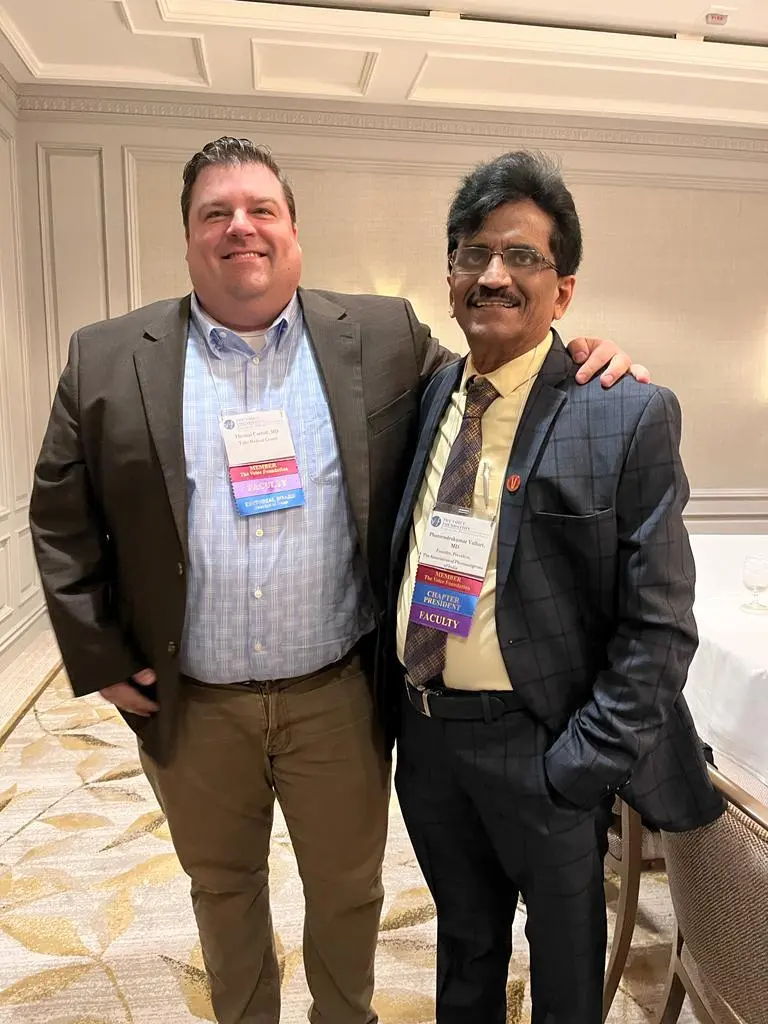
The collaborative spirit was further underscored by prominent interactions during the broader international circuit. Notably, Prof. Phaniendrakumar’s ongoing academic exchanges—such as his collaborations with global figures like Dr. Thomas Carroll, featured prominently at the 52nd Annual Symposium of The Voice Foundation—have ensured that Indian phonosurgeons remain at the absolute cutting edge of global developments, bringing back advanced methodologies to local clinical settings.

Future Outlook: The Next Generation of Voice Care
As the medical community looks beyond the successes of the 2023 workshop, several key trends and future directions in phonosurgery are emerging, many of which were seeded during discussions at the Hyderabad event:
1. The Rise of In-Office Laryngology
The shift toward office-based procedures is accelerating. Driven by advancements in high-definition flexible chip-on-tip endoscopes, superior topical anesthetics, and refined micro-instruments, surgeons can now perform vocal fold biopsies, botulinum toxin injections for spasmodic dysphonia, and minor laser ablations in an outpatient setting. This reduces healthcare costs, eliminates the risks associated with general anesthesia, and provides immediate acoustic feedback from the patient during the procedure.
2. Technological Integration and Artificial Intelligence
The future of voice assessment is increasingly quantitative. Emerging diagnostic tools leverage artificial intelligence to analyze acoustic parameters, laryngeal stroboscopy, and high-speed digital imaging (HSDI). Future iterations of courses like the Phonosurgery Workshop will inevitably incorporate modules on AI-assisted diagnostics, helping clinicians detect early mucosal changes and malignant transformations long before they become apparent to the naked eye.
3. Regenerative Medicine and Biomaterials
While surgical medialization and augmentation have reached high levels of sophistication, the ultimate frontier in voice restoration lies in regenerative medicine. Researchers are actively exploring stem cell therapies, bio-engineered vocal fold lamina propria scaffolds, and growth factor injections to regenerate scarred or stiffened vocal fold tissue, potentially restoring a completely normal, native mucosal wave to patients with severe vocal trauma or post-radiation fibrosis.
Conclusion
The 17th Phonosurgery Course and International Workshop stands as a testament to the resilience, innovation, and collaborative spirit of the global otolaryngology community. By successfully marrying virtual accessibility with rigorous, hands-on clinical instruction, the event has set a gold standard for medical education in the 21st century. Under the stewardship of pioneers like Prof. V. Phaniendrakumar and supportive institutional networks, the future of voice care shines brighter than ever, promising restored voices and renewed livelihoods for patients around the world.