

Executive Overview
At its landmark product showcase, tech giant Apple unveiled a comprehensive suite of hardware and software innovations designed to reshape the personal technology landscape. While headlines naturally gravitated toward the hardware announcements—most notably the debut of Apple’s long-rumored folding iPhone alongside updated flagship devices, AirPods, and Apple Watches—a quieter, far more profound software shift stole the show for the audio and music sectors: Audio Intelligence.
Positioned as a cornerstone of the next-generation watchOS ecosystem, Audio Intelligence leverages advanced on-device machine learning and ambient computing to monitor a user’s acoustic surroundings continuously. According to Apple, the feature is engineered to “help you detect sounds, identify music, and stay present and engaged—all while protecting your privacy at every step.”
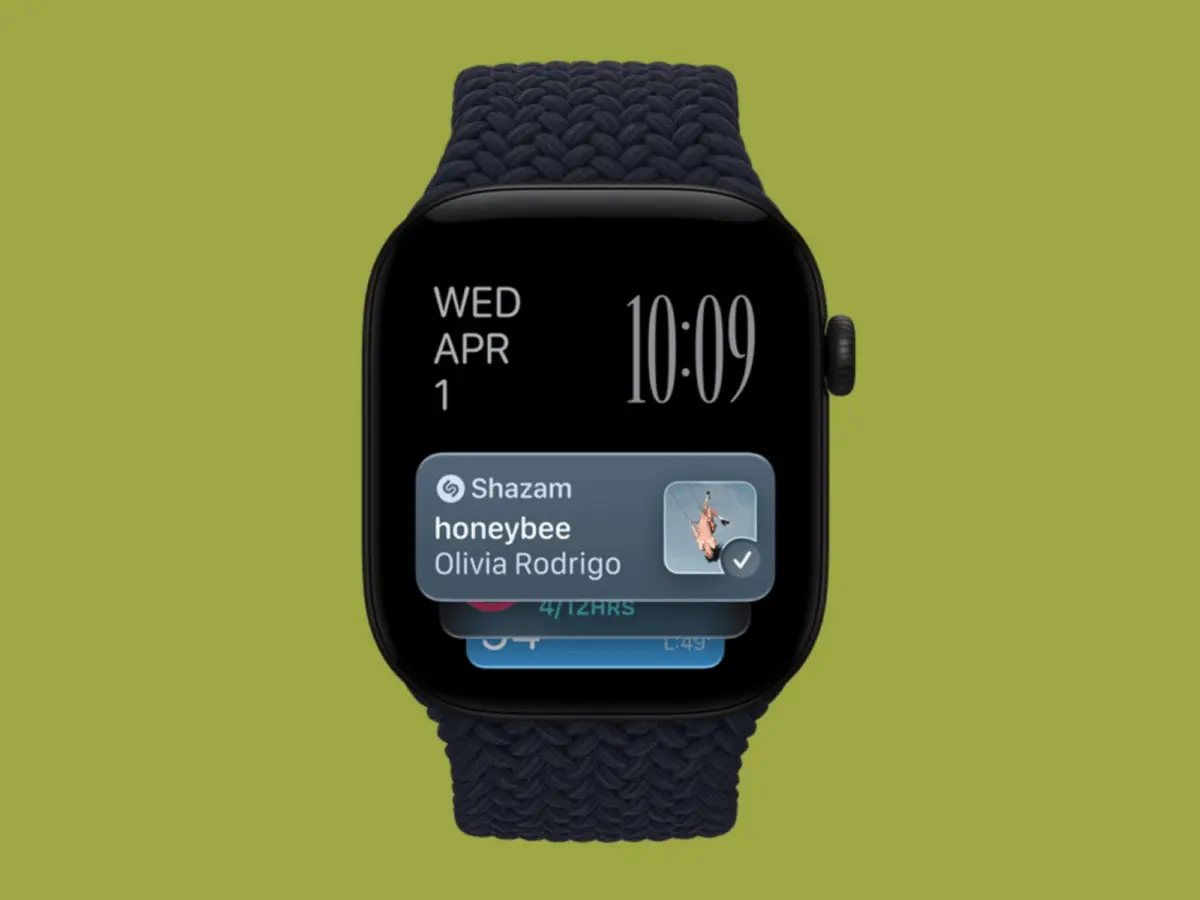
By turning the Apple Watch into an active listener equipped with ambient awareness, Apple is bridging the gap between passive wearable health trackers and active contextual assistants. The platform performs multiple functions simultaneously: it flags critical environmental cues like smoke detectors and doorbells for the hearing-impaired, transcribes and summarizes daily conversations, provides a “Live Rewind” buffer of the last 15 seconds of spoken audio, and—crucially for the music industry—integrates automated, passive Shazam music recognition directly into the user’s Smart Stack.
Yet, this leap into omnipresent acoustic monitoring does not arrive without friction. The prospect of millions of consumers walking around with wrist-worn hardware actively listening to their daily lives instantly reignites contentious debates surrounding pervasive surveillance, bystander consent, and data governance. Recognizing the gravity of these concerns, Apple took the unusual step of publishing a detailed, dedicated Audio Intelligence Privacy Overview whitepaper concurrently with the event.
This deep dive will examine the mechanics of Apple’s new Audio Intelligence suite, trace the historical trajectory of ambient music recognition, analyze the broader implications for the music and tech industries, and evaluate the delicate balance between contextual utility and user privacy.
Detailed Chronology: From Novelty App to Ambient Wearable Intelligence
To understand the weight of Apple’s recent announcement, it is necessary to contextualize how music recognition and ambient listening have evolved over the past two decades. The journey from manual music tagging to automated wrist-based discovery represents a maturation of artificial intelligence, battery efficiency, and hardware miniaturization.
The Era of Manual Discovery (2002–2010s)
Long before it was acquired by Apple in 2018 for a reported $400 million, Shazam was launched in 2002 as a pioneering text-message service in the UK. Users would dial “2580,” hold their feature phones up to a speaker for 30 seconds, and subsequently receive an SMS containing the track name and artist.
The transition to smartphones in the late 2000s revolutionized this workflow, replacing SMS with rich user interfaces, graphical album art, and direct links to digital music stores. However, the core interaction model remained fundamentally deliberate: the user had to actively pull out their phone, unlock the device, locate the app icon, and tap a button to capture a musical snippet.
The Advent of Passive Recognition
As mobile processors grew more powerful and power-efficient, developers began experimenting with passive, background listening capabilities. In December 2013, Shazam introduced an “Auto Shazam” feature for its iOS application, allowing the software to run continuously in the background and log tracks playing in a venue, at a party, or in a coffee shop.
While innovative, Auto Shazam was largely treated as an opt-in utility for specific use cases—such as tracking a night out or compiling a playlist from an ambient DJ set—rather than an always-on, core operating system feature. Running it continuously on early smartphone batteries came with a noticeable thermal and energy cost.
Simultaneously, competitors entered the ambient audio space. Google introduced “Now Playing” for its Pixel smartphone lineup in 2017. Unlike Shazam’s cloud-dependent queries, Google’s solution utilized an on-device database of tens of thousands of popular songs, allowing phones to passively recognize music playing in the background without sending raw audio snippets to external servers.
The Apple Watch Integration (2026)
Apple’s integration of music recognition into the watchOS Smart Stack via Audio Intelligence represents the convergence of these distinct historical threads. By moving automated Shazam tagging to the wrist, Apple has eliminated even the minor friction of pulling out a smartphone.
When a user hears an appealing track in a retail store, a cafe, or a passing car, the Apple Watch’s background processing catches the acoustic signature, verifies it, and surfaces the track name, artist, and contextual metadata directly on the watch face without requiring a single tap.
Supporting Context & Metrics: How Audio Intelligence Operates
To appreciate how Audio Intelligence functions without crippling the Apple Watch’s notoriously constrained battery life or violating fundamental data security principles, one must examine the underlying architecture of the system.
The Acoustic Sensor Suite
The Apple Watch microphone array—traditionally utilized for Siri voice commands, phone calls, and ambient noise level monitoring—now operates under a dual mandate. It functions as a real-time acoustic sentinel.
The software categorizes ambient soundscapes into distinct semantic layers:
- Safety and Accessibility Alerts: The system listens for high-priority frequencies and acoustic signatures, such as smoke alarms, carbon monoxide detectors, crying infants, glass shattering, or doorbells. This functions as a vital accessibility feature for users with partial or complete hearing loss, offering haptic taps paired with visual warnings on the wrist.
- Conversational Intelligence: The watch records snippets of spoken dialogue to generate daily conversation notes and summaries, enabling users to recall points discussed during meetings or casual chats.
- Live Rewind Buffer: A rolling 15-second acoustic buffer allows users to instantly playback and transcribe a short window of recently uttered speech—a feature akin to a digital "rewind button" for real-world interactions.
- Passive Music Recognition (Shazam): Operating quietly in the background, the Shazam module continuously scans acoustic environments for musical content, cross-referencing acoustic fingerprints against an optimized local and cloud index. When a match is made, the song details appear dynamically in the Smart Stack.
Technical and Energy Constraints
Running machine learning models locally on a wearable device presents severe engineering hurdles. Apple’s custom silicon within the newest Apple Watch iterations utilizes dedicated Neural Engine cores optimized for ultra-low-power audio classification. By executing preliminary audio filtering and classification on the device itself, the watch avoids continuously streaming raw microphone data to the cloud, which would otherwise devastate battery longevity and consume excessive cellular bandwidth.
Official Statements and Privacy Paradigms
Whenever a consumer technology company introduces an always-on microphone system, public skepticism is swift and justified. Recognizing that the specter of pervasive surveillance could stall adoption, Apple structured its launch around an aggressive, transparency-first messaging strategy.
The Privacy Overview Framework
Accompanying the product release, Apple published its exhaustive Audio Intelligence Privacy Overview document. The corporate stance emphasizes on-device processing as the primary defense against privacy breaches.
According to the documentation:
- Local Processing: Raw audio data captured for environmental sound detection, conversation notes, and Shazam recognition is processed locally on the Apple Watch’s Neural Engine. The raw acoustic waveforms are evaluated for semantic meaning and immediately discarded; they are not permanently stored on the device or transmitted to Apple servers.
- Encrypted Metadata Transmission: When music recognition requires a match from the Shazam database, only an abstracted, non-reversible acoustic fingerprint—not the underlying audio recording of the room or the user’s voice—is queried against Apple’s servers.
- User Control and Opt-Ins: Apple has implemented granular settings allowing users to toggle specific pillars of Audio Intelligence on or off independently. A user can enable Shazam music recognition while disabling conversational note-taking, or disable the entire suite entirely.
- Visual Indicators: Operating systems cues (such as distinct UI coloring and haptic feedback profiles) are deployed when sensitive audio features are actively capturing or summarizing dialogue, ensuring that wearers maintain situational awareness of the device’s operational state.
Industry and Regulatory Response
While consumer privacy advocates have welcomed the publication of detailed technical documentation, regulatory bodies across Europe and North America are expected to scrutinize the ambient recording capabilities closely. The core legal and ethical challenge lies in bystander consent: while the wearer of the Apple Watch has opted into the ecosystem, individuals conversing with or standing near the wearer have not explicitly consented to having their speech analyzed, transcribed, or summarized by a machine learning model.
Future Outlook: The Intersection of Wearable AI and the Music Economy
The integration of ambient, automated Shazam functionality into millions of wrist-worn devices carries profound commercial implications for the global music industry, digital service providers (DSPs), and the broader creator economy.
1. Accelerated Discovery and Conversion Loops
For decades, music discovery was hampered by friction. A consumer might hear a compelling song in a public space, wonder what it was, but fail to identify it due to inconvenience, social awkwardness, or simply forgetting the melody by the time they reached home.
Automated, wrist-based discovery collapses this conversion funnel. By displaying the track instantly in the Smart Stack without requiring the user to interact with the device, the likelihood of a passive listener transitioning into an active consumer—by streaming the track, adding it to a playlist, or purchasing merchandise—increases exponentially. Music publishers and record labels can anticipate a measurable uptick in algorithmic discovery loops driven entirely by physical-world environments.
2. Contextual Data and Attribution
As ambient music recognition becomes ubiquitous, the data captured by platforms like Shazam shifts from intentional searches to contextual occurrences. While privacy guardrails prevent individual tracking without consent, aggregated and anonymized telemetry data regarding where and when specific genres or tracks are organically encountered in the physical world could revolutionize marketing strategies for independent artists and major labels alike. Knowing that a track spikes in passive discovery metrics within specific retail environments or urban social hubs offers unprecedented marketing insights.
3. The Normalization of Ambient Computing
Ultimately, Apple’s rollout of Audio Intelligence marks a critical milestone in the normalization of ambient computing. Technology is receding further into the background of daily life, moving from devices we consciously hold and operate to invisible layers of intelligence wrapped around our wrists, ears, and homes.
As wearables become more perceptually aware, the boundary between the digital and physical worlds will continue to blur. For the music industry, this represents a golden age of frictionless serendipity—where every ambient melody encountered in the physical world is instantly captured, categorized, and converted into a permanent digital connection. Yet, as this technology embeds itself deeper into the fabric of daily existence, society will continue to grapple with the profound social and ethical responsibilities of living within earshot of an always-on algorithm.