
By David Salazar
Editor-in-Chief, OperaWire
Executive Overview
In a major cultural coup for the East Coast early music community, the Henry Purcell Society of Boston (HPSOB) has announced plans to mount a fully realized, semi-staged production of John Eccles’s theatrical masterwork, The Loves of Mars and Venus. Scheduled for November 20, 2026, at the historic Cathedral Church of St. Paul in downtown Boston, this upcoming performance marks what historians and organization leaders believe to be the very first time the work will be heard live in the city of Boston.
Long overshadowed by his contemporary and rival Henry Purcell, John Eccles was a towering figure of the English Restoration musical theater. The Loves of Mars and Venus, originally composed in 1697 as part of a musical prologue and incidental score for Peter Motteux’s play The Anatomist, represents a high-water mark of English Baroque stagecraft. By wedding sophisticated French-influenced orchestral textures with the dramatic declamation native to the English tongue, Eccles created a vibrant, highly theatrical soundscape that remains criminally under-performed in modern times.
The 2026 production promises to be an immersive, historically informed experience. Conductor and harpsichordist Ian Watson, a luminary in the realm of period performance, will lead the HPSOB’s elite period-instrument ensemble. Stage direction will be handled by Kirsten Z. Cairns, known for her innovative approaches to early opera and theater, while Restoration theater scholar Amanda Eubanks Winkler lends her formidable academic expertise as an artistic advisor.
Anchored by a stellar cast of Baroque specialists—including Carley DeFranco as Venus, David Thomas Mather as Mars, Cody Bowers as Erato, Mara Riley as Cupid, Daniel Fridley as Vulcan, and Kimberly Leeds in the dual roles of Jealousy and Aglaia—this production represents a vital intersection of musicological research and high-level artistic execution. As the classical music world increasingly looks to expand the standard canon and rescue unjustly neglected masterpieces from historical obscurity, the Henry Purcell Society of Boston’s mounting of The Loves of Mars and Venus stands out as one of the most anticipated early music events of the 2026–2027 season.
Detailed Chronology: From 1697 London to 2026 Boston
The Genesis at Lincoln’s Inn Fields (1697)
To understand the historical weight of the upcoming Boston premiere, one must travel back to late-seventeenth-century London. The theatrical landscape of the 1690s was intensely competitive. Following the Glorious Revolution and the subsequent relaxation of Puritan-era cultural restrictions, Londoners flocked to the playhouses. The United Company, which held a monopoly over London theater, had fractured, leading to fierce rivalry between the patent houses—most notably the Theatre Royal, Drury Lane, and the playhouse at Lincoln’s Inn Fields.
It was within this cutthroat environment that John Eccles rose to prominence. Appointed as Master of the Queen’s Band in 1700 (succeeding Nicholas Staggins), Eccles was the premier theatrical composer for the Lincoln’s Inn Fields company, writing music for dozens of spoken dramas, masques, and semi-operas.
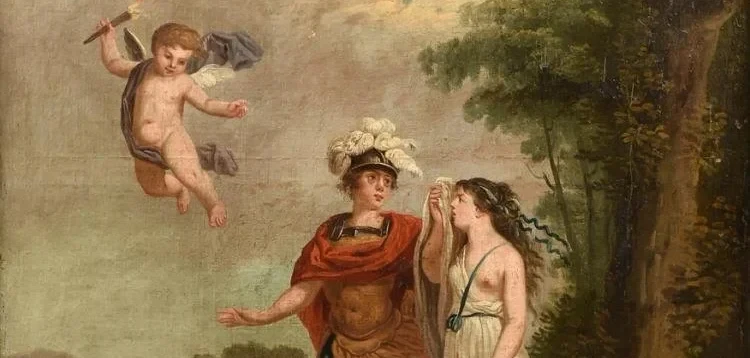
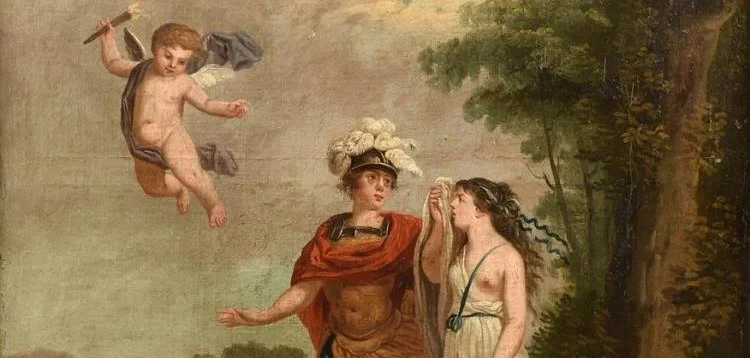
In March 1697, the playwright and translator Peter Anthony Motteux penned a two-act comedy titled The Anatomist; or, The Sham Doctor. To boost the production’s commercial appeal and aesthetic prestige, Motteux and Eccles collaborated on a lavish musical prologue titled The Loves of Mars and Venus. Based on the famous mythological tale from Ovid’s Metamorphoses—detailing the illicit romance between Mars, the god of war, and Venus, the goddess of love, and the humiliating trap set by Venus’s cuckolded husband, Vulcan—the work was an immediate sensation. It married neoclassical poetic drama with cutting-edge musical sensibilities, showcasing Eccles’s preternatural gift for vocal characterization and colorful orchestral scoring.
The Long Silence and Modern Rediscovery
Despite its initial success, The Loves of Mars and Venus, like much of the English theatrical repertoire written between the death of Henry Purcell (1695) and the rise of the Italian opera invasion spearheaded by George Frideric Handel in the 1710s, slipped into the shadows of music history. Tastes shifted rapidly toward Italian opera seria, and the rich tradition of English dramatic music was largely forgotten for nearly three centuries.
It is only in recent decades, fueled by the historical performance movement and groundbreaking musicological scholarship, that figures like John Eccles have begun to reclaim their rightful place in the pantheon. Scholars such as Amanda Eubanks Winkler—who serves as an artistic advisor for this upcoming HPSOB production—have dedicated their careers to unearthing, editing, and contextualizing these lost Restoration scores. The journey from dusty seventeenth-century manuscripts in British libraries to a modern performance edition ready for the stage is a painstaking process of decoding notation, determining instrumentation, and balancing historical fidelity with theatrical viability.
The Road to the Cathedral Church of St. Paul
The Henry Purcell Society of Boston has carved out a unique niche in the American musical landscape by championing the works of Purcell and his contemporaries. Recognizing a profound gap in the region’s concert programming regarding Eccles, the organization’s leadership initiated plans to bring The Loves of Mars and Venus to life.
The selection of the venue—the Cathedral Church of St. Paul on Boston’s Tremont Street—is deliberate. Its resonant acoustics and intimate architectural footprint provide an ideal sonic environment for a period-instrument ensemble and unamplified singers, effectively recreating the intimate, aristocratic atmosphere of a late-seventeenth-century London theater. Over the coming months, rehearsals, academic lectures, and community outreach events will build momentum toward the November 20, 2026 premiere, culminating in a landmark night for Boston’s cultural sector.
Supporting Context & Metrics
The Artistic Forces: Conductor, Director, and Cast
The success of any early music revival hinges entirely on the quality of its interpreters. The Henry Purcell Society of Boston has assembled an artistic team boasting deep expertise in seventeenth-century stylistic conventions.
- Ian Watson (Conductor and Harpsichordist): A musician of international renown, Watson has performed with nearly every major period-instrument orchestra in the world. As the music director of the HPSOB, his rigorous yet flexible approach to continuo realization and rhythmic articulation makes him the ideal pilot for Eccles’s volatile, expressive score.
- Kirsten Z. Cairns (Stage Director): Recognized for her imaginative stagings that bridge historical practice with contemporary theatricality, Cairns specializes in making Baroque opera feel immediate, psychologically acute, and visually captivating to modern audiences.
- Amanda Eubanks Winkler (Artistic Advisor): As a leading authority on Restoration theater, music, and culture, Winkler’s presence ensures that every textual, dramatic, and stylistic choice is grounded in authentic period research.
The Vocal Ensemble
The cast features some of the most sought-after interpreters of early music currently working in North America:
| Performer | Role | Character Description / Mythological Significance |
|---|---|---|
| Carley DeFranco | Venus | The goddess of love; central protagonist navigating desire and exposure. |
| David Thomas Mather | Mars | The god of war; powerful, passionate, and ultimately ensnared. |
| Cody Bowers | Erato | The Muse of lyric and love poetry; framing and narrating the action. |
| Mara Riley | Cupid | The mischievous god of desire; instigator of the romantic plot. |
| Daniel Fridley | Vulcan | The blacksmith god; the betrayed husband seeking poetic, mechanical justice. |
| Kimberly Leeds | Jealousy / Aglaia | Dual roles representing emotional fallout and grace/charm, respectively. |
Economic and Cultural Metrics of Early Music Revivals
Mounting a period-instrument production of this scale involves complex logistical and financial planning. According to recent cultural economics studies in the performing arts sector, niche early music programming relies on a diversified funding model:
- Donor and Grant Support: Approximately 45–50% of production costs for specialized Baroque projects are typically underwritten by institutional grants (such as the National Endowment for the Arts or local cultural councils) and private philanthropic foundations dedicated to historical preservation.
- Ticket Revenue and Subscriptions: Box office returns account for roughly 30% of operating budgets, with early music audiences demonstrating high loyalty and retention rates.
- Educational Outreach: Community workshops, academic partnerships, and pre-concert lectures capture an additional 15–20% in earned revenue and institutional sponsorships, emphasizing the educational value of historical musicology.
Official Statements and Perspectives
While formal institutional press releases outline the basic operational details of the November 20, 2026 performance, cultural commentators and organization insiders have elaborated on the deeper significance of unearthing John Eccles for a modern American audience.
Musicologists familiar with the project emphasize that Eccles was far more than a mere footnote to Purcell. While Purcell possessed an unmatched harmonic audacity, Eccles was a master of theatrical pacing and vocal melody, having spent decades writing directly for the London stage. By presenting The Loves of Mars and Venus, the HPSOB is actively challenging the monolithic view of English Baroque music as "all Purcell, all the time."
Furthermore, staging the work as a semi-staged production allows the dramatic narrative to take center stage without the prohibitive technical costs of a full-scale opera production. This format emphasizes the dynamic interplay between the text, the singing actors, and the instrumental commentary provided by Ian Watson’s period band.
Future Outlook: The Legacy of the 2026 Premiere
As the classical music world looks toward the latter half of the 2020s, the appetite for historical discovery shows no signs of abating. Modern audiences are increasingly fatigued by the endless recycling of standard nineteenth-century repertoire, turning instead toward the rich, uncharted territories of the Renaissance, Baroque, and early Classical eras.
The Henry Purcell Society of Boston’s production of The Loves of Mars and Venus is positioned to serve as a bellwether for future early music programming in North America. If successful, this Boston premiere could spark a broader national revival of John Eccles’s stage works, encouraging other period ensembles to explore his extensive catalog of masques, odes, and theatrical scores.
For Boston arts patrons, early music aficionados, and theater historians, November 20, 2026, promises to be an unforgettable evening—a rare opportunity to step through a portal into the candlelit world of 1697 London and experience the theatrical brilliance of a forgotten master brought vibrantly back to life.
For ticket information, venue details, and updates regarding the Henry Purcell Society of Boston’s 2026–2027 concert season, please visit the official HPSOB web portal or consult local box office listings.