
Executive Overview
As the unofficial marker of the American autumn, Labor Day 2026 brought a definitive close to one of the most volatile, eventful, and culturally dense summer seasons in modern pop history. August 2026 will be remembered not merely as the tail end of the calendar year’s warm months, but as a critical pressure cooker for the global music industry. The period was characterized by high-stakes album rollouts, fierce commercial competition, intense digital discourse, profound grief over the loss of a foundational music pioneer, and a landmark live-music event that recalibrated the hierarchy of 2020s pop royalty.
Against this backdrop of dizzying industry activity, the latest installment of the Billboard Greatest Pop Stars (GPS) podcast—hosted by Andrew Unterberger alongside staff authorities Danielle Pascual and Eric Frankenberg—convened to dissect the titanic shifts of August 2026. Evaluating the top-performing acts, analyzing streaming milestones, and debating cultural missteps, the panel’s retrospective offers a comprehensive view of how the final weeks of summer shaped the race for the ultimate pop supremacy crown with four months left in the year.
This report synthesizes the core takeaways of the August 2026 pop landscape, mapping out the chronological high points, commercial metrics, critical debates, and forward-looking projections that define the current era of popular music.
Detailed Chronology of August 2026 in Pop Culture
The narrative arc of August 2026 was defined by a rapid succession of headline-grabbing moments that tested the staying power of established superstars while making space for unexpected breakout sensations.
Early August: The Battle of the Discourse and Cinematic Synchs
The month opened under the shadow of heavy digital debate, proving that modern pop stardom is just as much about narrative management as it is about vocal performance. Audiences and critics found themselves locked in exhaustive cycles regarding emerging aesthetic shifts, notably spearheaded by the polarizing conversations surrounding internet personality and burgeoning style icon Stella Lefty. Industry commentators spent the first week of August pleading for a collective digital "breath" as fanbases polarized over authenticity, camp, and the rapid commodification of micro-trends.
Simultaneously, the cross-pollination between Hollywood blockbuster franchises and top-tier pop production reached a fever pitch. The music supervision for the summer’s premier cinematic releases sparked immediate chart battles, most notably through high-profile sync placements from alternative-pop heavyweights Steve Lacy and Tame Impala for the latest Spider-Man cinematic installment. Analysts and listeners alike debated which artist’s sonic contribution functioned more effectively as a genuine cultural breakout moment, rather than a mere background placement.
Mid-August: Global Expansion and Latin Dominance
As the month progressed, the global charts saw fierce competition from international powerhouses. Karol G cemented her status as a titan of modern Latin pop with the runaway, viral dominance of her single "Bby Wow." The track’s staggering streaming velocity served a crucial industry function: it single-handedly validated and retroactively energized the relatively soft commercial debut of its parent album. While initial retail figures for the full-length project underwhelmed traditionalists, "Bby Wow" proved that modern consumption habits prioritize undeniable standalone singles that can rescue and rehabilitate an album cycle through sheer social media ubiquity.

Concurrently, genre-bending collectives like KATSEYE continued to challenge traditional definitions of girl-group formulas. Their mid-month releases forced critics to ask a compelling question: Are we witnessing the blueprint for the pop music of the future, or an ephemeral K-pop-infused experiment engineered purely for algorithm optimization?
Late August: Valedictions and Historical Milestones
The music world was brought to a solemn standstill in late August with the passing of an all-time American music legend, Dolly Parton. The outpouring of grief, adulation, and institutional reverence from every corner of the entertainment ecosystem—spanning country, pop, hip-hop, and indie—underscored the rare, unifying fabric of Parton’s enduring legacy. Her passing marked the end of an era for Nashville-to-Hollywood crossover viability and prompted widespread retrospection on what true, cross-generational goodwill looks like in an increasingly fragmented digital age.
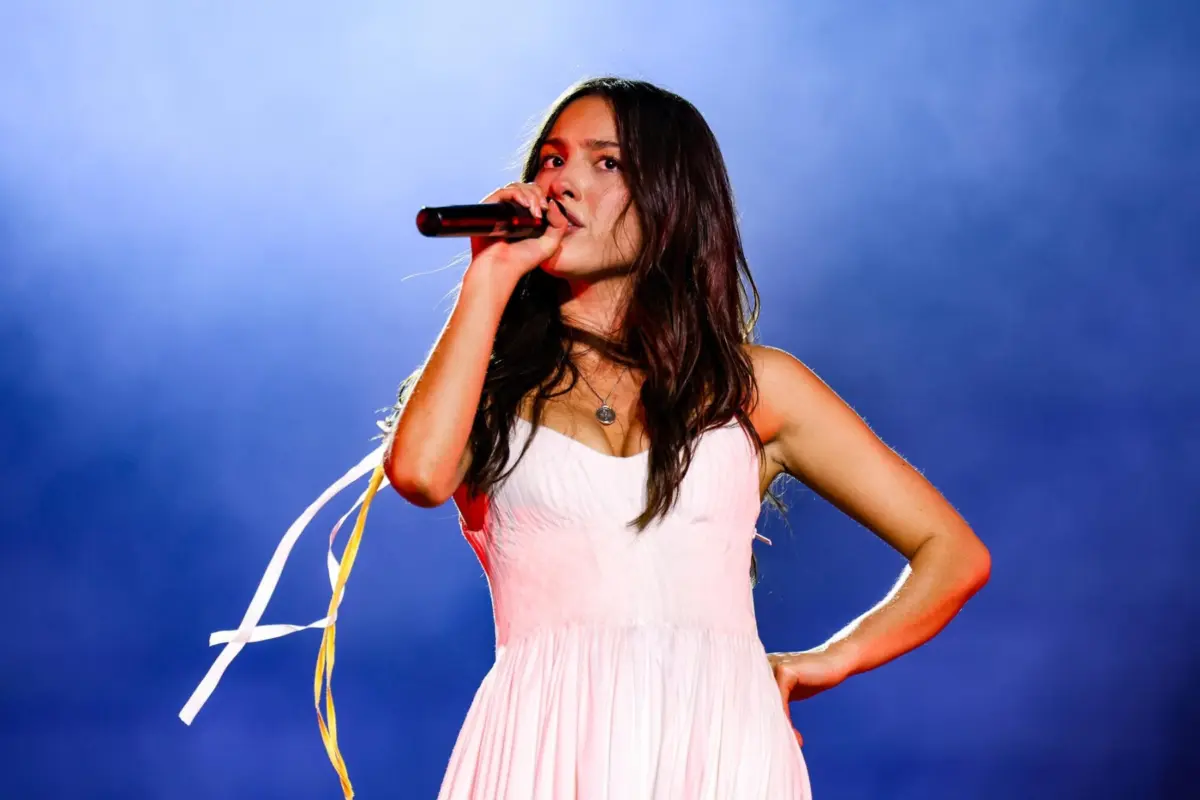
The month ultimately culminated on August 29, 2026, with the inaugural Daisy Chain Fields Festival at Great Park in Irvine, California. Headlined by Olivia Rodrigo, the festival felt instantly historic. More than just a collection of performances, the event served as a coronation, cementing Rodrigo not merely as a successful 2020s hitmaker, but as the undisputed leader of her generation of pop stars.
Supporting Context & Metrics: The GPS Podcast Panel Breakdown
To unpack the complex web of data and cultural resonance that defined the month, the Greatest Pop Stars panel organized their evaluation around rigorous monthly top-five lists, honorable mentions, and notable commercial disappointments.
The Olivia Rodrigo Hegemony
Central to the panel’s discussion was the cultural and economic impact of the Daisy Chain Fields Festival. Eric Frankenberg, Billboard’s touring and box-office expert, highlighted how Rodrigo’s ability to curate and command a standalone festival environment separates legacy-bound superstars from transient hitmakers. By anchoring the festival at the tail end of summer, Rodrigo successfully translated her streaming dominance and arena-tour stamina into a physical, localized cultural anchor. Danielle Pascual noted that the festival’s aesthetic choices and generational attendance proved that Rodrigo’s audience views her not just as an artist to consume, but as a lifestyle and generational voice.
Chart Mechanics: Karol G and the "Single-Rescue" Phenomenon
Analyzing the charts, the panel dissected the mechanics behind Karol G’s "Bby Wow." In an era where front-loaded album debuts often panic label executives, Karol G’s strategy of letting a juggernaut single breathe, build organic momentum, and eventually pull the parent album back up the Billboard charts was praised as a masterclass in modern release-week survival. It highlights a structural shift in consumption: consumers no longer buy into the full package on day one; they wait for the cultural consensus to anoint a definitive track before investing attention in the broader body of work.
The K-Pop Paradigm: Is KATSEYE the Future?
The debate surrounding KATSEYE touched upon the ongoing globalization and hybridization of popular music. By merging high-gloss Western pop structures with rigorous K-pop training and promotional models, the group represents the bleeding edge of multinational pop manufacturing. While purists occasionally debate the authenticity of such entities, the metrics don’t lie: their engagement rates and cross-market streaming retention place them firmly in the conversation about how pop music will be built over the next decade.

Official Statements & Industry Perspectives
Reflecting on the state of the industry during the August 2026 recording session, host Andrew Unterberger synthesized the overarching sentiment of the Billboard reporting staff:
"August 2026 was a microcosm of everything that makes modern pop music exhausting, exhilarating, and entirely impossible to ignore. We went from the dizzying, often hyper-online arguments over aesthetics and cinema syncs to the profound, collective heartbreak of losing Dolly Parton, and finally to the triumphant, generation-defining spectacle of Olivia Rodrigo commanding Daisy Chain Fields. It’s a month that reminds us why pop stardom matters—it captures our highest highs and our heaviest lows in real-time."
The editorial panel further emphasized that as the industry pivots toward the final third of the year, artists can no longer rely solely on passive streaming strategies. The successful pop acts of late 2026 are those capable of creating tangible, real-world moments—such as curated festivals, culturally resonant syncs, and undeniable viral singles that break through the noise of an oversaturated digital marketplace.
Future Outlook: The Race for the 2026 Crown
With four months remaining in the calendar year, the race for the title of the Greatest Pop Star of 2026 remains fiercely contested. While summer blockbusters and festival crowns have given early front-runners like Olivia Rodrigo and Karol G significant momentum, the fourth quarter traditionally introduces heavy-hitting veteran releases, holiday-album surges, and unexpected dark-horse contenders.
As the industry moves into the fall, key questions remain:
- Can emerging festival-curator models be replicated by other Gen-Z superstars? Rodrigo’s success with Daisy Chain Fields sets a high bar for experiential pop dominance.
- How will the industry honor and preserve the structural blueprints left behind by foundational legends like Dolly Parton? The pressure is now on contemporary artists to maintain cross-genre bridges in an increasingly siloed streaming ecosystem.
- Will late-year album cycles challenge the front-loaded, single-driven consumption patterns that defined August?
Listeners and industry insiders can catch the complete, unedited debate, detailed rankings, and honorable mentions by subscribing to the Greatest Pop Stars podcast on Apple Music, Spotify, or via Billboard’s official channels.
A Note on Community Advocacy
In alignment with the values continually championed by the Greatest Pop Stars community, readers and listeners with the means to do so are encouraged to support organizations fighting for transgender rights and healthcare equity, including the Transgender Law Center, Trans Lifeline, Destination Tomorrow, and the Human Rights Campaign. Furthermore, those struggling with disordered eating are urged to reach out to the National Alliance for Eating Disorders at (866) 662-1235 for confidential support and professional resources.