
Executive Overview
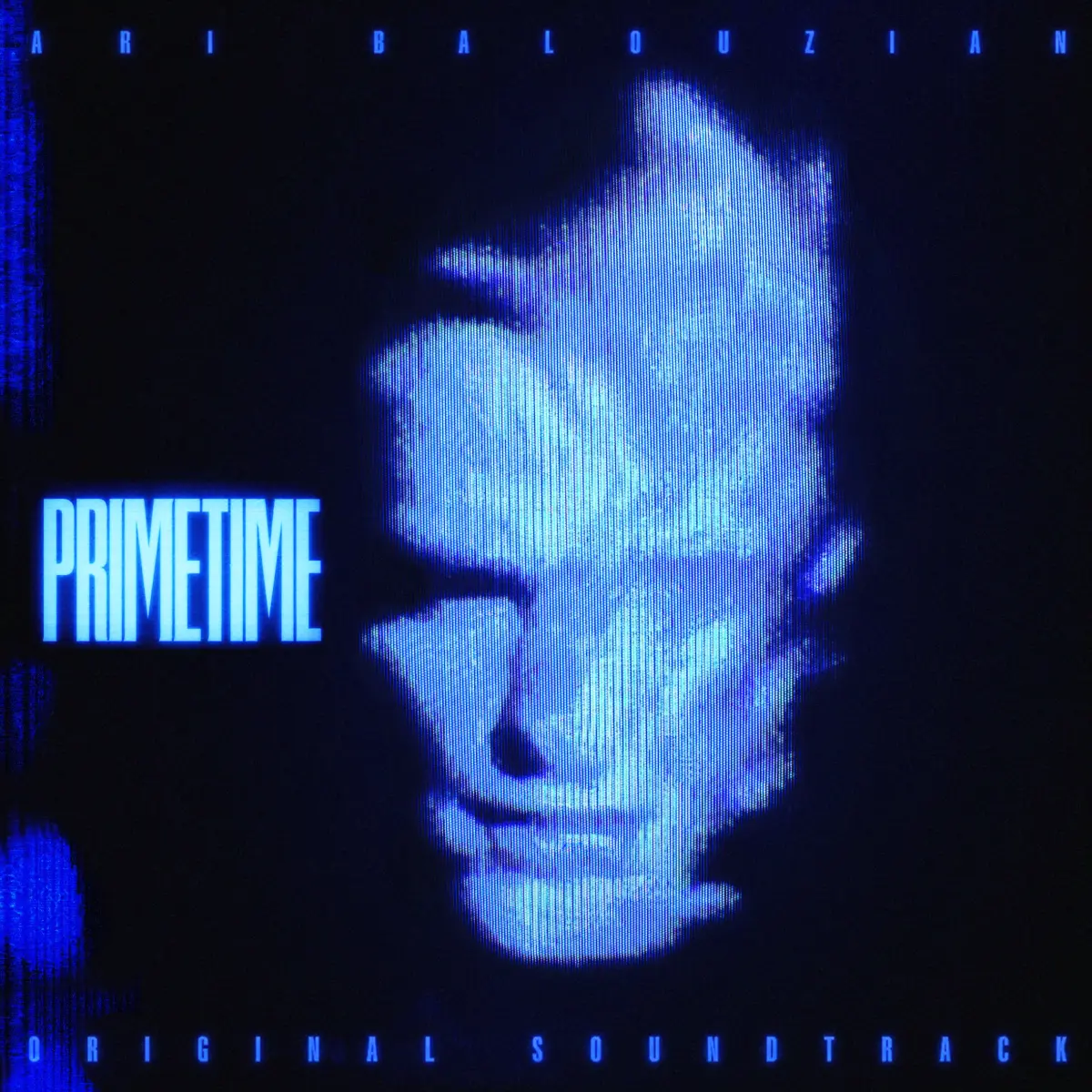
The intersection of contemporary independent cinema and avant-garde musical composition has rarely yielded a collaboration as tightly synchronized as the one driving Lance Oppenheim’s latest feature film, Primetime. Released to coincide with the film’s theatrical run, the official soundtrack arrives as a comprehensive auditory companion, featuring twenty-four meticulously crafted score pieces by composer Ari Balouzian alongside a haunting end-titles original song titled “On Video” by Grammy-nominated indie-rock luminary Phoebe Bridgers.
The project—which has already generated significant industry buzz following its high-profile premiere at the Venice International Film Festival—serves as a masterclass in early-integration scoring. Rather than treating the musical score as a post-production afterthought, Balouzian collaborated directly with Oppenheim during principal photography, utilizing script drafts and daily rushes to construct an enveloping sonic architecture. This dynamic environment profoundly impacted the production itself, most notably serving as a psychological anchor for lead actor Robert Pattinson, who famously utilized the track “Savior”—released concurrently as the record’s lead single—on set to access the complex psychological interior of his character.
Beyond its atmospheric resonance, Primetime represents a major milestone in cross-disciplinary casting and creative synergy. The film features an ensemble cast led by Pattinson, Merritt Wever, Skyler Gisondo, and marks the official acting debut of Phoebe Bridgers. The synergy between Balouzian and Oppenheim continues a prolific, multi-year creative partnership that has previously yielded acclaimed nonfiction and narrative hybrids such as Some Kind of Heaven, Spermworld, and RenFaire. As Balouzian and Oppenheim cement their status as one of modern cinema’s most dependable creative duos, their concurrent preparations for A24’s forthcoming October release, You Can See Everything, signal an expanding footprint in prestige filmmaking.
Detailed Chronology of Production and Release
From Script to Dailies: The Genesis of the Score
The genesis of the Primetime soundtrack defies traditional Hollywood workflows, where composers are routinely brought in during the final months of post-production to drape music over a locked edit. For Balouzian, co-founder of the boutique music production studio Appraiser, the journey began the moment he laid eyes on the early script.
Recognizing the delicate tonal balance required for Oppenheim’s vision, Balouzian initiated compositional work well before cameras rolled. This preemptive strike allowed the production team to establish a reciprocal dialogue between the visual and auditory elements of the film.
[Script Finalization]
       │
       ▼
[Early Composition by Ari Balouzian]
       │
       ▼
[On-Set Daily Rushes Fed to Composer]
       │
       ▼
[Score Integrated During Principal Photography]
       │
       ▼
[Editing to Pre-Existing Music Tracks]
       │
       ▼
[Theatrical Release & Soundtrack Drop]
As shooting commenced, daily footage—commonly referred to as "dailies"—was continuously funneled to Balouzian’s studio. This continuous feedback loop enabled Balouzian and Oppenheim to craft a living, breathing soundscape in real-time. Crucially, this methodology allowed the editorial department to cut scenes directly to Balouzian’s evolving musical themes. The score transformed from an ambient backdrop into a structural blueprint, dictating the rhythm of the cuts and the emotional pacing of the narrative long before color grading or sound mixing commenced.
Venice International Film Festival and Theatrical Deployment
The culmination of this rigorous developmental process reached its first major milestone at the prestigious Venice International Film Festival, where Primetime received its world premiere. Positioned within a competitive and highly discerning cultural landscape, the film drew immediate critical attention for its distinct stylistic bravura, razor-sharp direction, and the porous boundary between its dramatic performances and its industrial, atmospheric score.
Following its international festival circuit bow, the distribution strategy pivoted toward a synchronized theatrical rollout paired with the commercial availability of the soundtrack album. By aligning the physical and digital release of the twenty-four-track score with the film’s presence in cinemas, the production capitalized on immediate audience immersion. Viewers leaving the theater were offered an instantaneous digital pathway to re-enter the film’s distinct sonic world, anchored by the lead single "Savior" and the cinematic closer "On Video."
Supporting Context & Metrics: The Creative Ecosystem of Appraiser and A24
Ari Balouzian and the Appraiser Studio Ethos
At the heart of the Primetime auditory experience is the hands-on craftsmanship of Ari Balouzian. Eschewing the heavily orchestral, ghost-written assembly lines that dominate high-budget studio filmmaking, Balouzian performed and recorded the vast majority of the instrumentation for Primetime himself. Operating out of the Appraiser music production studio, Balouzian champions an intimate, auteur-driven approach to scoring.
This DIY ethos infuses the music with a tactile, human quality. Every microscopic imperfection in string tension, every analog synth artifact, and every acoustic resonance is intentionally preserved. This methodology ensures that the music does not merely illustrate the drama on screen; it feels physically touched by the artists who created it.
The Oppenheim-Balouzian Collaboration Axis
The partnership between Lance Oppenheim and Ari Balouzian is quickly solidifying into one of the most reliable and creatively fertile dyads in contemporary cinema. Their creative alignment was forged across a series of increasingly ambitious projects that blurred the lines between documentary observation and theatrical styling:
- Some Kind of Heaven (2020): Their breakout collaboration explored the surreal, sun-drenched utopia of The Villages in Florida. Balouzian’s score captured the tragicomic loneliness and perpetual optimism of America’s largest retirement community, establishing the duo’s penchant for finding emotional depth in eccentric environments.
- Spermworld (2024): A deep dive into the clandestine, unregulated subculture of independent sperm donors. Balouzian’s score navigated sensitive, bizarre, and deeply human terrain with understated dignity and electronic textures.
- RenFaire (2024): A critically lauded docuseries chronicling the Shakespearean corporate drama behind the Texas Renaissance Festival. The score leaned heavily into theatrical pageantry, blending medieval instrumentation with modern psychological tension.
This robust history of collaboration built an unshakeable foundation of trust between director and composer. By the time production on Primetime commenced, Oppenheim and Balouzian shared a nearly telepathic shorthand, allowing them to take aggressive creative risks—such as scoring a film before it was fully shot—that would terrify less-cohesive creative teams.
Expanding Horizons: The A24 Partnership and You Can See Everything
The commercial and critical momentum surrounding Primetime arrives at a moment of accelerated output for the Oppenheim-Balouzian partnership. Demonstrating their cross-genre versatility, the duo has already completed work on their next major project: You Can See Everything, slated for release this October under the prestige banner of A24.
The transition to A24 marks a significant upward trajectory in scale and visibility for the collaborators. Known for championing uncompromising auteur-driven visions—from Midsommar to The Zone of Interest—A24 provides an ideal institutional home for Oppenheim’s idiosyncratic storytelling and Balouzian’s textural, boundary-pushing compositions. As industry analysts monitor the theatrical performance of Primetime, anticipation is already mounting for how this creative team will navigate the expanded canvas of their forthcoming A24 release.
Official Statements and Methodological Insights
Robert Pattinson and the Psychoacoustic Power of "Savior"
Perhaps the most telling anecdote regarding the psychological efficacy of Balouzian’s score involves lead actor Robert Pattinson. Known for his rigorous, immersive approach to character creation—ranging from his work in Safdie brothers’ Good Time to Robert Eggers’ The Lighthouse—Pattinson utilized Balouzian’s music as a direct psychological portal on the set of Primetime.
According to production announcements, Pattinson listened to the track “Savior”—the album’s lead single—repeatedly on set to steep himself in the emotional and psychological state of his character. This technique transforms the traditional relationship between actor and score. Rather than responding to music added months later in a dubbing stage, Pattinson allowed the pre-composed sonic architecture to dictate his physical posture, vocal cadence, and internal monologue in real-time.
"I started working on PRIMETIME after reading the script, and had access to the dailies while they were shooting, so the process started super early," noted composer Ari Balouzian when discussing the collaborative atmosphere fostered on set.
"Lance and I were able to craft the sound during filming so they could edit to it. The process helped the music become a part of the emotional identity of the movie that the actors and other artisans could actually interact with."
This level of immersion explains the seamless cohesion between the performances in Primetime and its sonic backdrop. When an actor internalizes the exact frequency, tempo, and harmonic minor progressions of the film’s score while stepping in front of the camera, the resulting performance achieves a rare, symbiotic unity. The music is not commenting on the character’s internal state; it is the character’s internal state, externalized through sound.
Phoebe Bridgers: From Indie Icon to Cinematic Actor and Composer
The inclusion of Phoebe Bridgers in Primetime marks a fascinating multi-hyphenate expansion of her artistic portfolio. While Bridgers is globally celebrated as a GRAMMY-nominated singer-songwriter and the creative force behind indie-rock heavyweights Boygenius, Primetime captures her stepping into entirely new artistic arenas.
First, Bridgers contributes the haunting end-titles original song, “On Video”, which serves as the emotional decompression chamber for the audience as the credits roll. Her trademark lyrical melancholia and crystalline vocal delivery provide a poignant thematic postscript to the film’s narrative chaos.
Second, and perhaps more surprisingly, Bridgers makes her official acting debut within the film itself. Sharing screen time with industry heavyweights like Robert Pattinson and Merritt Wever, Bridgers transitions from a voice that observes the modern condition to an embodied physical presence within a dramatic narrative framework. This dual contribution—acting on screen and soundtracking its emotional aftermath—cements her status as an essential architect of the Primetime universe, bridging the worlds of prestige indie-rock and cutting-edge cinema.
Future Outlook: The Evolution of Auteur-Driven Cinema
Redefining the Director-Composer Paradigm
The rollout and reception of Primetime offer a compelling blueprint for the future of independent filmmaking. By dismantling the traditional, siloed post-production pipeline in favor of a fluid, concurrent workflow, Lance Oppenheim and Ari Balouzian have demonstrated the creative dividends of early musical integration.
In an entertainment landscape increasingly saturated by algorithmic content and interchangeable, temp-track-reliant orchestral scores, the artisanal, intensely personal approach championed by Appraiser stands out. When actors can listen to the score on set, when editors can cut to bespoke motifs during principal photography, and when multidisciplinary artists like Phoebe Bridgers can fluidly cross the lines between acting, songwriting, and scoring, the resulting cinema is richer, stranger, and profoundly more resonant.
What Lies Ahead
As Primetime continues its theatrical life and the twenty-four-track score gains traction among cinephiles and audiophiles alike, all eyes are turning toward the horizon. The upcoming October release of You Can See Everything via A24 will serve as the ultimate stress test for the Oppenheim-Balouzian partnership, testing whether their hyper-collaborative, boutique scoring methodology can scale up to meet the demands of major studio distribution without losing its idiosyncratic soul.
For now, Primetime stands as a triumph of collaborative filmmaking—a project where script, performance, editing, and sound were forged in a single, white-hot crucible of creative synergy. It proves that when directors trust composers early, and when actors are brave enough to let music rewrite their internal psychological landscapes, cinema can achieve an entirely new register of immersive, unforgettable art.