
Executive Overview
In the quarter-century since Björk’s historic, boundary-pushing Vespertine residency at London’s Royal Opera House (ROH), the venerable Covent Garden institution has undergone a profound cultural metamorphosis. Long stereotyped as an exclusive bastion for canonical 19th-century grand opera and classical ballet, the historic venue has progressively dismantled its velvet-draped barriers to welcome contemporary boundary-pushers onto its stages. While legendary icons such as Elton John, the Pet Shop Boys, and Rufus Wainwright have previously graced the spectacular white-and-gold main theatre—framed by crimson velvet and crowned by a deep blue oculus mimicking the night sky—true sonic experimentation has found a subterranean home.
Beneath the main floor, the ROH’s Linbury Theatre operates as a creative laboratory. Here, unconventional artists like John Grant, Caroline Polacheck, Matthew Herbert, and the late Scott Walker have pursued radical commissions, while recent boundary-smashers like ESKA have made waves with immersive binaural works such as Woman & Machine.
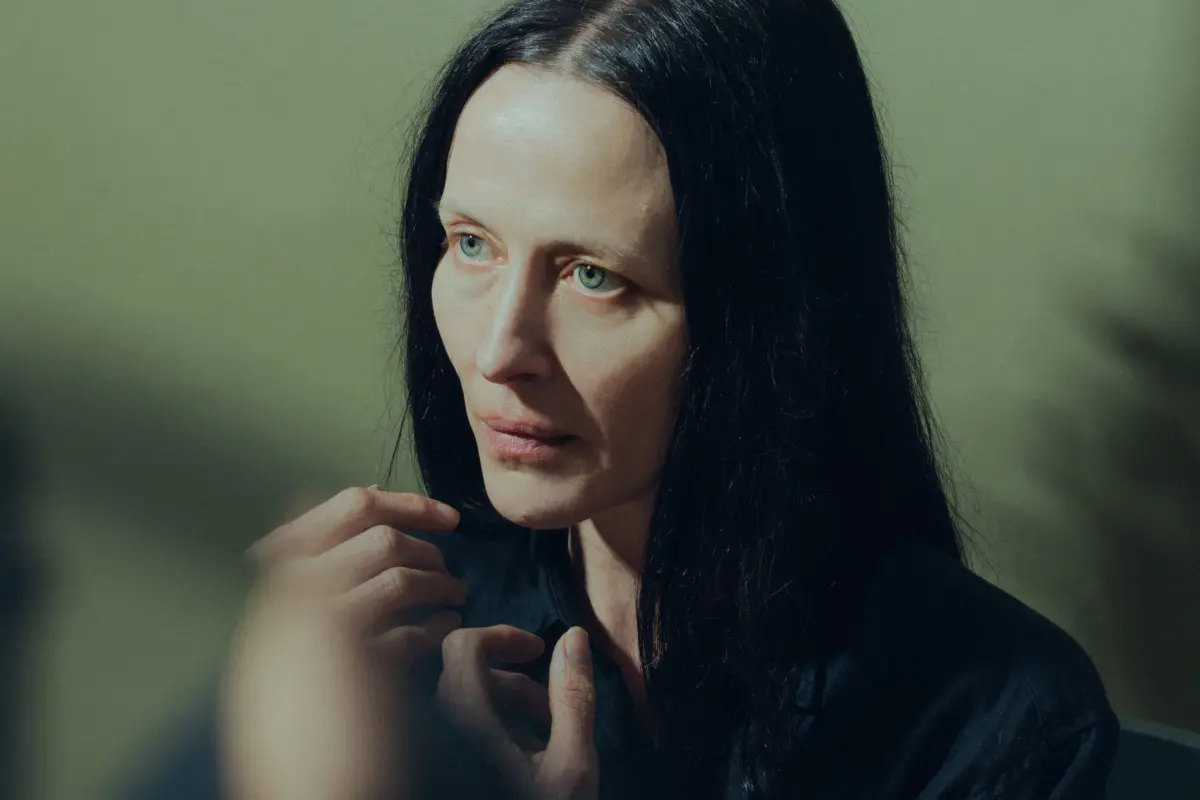
This autumn, under the curation of Associate Director Netia Jones, the Linbury Theatre launches Dark Nights—a rigorous series of research-and-development events designed to spotlight one-off performances by vocal artists and composers operating at the absolute vanguard of sonic and theatrical exploration. The series kicks off on September 23 with Keeley Forsyth, a Harrogate-born musician and actor who, across three critically acclaimed albums and a handful of arresting EPs, has carved out a unique space as one of the UK’s most visceral and distinctive voices. Renowned for a spine-tinglingly deep register and a remarkably physical, unvarnished vibrato, Forsyth brings a bespoke, multi-layered theatrical expansion of her previous collaborations into this hallowed subterranean space, marking a vital milestone in both her career and the ROH’s contemporary programming strategy.
Detailed Chronology: From Northern Council Estate to the Avant-Garde Stage
Formative Years and the Discovery of the Voice
Forsyth’s artistic journey is deeply rooted in her working-class upbringing on a council estate in Greater Manchester, an environment that instilled in her an acute awareness of economic hardship and a fierce drive for self-betterment. Between the ages of 12 and 18, she studied singing with Olive Valentine, a retired opera singer in her 80s living in nearby Heywood. Weekly lessons—costing a precious £12 at a time when every penny counted—involved cycling or traveling to Valentine’s home, where the elderly instructor accompanied Forsyth on the piano with a single crooked finger.
Though Forsyth knew nothing of formal opera at age 12, the experience awakened an emotional resonance within her body. More importantly, it exposed her to a wider world of art, literature, and culture, pulling her away from a predetermined socio-economic path.
Concurrently, a young Forsyth immersed herself in the works of theatrical vocalists and performers. She studied the physical and psychological precision of Karen Carpenter, Judy Garland, and Stephen Sondheim, nearly auditioning for the television show Stars in Their Eyes as Carpenter. This intense, analytical study of breath, gesture, and emotional subtext laid the groundwork for her eventual career as an actor—a profession defined by frequent rejection, grueling auditions, and the exhaustion of trying to "fit" into predefined casting boxes.
The Birth of a "Quiet Beast": Transitioning to Music
Decades of navigating the unpredictable acting industry eventually birthed what Forsyth describes as a "quiet beast of music." Emerging late in life as a recording artist, she bypassed conventional pop structures to develop a raw, deeply embodied vocal style. Her debut album, Debris, arrived as a shock to the contemporary landscape, driven by her heavy vibrato, stark minimalism, and profound emotional weight.
Crucial to this evolution was her discovery of uncompromising avant-garde icons like Scott Walker. Hearing Walker’s uncompromising masterpiece "Farmer in the City" gave Forsyth the psychological permission she needed to abandon commercial palatability. Walker’s music demanded total surrender, proving to Forsyth that a voice could operate outside sanitised parameters and delve directly into profound psychological and existential states.
Hand To Mouth To: The Linbury Theatre Premiere
In Hand To Mouth To, her newly commissioned work for the ROH’s Dark Nights series, Forsyth expands upon her 2023 collaboration with choreographer Matthew Bourne, Hand to Mouth. Premiering an embryonic version earlier this year at the BRDCST festival, she is now transforming the piece into a bespoke, multi-layered theatrical work integrating dynamic lighting, striking projections, and a newly minted spoken-word narrative.
To construct this narrative, Forsyth reached out to acclaimed French author Jean-Baptiste Del Amo, author of The Son of Man. Del Amo had previously revealed in interviews that he listened to Forsyth’s debut album Debris on a loop while writing his novel. The resulting cross-pollination led Del Amo to write seven bespoke narrative chapters specifically for Forsyth’s performance.
Titled The No-End House, the piece is narrated from the perspective of a sister navigating the grief-stricken aftermath of her father’s recent death and her mother’s long-ago passing. Set within the harrowing confines of their childhood home, the narrative unflinchingly explores memories of abuse, fractured familial connections, and psychological survival. Forsyth’s stark narration, combined with her physical performance style, promises to deliver an uncompromising sensory experience perfectly suited to the Linbury’s laboratory ethos.
Supporting Context & Metrics
The Anatomy of an Uncompromising Voice
Forsyth’s vocal delivery is frequently compared to historical outliers like Karen Dalton and Eartha Kitt—artists who famously sang "of the dirt," channeling raw human experience without a vocal or emotional filter. Unlike contemporary vocalists who rely on breathy, highly polished, and commercial tones, Forsyth purposefully pushes the boundaries of what a female voice can express, favoring cavity, resonance, and physical weight over ease of listening.
This aesthetic is heavily influenced by her consumption of diverse musical and theatrical disciplines. Her foundational inspirations span disparate worlds:
- Pina Bausch’s Tanztheater Wuppertal: Seeing Bausch’s visceral, unsettling production of The Rite of Spring—performed on a stage covered in earth—completely transformed Forsyth’s understanding of performance. For Forsyth, music and physical movement are utterly inseparable; sound is something to be physically inhabited rather than passively heard.
- Classical and Avant-Garde Masterpieces: Works like Henryk Górecki’s haunting Symphony No. 3 (the Symphony of Sorrowful Songs) profoundly influenced Forsyth’s early artistic evolution. Experimenting with Super 8 film as a young artist, she walked into the freezing sea off Brighton wearing a heavy black coat and a hat she refused to remove—a subconscious physical manifestation of creative intensity and impending burnout.
- Theatrical Songwriting: Longstanding devotions to Stephen Sondheim (particularly Sunday in the Park with George) and the dream-pop cinematic textures of the Cocteau Twins (The Moon & Melodies) inform her acute sense of narrative pacing, character construction, and emotional architecture.
Comparative Analysis: The Evolution of ROH’s Contemporary Programming
| Era / Milestone | Primary Focus | Notable Artists / Productions | Venue Impact |
|---|---|---|---|
| 2001 (Historic Landmark) | Mainstage crossover experiments | Björk (Vespertine residency) | Proved contemporary electronic and avant-garde art could command the historic house. |
| 2010s – Present | Mainstage prestige pop & art-rock | Elton John, Pet Shop Boys, Rufus Wainwright | Normalized the presence of non-classical singer-songwriters in the main auditorium. |
| Subterranean Era | Experimental commissions & labs | John Grant, Caroline Polacheck, Scott Walker, ESKA | Cultivated an underground testing ground for cutting-edge sound design and binaural opera. |
| Autumn 2024 (Dark Nights) | Vanguard vocal performance & R&D | Keeley Forsyth (Hand To Mouth To) | Merges physical theatre, literary text, and avant-garde vocalism into one-off bespoke events. |
Official Statements and Perspectives
Reflecting on her creative process, the mechanics of collaboration, and her uneasy relationship with the commercial music industry, Keeley Forsyth offers profound insights into her artistic ethos:
"We’ve done something very bespoke. When I’m on stage I often mutter things to myself so I thought, what if I actually said words that were written by an incredible writer? Jean-Baptiste [Del Amo] had written that he’d been listening to my first album Debris while he was writing The Son of Man, so we got in touch… He has written seven chapters for this new show, and it’s a story that has a beginning, a middle, and an end."
Addressing her vocal lineage and the rare nature of her artistic output, Forsyth notes:
"I like it when I feel that the voice isn’t just coming from the vocal cords. I think it was Eartha Kitt who said that she was ‘of the dirt,’ and that’s the kind of voice I like… I think I do push what a female voice can do rather than keep it in a kind of sensitive and breathy place. I like singers who are very strong."
On the vulnerability of stepping onto prominent stages and her ongoing battle with imposter syndrome, Forsyth remains refreshingly self-effacing:
"[laughs] Actually, I did a performance last night here in Porto and people said there was a woman in the audience who was crying. I’m not sure if people are just being kind. Because I’m northern, my instinct is always to not believe a good thing… I do suffer from a fear of outstaying my welcome. Even when I’m on stage I find it difficult to feel deserving of people’s attention. Maybe that’s why I take on a character, because I’m always thinking that people have somewhere better to be."
Netia Jones, Associate Director and visionary behind the Dark Nights series, emphasizes the necessity of carving out uncompromised spaces for radical creation within institutions as large as the Royal Opera House. By handing the keys of the Linbury Theatre over to boundary-pushing composers and vocalists, the institution reaffirms its commitment to incubating tomorrow’s canonical works today.
Future Outlook
As the Royal Opera House prepares to open its doors for the inaugural Dark Nights presentation on September 23, the cultural implications extend far beyond a single evening of avant-garde performance. The series signals a permanent institutional shift: large, historic cultural bodies can no longer afford to wall themselves off from the raw, unpolished realities of contemporary lived experience.
For Keeley Forsyth, Hand To Mouth To represents a monumental step forward—bridging her extensive theatrical background, her rigorous physical discipline, and her unique vocal artistry within one of the world’s most prestigious cultural complexes. Far from the commercial pressures of mainstream chart success, Forsyth continues to chart a lonely yet profoundly rewarding path, proving that artistic integrity, vulnerability, and uncompromising sonic exploration can find an audience even in the most historic of settings.
As Dark Nights unfolds across the autumn season, the Linbury Theatre will undoubtedly cement its reputation as London’s premier laboratory for the sonic avant-garde—a place where the ghosts of past experimentations whisper encouragement to the bold innovators shaping the future of performance art.