
Executive Overview
For decades, the rhythm section has been the unsung engine room of popular music. While frontmen, guitar heroes, and vocalists bask in the glare of the spotlight, the percussionist—tucked away behind a sprawling fortress of cymbals, shells, and hardware—typically absorbs the adoration of crowds from a distance. They are the architectural foundation of sound, yet they are rarely granted the intimate portraiture afforded to their melodic counterparts.
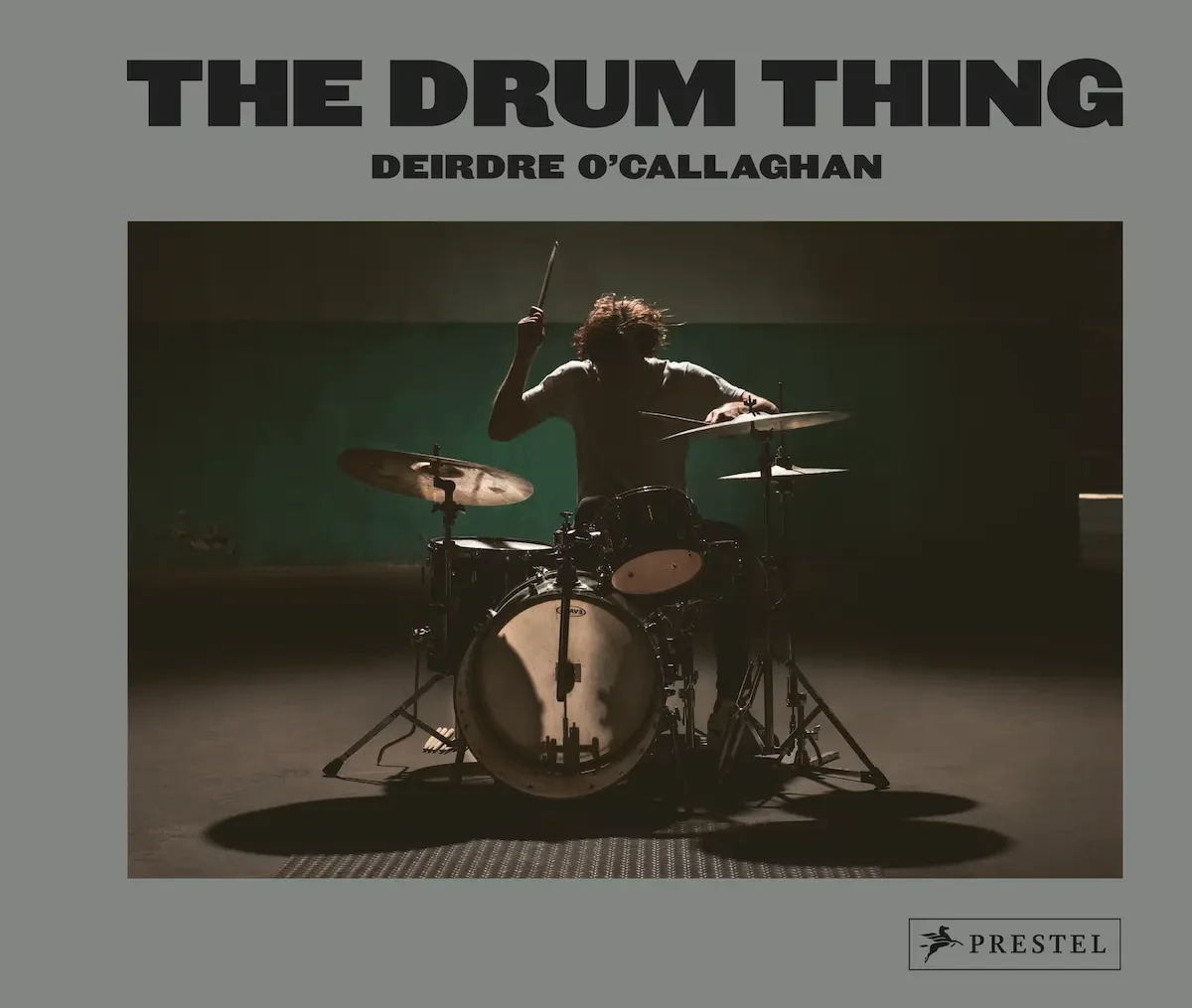
Enter photographer Deirdre O’Callaghan and her seminal, critically acclaimed work, The Drum Thing. Originally published to wide acclaim in 2016, this immersive visual and textual study is now returning to shelves in a gorgeous, highly accessible compact edition via Prestel. Spanning nearly a hundred master drummers drawn from across the musical spectrum—with a wonderfully robust representation of the jazz elite—the book bypasses the sterile, electrifying atmosphere of the live stage. Instead, O’Callaghan crosses the threshold into the most sacred and private of spaces: the domestic bedrooms, the cluttered basement dens, and the meticulously soundproofed personal studios where the magic actually takes shape.
This newly minted edition provides an opportune moment to re-examine O’Callaghan’s artistic triumph. Beyond merely showcasing kit setups, The Drum Thing serves as an anthropological study of rhythm, personality, and the profound, almost symbiotic relationship musicians forge with their instruments. Through deliberate, highly considered photography and accompanying candid commentary, the book strips away the commercial armor of the music industry to reveal the human beings behind the beat.
Published by Prestel, the 256-page hardcover volume retails for £35 (ISBN: 978-3-7913-9413-8) and cements its status as an essential artifact for musicologists, photography enthusiasts, and rhythm fanatics alike.
Detailed Chronology: The Evolution of a Masterpiece
To understand the weight and resonance of The Drum Thing, one must trace the winding trajectory of its creator. Deirdre O’Callaghan’s journey into the upper echelons of music and documentary photography is a masterclass in organic artistic evolution.
From Irish Roots to the Streets of London
O’Callaghan’s path began far away from the flashing strobes of London’s media landscape. Leaving her native Ireland at the tender age of 18, she eventually gravitated toward the British capital, seeking artistic stimulation and independence. It was not until her early twenties that she began to cultivate a serious, professional interest in photography. Rather than diving immediately into commercial fashion or editorial pop music assignments, O’Callaghan found her footing in long-term documentary projects centered around overlooked communities.
Her foundational major work, Hide That Can, set a high benchmark for her empathetic approach. For that project, O’Callaghan embedded herself for four years within Arlington House—a massive, historic men’s hostel located in the Camden district of London. Her haunting, deeply respectful portraits of the residents established her signature style: patient, immersive, and grounded in a profound dignity.
The Spark at Ronnie Scott’s
The seeds for The Drum Thing were planted humbly, originating as a modest magazine feature assignment that called for portraits of just eight drummers. However, the trajectory of her life and career shifted permanently during an encounter at the legendary London jazz club Ronnie Scott’s.
It was there that O’Callaghan crossed paths with Roy Haynes, the legendary, endlessly charismatic American jazz drummer whose career has spanned eras from bebop to avant-garde. The sheer magnitude of Haynes’ presence made O’Callaghan realize that a mere magazine spread was entirely inadequate to capture the scope, diversity, and historical importance of the drumming community.
Recognizing the need for a collaborative partner to help navigate the vast labyrinth of the global percussion underground, O’Callaghan teamed up with Sarah Lowe—wife of Jim Sclavunos, the enduring drummer for Nick Cave and the Bad Seeds. Together, Lowe and O’Callaghan began meticulously drafting a comprehensive "hit list" of rhythmic icons. What began as an eight-subject magazine piece bloomed into a monumental, multi-year global crusade to document the beating hearts of modern music.
Supporting Context & Metrics: Inside the Musician’s Lair
The true genius of The Drum Thing lies in its methodology. Eschewing the fly-on-the-wall photojournalism that often yields blurry, chaotic performance shots, O’Callaghan deliberately slows the process down.
The Aesthetics of Private Space
In numerous interviews detailing the creation of the volume, O’Callaghan has emphasized the transformative power of location. "Once I started going into their own environments, everything changed," she notes.
For a percussionist, the physical arrangement of a drum kit is not merely functional; it is psychological mapping. The heights of the cymbals, the tuning of the snares, the presence of dampening gels, and the surrounding clutter of records, books, and memorabilia all conspire to create a visual biography. As O’Callaghan observes, "With drummers especially, the question of where you keep your kit says everything. The space reflects the person’s personality and their relationship to the instrument."
This philosophy led the photographer to some truly unforgettable locales. Among her personal favorites during the extensive shoot was the late, great avant-garde jazz titan Milford Graves. Visiting Graves’ workspace was akin to stepping into fantasy literature. "His whole space was like a wizard’s lair," she recalls. "There was so much to discover."
Rejecting "Shot-on-the-Fly" Convenience
O’Callaghan’s operational ethos runs counter to the modern digital age’s obsession with rapid-fire, unposed capture. "My natural approach is always to set up rather than shoot on the fly," she explains. "There was no question of sneaking around corners grabbing shots. That’s not my style."
This deliberate staging creates a palpable tension in the imagery. The drummers are posed amidst their gear—sometimes commanding the throne, sometimes standing sentinel beside their metal and wood—resulting in compositions that feel classical yet deeply contemporary.
A Mosaic of Voices: The Interviews
While the visual component anchors the book, the accompanying text provides an unpredictable, highly entertaining Greek chorus of opinions on rhythm, talent, and artistry. The commentary spans the gamut from the delightfully mundane to the profoundly philosophical.
- Patrick Carney (The Black Keys): Offering a democratic, egalitarian view of musical potential, Carney bluntly asserts, "Anybody has the capacity to be a great drummer."
- James Gadson (R&B Icon): In direct philosophical opposition to Carney, legendary session drummer James Gadson leans into the mysticism of innate ability, noting, "People used to say… either you got it, or you don’t."
- Lenny White: The fusion maestro offers sharp, historically rich insights, particularly regarding his encounters and experiences within the orbit of Miles Davis.
- Tyshawn Sorey: Delivering some of the book’s most cerebral observations, Sorey recounts being told, "You’re like a young old guy." Refusing to view himself merely as a human metronome, Sorey champions the role of the drummer as a master orchestrator of sound and space.
Official Statements and Critical Perspectives
The release of the compact edition has reignited critical conversations regarding the intersection of documentary photography and niche musical subcultures. While music critics and photography enthusiasts have largely lauded the project’s ambition and execution, the book naturally invites dialogue regarding its stylistic choices.
Art and music critics have frequently debated the merits of color versus black-and-white photography in documenting jazz and underground music culture. Historically, mid-century jazz photography—typified by masters like Francis Wolff and Herman Leonard—relied heavily on high-contrast monochrome to capture the moody, smoke-filled haze of the jazz club.
Reflecting on this tradition, some purists note: "It used to be assumed that art photography was in black and white, and—just as in film—I prefer that medium. These are in colour, and they’re too ‘staged’ for my taste."
Yet, as critics quickly concede, such aesthetic reservations dissolve when confronting the sheer vibrancy of the final product. The rich, saturated palettes of the domestic spaces, the glint of polished brass cymbals, and the warm textures of vintage drum wraps demand the fidelity of color. As cultural commentators have observed: "The results are engaging and intriguing nonetheless. If you’re a fan of drummers, this book will appeal. It’s lavish and beautifully produced, and comprehensive."
O’Callaghan’s ability to extract vulnerability from towering musical figures remains her most praised achievement. By stepping away from the stage, she strips away the performative armor that drummers wear in concert venues. In their basements and studios, stripped of stage lighting and adoring mobs, they appear contemplative, eccentric, and fiercely devoted to their craft.
Future Outlook: The Legacy of The Drum Thing
As the music industry continues to digitize, physical artifacts of music culture carry an increasingly vital weight. The return of The Drum Thing via Prestel’s compact edition ensures that a new generation of musicians, producers, and art lovers can engage with this unique visual archive at an accessible price point (£35).
The cultural impact of O’Callaghan’s work extends far beyond its initial 2016 publication window. In an era where online content consumption is fleeting and algorithmic, The Drum Thing encourages slow, tactile appreciation. It prompts the viewer to ponder the solitary hours spent in practice rooms, the physical toll of polyrhythms, and the quiet dedication required to master an instrument that demands all four limbs operate independently.
Furthermore, the book serves as an inadvertent historical preservation project. Tragically, figures like Milford Graves have passed away since the inception of the project, rendering O’Callaghan’s intimate visual records irreplaceable historical documents. They are time capsules of living legends captured within the ecosystems they cultivated over lifetimes.
For aspiring drummers, jazz aficionados, and connoisseurs of documentary portraiture, the compact edition of The Drum Thing is not merely a book to be browsed; it is an invitation to sit behind the kit, look around the room, and listen to the silent stories told by the tools of the trade. Deirdre O’Callaghan has succeeded in mapping the rhythm section’s collective soul, proving once and for all that where a drummer keeps their kit reveals the exact blueprint of who they are.