

Executive Overview
In the highly cyclical calendar of liturgical music administration, the timeline for repertoire planning operates months ahead of the calendar year. Long before congregations turn their attention to Advent and Christmas, choral conductors and music directors across the globe are already structuring program budgets and instrumental personnel for the Lenten and Easter seasons. A recent industry offering on ChoralNet—the premier digital forum maintained by the American Choral Directors Association (ACDA)—has brought renewed attention to one of the most enduring, if historically debated, pillars of Victorian sacred music: Sir John Stainer’s 1887 sacred passion cantata, The Crucifixion.
Arranger and choral clinician Craig Hawkins has announced the availability of a newly adapted, flexible 20-piece chamber orchestra score for Stainer’s classic work. Priced at a flat rate of $300 inclusive of physical shipping, this edition departs from the traditional organ-only accompaniment, replacing or supplementing it with a tailored configuration of strings, solo woodwinds, trumpet, and timpani.
This development reflects a broader systemic trend within contemporary church music: the strategic re-orchestration of late 19th-century and early 20th-century standard repertoire to fit modern ensemble sizes, physical sanctuary acoustics, and budgetary realities. By scaling down the grandiosity of a full romantic orchestra while elevating the texture beyond a solo pipe organ, Hawkins’ arrangement offers sacred institutions an avenue to revitalize familiar choral literature without overburdening parish finances or logistical capacities.
Detailed Chronology
To understand the operational and artistic significance of this modern adaptation, one must analyze the timeline of Stainer’s work—from its 19th-century origins to its contemporary re-imagining in modern performance schedules.
+-----------------------------------------------------------------------------------+
| HISTORICAL & LITURGICAL TIMELINE: JOHN STAINER'S 'THE CRUCIFIXION'                |
+-----------------------------------------------------------------------------------+
| 1887: Premiered at Holy Trinity, Marylebone; designed for modest parish choirs.   |
| 1890s–1950s: Establishes global dominance across Anglican and Protestant parishes. |
| 1960s–1990s: Musicological re-evaluation; shift toward Baroque/Renaissance passion |
|              settings (Bach, Schütz).                                             |
| 2000s–Present: Revival via reduced instrumental arrangements and modern scoring.   |
| T-minus 6 Months (Autumn): Choir directors lock in Lenten/Easter arrangements.     |
+-----------------------------------------------------------------------------------+
1887: Genesis and Initial Reception
Sir John Stainer, then serving as organist at St. Paul’s Cathedral in London, collaborated with librettist W.J. Sparrow Simpson to create The Crucifixion: A Meditation on the Sacred Passion of the Holy Redeemer. Premiered on February 5, 1887, at Holy Trinity Church, Marylebone, the work was deliberately constructed as a populist alternative to the massive, complex Passion settings of Johann Sebastian Bach. Designed specifically for parish choirs of modest technical ability, Stainer scored the original work for tenor and bass soloists, SATB chorus, organ, and five congregational hymns intended for participatory worship.
20th-Century Dominance and Critical Re-Evaluation
Throughout the first half of the 20th century, The Crucifixion became arguably the most frequently performed Lenten choral work in the English-speaking world. Movements such as the unaccompanied motet "God so loved the world" and the processional "Fling wide the gates!" entered the canon of standard church anthems.
However, the mid-to-late 20th century saw a critical backlash. Musicologists and liturgical reformers frequently criticized the work for Victorian sentimentality and harmonic over-chromaticism. Despite these academic critiques, the piece maintained an immovable foothold in local parish practices due to its emotional immediacy, vocal accessibility, and deep pastoral resonance.
The Modern Adaptation Era and Planning Windows
In contemporary music ministry, the academic debate has largely yielded to practical pragmatism. As pipe organ maintenance costs rise and the availability of professional church organists fluctuates, music directors have increasingly turned to chamber instrumental re-arrangements.
The announcement of Hawkins’ chamber version during the pre-Advent window highlights the rigorous timeline required for liturgical production:
- Late Summer / Early Autumn: Music directors audit existing library scores, assess vocal section leader availability, and establish instrumental budgets for the following spring.
- Late Autumn (Current Phase): Acquisition of new scores, arrangements, and instrumental parts. Engagement of freelance instrumentalists for Holy Week services.
- Epiphany / Early Winter: Distribution of rehearsal materials to choir members; commencement of choral read-throughs.
- Lent / Holy Week: Integration of instrumental ensembles with the main chorus for dress rehearsals and final performance.
Supporting Context & Metrics
The introduction of a flexible 20-piece chamber orchestration into the market addresses specific financial, spatial, and acoustic metrics that govern contemporary church music departments.
Comparative Structural and Instrumentation Analysis
| Parameter | Original 1887 Stainer Score | Full Romantic Orchestral Adaptation | Hawkins Chamber Adaptation |
|---|---|---|---|
| Primary Accompaniment | Pipe Organ (Solo) | Full Symphony Orchestra (60+ players) | Chamber Orchestra (20 players) |
| Woodwind Complement | N/A | Flutes, Oboes, Clarinets, Bassoons (Doubled) | Solo Winds (Single woodwinds per line) |
| Brass & Percussion | N/A | Horns, Trumpets, Trombones, Tuba, Timpani | Single Trumpet, Timpani |
| Strings | N/A | Full String Section (16-12-10-8-6) | Flexible Chamber Strings |
| Target Venue Size | Parish Church with Organ | Concert Hall / Cathedral | Small-to-Midsize Worship Spaces |
| Relative Hiring Cost | Low (Single Organist Fee) | High ($8,000 – $15,000+) | Moderate ($2,500 – $4,500) |
    [ORIGINAL SCORE]              [FULL ORCHESTRAL]              [HAWKINS CHAMBER]
+-----------------------+     +-----------------------+     +-----------------------+
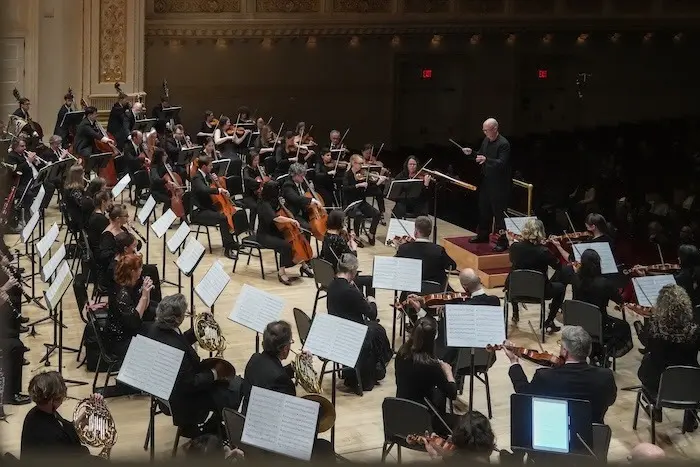
|  Solo Pipe Organ      |     |  Full Symphony (60+)  |     |  Chamber Group (20)   |
|  - High reliance on   | VS  |  - High budget        | VS  |  - Solo Woodwinds     |
|    instrument quality |     |  - Stage space constraints| |  - Trumpet & Timpani  |
|  - Traditional feel   |     |  - Overpowers choir   |     |  - Flexible Strings   |
+-----------------------+     +-----------------------+     +-----------------------+
Architectural and Acoustic Considerations
The original score relies heavily on the dynamic range and swell capabilities of a romantic pipe organ to paint the dramatic narrative of the Passion—from the quiet agony of Gethsemane to the thunderous commotion of Golgotha. However, many modern sanctuaries lack instruments with the requisite tonal stops or mechanical reliability to execute Stainer’s detailed registration markings.
By re-allocating these textures to a 20-piece ensemble, the chamber scoring solves several acoustic challenges:
- Textural Clarity: Solo woodwinds (flute, oboe, clarinet) provide distinct counter-melodies that can cut through choral textures without requiring the high volume levels of organ reeds.
- Dynamic Control: A reduced string section allows for delicate pianissimo playing during contemplative passages, preventing the instrumentalists from drowning out amateur volunteer choristers.
- Dramatic Pacing: The strategic use of a single trumpet and timpani preserves the visceral impact of movements like "Fling wide the gates!" and the earthquake depiction without demanding the footprint of a full brass section.
Commercial and Marketplace Dynamics
The direct-to-consumer distribution model chosen for this arrangement reflects broader changes in the music publishing landscape. Traditional choral publishing houses (such as Novello, Oxford University Press, or G. Schirmer) typically operate on long lead times, print-on-demand markups, and rigid rental agreements for orchestral parts.
At a direct sale price of $300, which includes physical score shipping and flexible ensemble performance rights, Hawkins utilizes an independent distribution framework. The acceptance of modern peer-to-peer digital payment systems—including PayPal, Venmo, and CashApp alongside traditional corporate entity checks—points to the modernization of transaction workflows within the sacred music industry.
Official Statements & Industry Perspectives
The release of this new arrangement highlights the ongoing dialogue between tradition and innovation in church music ministry.
In his formal listing, arranger Craig Hawkins articulated the core rationale behind the project, targeting music directors seeking to balance heritage with novelty:
"For those choir directors like myself, although Advent and Christmas isn’t here yet, thoughts of Lent and Easter may be creeping into your thoughts. If you’re interested in doing something familiar, yet different, I offer my orchestrated version of this very familiar chestnut. Arranged for a flexible 20 piece chamber orchestra, consisting of strings and solo winds, trumpet, and timpani, your congregation can experience a well-known major work in a new way."
Industry observers note that Hawkins’ description of the piece as a "familiar chestnut" acknowledges both its ubiquitous presence in the sacred canon and the potential for performance fatigue among veteran choristers and listeners.
Sacred music clinicians emphasize that re-orchestrations of this nature serve a dual purpose within parish administration:
"The challenge facing the contemporary choir director is not simply finding new music, but finding ways to help congregations re-engage with foundational texts and melodies," notes a veteran ACDA member and church music consultant. "When you transition a piece like Stainer’s ‘Crucifixion’ from the traditional organ bench to a live chamber ensemble, you transform a routine seasonal service into an orchestral event. It creates a focal point for the community while remaining fiscally responsible."
Future Outlook
The trajectory of sacred choral publishing points toward an increasing reliance on modular, highly adaptable chamber orchestrations. As music departments navigate post-pandemic recovery, variable volunteer recruitment numbers, and changing financial priorities, the market for large-scale, organ-only or full-symphonic works is shifting toward flexible configurations.
Key Trends Shaping the Sacred Choral Market
- Modular Orchestration Frameworks: Future adaptations of 19th-century works (such as Gabriel Fauré’s Requiem or Théodore Dubois’ The Seven Last Words of Christ) will likely adopt Hawkins’ model—offering "substitutable" part choices that allow ensembles to perform whether they have a full woodwind section or only a single string quartet with keyboard fill.
- Digital Micro-Publishing: Independent arrangers are bypassing major print publishers, using professional networking platforms like ChoralNet, public digital score databases, and instant payment applications to monetize specialized arrangements directly to church music budgets.
- Ecumenical Adaptability: While Stainer’s The Crucifixion originated within the Anglican tradition, chamber arrangements are increasingly being adopted across non-liturgical Protestant, Catholic, and community choral settings, expanding the geographical and denominational footprint of Victorian sacred music.
As choir directors finalize their Lenten and Easter programming in the coming months, initiatives like Craig Hawkins’ chamber scoring demonstrate that classic works need not remain frozen in their original mid-Victorian formats. By offering a middle path between a solo organist and a full symphony orchestra, such arrangements ensure that historical sacred literature continues to find a resonant, living voice in contemporary worship spaces.