
Executive Overview
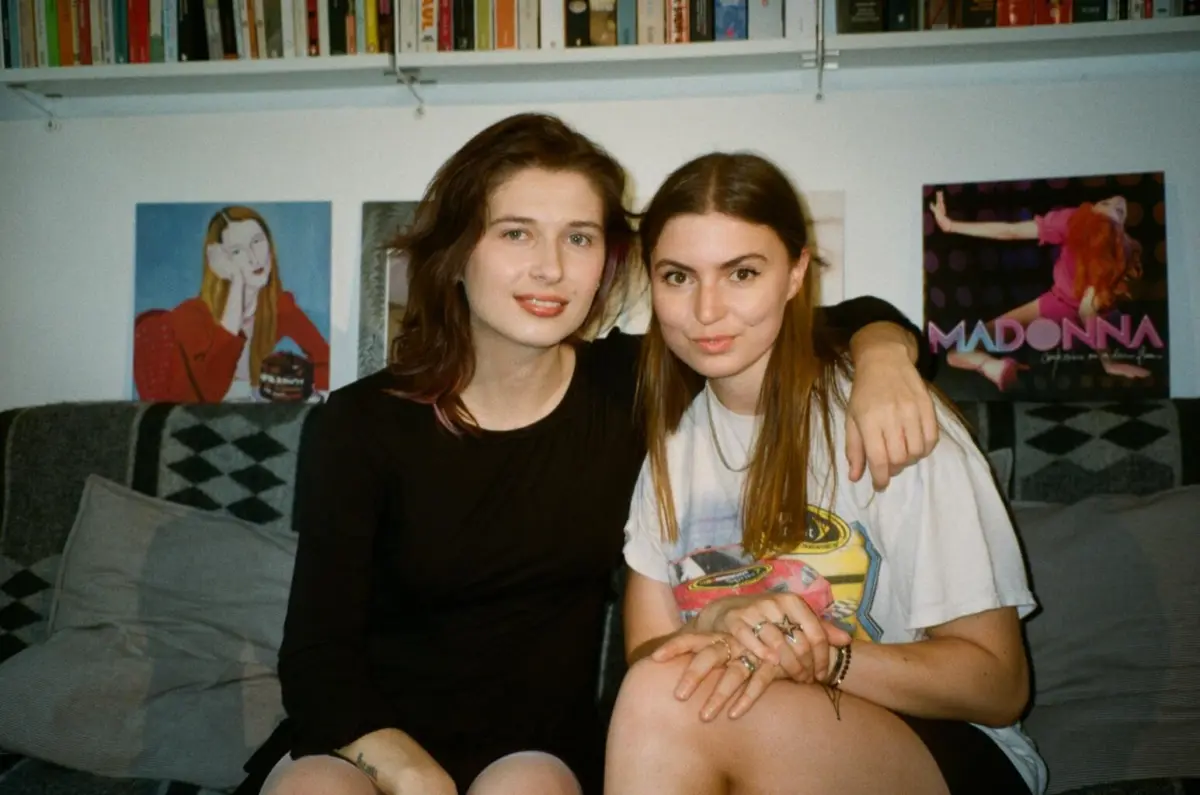
In the contemporary landscape of alternative pop music, few artists balance biting social commentary with devastating vulnerability quite as sharply as Bella Latham, universally known by her moniker Baby Queen. Following the breakout success of her expansive 2023 debut album, Quarter Life Crisis, Latham has shifted her creative lens inward. Her latest artistic statement, the sharply focused and deeply introspective record I Hope You Don’t Remember Me—released to critical acclaim this past July—marks a profound maturation in her songwriting.
Yet, beneath the glossy production and razor-sharp lyricism lies a rich, often overlooked wellspring of inspiration deeply embedded in Latham’s formative years. In the latest episode of Talk The Line, hosted by Emmeline Armitage, Latham steps away from the standard promotional circuit to embark on a remarkable journey back in time. Guiding listeners through the sonic and visual landscape of her childhood and adolescence in South Africa, Latham unpacks an unexpected muse: the avian wildlife of her birth country.
Talk The Line, a critically lauded podcast exploring the idiosyncratic detours that shape a creative life, positions this conversation as a masterclass in artistic excavation. By examining how the calls of exotic birds, the vast African skies, and the sensory landscape of the Southern Hemisphere continue to haunt her modern London-based studio sessions, Latham offers listeners a rare glimpse into the subconscious machinery of a modern pop auteur. This feature-length review examines the intersection of Latham’s migratory upbringing, her evolving musical trajectory, and the profound psychological architecture underpinning I Hope You Don’t Remember Me.
Detailed Chronology: From Durban Skies to British Indie Stardom
The South African Genesis
Long before Bella Latham was commanding festival stages across the United Kingdom and Europe under the neon-drenched banner of Baby Queen, she was a quiet, observant child growing up in South Africa. For Latham, the sensory blueprint of her youth was inextricably linked to the natural world. In her conversation with Emmeline Armitage on Talk The Line, Latham paints a vivid picture of a childhood soundtracked not by the urban hum of London traffic, but by the complex, polyrhythmic chorus of South Africa’s indigenous bird populations.
Growing up amidst diverse ecosystems, Latham developed an early fascination with avian wildlife. From the striking silhouettes of glossy starlings and sacred ibises to the piercing calls of weavers and fiscal shrikes, these creatures were active participants in her daily life. In the podcast episode, Latham reflects on how these encounters formed her earliest relationship with sound, rhythm, and atmosphere. Birds were not merely background elements in the South African landscape; they were territorial, communicative, and fiercely alive—qualities that would unconsciously bleed into Latham’s approach to vocal phrasing and lyrical arrangement years later.
The Great Displacement: Relocating to the UK
The pivotal turning point in Latham’s personal and professional trajectory occurred when she made the monumental decision to leave South Africa and relocate to London. The transition from the sprawling, sun-drenched landscapes of her homeland to the relentless, grey concrete sprawl of the British capital was nothing short of seismic.
This cultural displacement served as a crucible for the Baby Queen project. Musically, Latham channeled the alienation, disorientation, and acute observations of an outsider looking in at modern British youth culture. Her early singles functioned almost as sociological dispatches, capturing the anxieties, digital dependencies, and hedonistic coping mechanisms of Gen Z with surgical precision.
Quarter Life Crisis and Generational Commentary
The culmination of this observational phase arrived with the release of her 2023 debut album, Quarter Life Crisis. The record was widely celebrated as a defining generational document, earning praise for its unvarnished lyrical autopsy of modern coming-of-age dread. Tracks dissected the paralyzing weight of economic instability, the performative nature of social media, and the peculiar loneliness of the digital age.
Latham positioned herself as the sardonic voice of a generation trapped between economic despair and relentless optimism. However, while Quarter Life Crisis cemented her reputation as a formidable macro-commentator, it also left the artist craving a different kind of creative liberation. To look outward at the world for so long required a heavy emotional toll; the logical next step for an artist of Latham’s caliber was to turn the magnifying glass back onto herself.
I Hope You Don’t Remember Me: The Introspective Turn
Released in July, I Hope You Don’t Remember Me represents a radical departure from the broad, sweeping social critiques of her debut. The record is an exercise in emotional excavation, dealing in the currency of personal regret, romantic post-mortems, and self-interrogation.
Speaking on Talk The Line, Latham connects this shift in scale—moving from the global to the deeply personal—back to the meditative quality of her childhood memories. Just as she once sat quietly observing the intricate behaviors of South African birdlife, Latham now sits quietly observing the migratory patterns of her own memories. The record strips away some of the maximalist armor of her earlier work, leaving behind raw, exposed nerve endings and some of the finest songwriting of her career to date.
Supporting Context & Metrics: The Anatomy of Talk The Line and Modern Music Curation
The Philosophy Behind Talk The Line
Hosted by Emmeline Armitage and produced in association with The Line of Best Fit, Talk The Line occupies a unique space in contemporary music journalism and podcasting. Rather than adhering to the rigid, promotional hamster-wheel of standard album campaign interviews—where artists are routinely asked about release dates, single choices, and studio collaborations—Talk The Line operates on a fascinating premise: that the most compelling aspects of a creative life are often found far away from the day job.
The podcast serves as a cultural archive of obsession. By inviting musicians, actors, comedians, and directors to discuss their "beautiful detours"—whether that be entomology, architecture, culinary arts, or, in Baby Queen’s case, avian ornithology—the show humanizes its subjects while offering listeners a profound masterclass in lateral thinking. It posits that creative output is not produced in a vacuum; a songwriter’s ability to construct a melody is inextricably bound to how they process the world around them, down to the most seemingly insignificant details of their youth.
Commercial and Critical Metrics
To fully appreciate the weight of Latham’s creative evolution, it is essential to examine the metrics surrounding her trajectory:
- Streaming Momentum: Since bursting onto the scene, Baby Queen has amassed tens of millions of global streams, establishing a fiercely loyal international fanbase ("The Baby Club") that spans the UK, Europe, North America, and her native South Africa.
- Critical Acclaim: Quarter Life Crisis received widespread praise across premier music publications, landing on several "Best Albums of 2023" lists for its lyrical sharpness and sonic versatility.
- The Sophomore Shift: Industry metrics indicate that I Hope You Don’t Remember Me has outperformed its predecessor in terms of critical depth scores, signaling a successful transition from "hype-driven indie newcomer" to "respected, long-term artistic force."
- Podcast Engagement: Talk The Line continues to chart strongly within the music commentary category, with episodes routinely praised by cultural critics for extracting unprecedented psychological depth from high-profile artists.
Official Statements and Excerpts from the Episode
The conversation between Emmeline Armitage and Bella Latham on Talk The Line yielded several profound insights into the nature of memory, geography, and artistic identity. Below are synthesized highlights and direct thematic translations from their discussion:
On the Sonic Imprint of South Africa:
"When you grow up surrounded by that specific kind of wilderness, you don’t realize how deeply it’s wiring your brain for sound. In London, the soundscape is mechanical—cars, sirens, construction. In South Africa, my earliest memories are rhythmic, organic, and startlingly loud. Those bird calls were my first introduction to counterpoint and melody without human interference." — Bella LathamOn Moving from Sociological Observation to Self-Examination:
"With Quarter Life Crisis, I felt this intense responsibility to speak for what I saw happening around me and to my peers. But you can only look outward for so long before you realize you’re avoiding looking in the mirror. Making I Hope You Don’t Remember Me was terrifying because I couldn’t hide behind Gen Z satire or cultural commentary anymore. It was just me, sitting with my own history, trying to make peace with the ghosts of who I used to be." — Bella LathamHost Emmeline Armitage on the Essence of Latham’s Creative Process:
"What makes Bella such a fascinating guest for Talk The Line is her capacity to bridge massive conceptual ideas with hyper-specific sensory details. Whether she’s analyzing the socio-economic despair of a generation or the migratory habits of an indigenous South African bird, she treats every observation with the same poetic reverence. That is the hallmark of a true artist—the ability to find the universal in the deeply idiosyncratic." — Emmeline Armitage
Future Outlook: Where Does Baby Queen Fly Next?
As the dust settles on the release of I Hope You Don’t Remember Me and her illuminating appearance on Talk The Line, the question on every music critic’s mind is: where does Baby Queen fly next?
The trajectory mapped out by Latham indicates an artist who is actively refusing to be pigeonholed. Having conquered the realms of high-energy indie-pop, razor-sharp generational commentary, and now, bruised, introspective alternative singer-songwriting, Latham has proven her versatility.
Looking forward, several key developments are expected to shape the next chapter of the Baby Queen project:
- Global Touring Expansion: With a more intimate and emotionally resonant sophomore record under her belt, live performances are shifting. Expect Latham’s upcoming tour cycles to feature stripped-back, dynamic setlists that balance the explosive anthems of her debut with the poignant, acoustic-driven vulnerability of her latest work.
- Geographic Reconnection: Given her recent public rediscovery of her South African roots—amplified by her deep-dive conversation with Armitage—speculation is mounting regarding potential live dates or creative collaborations in Southern Africa, offering Latham a chance to close the geographical loop of her career.
- Sonic Experimentation: By proving she can write hits about both the geopolitical malaise of the internet age and the micro-details of avian wildlife, Latham has signaled that no topic is off-limits. Future releases will likely continue to blur the lines between high-concept pop polish and organic, folk-leaning storytelling.
In conclusion, Bella Latham’s journey from the bird-filled skies of South Africa to the bleeding edge of British indie-pop is a testament to the power of staying observant. As Talk The Line brilliantly illustrates, it is the beautiful, winding detours of our memories—the unexpected sounds, places, and obsessions—that ultimately grant artists the wings to fly.