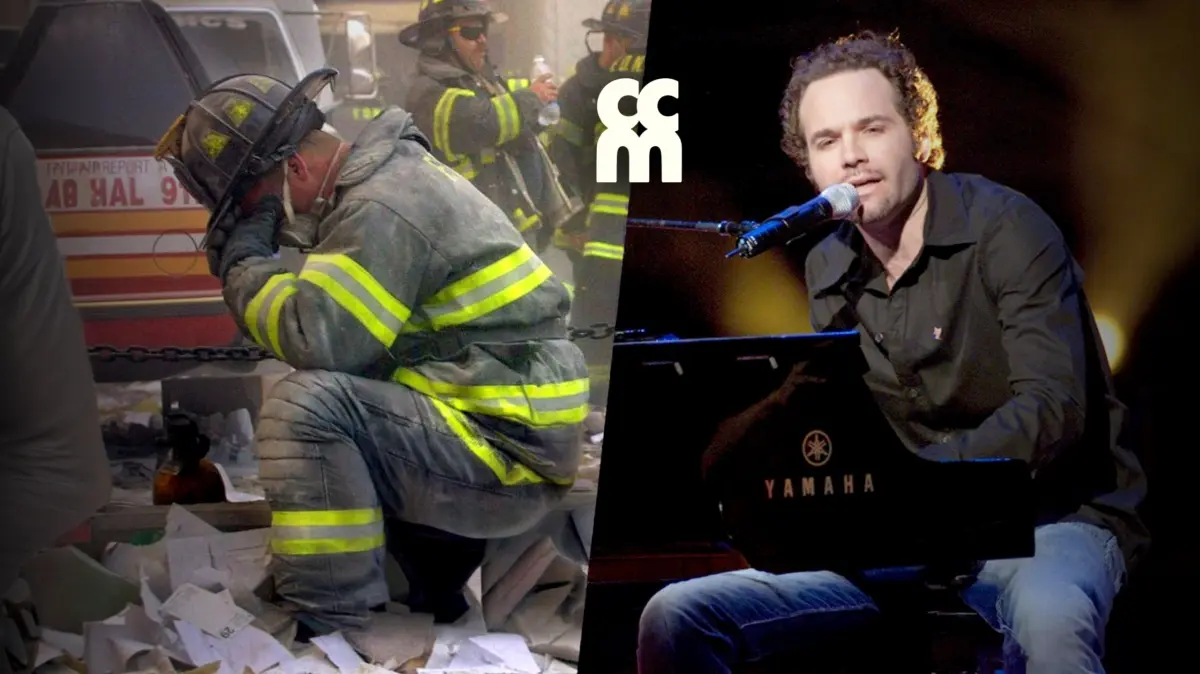
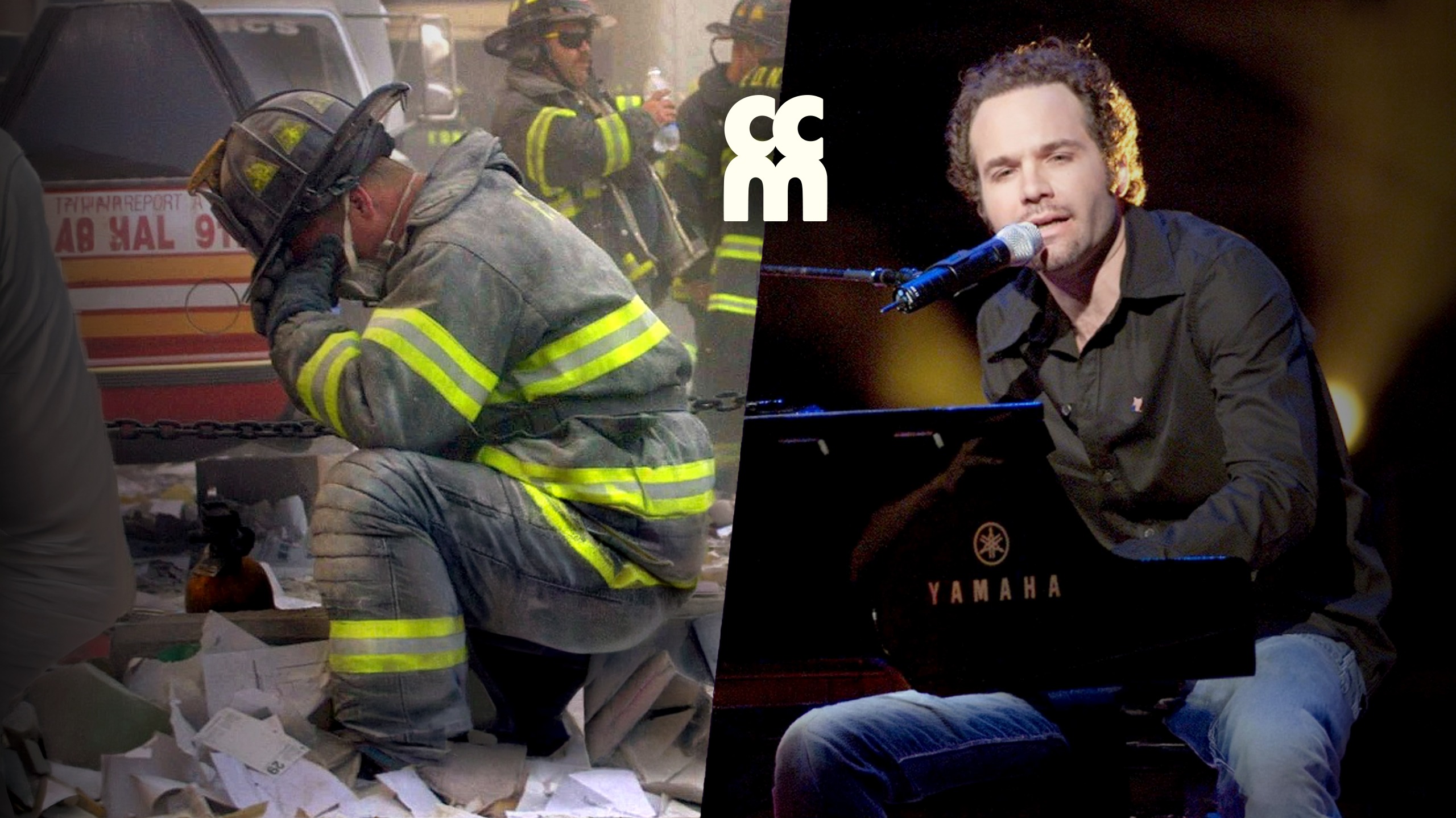
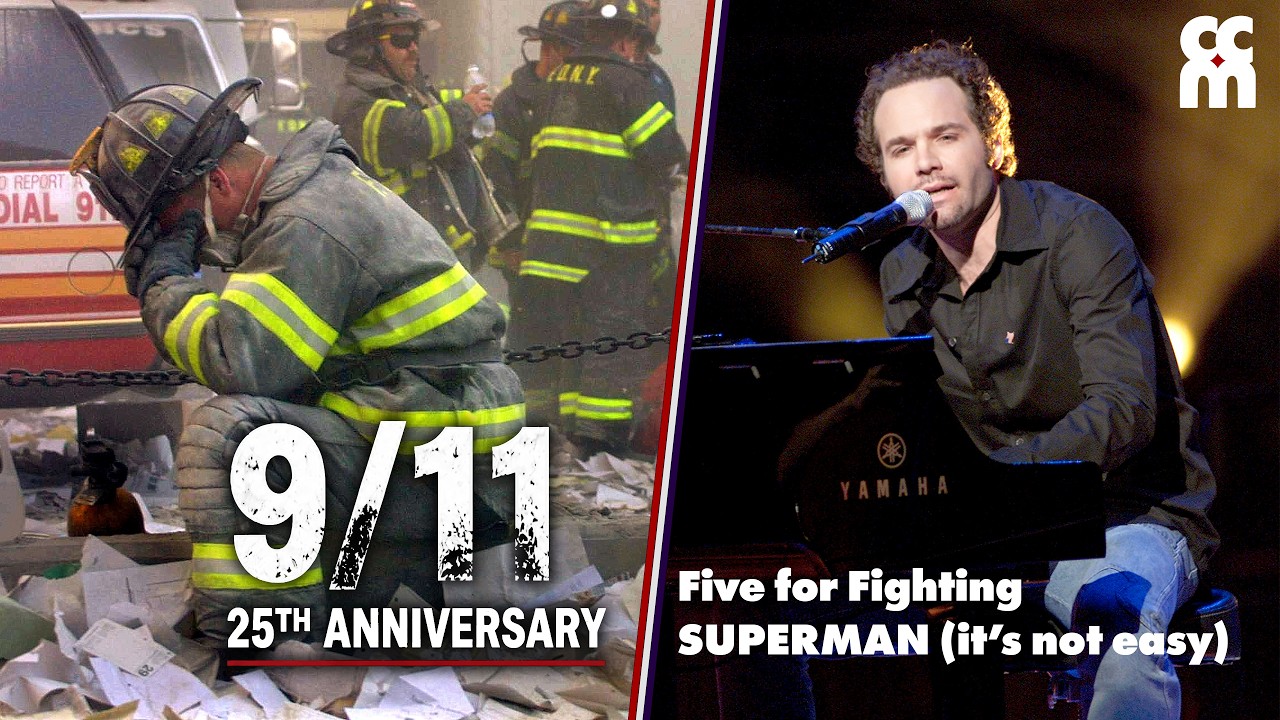
Twenty-five years after the defining tragedy of the modern era, certain melodies retain an almost gravitational pull, capable of instantly transporting listeners back to the smoke, shock, and solidarity of the weeks following September 11, 2001. In the wake of the attacks, music became the de facto vernacular of a nation struggling to process the unimaginable. It echoed through memorial services, underpinned television montages of first responders wading through rubble, and poured from car radios as a stunned populace searched for footing.
While some tracks were overtly patriotic, others were repurposed out of pure necessity. Love songs and rock anthems alike—such as Enrique Iglesias’s “Hero” and P.O.D.’s “Alive”—were drafted into service to give voice to collective grief. However, few songs became as inextricably linked to that national trauma as a humble piano ballad slowly climbing the charts at the time: Five for Fighting’s “Superman (It’s Not Easy).”
In a reflective retrospective interview, musician John Ondrasik sat down with media personality Logan Sekulow to trace the quarter-century journey of a track that stopped belonging to its creator long ago. The history of “Superman” is a profound study in how historical trauma can radically alter art, transforming a vulnerable exploration of human fragility into a timeless anthem for real-world heroes, global crisis zones, and, decades later, miraculous reunions. As the nation marks the 25th anniversary of 9/11, this deep dive explores how a reluctant record label’s gamble became a permanent fixture of modern resilience, taking its author from the side stages of New York to Hostage Square in Tel Aviv and the flight deck of the USS Nimitz.
Detailed Chronology: From a Reluctant Piano Ballad to Ground Zero
Before it became an inseparable soundtrack for firefighters, police officers, and emergency medical technicians, “Superman” was a hard sell. In the late 1990s and early 2000s, the pop landscape was dominated by high-energy boy bands and the gritty distortion of grunge music. A stripped-down piano ballad about emotional vulnerability did not immediately fit industry formulas.
[Late 1990s/2000] ──> Record Label Hesitancy (Boy bands/grunge era dominate)
       │
       ▼
[Early 2001]     ──> International Traction (Unexpected #1 hit in the Philippines)
       │
       ▼
[Sept 11, 2001]  ──> The Attacks (Ondrasik stranded in London for 10 days)
       │
       ▼
[Late Sept 2001] ──> The Shift (Media pairs "Superman" with Ground Zero footage)
       │
       ▼
[October 2001]   ──> Madison Square Garden ("The Concert for New York City")
The Struggle for Release
John Ondrasik, recording under the moniker Five for Fighting, had enjoyed a moderate hit with the track “Easy Tonight.” Executives at his label offered him one final opportunity to secure a breakout single.
"It’s funny, I had a song called Easy Tonight that was a moderate hit, and the record company said, ‘You get one more swing,’" Ondrasik recalled during his conversation with Sekulow. "And I’d seen Superman’s reaction in shows, and people forget, you know, it wasn’t 1977 with the piano all over the radio. It was little boy bands, grunge music."
Unconvinced by the commercial viability of a song focusing on the man behind the cape—exploring the weight of expectations and the heavy burden of forced strength—the label hesitated. Ondrasik stood his ground. "I’m like, if I’m going down with one song, I’m going to go down with ‘Superman.’"
International Momentum and September 11
The gamble paid off. The track began gaining traction domestically and internationally, surprising even its creator when it unexpectedly climbed to Number One in the Philippines. By September 2001, Ondrasik was traveling through Europe on a promotional tour and found himself in London when the World Trade Center was struck.
"Of course, when the first plane hit, I got calls, ‘Turn on the TV,’ and then, like everybody else, when the second plane hit, I just started calling everybody I knew in New York City and was in shock," Ondrasik remembered. It took ten days for him to secure a flight back to the United States.
While he was stranded overseas, entirely disconnected from American television broadcasts, his music was undergoing a massive cultural metamorphosis. News organizations and radio stations spontaneously began pairing “Superman” with imagery of first responders running toward burning towers—men and women acting on instincts entirely counter to self-preservation. Nobody had orchestrated the campaign; the public simply found in the lyrics a language for grief and heroism that politicians and pundits had yet to articulate.
Supporting Context & Metrics: The Magnitude of Cultural Impact
The cultural footprint of “Superman” expanded exponentially in the autumn of 2001, culminating in one of the most culturally significant benefit concerts in modern history: The Concert for New York City at Madison Square Garden.
The Madison Square Garden Phenomenon
To understand the gravity of the event, one must comprehend the sheer magnitude of the lineup. The stage featured a pantheon of rock and pop royalty: Paul McCartney, The Who, David Bowie, Billy Joel, Elton John, Eric Clapton, Mick Jagger, Keith Richards, Bon Jovi, and John Mellencamp. For a young artist who had recently been playing side stages, finding himself embedded in this ecosystem was surreal.
Ondrasik recalled paging through the show’s official itinerary, assuming his name would appear quietly near the beginning. Instead, as he turned to the final pages, he found himself sequenced among legendary acts. Yet, the famous names fading into the background of his memory, replaced by the profound humanity of the audience.
"When you meet the families who lost loved ones, when you stood with the firefighters, I really kind of immerse myself in that… Those folks, virtually all of them had been down at Ground Zero, digging through rubble, for 30 days. Again, it gave me a unique perspective."
Career-Altering Realization
That immersive experience fundamentally reoriented Ondrasik’s career trajectory. Far from being a standard promotional tour stop, the performance crystallized the precise, irreplaceable utility of art during times of existential crisis.
The Power of Solace: Music offered communities a way to process trauma when traditional dialogue failed.
Collective Resilience: Songs provided a synchronized, communal voice for millions of grieving citizens.
The Longevity of the Work: “Superman” permanently transitioned from a standard radio single into an annual memorial touchstone, carrying greater emotional weight with every passing September.
Official Statements & Reflections
Reflecting on a quarter-century of performing the song alongside his string quartet, Ondrasik emphasizes that the narrative arc of “Superman” extended far beyond the events of 2001. Decades later, the song intersected with global tragedies once more, proving that themes of vulnerability and survival transcend borders.
Following the October 7, 2001, attacks in Israel, the song found a new chapter of resonance. The impetus came from an unlikely source: the mother of an Israeli hostage who had been held captive for over 700 days.
"We did a new version of Superman that was initiated actually by the mother of Alon, who’d been a hostage over 700 days," Ondrasik explained. "She asked me, ‘Can we do something musically to put the spotlight back on the hostages?’ And I thought ‘Superman’ would be a good [way] to remind folks that for our Jewish friends, October 7th is their 9/11."
This newly minted rendition traveled the globe. During his live tours, Ondrasik consistently dedicated the performance to Alon Ohel, a gifted young pianist enduring unimaginable captivity, vocalizing his hope that the two might one day sit down and play the song together.
The Miracle of Survival
Against steep statistical odds, the narrative reached a jubilant milestone: Alon Ohel was released, returning safely to his family. The emotional peak of this journey materialized aboard the historic flight deck of the USS Nimitz, where Ondrasik and Ohel sat side by side at a piano to perform “Superman” in celebration of America’s foundational history.
"It was a miracle," Ondrasik stated plainly. "And I can’t say anything more. You know, miracles do exist. And that was a miracle… Alon would not be alive without America, so I thought having him sitting on that deck of the historic USS Nimitz playing for me spoke to a lot of people and was very significant."
Future Outlook: The Ongoing Legacy of Music in Crisis
As Five for Fighting prepares to launch its comprehensive Fall tour alongside a dedicated string quartet beginning September 19, the legacy of “Superman” stands as a testament to the unpredictable life cycle of creative work. An artist may craft lyrics with specific, personal intentions, but history and human experience frequently claim ownership of the final definition.
[The 2001 Paradigm] ──> Ground Zero / First Responders / Madison Square Garden
       │
       ▼
[The Global Stage]  ──> USO Tour Performances / International Solidarity
       │
       ▼
[Modern Era]        ──> Hostage Square (Israel) / USS Nimitz Reunion with Alon Ohel
       │
       ▼
[Future Outlook]    ──> Ongoing Fall Tour & Continuing Role of Art in Global Healing
This 25th-anniversary milestone of September 11 will inevitably be met with extensive retrospectives—analyzing geopolitical shifts, honoring the nearly 3,000 lives lost, and examining the resilience of a changing nation. Yet, the cultural commentary would remain incomplete without acknowledging the vital structural support provided by art.
In moments of profound national speechlessness, melodies serve as our unified voice. They allow communities to listen collectively, grieve collectively, and hope collectively. As John Ondrasik observed after witnessing the devastation of Ground Zero, the rubble of international conflict, and the joy of miraculous homecomings:
"I saw how music truly matters… I saw how music can really change the world and do things nothing else can."
For those seeking to experience this living history firsthand, Five for Fighting’s upcoming tour dates and ticketing information can be accessed directly via their official platform at fiveforfighting.com/tour.