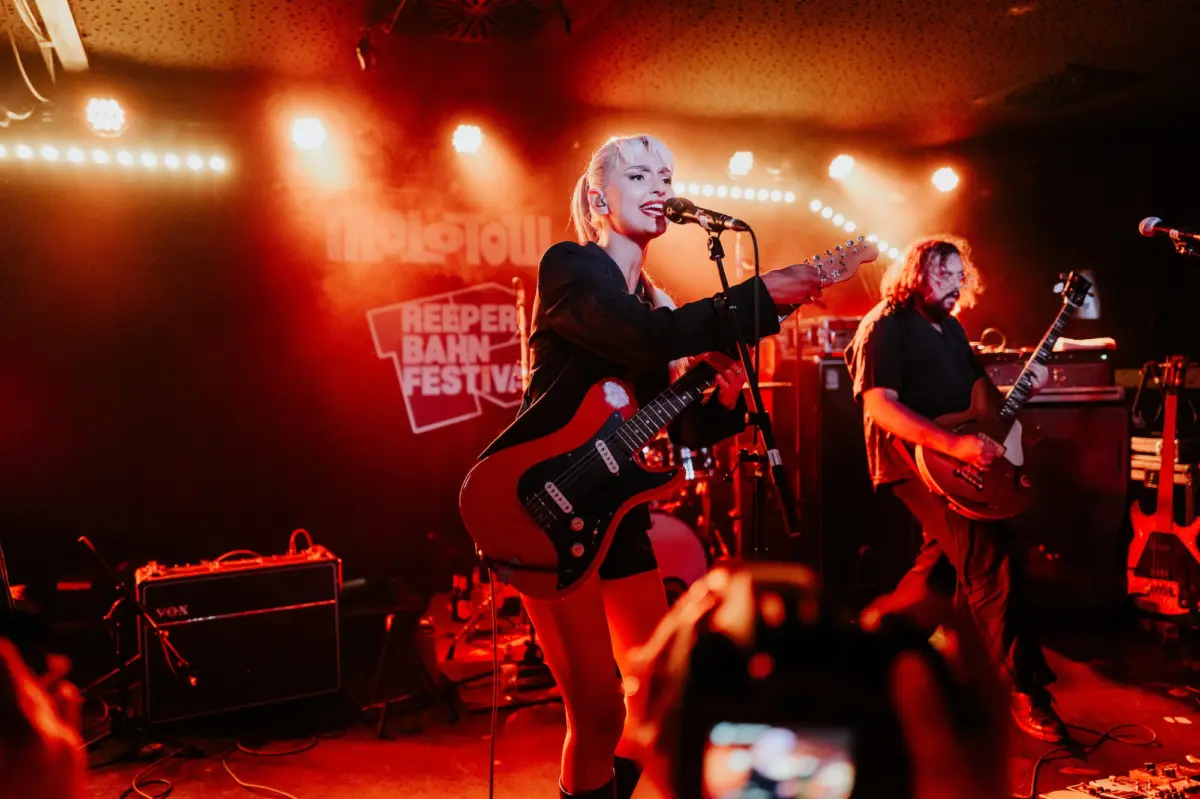
Every September, the rowdy red-light artery of Hamburg’s St. Pauli district undergoes a radical metamorphosis. The neon-lit strip—historically defined by its maritime grit, late-night carousals, and unpolished edge—surrenders its streetscape to the Reeperbahn Festival, Europe’s premier meeting ground for emerging global sound. Local nightclubs, subterranean bunker spaces, historic churches, and antiquated theatres are swiftly repurposed into stages hosting fresh, boundary-pushing talent from 44 countries.
Yet, to categorize the Reeperbahn Festival merely as a music showcase is to fundamentally misunderstand its operational architecture. Over two decades, it has evolved into a vital nexus where the commercial music industry, sociopolitical discourse, and raw artistic expression collide.
Under this year’s provocative curatorial banner—"Forever Legit?"—the festival confronted the music industry’s existential anxieties head-on. In an era dominated by algorithmic homogenization, generative AI acceleration, and shifting generational paradigms, Reeperbahn 2026 positioned young tastemakers, creatives, and marginalized voices not merely as consumers, but as the principal architects of the industry’s future. From Ukraine to Iceland, from the basement mosh pits of Molotow to the pristine acoustic engineering of the Elbphilharmonie, the festival proved that the answer to cultural legitimacy cannot be synthesized in a boardroom; it must be forged in the sweaty, unpredictable intimacy of live performance.
Detailed Chronology: A Sonic Expedition Through St. Pauli
Night One: Subterranean Vibrations and Global Perspectives
The festival’s opening night set an uncompromisingly eclectic tone. Descending into the curved, concrete bunker of the Mojo Club—a swanky subterranean venue steeped in Hamburg’s clubbing history—festival-goers were greeted by Anchor Award nominees Dov’è Liana. Sporting dark sunglasses and vibrant headscarves, the French trio bounded through a carefree, joyous set that merged Italo disco, Balearic house, and electro-funk.
"For your information, we are French, but we sing in Italian," the band joked, encapsulating the borderless identity defining modern European pop.
A short walk away at the trendy venue UWE, the Canadian Independent Music Association (CIMA) showcase presented a masterclass in genre-defying chaos. Jashim, a burgeoning non-binary multidisciplinary artist from Montréal sporting dramatic American football shoulder pads, captivated the room with a hybrid assault of dubstep, trap, Colombian cumbia, and hyperpop reminiscent of 100 Gecs. Nearby, Iceland’s Amor Vincit Omnia flew the flag for Nordic newcomers at Club 25, weaponizing breakbeats, vocoders, and ambient soundscapes to deliver a set that felt unequivocally "of the now."
For those seeking a reprieve from the kinetic debauchery of the strip, the velvet-drenched Imperial Theater—traditionally a home for crime thrillers—offered a stark sonic contrast. Here, Hamburg-based DIY artist Calid delivered minimalist, deeply moving reinterpretations of 1960s and ’70s Afghan folk music, drawing upon pre-war memories of Central Asia to honor his heritage with quiet dignity.
Night Two: Grunge Revivals and British Breakouts
Moving deeper into the St. Pauli district, just feet away from one of the area’s largest sex shops, stands Molotow. Long revered as one of Germany’s premier live music institutions, Molotow saw its designated performance slots hit full capacity well ahead of schedule throughout the week.
The venue played host to alternative trio She Her Her Hers, exemplifying the ongoing Japanese shoegaze revival, alongside fuzzy, fast-rising indie rockers Hiqpy from Amsterdam. Dublin’s Bleech followed with an electrifying display, as deadpan frontman Barry Quinlan belted out alt-grunge opener "Jackie." Despite visible frustration over early tuning troubles, Quinlan channeled a stadium-ready gravitas that had the Hamburg crowd locked in a state of frenzied mosh-pit euphoria.
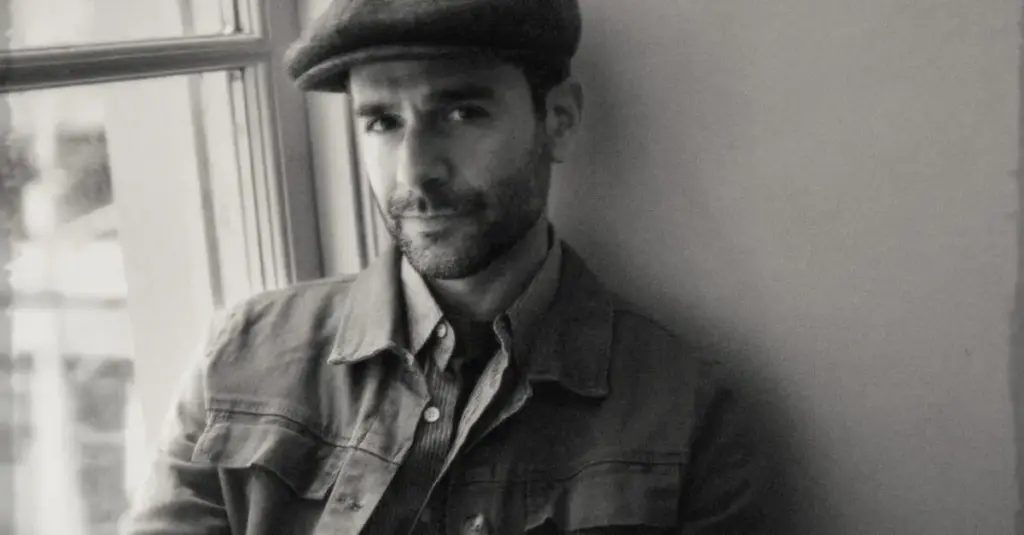
As the evening progressed, Molotow’s programming churned out a formidable succession of British breakout acts. London’s Keo delivered a confident, grunge-tinged medley ahead of their sophomore LP release, Put A Smile On Me, with frontman Finn Keogh earning stylistic nods for his retro Kangol cap. They were swiftly followed by Windmill’s 1000 Rabbits and Little Grandad, the latter showcasing a potent blend of sibling chemistry and exceptional trumpet arrangements.
Meanwhile, scaling up to the massive 1,500-capacity Docks—a legendary club that has previously hosted acts like Black Sabbath, David Bowie, and Liam Gallagher—recent Mercury Prize winners English Teacher and the riotous Fat Dog delivered monolithic headlining performances that defied the heavy drag of international jet lag.
The Weekend Crescendo: From Riot Grrrls to Classical Halls
As the festival peaked over the weekend, smaller venues continued to punch well above their weight class. At Prinzenbar, the chandelier-lit interior provided a majestic backdrop for the mellow, meditative sounds of Los Angeles-based untitled (halo). Outdoors at the Fritz-Kola-backed Heiligengeistfeld hub, Berlin’s REMOTE BONDAGE unleashed a "no-fucks-given" punk onslaught deeply rooted in the riot grrrl tradition. Down at Bahnhof Pauli, which replicates a claustrophobic U-Bahn station aesthetic, Maiah Manser utilized a formidable wind machine to deliver a powerhouse performance channeling an empowered hybrid of Caroline Polachek and Chappell Roan.
The grand finale of the festival’s cultural architecture arrived on Saturday at the architectural marvel of the Elbphilharmonie. Celebrating a decade of elite programming, the venue hosted individual Grand Hall takeovers by Sweden’s avant-garde visionary Anna von Hausswolff and the Moses Yoofee Trio. The latter offered a masterclass in nu-jazz and hip-hop fusion—a delicate equilibrium of mathematical precision and restless improvisation, featuring a substitute drummer who stepped in seamlessly to cover for an ailing Noah Fürbringer.
Supporting Context & Metrics: The Anatomy of Reeperbahn 2026
To understand the scale of the Reeperbahn Festival is to look beyond the headliners and examine its vast economic, social, and logistical footprint:
Global Reach: The 2026 edition featured fresh and upcoming talent hailing from 44 distinct countries, solidifying its status as Europe’s most comprehensive export platform for international music.
Accessibility & Pricing: In a deliberate effort to lower barriers for younger demographics, the festival introduced discounted tickets alongside the €49 SpotlightOn pass, granting full four-day access to performances, panels, and networking events.
Curated Spotlights: Specialized programming blocks were designed to dissect specific sonic ecosystems, including the Heavy Reeperbahn Spotlight, Hip-Hop Culture, and Track ID – The Spotlight On for electronic dance music.
The Anchor Award: As the festival’s premier international music prize, the Anchor Award evaluates bands on holistic artistry rather than commercial metrics. The 2026 jury—featuring industry heavyweights Sega Bodega, Oklou, Domiziana, and Jerry Heil—awarded the top prize to Ukraine’s GANNA, who continues to produce exquisite neoclassical arrangements blending nu-jazz with traditional Ukrainian folk music under extraordinary geopolitical circumstances.
Official Statements: The Philosophy of "Forever Legit?"
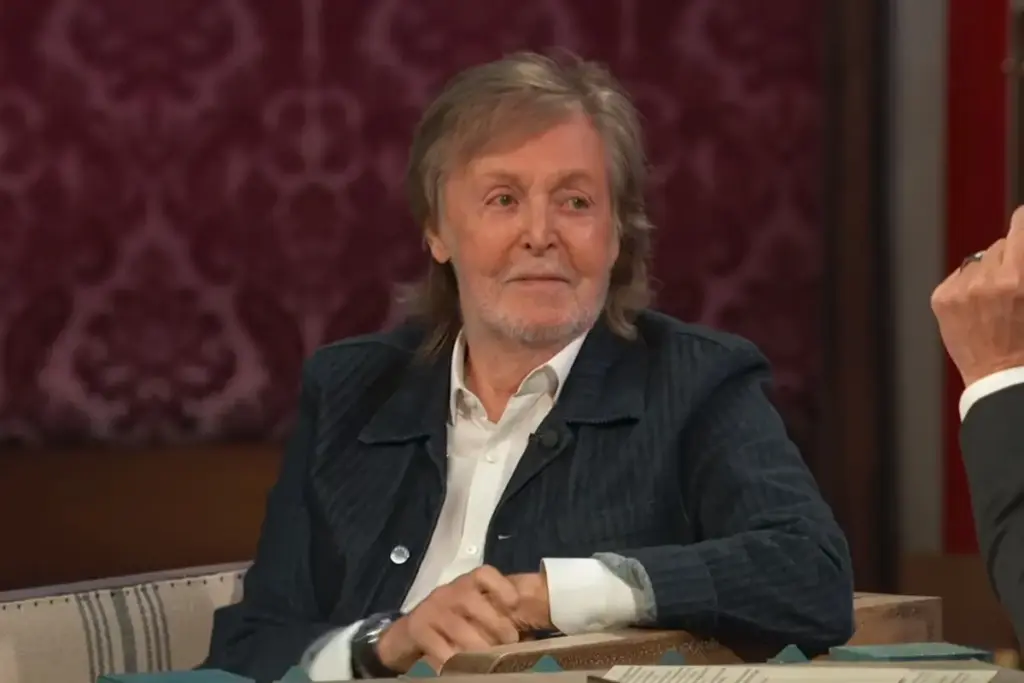
Frehn Hawel, spokesman for the Reeperbahn Festival, sat down to discuss the philosophical underpinnings of the 2026 edition, emphasizing the event’s commitment to constant evolution.
"We are proud to say that from the get-go, no edition has been the same, really," Hawel notes. While recurring institutional formats—such as the 70-minute Opening Show at Schmidts Tivoli or the ninth presentation of the International Music Journalism Award (IMJA)—anchor the event, the thematic core shifts annually to address urgent societal and industrial questions.
Last year’s theme, "Imagine Togetherness," served as an industry-wide call for cooperation, championing the protection of smaller artists, independent venues, and grassroots companies. This year’s theme, "Forever Legit?", shifted the lens directly onto generational dynamics.
"It’s very much about the younger generation, the next in cutting-edge tastemaking," Hawel explains. "Not solely as consumers, but more as shapers of the future of our industry with their values and decisions. What they consider legit, and that must not necessarily align with the current status quo."
Hawel summarizes the festival’s enduring mission with absolute clarity:
"Showcasing the most promising new international talent, addressing the most pressing matters in the creative industry with an approach for equal, fair, and sustainable solutions."
Future Outlook: Reclaiming Culture from the Algorithm
As the music industry hurtles deeper into an era dominated by generative AI, playlist-driven homogenization, and algorithmic gatekeeping, the Reeperbahn Festival has staked out a defiant counter-position.
In an unprecedented structural move to reshape business models from the ground up, the festival established the "Future Minds" consultancy board, comprising creative industry workers strictly under the age of 29. By handing agency directly to the generation best equipped to navigate digital disruption, Reeperbahn is attempting to future-proof the business of music against corporate staleness.
Furthermore, initiatives like YUNOMI—a project premiered at the Festival Village centered around clean drinking water access in Africa, conceived by social architect Onejiru Arfmann and featuring a surprise pop-up set by German rapper Jan Delay—demonstrate that the festival’s purview extends far beyond commercial entertainment into tangible social responsibility.
Ultimately, when asked whether the contemporary music industry is "forever legit," the answer cannot be found in boardrooms or data analytics dashboards. It is found on the pavement of the Reeperbahn: in the grit of a crowded basement club, the warm hum of an analog amp, the communal sharing of a late-night currywurst, and the unbridled, unpredictable brilliance of a new generation refusing to play by yesterday’s rules.