
Executive Overview
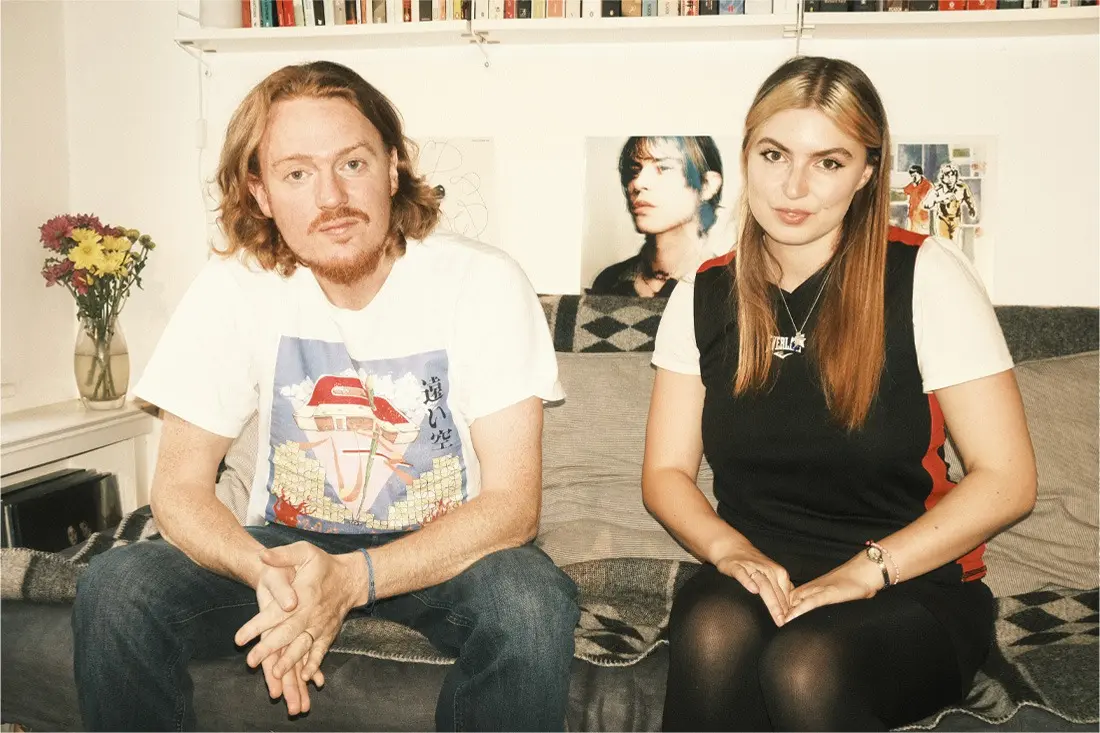
In the modern landscape of independent music, few figures match the sheer, relentless output of William Dorey. Operating under the moniker Skinshape, the British singer-songwriter, multi-instrumentalist, producer, and former member of the indie-rock outfit Palace has carved out a singular sonic ecosystem across ten critically acclaimed LPs. His music is frequently described as sun-dappled, lo-fi, and deeply cinematic—a meticulous pastiche of 1960s and 70s psychedelic folk, dub, funk, and soulful orchestration. Yet, as Dorey prepares for the release of his eleventh studio album, Chapman’s Pool, and a subsequent European tour this November, his creative aperture has expanded far beyond the mixing console and the fretboard.
Appearing on the latest installment of The Line of Best Fit’s acclaimed interview podcast, Talk The Line, Dorey shifts his focus away from the standard promotional machinery of album releases to delve deep into an unexpected obsession: mushroom foraging.
Talk The Line is an ongoing journalistic exploration into the beautiful detours that animate a creative life—the unconventional fascinations, eccentric hobbies, and deep-seated obsessions that exist miles away from the day jobs of musicians, directors, comedians, and actors. For Dorey, the forest floor has become just as vital a canvas as the multitrack recorder. This special feature examines the intersection of Dorey’s meticulous sonic worlds and his profound mycological expertise, tracing how his woodland expeditions inform his artistic output, contextualizing his upcoming eleventh release, and assessing the broader landscape of an artist who refuses to be pigeonholed by genre or medium.
Detailed Chronology: From the Foundations of Palace to Fungal Expeditions
The Genesis of Skinshape and the Palace Years
To understand William Dorey’s current creative trajectory, one must trace the winding path that led him to the forefront of contemporary indie-psychedelia. Growing up in the UK with an insatiable appetite for dusty vinyl records, obscure world music, and vintage recording equipment, Dorey established himself early on as a musician of rare textural sensitivity.
His breakthrough into the broader British indie consciousness came as a founding bassist for Palace, a band celebrated for its melancholic, atmospheric guitar-pop. However, the collaborative, high-pressure environment of a traditional band setup soon gave way to a desire for total sonic autonomy. In 2014, Dorey launched Skinshape as a solo vehicle—a sanctuary where he could experiment freely with analog gear, tape machines, and an eclectic palette of global influences ranging from West African highlife to Greek rebetiko.
Over the span of a decade, Dorey maintained a blistering release schedule, quietly dropping ten full-length records that amassed a fiercely loyal, organic global following. Tracks like "Holyland" and "I Got The Key" became staples of internet-era chillout playlists, characterized by their warmth, tape hiss, and organic instrumentation. Yet, behind the warmth of these sun-dappled dreamscapes lay a parallel journey taking place in the damp, quiet woodlands of the British countryside.
The Turn Toward the Woodland Floor
While Dorey’s musical output was swelling year on year, a concurrent passion was taking root in his personal life. Long before the term "foraging" became a widespread cultural buzzword associated with artisanal gastronomy and wellness culture, Dorey was quietly cultivating an encyclopedic knowledge of mycology.
What began as casual countryside walks during breaks from recording evolved into an obsessive, scientific, and artistic pursuit. In his conversation on Talk The Line, Dorey articulates how the act of hunting for wild fungi mirrors the creative process of music production. Both require immense patience, an eye for hidden details, an understanding of complex ecosystems, and a willingness to venture off the beaten path.
The chronology of Dorey’s mycological education runs parallel to the maturation of the Skinshape sound. As his albums became more textured and layered—incorporating intricate field recordings and acoustic spaces—his ability to identify rare and obscure mushroom species deepened. For Dorey, the forest is not merely a place of leisure; it is an alternative archive of rhythm, color, and decay that directly influences the atmospheric weight of his records.
Supporting Context & Metrics: The Anatomy of a Prolific Indie Career
To grasp the magnitude of William Dorey’s creative output, it is necessary to examine the metrics and cultural footprint of the Skinshape enterprise. In an era where artists often take three to four years between albums to capitalize on streaming algorithms and marketing cycles, Dorey operates on a classic, almost vintage release cadence.
| Metric / Indicator | Data Point / Description |
|---|---|
| Total Studio Albums | 10 released (11th album, Chapman’s Pool, releasing October 30) |
| Primary Instruments | Bass, guitar, keyboards, an array of vintage percussion, and analog mixing gear |
| Key Collaborative Eras | Former bassist for Palace; primary auteur of Skinshape since 2014 |
| Primary Influences | 60s/70s psych-folk, vintage soul, West African highlife, dub, and field mycology |
| Media Platform | Featured guest on Talk The Line podcast (new episodes drop every Friday) |
The Economics and Aesthetics of Lo-Fi Independence
Skinshape’s success serves as a masterclass in modern independent music economics. Operating largely outside the traditional major-label ecosystem, Dorey has retained 100% creative control over his master recordings and publishing. This independence affords him the luxury of disappearing into the woods for days at a time, returning not with writer’s block, but with the renewed perspective necessary to helm an album campaign.
The upcoming release of Chapman’s Pool on October 30 marks another milestone in this independent framework. Named after the secluded, rugged bay on the Jurassic Coast of Dorset, England, the title itself evokes topography, earth, and untamed nature—themes that bridge Dorey’s musical vistas with his passion for the natural world. The album is expected to lean further into the organic warmth that defines his catalog, serving as the sonic equivalent of a woodland canopy filtered through analog tape.
Official Statements and Insights
The philosophical core of Dorey’s dual life as a musician and forager is laid bare in his extensive interview on Talk The Line. Speaking on the nature of creative detours, Dorey sheds light on why artists must look beyond their primary disciplines to maintain longevity and inspiration.
"When you spend your entire life inside a studio looking at waveforms, mixing desks, and screens, your brain develops a very specific kind of fatigue," Dorey explains during the podcast. "Stepping out into the woods to hunt for fungi is the ultimate antidote. You are forced to slow down, to look at the ground, to notice the minute variations in color, texture, and environment. It completely resets your creative wiring."
This sentiment strikes at the very heart of Talk The Line’s editorial mission. Hosted by cultural chroniclers who seek to understand the eccentricities of modern creators, the podcast examines how these seemingly disconnected hobbies often provide the psychological sustenance required to produce enduring art.
Dorey expands on the parallels between tracking down rare musical samples and discovering elusive fungal specimens:
"There is a very distinct dopamine hit when you spot a rare chanterelle or a pristine porcini hiding under a thick layer of oak leaves. It’s remarkably similar to the feeling of digging through a crate of forgotten vinyl and pulling out a masterpiece, or finally nailing the exact guitar tone you’ve been chasing for three days. It’s all about the hunt, the identification, and the deep appreciation for things that exist outside the mainstream algorithm."
Future Outlook: The Chapman’s Pool Era and European Tour
As the leaves begin to turn and the autumnal foraging season reaches its peak in the British Isles, William Dorey is poised to transition from the forest floor back to the live stage. The release of Chapman’s Pool on October 30 serves as the anchor for a busy end-of-year schedule, culminating in a short but highly anticipated European tour kicking off this November.
Navigating the Live Environment
Translating Skinshape’s intensely intimate, studio-crafted soundscapes into a live concert experience has always been an exercise in atmospheric world-building. Dorey and his touring ensemble are known for creating immersive auditory environments where audiences can lose themselves in undulating basslines, shimmering vintage electric pianos, and hypnotic guitar phrasing.
The inclusion of tracks from Chapman’s Pool into the live setlist promises to showcase an artist continuing to refine his craft. Critics and fans alike will be listening closely to hear how the themes of isolation, coastal topography, and natural wonder manifest in a live setting.
The Enduring Value of Creative Detours
Looking further ahead, Dorey’s trajectory offers a blueprint for contemporary creators navigating an increasingly homogenized digital culture. By maintaining a healthy distance from the relentless demands of constant online engagement—choosing instead to immerse himself in the tactile realities of analog recording and forest foraging—Dorey ensures his well of inspiration remains deep.
As Talk The Line continues its weekly exploration of creative anomalies every Friday across all major podcast platforms, episodes featuring polymaths like William Dorey stand as essential listening. They remind us that the most compelling art is rarely born in a vacuum; rather, it is synthesized from the rich, complex intersections of a well-lived, deeply curious life.
Whether he is unearthing a rare psychedelic groove from a 1970s obscure compilation or identifying a delicate bracket fungus on a decaying beech tree, William Dorey remains an artist wholly attuned to the hidden frequencies of the world around him. With Chapman’s Pool arriving this October and a European tour on the horizon, the Skinshape universe is set to expand once more—grounded firmly in earth, tape, and timeless sound.