
Executive Overview
The opening weeks of a new academic year establish the psychological and technical trajectory for any choral ensemble. For choir directors, the initial moments of the very first rehearsal set the standard for classroom culture, vocal expectations, and student engagement. Traditionally, however, these critical minutes are bogged down by logistical friction. Directors are often tethered to the piano bench, desperately trying to play accompaniments, modulating through complex key changes on the fly, and straining to catch subtle pitch or posture issues festering in the back rows.
A paradigm shift is underway. By marrying the pedagogical brilliance of printed resources like Bethany Main’s Choir Up! with the interactive digital capabilities of MakeMusic, modern music educators are automating the mechanical burdens of rehearsal management. This technological integration frees directors to step away from the keyboard, roam the room, and focus on what truly matters: holistic vocal pedagogy, ensemble cohesion, and inspiring a lifelong love of music in their students. This report explores a battle-tested, four-step rehearsal blueprint designed to captivate singers from day one, enhance music literacy, and streamline the modern choral classroom.
Detailed Chronology: A Step-by-Step Rehearsal Blueprint
To maximize the potential of the modern digital classroom, educators are deploying a structured, sequential workflow during the opening weeks of the term. This blueprint transitions an ensemble from physical warm-ups to sophisticated repertoire study seamlessly.
Step 1: Establishing Joy and Kinesthetic Engagement
Vocal technique cannot exist in a vacuum; healthy sound production requires total body awareness and physical engagement. Bethany Main’s pedagogical resource, Choir Up!, addresses this by bridging the gap between physical movement, playful exploration, and healthy vocal mechanics.
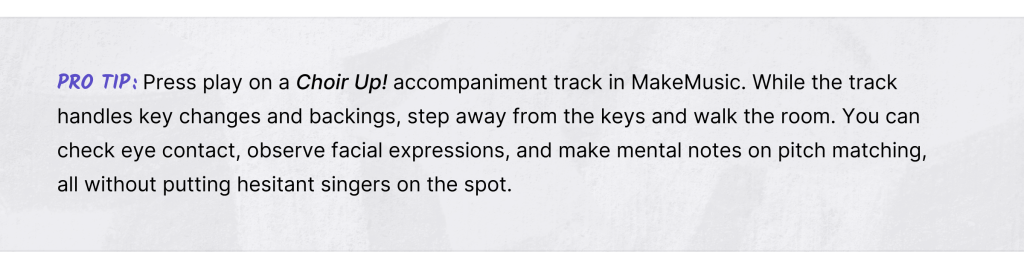
In its traditional print format, Choir Up! provides directors with foundational melodies, clever lyrics, and intuitive movement prompts. For example, exercises compare upright, energized posture to "sleepy, grumpy, unconscious" days to humorously contrast poor alignment with performance-ready stance. However, when educators open these exact exercises inside the MakeMusic platform, static 8-bar printed exercises are instantly transformed into fully orchestrated, dynamically modulating lessons. The software handles the piano accompaniment and modulation seamlessly, allowing the director to circulate the room, observe student posture firsthand, and correct physical habits before they become ingrained.
Step 2: Hooking Students with High-Energy Pop Melodies
Once the ensemble is physically active, breathing correctly, and mentally present, directors face the challenge of bridging foundational vocal technique with contemporary stylistic preferences. To achieve high buy-in, many educators pivot to the Pop Warm-Ups collection by Jack Zaino—a MakeMusic exclusive resource.
These exercises cleverly adapt iconic, instantly recognizable pop hooks into structured vocal drills backed by authentic rock and pop band tracks. Because the backing tracks replicate the high-fidelity sound of a real studio band rather than a standard, sterile classical piano, students buy into the exercises immediately. This stylistic bridge allows directors to teach complex vocal techniques—such as mix-belt coordination, stylistic phrasing, and vowel modification—using music that resonates with contemporary adolescent culture.
Step 3: Achieving Infinite Music Literacy
One of the most persistent hurdles in choral education is the stagnation of sight-reading materials. Traditional printed sight-reading books suffer from a finite number of examples. Once a choir works through a book, students frequently memorize the patterns rather than developing true music-reading literacy.
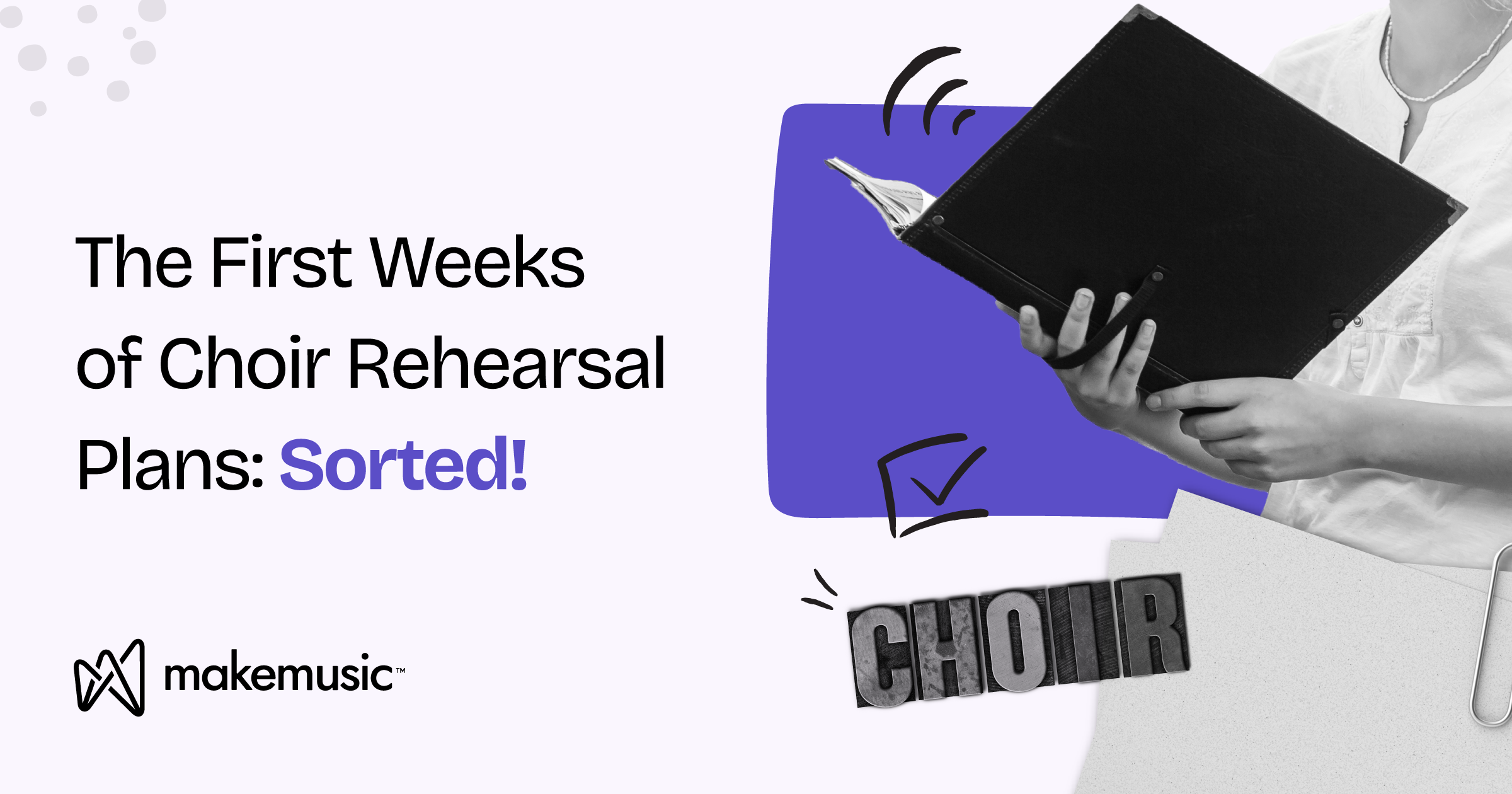
The integration of the classic Sing at First Sight method with MakeMusic’s advanced Sight Reading Studio solves this problem definitively. Directors now have access to auto-generated, concept-correlated templates in unlimited supply. Whether an ensemble requires three quick review examples at the start of a class or fifty unique variations to master a tricky syncopated rhythm or minor key signature, the generator ensures the material never runs dry. Because every generated example adheres strictly to pedagogical milestones, teachers can reliably assess individual sight-reading capabilities without the fear of students relying on rote memorization.
Step 4: Seamless Transitions to Repertoire and Strategic "Brain Breaks"
With physical warm-ups completed, contemporary pop-infused technique drills locked in, and sight-reading competencies sharpened, the ensemble enters a primed, receptive state. At this stage, directors can seamlessly transition into concert repertoire, accessing massive octavo catalogs directly through digital platforms.
Yet, even the most focused ensembles experience cognitive fatigue during intense sections of complex repertoire work. To combat mental burnout, innovative directors are utilizing strategic "brain breaks." By pulling a creative movement page from Bethany Main’s Choir Up!, utilizing Anna Wentlent’s The Choral Playbook, or cueing up a vibrant two-minute Pop Warm-Up track, directors can reset their singers’ focus mid-rehearsal. These brief, structured diversions revitalize the room, lower cortisol levels, and prepare students to dive back into demanding choral literature with renewed energy.
Supporting Context & Metrics: The Shift Toward Digital Pedagogies
The adoption of digital tools in the choral classroom is not merely a matter of convenience; it represents a fundamental evolution in how music educators address structural challenges in schools.
The Cost of the Piano Tether
Historically, choral directors have functioned as one-person bands during warm-ups. A typical rehearsal structure required the director to read a score, play rolling arpeggios on an acoustic piano, transpose keys manually to accommodate changing voice parts, and visually monitor fifty to one hundred students simultaneously.
Educational workflow studies indicate that directors tethered to a keyboard miss up to 60% of individual vocal posture faults occurring outside their direct line of sight. By automating accompaniments and key modulations via software like MakeMusic, directors reclaim roughly 12 to 15 minutes of instructional mobility per rehearsal. This reclaimed time allows for targeted diagnostic interventions, resulting in faster vocal blending and reduced vocal strain across the ensemble.
Combating Attrition Through Modern Relevance
Music program retention relies heavily on student engagement during the first month of school. High school and middle school singers frequently report feeling disconnected from traditional choral repertoire during early-term warm-ups. Integrating modern pop idioms and gamified sight-reading platforms directly addresses this engagement gap. Classrooms utilizing interactive, genre-blending warm-up suites report measurable increases in student retention from the drop/add period through the final concert cycle.
Official Statements & Expert Perspectives
Music education leaders and curriculum developers have increasingly emphasized the necessity of balancing time-tested pedagogical foundations with modern technological enhancements.
"The first few weeks of choir class set the tone for the entire year, and those first few minutes set the tone for the rest of class," notes the curatorial team behind MakeMusic’s back-to-school choral initiative. "This time is critical for building vocal technique, establishing culture, and getting buy-in from students. When you remove the mechanical burdens of accompaniment, the director transforms from a pianist into an active observer and coach."
Pedagogues emphasize that digital tools are not designed to replace human artistry, but rather to amplify it. Bethany Main, author of Choir Up!, has frequently highlighted the importance of kinesthetic movement in vocal development:
"When students engage their bodies, their voices follow. The goal of early-rehearsal work is to wake up the instrument safely and joyfully. Technology shouldn’t sterilize that process—it should amplify the energy in the room and give the teacher the freedom to connect personally with every singer."
Similarly, curriculum specialists point out that infinite sight-reading generation bridges the equity gap in music education. In under-resourced districts where purchasing new consumable sight-reading books annually is financially prohibitive, digital generation engines ensure that every student has access to fresh, high-quality literacy tools without straining departmental budgets.
Future Outlook: The Next Era of Choral Direction
As educational technology continues to evolve, the intersection of printed methodology and digital orchestration will likely become the standard baseline for teacher-preparation programs.
Future iterations of choral software will likely incorporate more advanced diagnostic capabilities, such as real-time pitch-tracking visualizations for entire sections and automated feedback loops for individual sight-singing assessments. However, the core philosophy will remain unchanged: technology exists to serve the art, not the other way around.
By utilizing comprehensive systems that combine interactive warm-ups, pop-infused stylistic studies, limitless music literacy generators, and seamless octavo access, today’s choir directors are redefining what is possible in the rehearsal space. Directors are no longer trapped behind the piano bench; they are out in the room, fostering a vibrant culture centered on joy, vocal health, musical accuracy, and uncompromising artistic excellence.
For music educators looking to reclaim their rehearsal mobility and modernize their foundational teaching strategies, exploring integrated suites like MakeMusic—and leveraging foundational resources such as Choir Up!, Pop Warm-Ups, and Sing at First Sight—offers a clear path forward toward a more efficient, engaging, and joyful choral year.