
Executive Overview
In the landscape of modern classical music, few milestones carry the weight, the poetic resonance, or the sheer chronological impossibility of György Kurtág’s monumental milestone. Having celebrated his centenary this February, the venerable Hungarian composer occupies a space in contemporary art akin to a living monument. Yet, his crowning achievement—his first and only opera, Fin de partie (Endgame)—did not arrive during the impetuous fire of youth or the calculated brilliance of middle age. Instead, it was forged during his late eighties and early nineties, culminating in a triumphant 2018 world premiere at Milan’s fabled Teatro alla Scala.
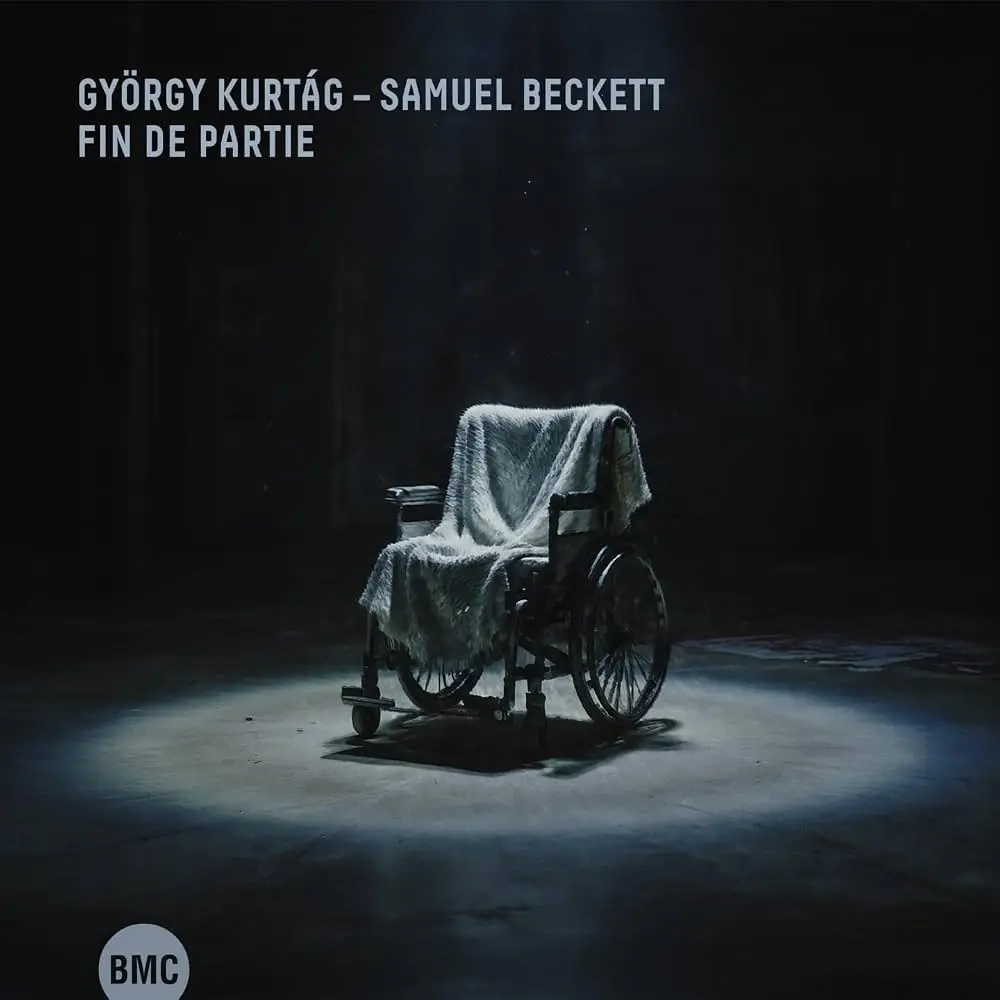
Now, this monumental contribution to lyric theater receives its first commercial release via BMC CD 363, a live 2020 concert recording captured in Budapest and issued by the house label of the Budapest Music Center (BMC). For an institute where Kurtág maintained an apartment and painstakingly shaped much of the score, this release serves as both a historical preservation and a masterclass in modern operatic documentation. At two hours in length, Fin de partie is the longest score of Kurtág’s career—a staggering expansion for a composer celebrated globally as a master of the musical miniaturist tradition, where entire movements frequently transpire in mere seconds.
Based on Samuel Beckett’s stark 1957 French-language absurdist play, the opera represents an uncanny meeting of minds: a titanic dramatist of existential dread and an octogenarian composer confronting the twilight of his own extraordinary life. This recording, while lacking an enclosed libretto due to licensing complexities, invites listeners into a gray eternity—a tragicomic purgatory where time dissolves, memories curdle, and the only certainty is the inexorable approach of the end.
Detailed Chronology
The Genesis of an Improbable Opera
The creative trajectory of Fin de partie spans decades of mutual aesthetic reverence between two giants of twentieth-century avant-garde art, though they operated in distinct mediums. Samuel Beckett’s play, first produced in French, outlines a desolate world stripped of all natural vitality. The narrative unfolds in a dingy, light-starved interior where the blind, tyrannical Hamm issues cruel commands to his bitter yet tethered servant, Clov. Confined to the same room are Hamm’s legless parents, Nagg and Nell, who exist entombed within sand-lined ashbins, popping out intermittently like grotesque jack-in-the-boxes.
For decades, the idea of setting Beckett’s tightly controlled, rhythmic prose to music was considered a fool’s errand. Beckett himself was notoriously protective of his texts, frequently resisting attempts to adapt his stage works into lyric theater. Yet, Kurtág, possessing a profound sensitivity to European linguistic prosody and a lifelong affinity for Beckett’s worldview, spent two years thoroughly internalizing the French script before penning a single note.
The result of this exhaustive gestation period was unveiled at La Scala in 2018, echoing a historical resonance from more than a century prior. It recalled Giuseppe Verdi’s geriatric masterpiece, Falstaff, which premiered at the very same Milan landmark when the Italian titan was seventy-nine. Yet, Kurtág pushed the boundaries of compositional longevity even further, delivering a complex theatrical statement in his late eighties.
The Live Budapest Recording
The new commercial release stems from a 2020 concert performance in Budapest, an environment intimately tied to the composer’s later years. Captured under the expert baton of conductor Markus Stenz—who also helmed the La Scala world premiere—the performance exhibits an astonishing degree of familiarity with Kurtág’s labyrinthine musical architecture. Stenz leads the Danubia Orchestra with a rare combination of structural rigor and improvisatory freedom, ensuring that every isolated sonic detail breathes with theatrical immediacy.
Despite being captured in a live concert setting, the audio engineering preserves the intricate dynamic contrasts of Kurtág’s sparse, Bartókian orchestration. From the piercing squeaks of wind instruments to the hollow thuds of the timpani doubling the vocal line, the recording encapsulates the stark acoustic landscape of Beckett’s theatrical wasteland.
Supporting Context & Metrics
Musical Architecture and the "Additive" Logic
To fully grasp the musical framework of Fin de partie, one must understand its relationship with time. The opera’s overarching structure avoids traditional grand-scale symphonic architecture, mirroring instead the meandering, recursive logic of Beckett’s text. Kurtág relies on a micro-compositional technique, stacking thousands of discrete musical moments that accumulate like Zeno’s paradox of the millet grains—an image explicitly invoked by Hamm during the drama.
This "plus-one" additive logic is brilliantly demonstrated in the opera’s opening moments. Clov’s initial line—“Finished, it’s finished, it will finish”—is set with rigorous attention to French declamation:
- Two notes for "Fini"
- A calculated pause, followed by three notes for "c’est fini"
- Another pause, concluding with four notes for "ça va finir"
This incremental growth directly prefigures Clov’s subsequent observation regarding the accumulation of time and matter: "Grain upon grain, one by one, and one day, suddenly, there’s a heap, a little heap, the impossible heap." Kurtág scatters these additive grain motives throughout the score, turning the orchestra into an acoustic hourglass that measures the imperceptible trickle of life toward its terminus.
Leitmotifs and Nostalgic Interruptions
While not as systematically deployed as in the works of Richard Wagner, Kurtág’s use of leitmotifs functions through variation rather than exact repetition. Motifs recur transformed by altered intervals, sounding less like rigid thematic statements and more like the faltering memories of aging minds.
A striking exception occurs at the opera’s very outset with the introduction of a simple ABA melody performed on the bayan (a Russian accordion). This folk-inflected waltz, a sentimental exercise from Kurtág’s youth, serves as a poignant emotional anchor. It reappears when Nell sings the word "hier" (yesterday), fondly recalling an engagement-era boat ride on Lake Como with Nagg. As Nell describes looking down into the crystal-clear water, Kurtág quotes the rocking boat motif from Sergei Rachmaninoff’s Isle of the Dead before shifting the waltz theme to the clarinet.
This juxtaposition of kitschy nostalgia with the grim reality of the ashbins underscores what can be described as the pathetic aesthetic of the opera—not in the sense of evoking noble pathos, but in the colloquial understanding of something that blends the pitiful with the absurd.
The Vocal Ensemble and Character Portrayals
The cast assembled for this historic recording delivers tour-de-force vocal interpretations that elevate the material beyond mere theatrical exercise:
- Frode Olsen (Hamm): Taking on the mammoth role of the tyrannical master, Olsen channels the theatrical energy of comedic legends like Zero Mostel or Bert Lahr. His performance is characterized by an affected, world-weary lethargy, underscored by drowsy bassoon accompaniment and timpani doublings that deepen his vocal resonance.
- Zsolt Haja (Clov): Haja portrays the abused servant with a simmering, long-repressed resentment, hinting at a tragic backstory that includes the potential abandonment of his own child. His final monologue captures a profound, wearisome entrapment.
- Leonardo Cortellazzi (Nagg): Displaying natural comedic timing, the tenor brings theatrical flair to Nagg’s dark jokes, most notably the existential parable comparing the creation of the world to the tailoring of a pair of trousers.
- Hilary Summers (Nell): As the least repulsive of the quartet, contralto Hilary Summers provides an emotional core that transcends the original play. Her delivery of Beckett’s poem Roundelay during the prologue showcases the dark, tannic warmth of her lower register, while her musical interactions with Cortellazzi capture the vocal convergence typical of lifelong couples.
Official Statements & Analytical Perspectives
Critical reception of Fin de partie has consistently emphasized its unprecedented fusion of theatrical absurdism and rigorous musical craftsmanship. Musicologists and critics note that Kurtág’s decision to tackle Beckett in his late eighties was not merely an artistic challenge, but an existential inevitability.
"A text like Fin de partie could only be set to music by an elderly composer—someone who has lived an exhaustingly long life and occupied that tragicomic stage of existence that directly precedes the end."
Furthermore, the orchestration reflects a deliberate aesthetic choice to mix high-art modernism with vaudevillian grotesquerie. By incorporating unorthodox instruments such as the steel drum, the bayan, and the cimbalom—the latter serving as a folksy, nostalgic nod to his Hungarian heritage—Kurtág constructs a sonic world where bleak ennui meets slapstick absurdity. As Nell observes, encapsulating the entire ethos of the production: "Nothing is funnier than unhappiness."
Future Outlook
The release of BMC CD 363 marks a watershed moment for contemporary opera. As György Kurtág continues to enjoy his centenary year, this recording ensures that his solitary foray into lyric theater is no longer confined to privileged audiences in Milan or Budapest, but is accessible to the global classical music community.
Looking forward, Fin de partie is poised to occupy a permanent place in the canon of twentieth-century masterpieces. Its synthesis of Beckettian minimalism and Kurtág’s micro-compositional genius challenges future generations of directors, conductors, and vocalists to confront the absurdities of existence head-on. While the lack of a printed libretto in the current CD packaging requires listeners to seek out Beckett’s English translations independently, the music speaks with a directness that transcends linguistic barriers.
In the final analysis, Kurtág’s Fin de partie stands as a triumphant monument to artistic endurance—a brilliant, stuttering, and deeply human meditation on the endgame we all must eventually face.