
Executive Overview
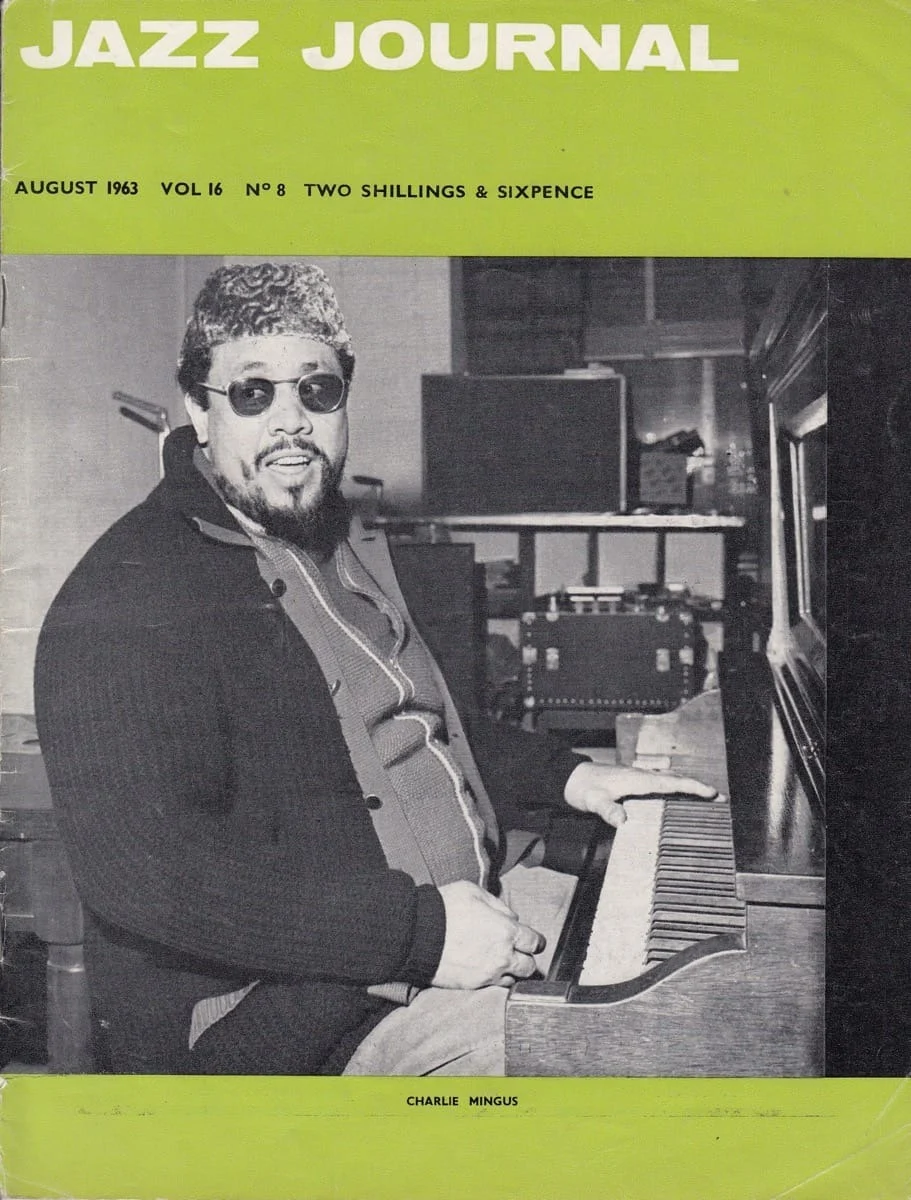
The landscape of American jazz underwent a seismic, irreversible evolution during the 1950s. At the epicenter of this creative earthquake stood two distinct compositional titans: bassist, bandleader, and visionary provocateur Charles Mingus, alongside pianist, composer, and architect of hard bop Horace Silver. While both artists operated within the rich, expressive vocabulary of the blues and the burgeoning post-bop movement, their methodologies, temperaments, and structural approaches diverged into wildly different masterclasses of modern composition.
This report offers an authoritative, deep-dive retrospective into two definitive recordings from this golden era: Charles Mingus’s 1959 masterwork Mingus Ah Um and Horace Silver’s 1956 breakout statement, Silver’s Blue. Both albums have long since transcended their original commercial contexts to achieve five-star legendary status in jazz canon literature. Yet, viewed through a contemporary lens, they serve as crucial historical markers of an era when jazz broke free from standard big band constraints, shifting permanently toward personal expression, racial and social commentary, and deeply rooted African American rhythmic traditions.
By examining the personnel chemistry, political friction, studio dynamics, and long-term cultural fallout of these sessions, we uncover how Mingus and Silver engineered blueprints that continue to dictate the boundaries of contemporary improvised music.
Detailed Chronology: The Making of Two Masterworks
To fully comprehend the magnitude of Mingus Ah Um (1959) and Silver’s Blue (recorded largely in 1956), one must trace the winding, often turbulent developmental timelines that brought these artists to their respective creative peaks.
Charles Mingus and the Road to Mingus Ah Um (May 1959)
By the spring of 1959, Charles Mingus was an artist possessed. With a monumental discography already boasting 133 sessions as a leader, he had cemented his reputation as jazz’s most volatile yet brilliant innovator. His career up to this point had been marked by a fierce independence, highlighted by the establishment of his cooperative-style rehearsal unit, the Jazz Workshop.
The sessions for Mingus Ah Um took place over two crucial dates in New York City—May 5 and May 12, 1959—for Columbia Records. This album arrived during one of the most creatively fertile years in jazz history (sharing a calendar year with Miles Davis’s Kind of Blue and Ornette Coleman’s The Shape of Jazz to Come). Mingus brought together a loosely structured yet fiercely loyal collective of players. Anchored by the indestructible rhythm section of drummer Dannie Richmond and Mingus’s own percussive, walking bass, the frontline and harmonic layers were bolstered by trombonists Jimmy Knepper and Willie Dennis, saxophonists Booker Ervin, John Handy, and the enigmatic Curtis Porter (also known as Shafi Hadi), alongside pianist Horace Parlan.
For Porter, these sessions marked a bittersweet milestone: Mingus Ah Um would be his final studio recording under his own name or as a primary sideman, though his searing alto and tenor work can also be heard on the 1959 film soundtrack for Shadows.
The resulting music was a masterclass in synthesis. Mingus looked backward to the sanctified church and the delta blues while pushing forward into modal exploration and overt political protest.
[May 5, 1959] ----> NYC Columbia Studio Sessions (Part 1) ----┐
                                                             ├──> Release of *Mingus Ah Um* (Columbia)
[May 12, 1959] ---> NYC Columbia Studio Sessions (Part 2) ----┘
Horace Silver: From Sideman to Hard Bop Monarch (1950–1956)
Horace Silver’s ascent to leadership follows a classic jazz apprenticeship model, albeit accelerated by undeniable genius. Silver’s introduction to the national jazz consciousness occurred in December 1950, courtesy of saxophonist Stan Getz. Getz had encountered Silver’s trio functioning as a house rhythm section at Connecticut’s Sundown Club. Electrified by the young pianist’s harmonic sophistication and rhythmic drive, Getz immediately hired the entire unit for an 18-month tour. During this tenure, Getz recorded three vital Silver compositions: "Penny," "Potter’s Luck," and "Split Kick" (a brilliant contrafact of "There Will Never Be Another You").
Armed with hard-won professional validation in New York circles, Silver quickly became an omnipresent figure, recording and performing alongside modern masters such as Lou Donaldson, Terry Gibbs, Bill Harris, Coleman Hawkins, and Lester Young. By 1954, Silver reached a critical career junction when he partnered with drummer Art Blakey to co-found the Jazz Messengers—a group that effectively birthed the hard bop genre.
Silver’s Blue was recorded mere months after Silver’s official departure from the Jazz Messengers. The sessions took place across two distinct dates: a single track ("Everything Happens To Me") cut on December 2, 1955, and the bulk of the album tracked on July 2 and July 17, 1956. This precise chronological window coincided with a historic industry poll conducted by critic Leonard Feather, who canvassed 120 leading musicians to vote for the definitive "new star" on the piano. Horace Silver captured the top spot, outpolling contemporaries Hampton Hawes and Dave McKenna and validating his solo trajectory.
Supporting Context & Metrics
Evaluating these records requires a deep dive into the personnel ecosystems, studio mechanics, and socioeconomic backdrops that shaped their creation.
The Personnel Matrix of Mingus Ah Um
Mingus’s genius lay in his ability to select musicians whose early professional DNA mirrored his own emotional and stylistic intentions. Remarkably, several key sidemen on Mingus Ah Um—John Handy, Booker Ervin, Dannie Richmond, and Curtis Porter—had cut their teeth not in academic conservatories, but on the gritty, high-energy R&B circuit. This background instilled in them an innate, visceral understanding of foundational blues harmony and crowd-moving rhythm.
- "Better Git It In Your Soul": A hard-driving, ecstatic gospel romp in 6/4 time that directly echoed Mingus’s earlier church-inflected anthems like "Wednesday Night Prayer Meeting." Booker Ervin delivers two blistering choruses here, audibly spurred on by Mingus’s own soulful vocal exhortations set against a backdrop of rhythmic hand-clapping.
- "Goodbye Pork Pie Hat": An aching, elegiac masterpiece serving as a memorial for tenor titan Lester Young, who had passed away just two months prior. John Handy reads the melody with heartbreaking emotional precision.
- "Boogie Stop Shuffle": An ambitious compositional tour de force featuring four distinct thematic layers, underpinned by solos from Ervin and Horace Parlan cushioned by tight, sympathetic ensemble riffs.
- "Open Letter To Duke": Opens as a themeless, uptempo blowing vehicle before executing a dramatic, cinematic tempo shift into a sultry, Johnny Hodges-style ballad complete with sweeping glissandos from Handy.
- "Fables Of Faubus": Mingus’s blistering, sardonic attack on Orval Faubus, the notorious segregationist governor of Arkansas. Columbia executives infamously censored Mingus, forbidding him from recording the biting lyrical content due to its explicit political nature. (The lyrics would finally see official release on the 1960 Candid album Charles Mingus Presents Charles Mingus).
- "Pussy Cat Dues" & "Jelly Roll": Trombonist Jimmy Knepper—a vital ensemble fixture who rarely received enough solo spotlight—delivers a masterclass here. His contribution to "Pussy Cat Dues" has been widely compared to the relaxed brilliance of Jack Teagarden, while his trombone bookends "Jelly Roll" over Mingus’s authentic, old-school slapped bass.
The Hard Bop Blueprint of Silver’s Blue
Horace Silver’s eponymous 1956 release captured a transitional moment where the fiery, extroverted energy of the Jazz Messengers fused seamlessly with the compositional polish of Blue Note-style modernism.
Though featuring stellar contributions from rotating rhythm sections—including the legendary drumming tandem of Art Taylor and Kenny Clarke, alongside bassist Doug Watkins—the album’s frontline is an embarrassment of post-bop riches.
- "Silver’s Blue": A slow, smoldering call-and-response blues that acts as a direct stylistic extension of Silver’s work with Blakey.
- "To Beat Or Not To Beat": A blistering Rhythm-changes chart showcasing trumpeter Joe Gordon, whose brilliant career was tragically cut short in a 1963 fire. Gordon also employs a cup mute on "How Long Has This Been Going On?", injecting an intimate, nocturnal vulnerability into the standard.
- "The Night Has A Thousand Eyes": Features the ubiquitous Donald Byrd—who recorded on an astonishing two dozen distinct record dates in 1956 alone—sounding uniquely inspired and fleet-fingered.
- "Shoutin’ Out" & "Hank’s Tune": Highlight the understated brilliance of tenor saxophonist Hank Mobley. Often dubbed the "middleweight champion of the tenor," Mobley balances melodic sweetness with rhythmic grit, proving why he remained the definitive house tenor for Blue Note Records.
Official Statements and Critical Reception
The enduring historical stature of Mingus Ah Um and Silver’s Blue is not merely a matter of revisionist fan adoration; it is backed by consensus-driven critical metrics and contemporary critical appraisal. Both albums have achieved the coveted five-star rating in the All Music Guide to Jazz, placing them in an elite tier of recorded American art.
Renowned jazz historian and critic Gary Giddins noted of Mingus’s 1959 output:
"Mingus did not merely write tunes; he orchestrated human personalities. On ‘Mingus Ah Um,’ every sideman is hand-selected not just for their technical dexterity, but for their psychological willingness to embrace Mingus’s exuberant, freewheeling approach to ensemble chaos and order."
Similarly, producer and critic Leonard Feather observed during the 1956 polling cycle regarding Horace Silver:
"Silver has done more than any pianist of his generation to bridge the gap between bebop’s cerebral geometry and the visceral, church-derived pulse of rhythm and blues. His compositions don’t just swing; they preach."
While Columbia executives initially sought to sanitize Mingus’s political urgency—as evidenced by the censorship of "Fables Of Faubus"—subsequent generations of musicologists have vindicated Mingus’s insistence on merging sociopolitical commentary with high-art composition. The suppression of his lyrics became a watershed moment for artistic freedom in the jazz industry, proving that recorded jazz could no longer be safely sequestered as background entertainment.
Future Outlook: The Legacy and Modern Relevance of Mid-Century Jazz Masters
As we look toward the future of improvised music, the blueprints laid down by Charles Mingus and Horace Silver in the mid-1950s remain fiercely relevant. In an era where modern jazz frequently flirts with academic abstraction or commercial dilution, the raw, unfiltered urgency of Mingus Ah Um and Silver’s Blue serves as a permanent corrective.
Preservation and Archival Reclamation
The physical and digital preservation of these master tapes—distributed today through boutique re-issue labels like Number One Essentials (for Mingus) and Pan Am Records (for Silver)—ensures that new generations of musicians can study the micro-interactions of players like Dannie Richmond, Booker Ervin, and Hank Mobley. Archival initiatives continue to unearth alternate takes, shedding light on the rigorous, highly democratic rehearsal processes demanded by bandleaders who viewed composition as an ongoing, living experiment.
Pedagogical Influence
In contemporary music conservatories globally, compositions like "Goodbye Pork Pie Hat" and "Silver’s Blue" are taught not merely as historical standards, but as structural frameworks for teaching modal phrasing, blues inflection, and ensemble interplay. The ethos of the Jazz Workshop—where written arrangements served merely as a launchpad for collective improvisation—continues to inform modern avant-garde and large-ensemble jazz collectives.
Ultimately, Charles Mingus and Horace Silver proved that jazz could be simultaneously deeply intellectual and viscerally popular. Whether through Mingus’s roaring, politically charged jazz-workshop lamentations or Silver’s church-infused, hard-swinging hard bop anthems, these recordings remain immortal monuments to a time when jazz redefined the cultural soundtrack of America.
Comprehensive Discographical Data
Release 1: Charles Mingus – Mingus Ah Um
- Label / Catalog Number: Number One Essentials 291048
- Total Playing Time: 57:00
- Recording Dates: May 5 & May 12, 1959, New York City
- Tracklisting:
- Better Git It In Your Soul
- Goodbye Pork Pie Hat
- Boogie Stop Shuffle
- Self-Portrait In Three Colours
- Open Letter To Duke
- Bird Calls
- Fables Of Faubus
- Pussy Cat Dues
- Jelly Roll
- Personnel:
- Jimmy Knepper (Trombone)
- Willie Dennis (Trombone)
- Curtis Porter / Shafi Hadi (Alto Saxophone, Tenor Saxophone)
- John Handy (Alto Saxophone, Tenor Saxophone, Clarinet)
- Booker Ervin (Tenor Saxophone)
- Horace Parlan (Piano)
- Charles Mingus (Double Bass, Leader)
- Dannie Richmond (Drums)
Release 2: Horace Silver – Silver’s Blue
- Label / Catalog Number: Pan Am Records 9152341
- Total Playing Time: 46:36
- Recording Dates:
- December 2, 1955 (New York City) — Track 8
- July 2 & July 17, 1956 (New York City) — Tracks 1–7
- Tracklisting:
- Silver’s Blue
- To Beat Or Not To Beat
- How Long Has This Been Going On?
- I’ll Know
- Shoutin’ Out
- Hank’s Tune
- The Night Has A Thousand Eyes
- Everything Happens To Me
- Personnel:
- Donald Byrd (Trumpet — Sessions 1 & 2)
- Joe Gordon (Trumpet — Session 2 only)
- Hank Mobley (Tenor Saxophone)
- Horace Silver (Piano, Leader)
- Doug Watkins (Double Bass)
- Art Taylor (Drums — Session 2 only)
- Kenny Clarke (Drums — Session 2 only)
- Art Blakey (Drums — Session 1 only)