
Executive Overview
The contemporary jazz landscape is currently experiencing a vibrant renaissance, characterized by a fearless cross-pollination of genres, historical reverence, and ambient atmospheric experimentation. This report examines three notable recent releases that highlight the current vitality of the global jazz ecosystem: the Brighton-based ensemble Hill Collective and their sophomore album, Fire In Orbit; the Chris Coull Quartet featuring Imogen Ryall, who breathe thrilling new life into the American songbook with Songs From Porgy And Bess; and Romanian innovator Emil Gherasim’s ambient jazz project, Fluidian, collaborating with Norwegian master trumpeter Nils Petter Molvaer on Windscapes.
Together, these recordings demonstrate the broad spectrum of modern improvised music. From the loose, spiritual, and large-band chaos of the Hill Collective to the crisp, bop-infused precision of Coull’s arrangements, and finally to the cinematic, hypnotic soundscapes crafted by Fluidian, contemporary artists are continually redefining the boundaries of tradition. This analysis offers a detailed exploration of these releases, evaluating their structural frameworks, personnel dynamics, and broader significance within the modern music industry.
Detailed Chronology and Artistic Evolution
1. Hill Collective: Fire In Orbit (Batov Records)
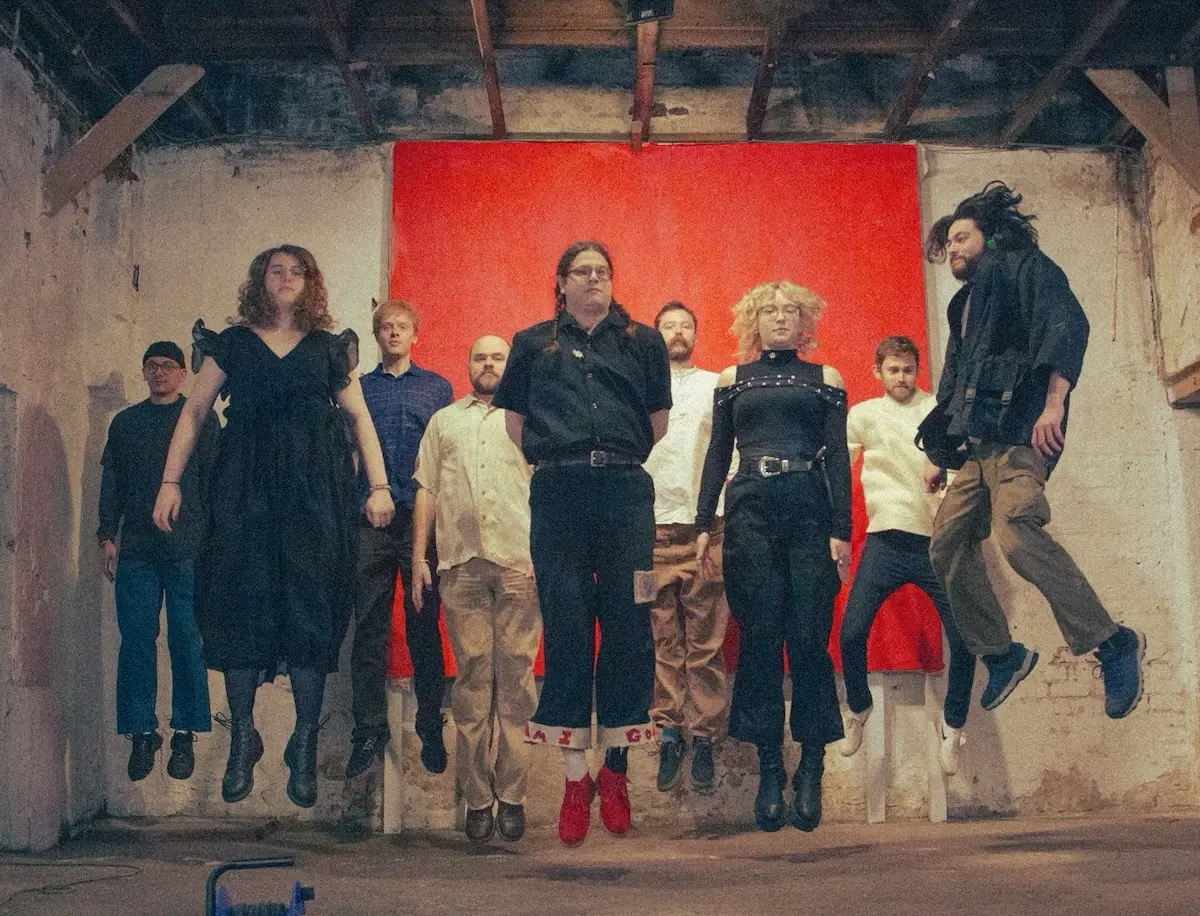
Emerging from the culturally vibrant hub of Brighton, the Hill Collective has quickly established itself as a torchbearer for modern spiritual jazz. Rooted in loose, organic interplay that deliberately leaves room for raw, unpolished edges, the ensemble follows up on their critically acclaimed 2024 debut with a leaner, more sharply focused studio statement: Fire In Orbit (released via Batov Records, BTR137).
Musically, the album engages in a fascinating dialogue with the cosmic avant-garde philosophies of Sun Ra, while simultaneously channeling the dense, controlled sonic mayhem of a Charles Mingus big band.
- The Title Track: The album opens gently with the title track. A piano circles an infectious, grounding bass line over a crisp, snapping drum beat, before a soaring vocal chorus lifts the composition upward. Bandleader Pete Piskov makes an immediate impression on alto saxophone, executing fluid solos that merge seamlessly with communal choruses.
- Introspection and Texture: Keep Breathing shifts the mood inward. It begins with an intimate dialogue between saxophone and flute that gradually settles into a devotional, pulsing rhythm, eventually transformed by vocals into a meditative mantra.
- Patience and Climax: A House Is A Home Like Honey stands out for its unhurried patience. The piece unfolds slowly around a relaxed harmonic theme for nearly seven minutes before the horn section rises in unison, building to a powerful intensity before gracefully receding into quiet reflection. It is a masterclass in compositional restraint, masking immense technical skill beneath a veneer of simplicity.
- The Finale: The closing track, Song For A Blossom Baby, employs a clear chorus-solo-chorus structure set against an angular time signature. Infused with vague Eastern intonations, unsettling interjections, and sudden tempo shifts, the track culminates in a final few minutes of glorious sonic disorder—a testament to the ensemble’s formidable reputation as a must-see live act.
Personnel & Production: Recorded at Sea Breeze Studios around 2025, the sprawling ensemble features Pete Piskov (as, pc), Will Roberts (tb), Ivy Koska (c), Jay Orpana (f, v), Max Generowicz (vn), Vincent Malloch (elg), Luke Congdon (p, ky), Chris Luu (kyb, v), Joe Snelling (b), Sudhi S Pooniyil (tab), and Joe Edwards (d, cga, oc). The 37-minute-and-53-second runtime is economical, delivering maximum impact without narrative fatigue.
2. Chris Coull Quartet with Imogen Ryall: Songs From Porgy And Bess (Rubicon)
Also hailing from Brighton, trumpeter and dedicated promoter Chris Coull has spent years fostering the local live music scene. His journey toward Songs From Porgy And Bess (Rubicon, RJZ1008) began in his childhood, when he discovered his father’s vinyl copy of the legendary 1958 Miles Davis and Gil Evans collaboration. Later encounters with the Glyndebourne box set of George Gershwin’s opera, featuring Willard White, cemented his fascination with the material.
After years of developing his concepts, Coull finally realized his vision by partnering with vocalist Imogen Ryall. Ryall’s flawless diction, profound jazz sensibility, and theatrical delivery make her an ideal focal point for the project.
- Avoiding Clichés: Reinterpreting Porgy And Bess carries inherent risks. Modern artists frequently grapple with the towering legacies of the Davis-Evans collaboration, Louis Armstrong and Ella Fitzgerald’s famous duets, and Ella’s definitive 1950s Gershwin songbook. Furthermore, artists often face pressures tied to centennial commemorations. Coull deftly sidesteps these predictable tropes, leaning instead onto the strength of his inventive arrangements while preserving the emotional core of the original compositions.
- Track-by-Track Breakdown: Recorded in Tunbridge Wells, Kent, on July 23, 2025, the 59-minute album showcases dynamic pacing. The opening Buzzard Song moves with brisk, snappy energy; My Man’s Gone Now is transformed into a revelatory, emotional centerpiece; It Ain’t Necessarily So offers a buoyant delight; Prayer (Oh Dr Jesus) provides a sanctified spiritual high; and There’s A Boat Leaving Soon For New York unearths a rarely heard pleasure from the score.
- Rhythmic Foundation: The rhythm section operates with a light, airy touch. Pianist John Turville delivers moments of striking eloquence, bassist Simon Thorpe provides robust and inventive foundations (notably on I’ve Got Plenty Of Nothing), and drummer Matt Fishwick maintains exceptional consistency. Coull, playing trumpet and flugelhorn on all but two tracks, eschews the expected languid blues associations, injecting a sharp bop sensibility and immaculate technical precision into the performance.
3. Fluidian: Windscapes (Fluidian Music)
Crossing the continent to Eastern Europe and Scandinavia, we find Romanian innovator Emil Gherasim, the creative force behind Fluidian. Following up on his acclaimed 2022 collaborative album Opaque Lights (created with Arve Henriksen), Gherasim returns with Windscapes (released via Fluidian Music Bandcamp download).
- Aural Aesthetics: Comprising 14 miniature, momentary pieces, Windscapes functions as a series of sonic adventures that evoke ephemeral stories and deep emotional resonance. The music conjures an imaginary, slightly disorienting state of mind where visual perceptions blur and obscure visions drift in a landscape bathed in moonlight. The rhythm pulses at a slow, hypnotic pace.
- Instrumentation and Collaboration: Gherasim constructs richly textured ambient backdrops, utilizing wondrous guitar lines, pizzicato accompaniments, and carefully curated chamber orchestra samples that command the listener’s attention. Joining him on six tracks is renowned Norwegian trumpeter Nils Petter Molvaer. Molvaer’s contributions are unfailingly unhurried, poised, and precise. The two artists achieve a symbiotic musical mesh, though the true triumph of the album lies not in isolated virtuosity, but in the cohesive, immersive atmosphere of the entire 40-minute-and-3-second set. This is music designed not for casual background listening on a daily commute, but as a therapeutic soundbath to be absorbed at a leisurely pace.
Supporting Context & Metrics
To contextualize these releases within the broader economic and cultural framework of the modern jazz industry, several key metrics and structural trends must be considered:
- Geographic Decentralization: The prominence of Brighton-based acts (Hill Collective and Chris Coull Quartet) highlights a broader trend in the UK music industry: regional artistic hubs outside of London are increasingly driving creative innovation, supported by robust local gig circuits and regional recording studios.
- Format Diversity: The reviewed releases embrace radically different distribution models. While Hill Collective benefits from physical and digital backing via Batov Records (BTR137) and Coull utilizes traditional boutique jazz label Rubicon (RJZ1008), Fluidian continues to pioneer direct-to-consumer digital distribution via Bandcamp. This multi-channel approach reflects the adaptive strategies required by modern jazz artists to monetize their work effectively.
- Runtime Economics:
- Hill Collective – Fire In Orbit: 37:53 (Optimized for vinyl listening and high engagement).
- Chris Coull Quartet – Porgy And Bess: 59:25 (Comprehensive thematic journey).
- Fluidian – Windscapes: 40:03 (Concise ambient immersion).
| Artist / Album | Primary Genre | Label / Format | Key Collaborators / Standout Personnel |
|---|---|---|---|
| Hill Collective (Fire In Orbit) | Spiritual Jazz / Big Band Fusion | Batov Records (LP/Digital) | Pete Piskov, Joe Edwards, Luke Congdon |
| Chris Coull Quartet (Porgy & Bess) | Bop-Infused Vocal Jazz | Rubicon (CD/Digital) | Imogen Ryall, John Turville, Simon Thorpe |
| Fluidian (Windscapes) | Ambient Jazz / Cinematic | Fluidian Music (Bandcamp) | Emil Gherasim, Nils Petter Molvaer |
Official Statements and Critical Perspectives
The critical reception surrounding these projects underscores a growing appetite for authenticity, narrative depth, and cross-genre fluidity in modern improvised music.
Industry analysts and critics have noted that projects like the Hill Collective’s Fire In Orbit represent a vital bridge between the historical roots of 1960s spiritual jazz and the energetic, youthful dynamism of contemporary UK scenes. Observers have praised the ensemble’s ability to balance composed arrangements with spontaneous combustion, noting that "its last few minutes of sonic disorder are a fine reminder that [this] is a great live band whose adventures on stage always make for a very happy outing."
Regarding the Chris Coull Quartet, reviewers have lauded the project for successfully circumventing the creative traps associated with canonical songbook tributes. By pairing Coull’s bop-infused, precise trumpet arrangements with Imogen Ryall’s theatrical yet disciplined vocal delivery, the quartet has achieved what industry commentators describe as a "reworked revelation," proving that familiar thematic material can still yield genuine artistic surprises when filtered through a distinct regional perspective.
Finally, Emil Gherasim’s work with Fluidian continues to earn accolades from ambient and jazz purists alike. Reflecting on the immersive nature of Windscapes, critics have emphasized that Gherasim and Nils Petter Molvaer have crafted a masterclass in sonic restraint. As one reviewer aptly observed, "This is not music to be hurried over or listened to on the go, more a soundbath into which one can relax at leisure."
Future Outlook
As the global jazz community looks toward the remainder of the decade, the trajectories of artists like the Hill Collective, the Chris Coull Quartet, and Fluidian point toward several encouraging trends:
- Genre Fluidity as Standard Practice: The rigid boundaries separating spiritual jazz, chamber orchestration, traditional American songbook interpretations, and ambient electronica are continuing to dissolve. Artists who refuse to confine themselves to a single stylistic box are finding the most enthusiastic audiences and critical support.
- Sustainability of Regional Hubs: The success of Brighton- and Eastern Europe-based projects demonstrates that world-class artistic output is no longer tethered exclusively to global capitals like London, New York, or Paris. As local scenes strengthen their infrastructure, we can expect an increase in regionally distinct jazz movements.
- Physical and Digital Hybridization: The coexistence of Bandcamp-driven digital releases (Fluidian) alongside traditional audiophile label pressings (Rubicon and Batov) ensures that modern jazz remains accessible to diverse consumer bases, from casual streaming audiences to dedicated vinyl collectors.
Ultimately, these three releases confirm that contemporary jazz is in robust, inventive health. Whether through the fiery collective spirit of a Brighton big band, the refined elegance of a Gershwin reinterpretation, or the nocturnal stillness of ambient soundscapes, improvisational music continues to offer profound emotional and intellectual rewards for listeners willing to listen closely.