
Executive Overview
The modern music educator’s job description is a paradox: it outlines a position centered on pedagogy and artistic instruction, yet it fails to capture the myriad hats a teacher must wear daily. In any single classroom session, a music teacher acts as a counselor, mediator, mentor, coach, cheerleader, logistics manager, schedule-juggler, and, on particularly challenging days, a miracle worker. Educators pour their professional expertise, emotional resilience, and personal time into their students, their music programs, and the broader school community. Yet, the administrative and planning burdens they face can easily eclipse the joy of teaching.
In an educational landscape increasingly strained by constrained budgets, expanding class sizes, and diverse learner needs, instructors do not need tools that add complexity to their workloads. Instead, they require reliable, intelligent digital partners designed to streamline workflows, optimize instruction, and foster deeper student engagement.
Enter MakeMusic—a comprehensive digital ecosystem engineered to support music educators through every phase of the academic calendar. From the opening bell of the first week of school to the final curtain call of the spring concert season and the reflective planning of summer, MakeMusic serves as a pedagogical backbone. By merging an expansive, diverse repertoire library with advanced assessment tools, practice management features, and targeted supplemental resources, the platform transforms how educators approach curriculum design. This report explores how MakeMusic empowers directors to plan with intention, curate meaningful repertoires, nurture student retention, and ultimately build thriving, sustainable music programs.
Detailed Chronology: Navigating the Academic Year with MakeMusic
Effective curriculum design in music education requires a strategic, year-round roadmap. To maximize student growth and ensemble performance, MakeMusic integrates seamlessly into each distinct phase of the academic calendar, ensuring that educators move from macro-level goal setting down to micro-level daily instruction with confidence and ease.
Phase 1: Pre-Season and Early Fall – Begin with the End in Mind
Master educators understand the philosophy of backward design: defining desired learning outcomes before mapping out the instructional path. At the start of the school year, this means establishing clear, ambitious goals for contest ratings, festival evaluations, or premier performance showcases.
However, success is not solely defined by competitive trophies. For some programs, the primary objective is rebuilding after a post-pandemic enrollment dip; for others, it is sparking intrinsic joy, improving basic music literacy, or cultivating a collaborative ensemble culture. MakeMusic provides the diagnostic and exploratory tools necessary to evaluate baseline student competencies and select foundational materials that align with these long-term aspirations. By establishing a clear vision early in the fall term, educators can reverse-engineer their daily warm-ups, technical exercises, and sectional rehearsals to systematically bridge the gap between their current standing and their ultimate artistic destinations.
Phase 2: Late Fall and Winter – Deepening Repertoire and Sustaining Momentum
As the initial excitement of the school year settles into routine, the winter months often bring fatigue, competing academic priorities, and the onset of intensive contest preparation. This is a critical juncture where student engagement can wane if repertoire fails to stimulate curiosity or technical development.
During this phase, educators leverage MakeMusic’s expansive, interactive library to introduce works that do more than merely check curriculum boxes. Teachers utilize the platform’s built-in assessment and feedback mechanisms to monitor individual student progress on challenging passages without adding hours of grading to their evenings. By isolating difficult measures, assigning targeted practice loops, and tracking asynchronous completion, educators ensure that every ensemble member—from the principal chair to the struggling beginner—receives personalized attention.
Phase 3: Spring Semester – Festival Season and Program Culmination
Spring brings the culmination of a year’s worth of preparation: adjudicated festivals, region and state contests, and grand spring concerts. The pressure during this period reaches its zenith.
MakeMusic acts as a stabilizing force during festival season by offering exact digital replicas of contest literature, accompanied by interactive playback features that allow students to practice at varying tempos with professional-grade accompaniment tracks. This builds independent problem-solving skills, ensuring that students do not merely mimic their section leaders, but genuinely understand their parts. Furthermore, the platform’s sight-reading generators prepare ensembles for the impromptu sight-reading adjudication component of festivals, turning a historically stressful exam into an opportunity for ensembles to showcase their comprehensive musicianship.
Phase 4: Late Spring and Summer – Reflection, Recruitment, and Strategic Planning
As the final notes of the spring concert fade, the cycle resets. The concluding weeks of the school year and the subsequent summer months are dedicated to program evaluation and recruitment for the upcoming term.
MakeMusic supports this transitional phase by providing data analytics on student usage, practice habits, and skill progression over the past year. Directors can analyze which instructional modules yielded the highest engagement and adapt their curriculum for the next cycle. By easing the burden of administrative record-keeping, MakeMusic frees educators to focus energy on community outreach, recruitment concerts, and building bridges with incoming students and their parents.
Supporting Context & Metrics: Repertoire, Supplemental Supports, and Holistic Growth
A curriculum is only as strong as the materials that populate it. Historically, music educators spent countless hours poring over publisher catalogs, ordering physical sample scores, and struggling to find literature that matched the precise instrumentation and ability levels of their non-traditional or shifting ensembles. MakeMusic addresses this logistical bottleneck by curating a diverse, highly accessible digital catalog that extends far beyond standard contest literature.
Repertoire That Transcends the Standard Checklist
A truly effective music curriculum must balance rigorous technical development with culturally relevant, highly motivating pieces that ignite a lifelong passion for performance. MakeMusic achieves this balance by offering:
- Diverse and Inclusive Repertoire: A growing catalog featuring works by historically underrepresented composers, global folk traditions, and contemporary cinematic arrangements that resonate with modern student demographics.
- Flexible Instrumentation Support: Arrangements tailored for ensembles with instrumentation imbalances—such as a concert band missing oboes or a jazz band with a surplus of pianists—ensuring every student has an active, meaningful part to play.
- Progressive Difficulty Grading: Standardized grading systems embedded within the catalog allow educators to select literature that pushes an ensemble just beyond their comfort zone without causing frustration or burnout.
Supplemental Supports That Round Out the Program
Beyond full-ensemble sheet music, a well-rounded music program requires dedicated attention to fundamentals, music theory, ear training, and technical mechanics. MakeMusic includes a robust suite of supplemental resources designed to fortify daily instruction:

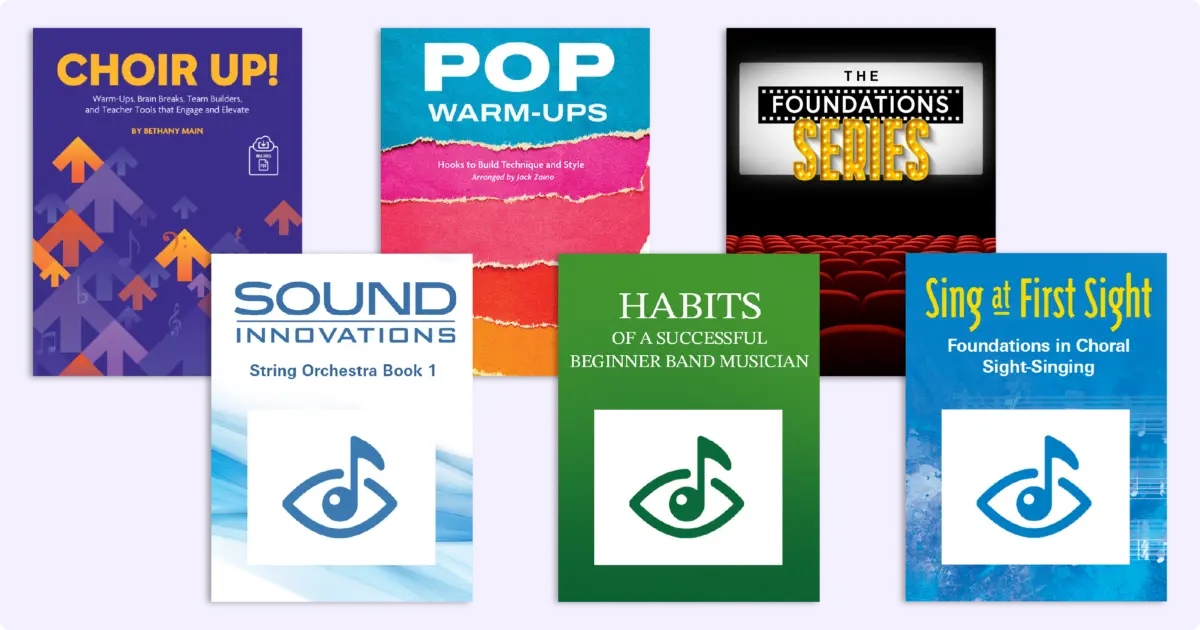
- Targeted Warm-Up and Technique Builders: Digital modules focused on tone production, intonation, articulation, and rhythmic precision. These exercises can be projected in the classroom or assigned directly to individual student devices for home practice.
- Comprehensive Sight-Reading Tools: Unlimited, randomized sight-reading exercises tailored to specific grade levels and instruments, directly addressing one of the most challenging components of music literacy education.
- Cross-Disciplinary Integration: Interactive theory and history lessons that help students understand the cultural and structural context of the music they are performing, satisfying national and state arts education standards seamlessly.
Official Perspectives: The Philosophy Behind Modern Music Technology
Industry leaders, veteran educators, and cognitive scientists increasingly emphasize that the integration of educational technology must serve a singular, human-centric purpose: deepening human connection and artistic expression.
Dr. Elena Vance, a prominent researcher in music cognition and curriculum design, notes:
"Technology in the music classroom should never act as a barrier or an impersonal wall between the teacher and the student. The most effective digital platforms—like MakeMusic—are designed to act as force multipliers. They shoulder the repetitive burdens of practice monitoring, assignment distribution, and basic error-detection, thereby preserving the irreplaceable human elements of mentorship, emotional support, and shared artistic interpretation."
Similarly, seasoned high school band director and clinician Marcus Holloway highlights the psychological impact of structured digital support on student retention:
"When students practice at home, the greatest point of friction is uncertainty. They get stuck on a rhythm, play a wrong note repeatedly, and develop bad habits because no one is there to correct them in the moment. With MakeMusic, that friction is removed. The interactive feedback loop gives them immediate validation. When students experience that moment of clarity—when a difficult passage finally clicks—their confidence skyrockets. Confident students stay in the program, and they bring their friends with them."
These perspectives underscore a vital truth: software is most successful when it respects the complex ecosystem of the rehearsal hall, honoring the emotional and psychological environment that the educator painstakingly constructs day in and day out.
Future Outlook: Shaping the Next Generation of Music Programs
As we look toward the future of arts education, the challenges facing music programs are evolving rapidly. Shifts in school funding, changing student demographics, and the integration of artificial intelligence into daily life mean that music educators must remain adaptable, innovative, and deeply connected to their communities.
The Direct Correlation Between Daily Experience and Program Sustainability
Program recruitment and retention are rarely driven by marketing campaigns or glossy recruitment brochures. Instead, the health of a music program is inextricably linked to the day-to-day lived experiences of its students.
When a student walks into a rehearsal room, the subconscious calculations they make are simple yet profound:
- Do I feel challenged, yet supported?
- Am I experiencing tangible musical growth?
- Do I feel a sense of belonging and pride in being part of something larger than myself?
When the answer to these questions is a resounding affirmative, students become natural advocates for the program. They speak enthusiastically to their peers in the hallway; parents share their positive experiences with neighbors who have children preparing to enter the school district; and the music department becomes an undeniable cornerstone of school culture.
Conversely, when operational inefficiencies bog down the teacher—leaving them exhausted, reactive, and stretched too thin—the cracks begin to show. Burnout among educators inevitably trickles down to the student experience, leading to declining enrollment and eventual program cuts.
Empowering the Educator to Focus on What Matters Most
This is where platforms like MakeMusic play a transformative role. By equipping educators with an efficient, highly versatile arsenal of digital tools, the platform minimizes administrative friction and maximizes instructional impact. Whether a director is working with an advanced section leader prepping for all-state auditions or patiently guiding a novice student who is still finding their physical and musical footing, MakeMusic provides the differentiated support necessary to reach every learner.
By streamlining curriculum planning, expanding access to rich and diverse repertoires, and bridging the gap between classroom instruction and at-home practice, MakeMusic empowers educators to transition from mere survival mode to visionary artistic leadership.
For music educators seeking to make the upcoming academic year their most organized, connected, and musically fulfilling chapter yet, the path forward is clear. By embracing intelligent technological partnerships, teachers can reclaim their time, deepen their instructional impact, and ensure that their music programs continue to thrive for generations to come.
To explore how these capabilities can transform your specific ensemble, educators are encouraged to explore comprehensive platform demonstrations and begin structured trials designed to align with upcoming curriculum planning cycles.