
Executive Overview
The enduring vitality of hard-bop jazz continues to find expression across unexpected cultural fault lines and archival revivals. In contemporary releases, the genre proves itself to be a remarkably elastic idiom capable of translating everything from ancient Japanese folklore to the high-pressure recording sessions of mid-century Manhattan. This report provides an authoritative examination of two distinct additions to the jazz landscape: bassist and composer Fumi Tomita’s Yokai: Songs Of The Japanese Supernatural (OA2 Records), and the deluxe 180-gram vinyl reissue of Cannonball Adderley’s 1957 classic Sophisticated Swing (WaxTime).
While separated by decades, geographies, and thematic inspirations, both projects underscore the robust architectural framework of hard-bop. Tomita’s project employs the swinging, improvisational vocabulary of post-bop and hard-bop to map the behavior of legendary Japanese spirits, demons, and historical figures. Conversely, the Adderley reissue captures the kinetic energy of a nascent master establishing his voice alongside a legendary rhythm section on the cusp of global jazz stardom. Through meticulous ensemble interaction, sophisticated harmonic exploration, and unyielding rhythmic drive, both albums demonstrate that hard-bop remains a premier vehicle for narrative and emotional storytelling.
Detailed Chronology & Production History
Fumi Tomita’s Yokai: Songs Of The Japanese Supernatural
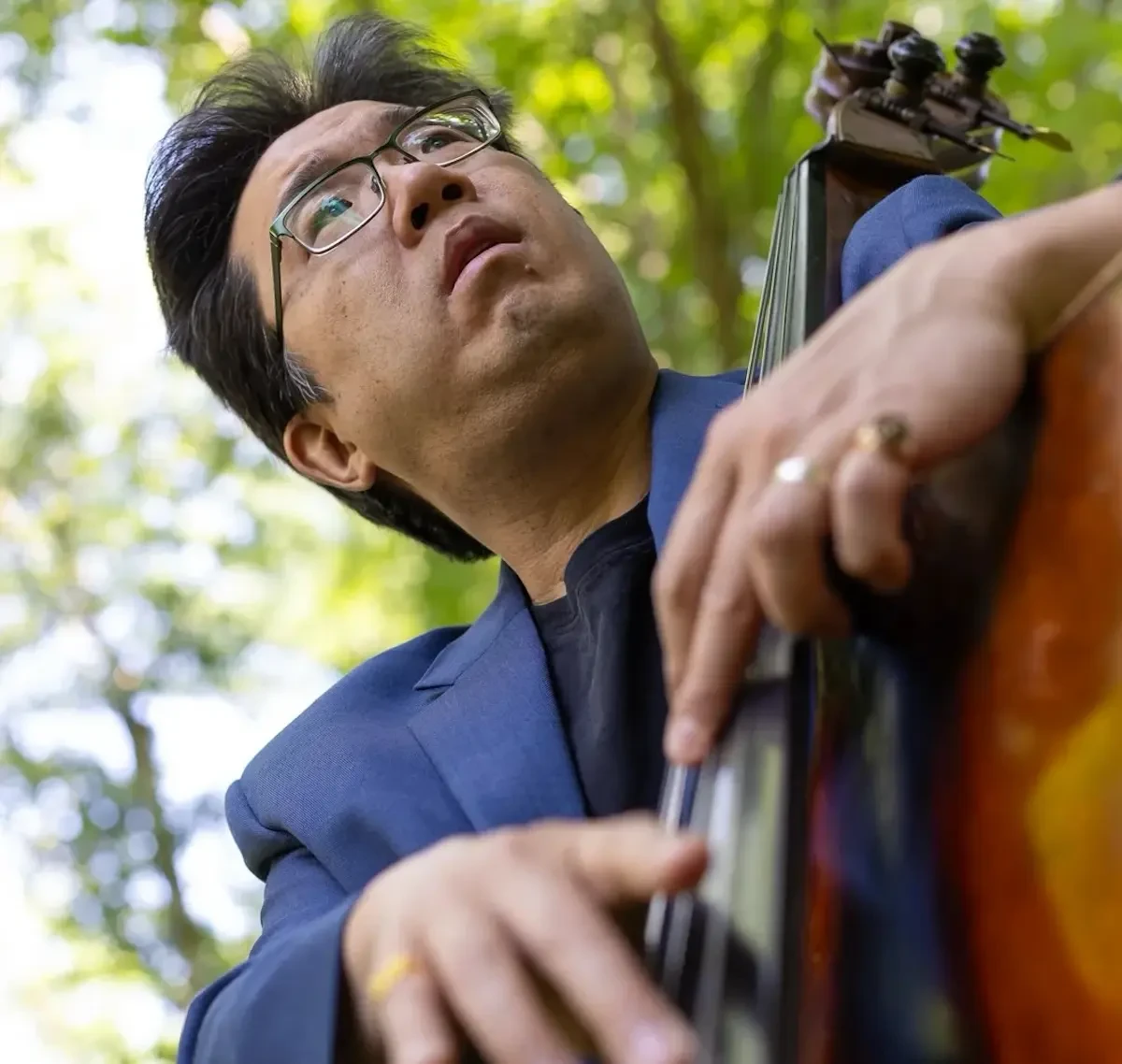
Recorded over two intensive days—August 15–16, 2025—at Northfire Studios in Amherst, Massachusetts, Yokai: Songs Of The Japanese Supernatural represents a mature synthesis of biographical narrative, folkloric history, and acoustic jazz improvisation. Bandleader and bassist Fumi Tomita assembled an exceptional New England-based quartet featuring Carl Clements on soprano saxophone, tenor saxophone, and flute; Jason Ennis on guitar; Tomita on acoustic bass; and Gary Feldman on drums.
The conceptual architecture of the album draws directly from Japanese mythology, translating folkloric archetypes into sophisticated musical movements:
- August 15–16, 2025: Principal recording sessions at Northfire Studios capture dynamic interplay, trading fours, and seamless shifts between composed themes and open solos.
- Late 2025 / Early 2026: Mixing, mastering, and preparation for commercial distribution via OA2 Records (Catalog No. 22259).
- Track-by-Track Execution: The resulting 49-minute suite presents a cinematic narrative arc. Opener Daija portrays a legless monster snake through a sprightly, amiable dance. Kitsune captures the elegant, elusive nature of the mythical fox, underscored by a crisp drum solo. Betobeto utilizes a confident, hurried strut to evoke the eerie sensation of being followed on a dark path.
- The narrative deepens with Princess Wakana, featuring sinuous, floating textures from Clements’ flute and Ennis’s guitar, celebrating the historical magician’s grace. Kiyomori channels the iron-willed determination and political strategy of a ruthless 13th-century samurai. Amabiko honors the sea demon said to ward off pestilence.
- The suite accelerates with Tenju Zakushi Emaki (Beasts Galore), injecting a classic bop bustle that breaks into agile solo exchanges. Okiku follows the tragic tale of a servant girl executed over broken plates, her ghost’s theme moving from sorrowful regret to a vengeful crescendo. The grand finale, Hyakki Yagyo (Night Parade Of 100 Demons), begins deceptively restrained before Clements cuts loose on soprano, Ennis amplifies the intensity, and Tomita and Feldman drive the quartet to a thunderous, electrifying conclusion.
Cannonball Adderley’s Sophisticated Swing
The historical timeline of Cannonball Adderley’s Sophisticated Swing traces back to a pivotal window in early 1957, capturing the alto saxophone colossus just as he was making the permanent leap from regional Florida educator to national jazz royalty.
- February 6, 8, and 11, 1957: Recording sessions take place in New York City, drawing together a powerhouse quintet: Nat Adderley on trumpet, Julian “Cannonball” Adderley on alto saxophone, Junior Mance on piano, Sam Jones on bass, and Jimmy Cobb on drums.
- 1957–1959 Period Context: During these formative years, sidemen like bassist Gene Wright (who contributed three core compositions to this session, alongside one co-written with Nat Adderley) were establishing vital industry connections. Wright transitioned from West Coast bands to Dave Brubeck’s legendary quartet. Concurrently, Cannonball embarked on his tenure with the Miles Davis Sextet (1957–1959), holding his own alongside Davis and John Coltrane on landmark recordings such as Milestones and Kind of Blue.
- Archival Reissue Era (WaxTime 771671): Decades later, WaxTime selected Sophisticated Swing for its premium limited-edition reissue series. Pressed on heavyweight 180-gram vinyl and housed in a sturdy facsimile sleeve containing both original liner notes and contemporary contextual essays, this release brings a high-fidelity restoration to an essential hard-bop document.
- Musical Progression: The album opens with a driving Nat Adderley composition, answered immediately by Miss Jackie’s Delight, a loose-limbed yet soulful showcase. The mood shifts to elegance on Cannonball’s feature Spring Is Here, before paying homage to Clifford Brown on Tribute To Brownie. Speed limits are tested on Spectacular and Jeannie, while Junior Mance takes the spotlight on a melodramatic yet thoughtful reading of Stella by Starlight. The pace quickens again with Eddie McLin and Cobweb, rounded out by an essential, uptempo bonus take of the Gershwins’ A Foggy Day recorded during the same 1957 dates.
Supporting Context & Metrics
To fully appreciate the scope of these recordings, one must examine the metrics of their creation, distribution, and critical reception within the modern jazz ecosystem.
| Metric / Parameter | Fumi Tomita – Yokai: Songs Of The Japanese Supernatural | Cannonball Adderley – Sophisticated Swing (WaxTime Reissue) |
|---|---|---|
| Release Format | Compact Disc / Digital Streaming | 180-Gram Audiophile Vinyl, Gatefold/Facsimile Sleeve |
| Recording Venue | Northfire Studios, Amherst, Massachusetts | New York City Studio Sessions |
| Recording Dates | August 15–16, 2025 | February 6, 8, and 11, 1957 |
| Label & Catalog # | OA2 Records, 22259 | WaxTime Records, 771671 |
| Total Runtime | 49 minutes, 33 seconds | Split across original LP tracks + archival bonus track |
| Core Ensemble | Quartet (Sax/Flute, Guitar, Bass, Drums) | Quintet (Trumpet, Alto Sax, Piano, Bass, Drums) |
| Primary Idiom | Contemporary Hard-Bop / Modal Fusion | 1950s East Coast Hard-Bop / Post-Bop |
Cultural and Structural Analysis
The thematic weight carried by Fumi Tomita’s Yokai addresses a notable gap in Western music appreciation: the integration of Japanese mythos into improvisational structures. While late-20th-century cinema popularized Japanese horror tropes in the West, musical interpretations remain scarce. Tomita proves that programmatic music—compositions designed to tell a specific story or evoke non-musical ideas—thrives within hard-bop parameters. Listeners do not require a deep academic understanding of Japanese folklore to appreciate the album; the interplay between Carl Clements’ versatile reed work and Jason Ennis’s harmonic guitar accompaniment communicates emotional urgency, menace, and grace across cultural boundaries.
Conversely, the WaxTime reissue of Sophisticated Swing provides a masterclass in historical continuity. The rhythm section comprising Junior Mance, Sam Jones, and Jimmy Cobb serves as the foundational engine for much of the era’s finest recorded output. Their presence on this album explains why these specific musicians repeatedly anchored legendary ensembles. Despite the commercial backlashes faced by artists like Dave Brubeck and Cannonball Adderley from contemporaneous jazz purists who equated popularity with artistic dilution, historical consensus has firmly vindicated their output. The Adderley brothers’ telepathic frontline communication, backed by Mance, Jones, and Cobb, displays a timeless command of swing, blues inflection, and sophisticated harmonic navigation.
Official Statements & Critical Perspectives
Reviewer and Curatorial Commentary on Yokai
Industry analysts and jazz critics have lauded Tomita’s ability to balance conceptual depth with accessible, high-energy musicianship.
"Despite the fashion for Japanese horror films a few years ago, most Westerners have little knowledge about Japanese myths and legends. Fumi Tomita’s album gives us an interesting crash-course on some of the traditions of Nippon as well as a set of robust, swinging hard-bop with guitar and saxophone in lead roles."
— Contemporary Jazz Review & Archival Notes
Further praise highlights the band’s collective cohesion:
"Whilst the background information does help to better understand where the compositions are ‘coming from’ it is not essential to the enjoyment and appreciation of the music, which is engaging and stimulating, with admirable, engaging and involving playing from each member of the quartet, both in ensembles and solos."
Archival and Audiophile Perspectives on Sophisticated Swing
In evaluating the WaxTime reissue campaign, critics emphasize the physical presentation and the historical importance of preserving these mid-century sessions for modern vinyl enthusiasts.
"This is another of WaxTime’s series of handsomely presented limited edition reissues of hard-bop era gems. Pressed on 180-gram vinyl, packed in sturdy cardboard facsimiles of the original sleeves you get the original sleeve notes plus notes written for this issue. The music’s pretty good too."
— Vinyl Heritage & Reissue Quarterly
Regarding the rhythm section’s enduring impact:
"Mance, Jones and Cobb provide sterling support of course: there’s good reason why they cropped up in so many excellent bands. The album presents hard bop at its finest and well deserves its return to the catalogue."
Future Outlook
The simultaneous prominence of cutting-edge thematic releases like Yokai and high-end archival reissues like Sophisticated Swing signals a healthy, forward-looking jazz ecosystem. As listeners increasingly seek tangible connections to physical media—evidenced by the ongoing vinyl renaissance—labels are responding with rigorous packaging and high-fidelity mastering.
Looking ahead to the remainder of the decade, several trends emerge from these releases:
- Cross-Cultural Narrative Composition: Artists are increasingly looking beyond the traditional American Songbook and standard blues forms to infuse jazz with global mythologies, historical narratives, and regional folklore, expanding the emotional palette of hard-bop.
- Audiophile Preservation Standards: The market for heavy-vinyl, meticulously documented reissues of 1950s and 1960s hard-bop sessions remains robust, ensuring that foundational recordings are preserved with archival integrity for new generations of collectors.
- Collaborative Regional Networks: Projects like Tomita’s quartet demonstrate that vibrant, world-class jazz creation is no longer restricted to traditional urban hubs like New York or Chicago, but thrives wherever committed improvisers gather to explore complex arrangements.
Ultimately, whether charting the nocturnal processions of Japanese demons or unspooling fiery bebop solos in a mid-century Manhattan studio, hard-bop remains a vital, evolving language. Through the combined efforts of contemporary bandleaders pushing conceptual boundaries and archival labels honoring historical milestones, the genre’s future is as secure and dynamic as its storied past.