

Executive Overview
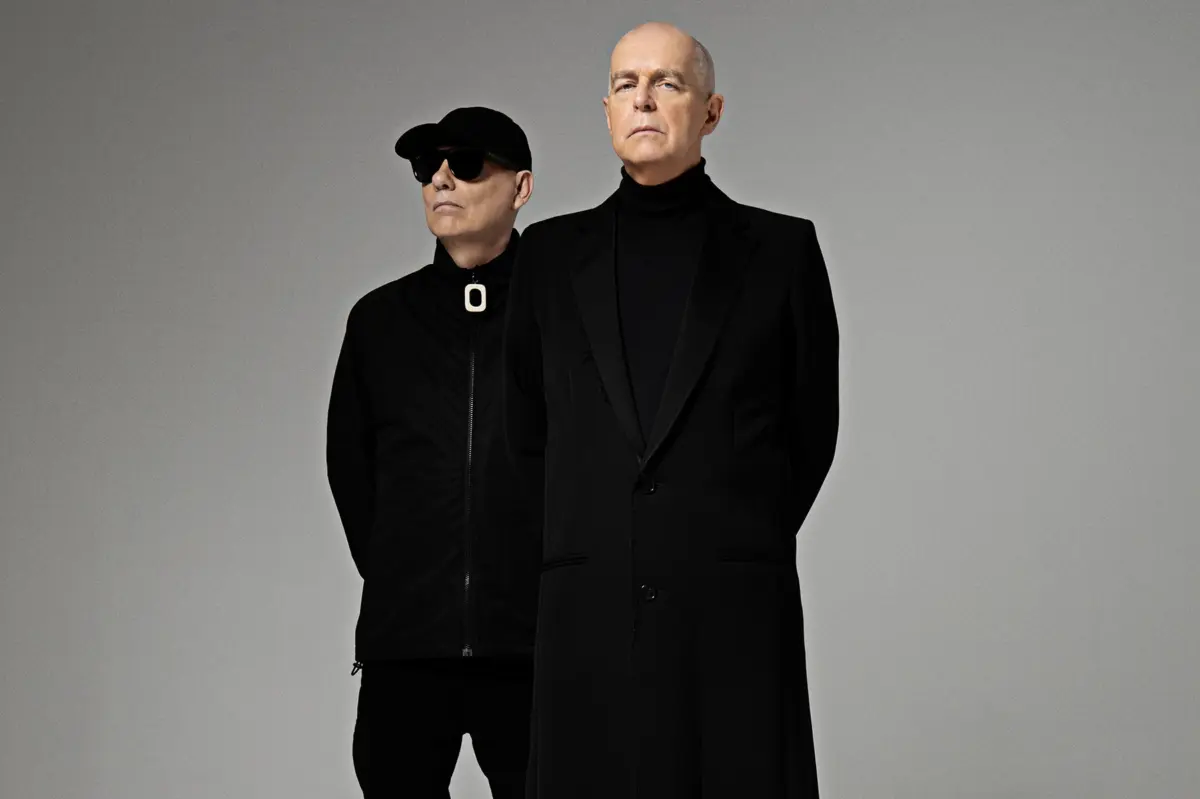
In a daring fusion of high-art orchestration and cutting-edge electronic composition, legendary British electro-pop duo Pet Shop Boys have returned with A Man from the Future. Released via Parlophone Records, the conceptual opus is a sweeping, multi-movement sonic exploration of the life, brilliance, persecution, and tragic death of Alan Turing—the foundational architect of modern computing and the brilliant logician who cracked the Nazi Enigma machine.
More than a decade in the making, the project represents a significant evolution of material originally conceived by Neil Tennant and Chris Lowe in 2012 and 2013. Meticulously updated, reworked, and rearranged with contemporary electronic soundscapes, fresh textual integrations, and sweeping orchestrations by composer Sven Helbig, A Man from the Future serves as both a dazzling artistic statement and a long-overdue musical memorial. Featuring string arrangements performed by the Manchester Camerata Octet and striking spoken-word contributions from acclaimed actor Juliet Stevenson—drawing from Andrew Hodges’ definitive biography, Alan Turing: The Enigma—the album bridges historical tragedy with futuristic techno-optimism.
Arriving hot on the heels of their critically acclaimed 2024 studio album Nonetheless, which peaked at No. 2 on the Official U.K. Albums Chart, this latest release underscores Pet Shop Boys’ enduring cultural relevance. For over four decades, Tennant and Lowe have successfully pushed the boundaries of pop music, embedding socio-political commentary, theatricality, and high-concept storytelling into chart-topping synth-pop. With A Man from the Future, they elevate their legacy, delivering an authoritative, deeply moving investigation of a man who was profoundly ahead of his time.
The Genesis and Evolution of a Masterpiece: Detailed Chronology
The journey of A Man from the Future spans more than ten years, transitioning from an ambitious theatrical experiment into a fully realized, studio-crafted masterwork. Understanding the weight of the project requires tracing its origins back to the early 2010s, a period when public fascination with Alan Turing was experiencing a massive cultural renaissance.
2012–2013: The Initial Conception
Long before Benedict Cumberbatch brought Turing to the silver screen in the Oscar-winning 2014 biographical drama The Imitation Game, Neil Tennant and Chris Lowe were already deep into the history of the Bletchley Park cryptanalyst. Collaborating with biographer Andrew Hodges, the duo began structuring a musical narrative that would chart the highs and tragic lows of Turing’s extraordinary existence. Operating at the intersection of classical arrangements and synthesizer-driven pop, the early composition sessions sought to find a sonic equivalent to Turing’s binary mind—balancing rigid algorithmic precision with emotional vulnerability.
July 2014: The Royal Albert Hall Premiere
The project’s nascent form was first introduced to the public during a prestigious BBC Proms concert at London’s historic Royal Albert Hall in July 2014. Pet Shop Boys performed select pieces from the suite, accompanied by orchestrations that immediately captured the imagination of classical and pop critics alike. However, rather than rushing a recording to capitalize on the cultural momentum of The Imitation Game, Tennant and Lowe shelved the material, allowing the concept to mature alongside rapid advancements in electronic music and changing socio-political attitudes toward LGBTQ+ historical figures.
The Modern Reworking
More than a decade after its initial inception, A Man from the Future was comprehensively revived. Teaming up with co-producer Sven Helbig, Pet Shop Boys completely overhauled the score. The updated version incorporates state-of-the-art electronic sound design, newly written lyrical passages, and refreshed orchestrations that give the compositions a sharper, more urgent cinematic scope. The Manchester Camerata Octet was brought in to execute Helbig’s intricate string arrangements, while Juliet Stevenson lent her gravitas to the project, breathing dramatic life into excerpts from Hodges’ biography.
A Chronological Journey Through Turing’s Life
Structured across eight distinct chapters, the album unfolds in strict chronological sequence, mirroring the sweeping trajectory of Turing’s brief yet epoch-making life.
- The Formative Years: The opening movements capture Turing’s childhood and schooldays, mapping his early, insatiable fascination with mathematics, theoretical science, and the quiet realization of his homosexuality in a deeply repressive British society.
- Cambridge and Academia: The narrative moves to his formative years at Cambridge University, where his theoretical brilliance began to challenge the orthodoxies of classical mathematics and laid the groundwork for the digital age.
- Bletchley Park and the Enigma: A dramatic apex of the record centers on World War II, detailing Turing’s clandestine, high-stakes work for the British Government at Bletchley Park. Here, his creation of the "Bombe" machine successfully cracked the encrypted messages of the German Enigma machine, an achievement historians estimate saved millions of lives and shortened the war by years.
- The Dawn of Computing and AI: The mid-section of the album explores Turing’s visionary leaps into computer science. Not content with merely building the digital computer, Turing peered decades into the future, predicting the rise of Artificial Intelligence and formulating the famous "Turing Test" to measure machine sentience.
- Persecution and Trial: The mood of the album darkens dramatically as it addresses the post-war political climate. In 1952, Turing’s homosexuality was criminalized under British law. The album captures the chilling legal proceedings, his subsequent conviction for "gross indecency," and the cruel chemical castration mandated by the state as an alternative to imprisonment.
- Tragic Demise: The final movements reflect on Turing’s isolation, the revocation of his security clearance, and his tragic death by cyanide poisoning in 1954 at the age of 41—a loss that robbed humanity of one of its most fertile scientific minds.
Supporting Context, Artistic Intent, and Industry Metrics
To fully appreciate the cultural weight of A Man from the Future, it is essential to examine both the explicit intent of its creators and the formidable commercial foundation upon which the release stands.

Official Statements and Artistic Motives
In an official statement accompanying the album’s midnight release, Pet Shop Boys laid bare the moral imperative behind the project:
"Our motive in creating this work was to make a musical memorial to Alan Turing who gave so much to his country and the world and was rewarded for it by being prosecuted for his sexuality," the duo shared.
"Alan made a massive contribution to the defeat of Germany in World War II and was a pioneer of computing, imagining a world with intelligent computers. He also looked forward to a time when being gay would be accepted as normal. In both his professional and private lives, he was ahead of his time."
By framing Turing’s life through the lens of electronic pop and classical minimalism, Pet Shop Boys connect the digital infrastructure of the 21st century—which relies entirely on Turing’s foundational theories—to the personal cost paid by queer pioneers who built the modern world.
Commercial Standing and Chart Metrics
A Man from the Future arrives during a remarkably fertile creative period for Neil Tennant and Chris Lowe. The LP serves as the direct follow-up to their critically lauded 2024 studio album, Nonetheless, which fiercely contested the top of the charts, ultimately peaking at No. 2 on the Official U.K. Albums Chart.
Pet Shop Boys’ chart pedigree remains virtually peerless within the synth-pop landscape:
- U.K. Dominance: The duo has amassed 22 top 10 hit singles in their homeland, including four coveted No. 1s.
- Album Success: They have landed ten top 10 albums in the United Kingdom, highlighted by their chart-topping 1993 classic, Very.
- Global Impact: In the United States, Pet Shop Boys have secured 12 entries on the Billboard Hot 100, featuring five top 10 hits and a legendary No. 1 with 1986’s quintessential electro-pop anthem, "West End Girls."
Future Outlook: Legacy and Cultural Impact
As A Man from the Future makes its way onto streaming platforms and record store shelves worldwide, its release signifies more than just another milestone in a storied discography. It represents a vital evolution in how popular musicians engage with historical archiving and social justice.
In an era where LGBTQ+ histories face renewed political scrutiny and the ethical implications of Artificial Intelligence dominate global headlines, Pet Shop Boys’ return to the Turing narrative feels remarkably prescient. By synthesizing orchestral grandeur with cold, hypnotic synthesizer beats, the duo has constructed a monument that is simultaneously ancient and futuristic.
For fans and music critics alike, A Man from the Future cements Pet Shop Boys’ status not merely as pop hitmakers, but as cultural historians of the highest order. As the world continues to grapple with the dual promises of technological advancement and the perpetual fragility of human rights, Tennant and Lowe have ensured that Alan Turing’s ghost continues to haunt the digital machine—reminding us of the brilliance we owe to the past, and the empathy we require for the future.















