
Executive Overview
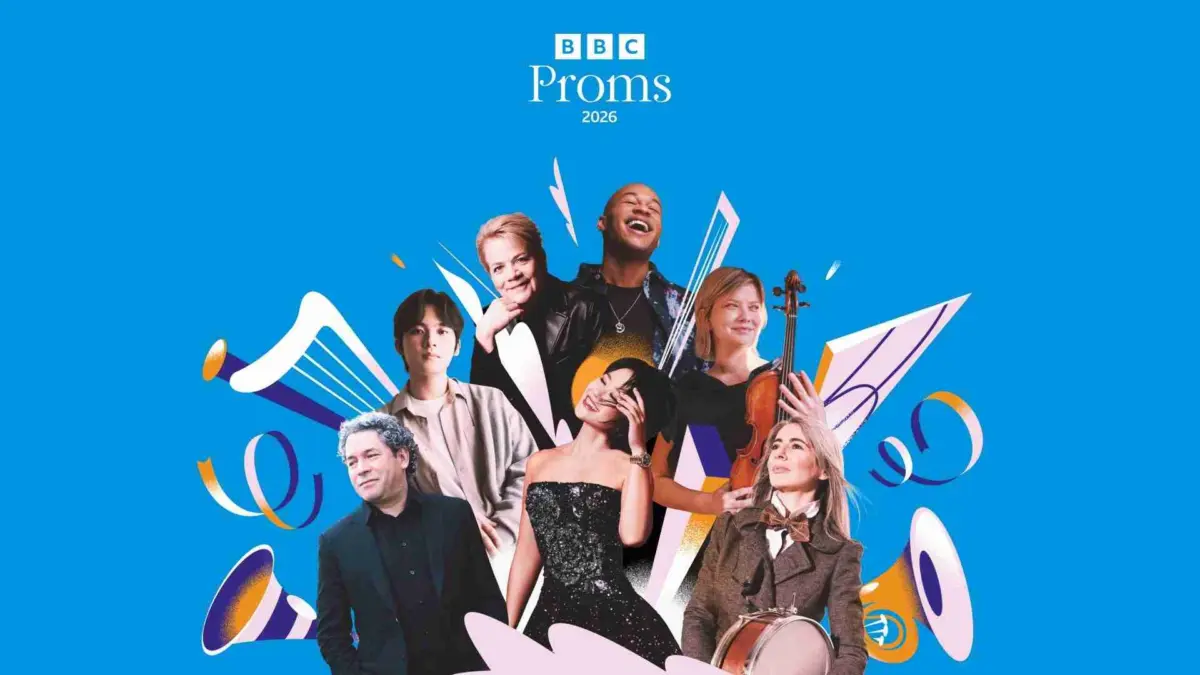
As the London summer draws to its majestic close, classical music’s most vibrant and beloved festival reaches its explosive crescendo. On Saturday, 12 September 2026, the Royal Albert Hall will host the legendary Last Night of the Proms, capping off an extraordinary eight-week season that has redefined the boundaries of classical programming, shattered digital viewing records, and captivated hundreds of thousands of live attendees.
Under the baton of Chief Conductor Sakari Oramo, the BBC Symphony Orchestra and Chorus, alongside the BBC Singers, will deliver a night of musical juxtapositions that honors classical tradition while boldly embracing cross-genre innovation. This year’s programme features an eclectic mix of world premieres from Oscar-winning and internationally acclaimed composers, virtuosic showcases by global instrumental titans like pianist Yuja Wang, and a star-studded, genre-bending tribute to the late Queen of Country, Dolly Parton.
Beyond the historic Victorian arches of the Royal Albert Hall, the 2026 season has been an unmitigated triumph of accessibility and engagement. Interim figures reveal that the festival achieved record-breaking digital reach across BBC Sounds and BBC iPlayer, engaging 1.7 million accounts—a striking 32% year-on-year increase. With 86 concerts spanning 72 events in London and 14 across the wider United Kingdom, the Proms have reaffirmed their status as a cornerstone of British cultural life. As organizers look ahead to next year’s historic centenary, the 2026 Last Night stands ready to deliver a joyful, unifying celebration for a fragmented modern world.
Detailed Chronology and Programme Highlights
The anatomy of the Last Night of the Proms is a carefully calibrated journey through high art, folk tradition, and contemporary surprise. The 2026 running order promises to take audiences on a rollercoaster of emotion, virtuosic display, and celebratory nationalism.
Part One: Overtures, Masterworks, and World Premieres
The evening commences with the sparkling energy of Bernstein’s Candide Overture, setting an optimistic and energetic tone for the evening. This is followed by the deeply reflective "Lament" from Joseph Foulds’s Keltic Suite, before Scottish tenor Nicky Spence joins the BBC Symphony Chorus and BBC Singers for a soaring excerpt from Dvořák’s operatic masterpiece, Rusalka.
The orchestral journey then sweeps across Central Europe with Smetana’s evocative tone poem Vltava (The Moldau) from Má vlast, before diving headfirst into the modern era. Canadian composer and conductor Samy Moussa takes center stage—figuratively speaking—with the world premiere of Dithyramb, a major BBC commission performed by the orchestra alongside the massive forces of the BBC Symphony Chorus and BBC Singers.
Virtuosity and Country Icons
One of the most anticipated moments of the evening arrives with the appearance of world-renowned pianist Yuja Wang. Wang will deliver the first-ever Proms performance of Samuel Barber’s Pulitzer Prize-winning Piano Concerto, a notoriously demanding work that requires staggering technical facility and emotional depth.
Immediately following this high-octane classical masterwork, the atmosphere pivots sharply toward popular culture with "To Dolly, With Love." Arranged by Fiona Brice, this specially curated medley pays tribute to the late, great Dolly Parton. An all-star cast of British vocal powerhouses will take over the stage:
- Sheridan Smith will bring theatrical flair to a rousing rendition of 9 to 5.
- Beverley Knight will unleash her legendary soul-drenched vocals on I Will Always Love You.
- Country-pop sibling duo Ward Thomas will deliver a harmonious, spirited take on Jolene.
The Road to the Midnight Hour
As the evening progresses into its second half—broadcast live on BBC One—Gustav Holst’s Jupiter, the Bringer of Jollity provides a burst of celestial buoyancy. Yuja Wang returns to the keyboard for a second time, applying her characteristic brilliance to Alexander Tsfasman’s jazzy Suite for Piano and Orchestra.
Modernity and tradition rub shoulders in the final stretches. Nicky Spence returns for a rousing interpretation of Scotch Snap (arranged by Stuart Calvert), followed by a second world premiere: Iris of Life, a brand-new BBC commission by Academy Award-winning British composer Anne Dudley, performed with the BBC Singers.
Broadway humor injects itself into the Proms via Frank Loesser’s "Sit Down, You’re Rockin’ the Boat" from Guys and Dolls, featuring Spence, the Chorus, and the Singers.
Finally, the concert transitions into its sacred, immovable rituals. Henry Wood’s timeless Fantasia on British Sea Songs, Thomas Arne’s Rule, Britannia!, Edward Elgar’s Pomp and Circumstance March No. 1 (Land of Hope and Glory), and Hubert Parry’s Jerusalem (arranged by Elgar) will wash over a flag-waving audience, culminating in the traditional communal bonding of Britten’s arrangement of the National Anthem and Robert Burns’s Auld Lang Syne.
Supporting Context and Metrics: A Record-Breaking Season
While the Last Night is the undeniable crown jewel of the festival, the wider context of the 2026 BBC Proms season reveals a healthy, expanding, and digitally savvy institution.
Spanning eight intensive weeks, the 2026 season comprised 86 distinct concerts. While the Royal Albert Hall remained the spiritual heartland with 72 performances, the festival continued its vital mission of regional outreach, staging 14 concerts at various cultural venues across the United Kingdom. Approximately 300,000 music lovers attended these live events in person.
However, the most explosive growth has occurred in the digital sphere. In an era where traditional broadcasting faces steep competition from on-demand streaming and short-form media, the BBC Proms have bucked the trend entirely. Interim statistics released ahead of the finale show that digital platforms have achieved record-breaking reach:
- Unique Accounts: 1.7 million accounts accessed Proms content on BBC Sounds and BBC iPlayer between 13 April and 6 September 2026—a remarkable 32% increase year-on-year.
- Engagement Volume: This digital footprint generated 6.8 million individual plays.
- Consumption Time: Audiences invested a staggering 3.4 million combined listening and viewing hours into the festival.
- Radio 3 Boost: Bolstered by standout performances from international heavyweights such as The Met Orchestra, the Oslo Philharmonic, and the Berlin Philharmonic, BBC Radio 3’s weekly accounts on BBC Sounds spiked by 10% during the week commencing 17 August 2026.
These metrics prove that classical music is not fading into obscurity; rather, it is successfully migrating to multi-platform formats, capturing younger and more geographically diverse demographics than ever before.
Official Statements
The leaders behind the mammoth operation have reflected on the triumph of the 2026 season with a mixture of pride, relief, and anticipation for the future.
Sam Jackson, Controller of Radio 3 and the BBC Proms, commented:
"This year’s Last Night of the Proms promises to be a joyous celebration, bringing together world-class performers, much-loved repertoire and memorable musical moments. Across eight weeks, audiences have embraced the Proms in record numbers on our broadcast platforms, while around 300,000 people have joined us at the Royal Albert Hall and at venues across the UK. We very much look forward to the centenary of the BBC Proms next year, but for now, we can’t wait to celebrate the end of the 2026 season in style!"
Echoing these sentiments, Suzy Klein, Head of Arts and Classical Music TV, emphasized the unifying power of public service broadcasting:
"The BBC Proms has once again connected audiences across the UK and beyond through an extraordinary summer of live music. We’re incredibly proud of the range and quality of concerts across BBC television and BBC iPlayer, and the Last Night will provide the perfect finale to an unforgettable season. And while the season may be drawing to a close, audiences will be able to enjoy the Proms on BBC iPlayer for a whole year afterwards."
Future Outlook: Looking Ahead to the Centenary
As the final chords of Auld Lang Syne echo through the Royal Albert Hall on 12 September, and the streamers fall from the ceiling onto a euphoric crowd, the organization will not rest on its laurels for long.
The conclusion of the 2026 season officially fires the starting pistol on one of the most significant milestones in British cultural history: the centenary of the BBC Proms. Next year marks 100 years since the inception of the world’s greatest classical music festival—a legacy that began under Sir Henry Wood in 1927 with the vision of making great music accessible to everyone.
The explosive digital engagement figures of 2026 suggest that the Proms enter their second century in rude health. By balancing boundary-pushing contemporary commissions (such as those by Samy Moussa and Anne Dudley) with populist pop-culture crossovers (like the Dolly Parton tribute) and uncompromised classical virtuosity (Yuja Wang), the festival has cracked the code of modern cultural relevance.
For now, audiences worldwide can prepare for Saturday night’s broadcast—available live on BBC Radio 3, BBC Sounds, BBC Two, BBC One, and BBC iPlayer—knowing that they are witnessing living history. And for those who cannot catch the live transmissions, the BBC has confirmed that television broadcasts will remain available on BBC iPlayer for an entire year, ensuring that the magic of the 2026 Proms can be revisited long after the autumn winds begin to blow.