
Executive Overview
For centuries, traditional music education has approached the acquisition of sight-reading as an intellectual decoding exercise rather than a linguistic immersion. Students are taught to look at a staff, identify a note symbol, recall its letter name, translate that name into a physical finger position on an instrument, and finally, produce the sound. This multi-step cognitive bottleneck—akin to translating every single foreign word back to one’s native tongue before speaking—cripples fluency, shatters tempo, and turns the vibrant language of music into a mechanical math problem.
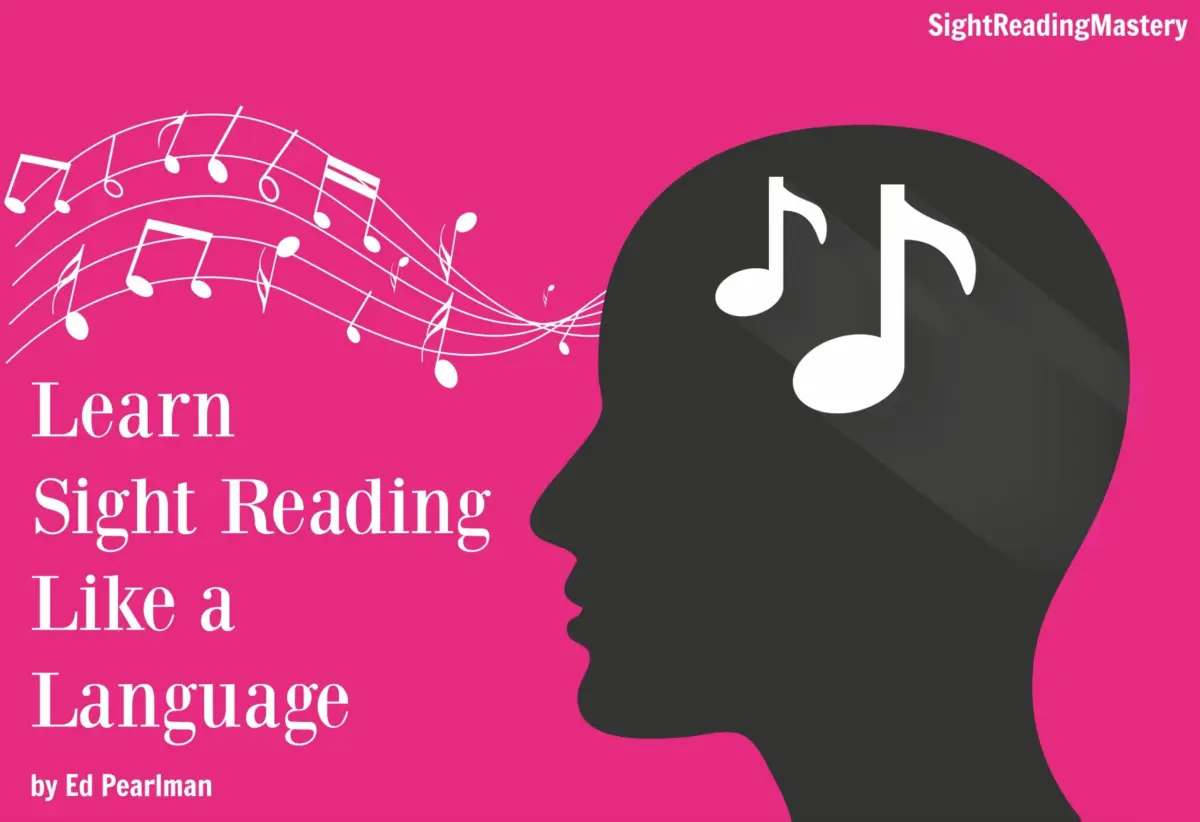
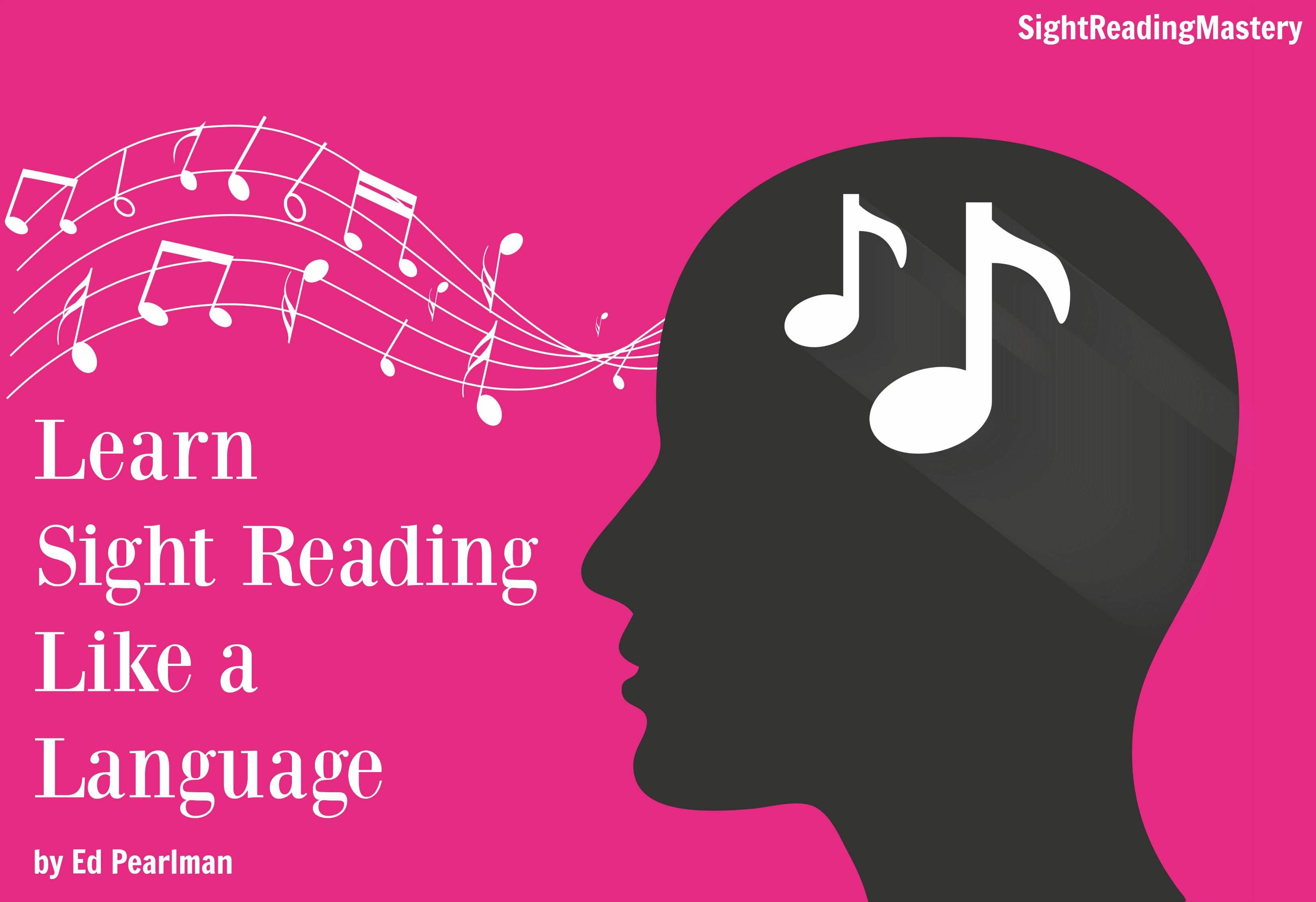
In this comprehensive investigative and pedagogical analysis, we examine a revolutionary framework proposed by veteran musician and educator Ed Pearlman. By shifting the paradigm from translation to direct comprehension, musicians can learn to process written music the way fluent speakers process spoken language. This article breaks down Pearlman’s progressive five-step methodology, explores the neurological and cognitive underpinnings of musical fluency, and provides an authoritative roadmap for musicians, vocalists, and educators seeking to master the art of sight-reading.
Detailed Chronology: The Evolution of Sight-Reading Pedagogy
To understand how modern music instruction arrived at this crossroads, it is vital to trace the pedagogical shifts that have shaped instrumental and vocal training over the last several hundred years.
The Era of Mechanical Translation (Pre-20th Century)
Historically, the transmission of music was largely oral, preserved through apprenticeship and direct imitation. However, as Western classical notation grew increasingly complex, formal pedagogical methods became necessary. Early instructional manuals focused heavily on solfège, interval recognition, and rigorous note-spelling drills.
While these methods produced competent technicians, they often created a generation of performers who were heavily dependent on slow, methodical decoding. If a student could not instantly name a note or decipher its exact theoretical interval, performance ground to a halt. The metric of success was absolute accuracy in isolation, rather than uninterrupted momentum within a temporal framework.
The Shift Toward Gestalt and Pattern Recognition (Late 20th Century)
As cognitive psychology advanced in the latter half of the 20th century, music educators began to apply theories of language acquisition to instrumental training. Researchers realized that reading words does not require spelling out every letter; similarly, reading music should not require parsing every individual notehead in a vacuum.
Pedagogues began emphasizing the "profile" of a musical line—how notes move collectively upward, downward, or remain static. Exercises designed to build rhythmic independence emerged, separating the physical mechanics of time from the pitch-selection process. Yet, despite these theoretical breakthroughs, many modern students still fall back on the trap of mental translation, bogged down by the tyranny of the individual note.
The Modern Linguistic Paradigm (Present Day)
Today, contemporary platforms like SightReadingMastery and educators such as Ed Pearlman are spearheading a return to the linguistic roots of musical literacy. By treating notation as a direct representation of sound—bypassing the intermediate step of verbal note-naming—musicians can achieve a state of flow.
The core philosophy of this modern approach is simple: when you speak your native language, you do not think of grammar rules or dictionary definitions. You communicate meaning. Similarly, when a musician reads a score, the page should transmit a direct auditory and kinetic experience. The five-level framework detailed below represents the practical culmination of this pedagogical evolution.
Supporting Context & Metrics: The Cognitive Mechanics of Musical Fluency
To appreciate why traditional sight-reading methods fail, one must examine how the human brain processes visual symbols under strict temporal constraints.
The Cognitive Bottleneck of Mental Translation
When a musician attempts to read a piece of music in real-time, working memory is subjected to an immense load. Consider the timeline of traditional decoding:
- Visual Intake: The eye registers a note on the staff.
- Identification: The brain identifies the clef, line, or space.
- Translation: The brain retrieves the letter name (e.g., "F-sharp").
- Mapping: The brain recalls the physical instrument mechanism required to produce F-sharp.
- Execution: The finger depresses the key, valve, or string.
In a moderate allegro tempo of 120 beats per minute, playing eighth notes requires completing this five-step cycle four times every single second. Mathematically and neurologically, human working memory cannot sustain this volume of conscious serial processing. The system overloads, resulting in hesitations, dropped beats, and panicked tempo adjustments.
[Traditional Decoding Method - High Latency]
Visual Symbol ➔ Identify Note ➔ Translate to Name ➔ Map to Instrument ➔ Physical Action
(Result: Cognitive overload, tempo collapse)

[Linguistic Mastery Method - Low Latency]
Visual Symbol ➔ Direct Kinetic/Auditory Comprehension
(Result: Uninterrupted musical flow)
The Linguistic Analogy: Buenos Días
To use a linguistic parallel, consider learning Spanish. When encountering the phrase "buenos días," a beginner mentally translates the words into "good morning" to verify their accuracy. While this translation offers reassurance, it acts as a mental brake pad. True fluency means hearing or reading "buenos días" and immediately grasping the greeting without the intermediary translation step.
Music operates under identical constraints. If a singer or instrumentalist must translate notation into note names before producing sound, they are perpetually trapped in the role of a beginner. The goal of advanced sight-reading practice is to internalize note profiles, rhythmic groupings, and harmonic intervals so deeply that the visual input triggers an immediate, reflexive output.
The Five-Level Progressive Framework for Sight-Reading Mastery
Ed Pearlman’s progressive methodology breaks the monumental task of sight-reading down into digestible, isolated components. The golden rule of this system is additive: once you master Level 1, you maintain it while integrating Level 2, and so on, progressively layering cognitive skills until the entire process becomes second nature.
Note: These developmental levels are distinct from the difficulty grade levels used to categorize individual musical pieces within sight-reading libraries.
Level 1: Rhythms Only
Before introducing pitch, the musician must conquer time. In Level 1, the practitioner selects a steady tempo and simply taps, claps, or speaks the rhythm of the passage.
- The Objective: Train the eye to perceive the rhythms of entire measures rather than calculating one note value at a time.
- Why It Matters: Rhythms possess zero meaning in isolation; they exist entirely in relationship to one another. Just as a single syllable stripped of its cadence ceases to communicate rhythm, a single isolated 64th note is musically meaningless—a reality highlighted by the old orchestral joke about the violist who claimed he could play 64th notes, only to play a single one when challenged.
- Practice Strategy: Set a metronome. Scan ahead by at least a measure. Focus entirely on temporal accuracy and subdivisions.
Level 2: Note Profile
Once rhythmic stability is secured, the musician adds pitch—with a crucial catch. In Level 2, you play or sing the passage while thinking purely about contour: whether the notes are moving higher, staying the same, or dropping lower relative to the preceding notes.
- The Objective: Abandon the pressure of hitting exact, pitch-perfect notes and instead focus on the physical and visual "shape" (profile) of the melodic line.
- Why It Matters: Melodic contour is the architectural skeleton of music. By grouping measures into overarching shapes, the brain processes phrases as holistic gestures rather than a chaotic string of isolated dots.
- Practice Strategy: Maintain the strict tempo established in Level 1. If you hit a wrong pitch, do not correct it or pause; ensure the direction of your movement matches the visual contour on the page.
Level 3: Focusing the Picture
Level 3 introduces specific pitch accuracy within the framework established by the first two levels. Before attempting this stage, the musician must examine the key signature and play the corresponding scale, paying explicit attention to where half-steps fall within the active range.
- The Objective: Execute the passage using the correct key and accurate note profiles while maintaining unwavering tempo.
- Why It Matters: This is where discipline is forged. Good timing supersedes absolute note perfection. If uncertainty arises regarding a specific pitch, the musician must make an educated guess based on the key signature and scale patterns, but they must never stop or drag the tempo.
- Practice Strategy: If maintaining tempo at full speed proves too difficult, reduce the metronome speed or chunk the exercise into manageable one- or two-measure segments.
Level 4: Seeing Intervals
At Level 4, the musician moves from general contour awareness to precise interval recognition. This requires training the eye to instantly distinguish between different visual geometries on the staff.

- The Objective: Visually map intervals without conscious calculation.
- Key Distinctions to Master:
- Steps (Scales): Consecutive notes moving from a line to an adjacent space, or a space to an adjacent line.
- Thirds: Consecutive notes skipping a grade—moving from a line to the next line up/down, or a space to the next space up/down.
- Larger Japs (Fourths, Fifths, and Beyond): While wider intervals require more acute visual tracking, they quickly become second nature through consistent exposure. For example, a fifth spans from one line across another to the next line (or space to space).
- Practice Strategy: Drill visual flashcard patterns of intervals across various clefs until the eye automatically registers the geometric distance between noteheads.
Level 5: Names of Notes
The final level addresses note naming. Interestingly, Pearlman notes that consciously naming notes in your mind while playing is entirely optional for fluid sight-reading. Because note names are not strictly essential to the direct language of seeing and playing music, proficient sight-readers often bypass verbalization entirely.
- The Objective: Test ultimate cognitive focus. Can you maintain rhythmic momentum, interval recognition, and profile accuracy while simultaneously tracking and naming the underlying notes?
- Why It Matters: While not strictly mandatory for performance fluency, note-naming is a valuable analytical skill. It bridges the gap between kinetic performance and theoretical understanding.
- Practice Strategy: Utilize targeted tools like interactive note-recognition trainers to accelerate notation fluency. If mental bottlenecks occur here, separate note-identification drills from active instrument practice.
Official Statements & Pedagogical Insights
Renowned educators and performers consistently emphasize that musical literacy is fundamentally an issue of habituation rather than innate talent.
"When you approach sight-reading as a language rather than a math problem, the psychological barrier collapses," explains Ed Pearlman, a veteran violinist and educator with decades of classical and traditional performance experience. "Students become terrified of making mistakes because they are hyper-focused on every microscopic symbol. By breaking the process down—rhythm first, contour second, intervals third—we retrain the brain to process music as an unfolding narrative."
Pedagogical research supports this perspective. Studies in cognitive musicology demonstrate that expert sight-readers do not possess superior eyesight or faster mechanical reflexes than novices; rather, they possess superior chunking abilities. They view groups of notes, entire chord structures, and rhythmic cells as single cognitive units. By implementing the five-level progression outlined above, developing musicians systematically build these exact chunking pathways.
Future Outlook: The Digital Frontier of Musical Literacy
As music education continues to evolve in the 21st century, the future of sight-reading training points toward highly personalized, adaptive learning ecosystems. Traditional static method books are increasingly being supplemented by dynamic digital platforms that generate endless variations of sight-reading examples tailored to a student’s exact proficiency level.
The Role of Adaptive Software
Platforms utilizing algorithmic generation—such as SightReadingMastery—allow musicians to practice without the limitation of memorizing static repertoire. Because true sight-reading requires reading material you have never seen before, having access to an infinite library of graded exercises ensures that the brain never falls back on rote memorization.
Integrating Holistic Practice Habits
To maximize the value of sight-reading sessions without losing momentum, educators recommend incorporating complementary habits:
- Pre-reading Scans: Spend 30 seconds scanning a new piece before playing a single note, identifying potential problem areas, tempo changes, and accidentals.
- Mental Rehearsal: Silently audit the piece internally, hearing the sounds before touching the instrument.
- Consistent Micro-Dosessions: Dedicate 5 to 10 minutes daily to dedicated sight-reading rather than sporadic, hour-long cram sessions.
By embracing these principles, musicians of all instruments and vocal backgrounds can dismantle the fear of the blank score. Transforming sight-reading from a laborious translation exercise into a fluent, expressive language opens the door to a lifetime of effortless musical exploration.