
Executive Overview
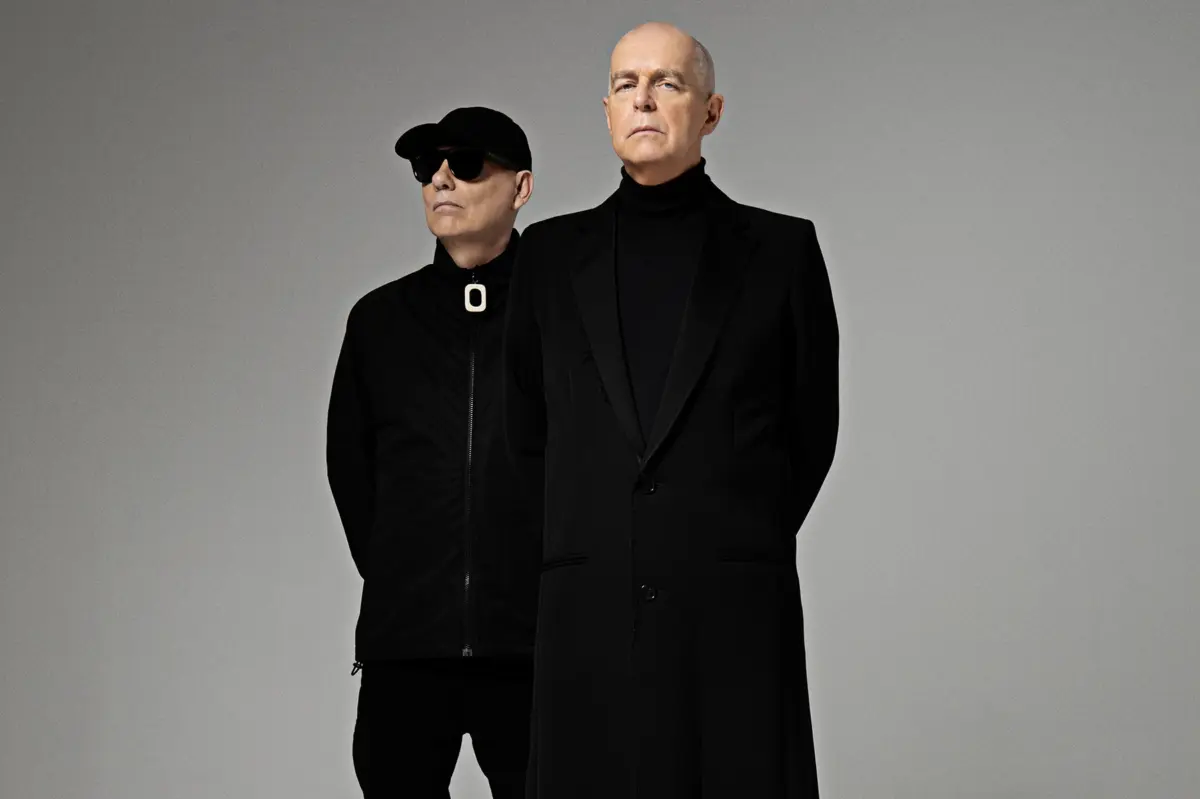
The legendary British electro-pop duo Pet Shop Boys—comprising vocalist Neil Tennant and keyboardist/programmer Chris Lowe—has once again bridged the gap between avant-garde art and mainstream electronic music. Released via Parlophone Records, their latest concept album, A Man from the Future, is an expansive, highly immersive audio-visual project dedicated to the life, brilliance, and tragic persecution of Alan Turing. Widely celebrated as the father of modern computing and the mastermind behind cracking Nazi Germany’s Enigma code during World War II, Turing’s legacy is given a sweeping, multi-layered electronic and orchestral treatment.
Produced collaboratively by Pet Shop Boys and avant-garde composer Sven Helbig, the album is a profound metamorphosis of a project initially conceived more than a decade ago. It fuses cutting-edge synthesizer elements, striking spoken-word passages, and lush string orchestrations performed by the Manchester Camerata Octet. Featuring theatrical narration by acclaimed actress Juliet Stevenson—pulling directly from Andrew Hodges’ definitive biography, Alan Turing: The Enigma—the album unfolds as a chronological exploration of human genius, technological prophecy, and institutional cruelty.
Following hard on the heels of their critically acclaimed 2024 LP Nonetheless, which peaked at No. 2 on the Official U.K. Albums Chart, A Man from the Future demonstrates that Tennant and Lowe remain creative powerhouses. More than four decades into an illustrious career defined by 22 UK Top 10 hit singles and global chart dominance, the duo has crafted what they hope will stand as a permanent musical memorial to one of the 20th century’s most vital, yet profoundly mistreated, historical figures.
Detailed Chronology: From Concept to Contemporary Masterpiece
The genesis of A Man from the Future stretches back over a decade, mirroring the slow, deliberate pace of historical re-evaluation. To understand the gravity of the new record, one must trace its path from a theatrical seed to a fully realized symphonic-electronic monument.
Phase 1: The Initial Spark (2012–2013)
Long before Benedict Cumberbatch brought Alan Turing’s complex life to the silver screen in the 2014 Oscar-winning film The Imitation Game, Neil Tennant and Chris Lowe were already deep in research. Working in close collaboration with biographer Andrew Hodges, the Pet Shop Boys began sketching out a musical and theatrical piece that would capture the intellectual highs and devastating lows of Turing’s existence. During this period, the duo toyed with the structural framework of the narrative, establishing the foundational melodies and thematic motifs that would eventually dictate the flow of the eight core movements.
Phase 2: The Royal Albert Hall Premiere (July 2014)
The project broke cover into the public consciousness in the summer of 2014. As part of the prestigious BBC Proms season at London’s iconic Royal Albert Hall, Pet Shop Boys performed select orchestral and electronic arrangements from the work. Accompanied by massive arrangements and guest vocalists, the live presentation proved that the synthesis of classic pop sensibilities, modern electronica, and historical biography could captivate a mainstream classical audience. However, despite the acclaim of the one-off concert, a full studio recording remained elusive for years as the band pursued other touring commitments and album cycles, including Super (2016), Hotspot (2020), and Nonetheless (2024).
Phase 3: The 2026 Reworking and Expansion
Revisiting the source material a decade later, Tennant and Lowe decided the project required a thorough contemporary overhaul. Partnering with composer and producer Sven Helbig, the duo updated, reworked, and rearranged the entire score. They injected fresh electronic programming, integrated modern text framing, and commissioned entirely new string orchestrations. The result is a richer, darker, and more sonically cohesive work than the 2014 Proms iteration suggested—transforming a historical suite into a definitive, state-of-the-art concept album.
A Life in Eight Movements: The Tracklist Unfolded
A Man from the Future is meticulously structured to flow chronologically through the major milestones of Alan Turing’s short but seismic life. Each chapter serves as both a historical vignette and an emotional exploration of isolation, intellect, and societal injustice.
[School Days] ➔ [Cambridge] ➔ [Bletchley Park / Enigma] ➔ [Digital Computing] ➔ [AI Prophecy] ➔ [Trial & Conviction] ➔ [Tragic Fall / Suicide]- The Formative Years: The LP opens with Turing’s youth, capturing his early, insatiable fascination with mathematics, the physical sciences, and the quiet realization of his own homosexuality in a rigidly conservative society.
- The University Era: Moving into his academic prime at Cambridge, the music mirrors the bustling, intellectually charged atmosphere of a young mind breaking free from traditional constraints.
- Bletchley Park and the Enigma: This central chapter tackles Turing’s pivotal, top-secret work during World War II. Working alongside fellow cryptanalysts at Bletchley Park, Turing masterminded the electromechanical "Bombe," unlocking the seemingly impenetrable German Enigma machine and saving millions of lives.
- The Birth of Digital Computing: The record transitions into the postwar era, celebrating Turing’s foundational theoretical work in designing the Automatic Computing Engine (ACE), laying the groundwork for every digital device used in the modern world.
- The Prophecy of Artificial Intelligence: Ahead of his time, Turing conceptualized machine learning and posed the famous "Turing Test." The album captures this philosophical leap into a world where machines could theoretically think.
- Persecution and Trial: The tone darkens precipitously as the music addresses Turing’s arrest in 1952 for homosexuality, which was then illegal in the United Kingdom. The harrowing judicial process and subsequent chemical castration sentence form the emotional nadir of the project.
- The Final Silence: The album concludes with Turing’s tragic death by cyanide poisoning in 1954 at the age of 41—officially ruled a suicide—cementing his martyrdom at the hands of the very state he helped save.
Supporting Context & Metrics: The Legacy of Pet Shop Boys
To contextualize A Man from the Future, it is vital to examine the unprecedented commercial and artistic endurance of Pet Shop Boys. Formed in London in 1981, Tennant and Lowe transformed synth-pop into high art, fusing infectious danceable rhythms with sophisticated, literate lyricism.

U.K. Chart Dominance
- Total Top 10 Hits: 22 singles
- Number One Singles: 4 (including "West End Girls," "It’s a Sin," and "Always on My Mind")
- Top 10 Albums: 10 (including 1993’s Very, which debuted at No. 1)
- Recent Success: Their 2024 studio album, Nonetheless, proved their continued vitality by capturing the No. 2 spot on the Official U.K. Albums Chart.
U.S. and Global Impact
While primarily a British cultural institution, Pet Shop Boys achieved significant crossover success in the United States. They have placed 12 singles on the Billboard Hot 100, securing five Top 10 hits and a historic No. 1 with their defining 1986 anthem, "West End Girls."
The pivot toward a cerebral historical concept album like A Man from the Future is emblematic of a career that has continually rejected pop complacency. From their 2001 musical Closer to Heaven to their ballet The Most Incredible Thing (2011), Tennant and Lowe have consistently pushed the boundaries of where electronic pop music can live.
Official Statements and Artistic Intent
The motivation behind A Man from the Future is rooted as much in political and social commentary as it is in musical exploration. In an official statement accompanying the album’s release, Pet Shop Boys laid bare their primary objectives:
"Our motive in creating this work was to make a musical memorial to Alan Turing who gave so much to his country and the world and was rewarded for it by being prosecuted for his sexuality," the duo shared.
"Alan made a massive contribution to the defeat of Germany in World War II and was a pioneer of computing, imagining a world with intelligent computers. He also looked forward to a time when being gay would be accepted as normal. In both his professional and private lives, he was ahead of his time."
By pairing these sentiments with Sven Helbig’s towering string arrangements and Juliet Stevenson’s grave, clear-eyed narration of Andrew Hodges’ text, the album transcends typical pop instrumentation. It becomes an act of restitution—a cultural correction delivered through the very medium of electronic sound that Turing’s theoretical breakthroughs ultimately made possible.
Future Outlook: Critical Reception and Cultural Legacy
As A Man from the Future makes its way into the headphones and living rooms of listeners worldwide, initial critical reactions suggest it will be regarded as one of the most daring projects in Pet Shop Boys’ extensive catalog.
In an era dominated by hyper-compressed, short-form streaming singles, a sprawling, eight-movement electro-symphonic concept album about a persecuted wartime codebreaker is a defiant artistic statement. It challenges the listener to sit down, pay attention, and engage with history.
For Alan Turing—who received a posthumous royal pardon from Queen Elizabeth II in 2013, nearly sixty years after his death—the album provides a vibrant, throbbing digital afterlife. And for Pet Shop Boys, A Man from the Future reinforces their status not merely as pop veterans, but as vital cultural historians who continue to find new ways to make synthesisers weep, computers sing, and history matter.