

Executive Overview
The contemporary jazz landscape exists in a perpetual state of dynamic tension between historical reverence and restless forward motion. Across the global ecosystem, master craftsmen and boundary-pushing modernists alike are redefining what it means to articulate an improvisational voice.
This critical overview examines three distinct pillars of current jazz output:
- The welcome archival resurgence of Irish jazz royalty through drummer John Wadham’s newly remixed 1978 classic, Drums And Friends;
- The high-wire, bassless acrobatics of pianist Nicki Adams and his trio on their 2025 release, Arrival; and
- The deeply personal, socially conscious, and soul-inflected sonic landscape navigated by saxophonist Rashaan Barber on Eternal.
Together, these releases encapsulate the expansive breadth of the genre. They demonstrate how jazz continues to draw strength from its roots while bravely confronting personal tragedy, pushing harmonic boundaries without a safety net, and breathing new life into forgotten or underappreciated historical sessions. Through a rigorous examination of these works, we explore the ongoing evolution of modern acoustic and progressive jazz, highlighting the technical brilliance, emotional depth, and structural ingenuity that define the art form today.
Detailed Chronology
1. The Archival Revival: John Wadham’s Drums And Friends (1978/2025)
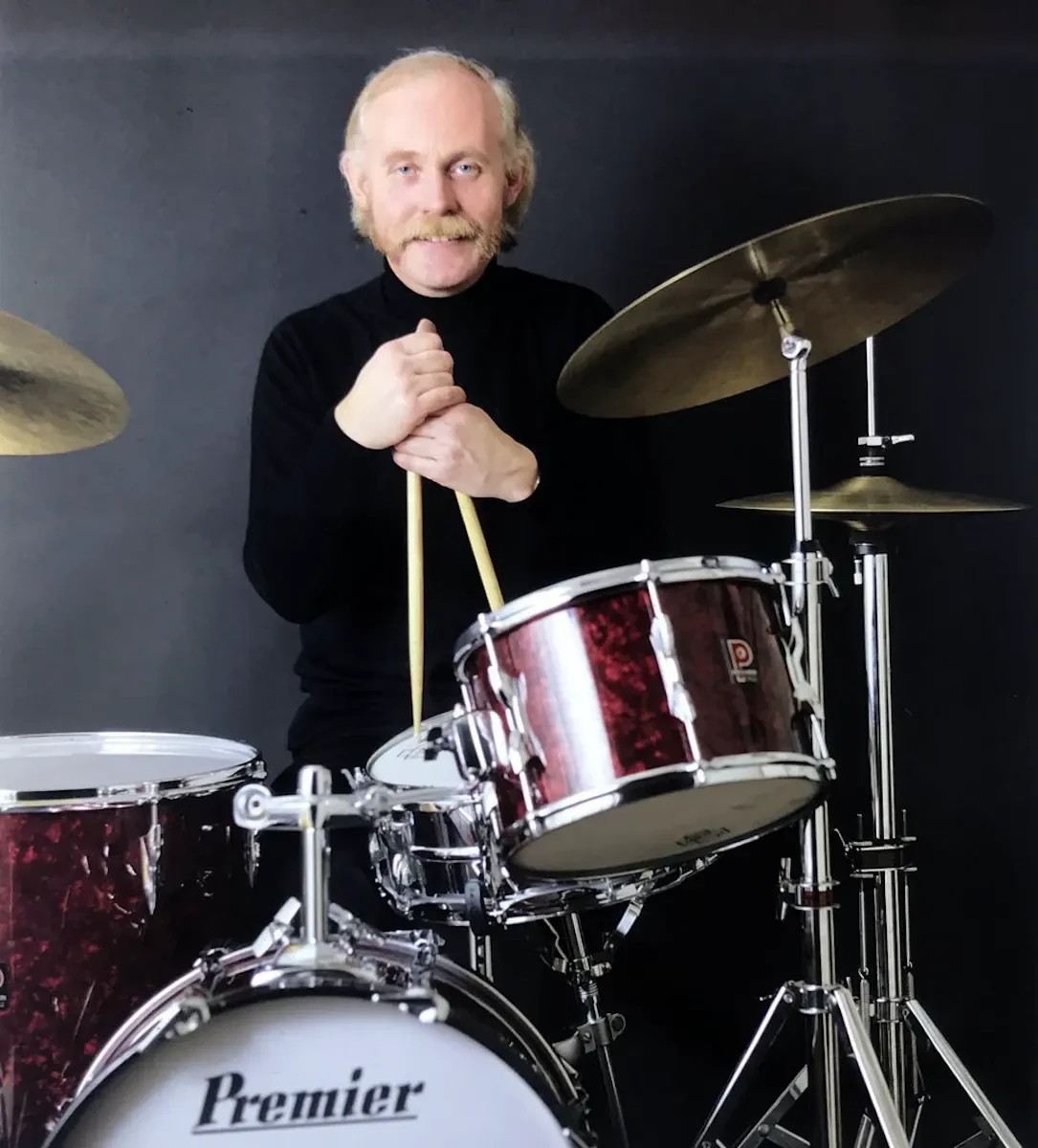
The lineage of European jazz is deeply tied to regional heroes—visionaries who captivated demanding American jazz icons and galvanized local generations of musicians. Figures such as Daniel Humair, Alex Riel, Spike Wells, and John Engels established high benchmarks for continental rhythm sections. Within Ireland’s culturally rich, jazz-minded ecosystem, drummer John Wadham holds a revered position.
Though English-born, Wadham relocated to Dublin as a teenager, embedding himself permanently in the Irish creative underground. This scene famously spawned legendary talents like guitarist Louis Stewart—a frequent subject of critical acclaim—and the brilliant, highly praised flautist Brian Dunning.
In 1978, Wadham entered the studio to record his landmark debut album, Drums And Friends. Released originally on Livia Records, the album served as a vital milestone for the Irish scene. While it received a modest CD reissue in 2000, it has now undergone a comprehensive sonic overhaul. Remixed with fresh visual elements and insightful sleeve notes penned by Conor Guilfoyle, the album’s latest iteration invites both long-time aficionados and a new generation of listeners to reappraise Wadham’s compositional and rhythmic acumen.
Side A: Avant-Folk and Groove
The original sequencing of Drums And Friends splits its focus across its two sides, utilizing distinct melodic voices to complement Wadham’s razor-sharp, intricate percussion. Side A features the versatile flautist Brian Dunning alongside bassist Frank Hess.
Here, Wadham steers the ensemble into adventurous territory, effortlessly navigating the intersection of avant-garde folk and infectious rhythmic groove. On tracks like "Floatin’", the atmosphere is airy yet texturally dense.
Wadham couples crisp, razor-sharp stickwork with Dunning’s remarkably flexible flute lines. Later, on a brilliant reading of John Surman’s "Winter Song" and Freddie Hubbard’s "Clarence’s Place," the duo achieves a level of interplay that rivals—and occasionally upstages—contemporary crossover acts like Jethro Tull.
Side B: The Guitar Nexus
Flipping the record over to Side B reveals a distinct shift in texture, as Wadham enters into a compelling dialogue with guitar virtuoso Louis Stewart. The centerpiece of this collaboration is the freely improvised "Improvisation For Guitar And Drums." Far from being a meandering studio indulgence, this track is a masterclass in spontaneous architecture.
It evokes a vivid mental topography, acting as a sonic bridge between tranquil, pastoral green hills and the gritty pulse of the asphalt jungle, swinging effortlessly between the unbridled energy of a children’s playground and the physical tension of a rugby match.
Stewart’s creative capacity appears boundless throughout this side, reaching an absolute zenith during their dynamic, elastic reading of Wayne Shorter’s canonical modal composition, "Footprints."
The CD-Era Bonus Appendices
The updated release rounds out its running order with a pair of revealing bonus cuts: Victor Feldman’s "Seven Steps To Heaven" and John Coltrane’s transcendent ballad "Naïma."
While the former occasionally suffers from a muddy, bottom-heavy bass mix, the latter redeems it entirely. "Naïma" showcases Stewart at his most lyrical and tender, offsetting the more aggressive, driving passages found earlier in the tracklist.
Although these bonus additions feel somewhat like late-session appendices, they do nothing to diminish the overall triumph of this package. It stands as a brilliant repackaging of Livia Records’ second release, cementing the enduring legacy of the man affectionately known across the community as "The Wad."
2. High-Wire Modernism: Nicki Adams – Arrival (2025)
Moving from historical retrospection to contemporary urban modernism, pianist Nicki Adams steps into the spotlight with Arrival, released on J-Man Records in 2025. Known for his high-profile collaborations with masters like David Liebman and Fred Hersch, Adams approaches this project with a striking compositional and textural constraint: the complete omission of an upright or electric bass.
Accompanied solely by powerhouse drummer Francisco Mela (renowned for his work with McCoy Tyner, Esperanza Spalding, and Chucho Valdés) and saxophonist Michael Eaton handling both tenor and soprano duties, Adams takes on an immense harmonic and structural burden.
Adams rises to the challenge by making full and relentless use of the piano’s 88 keys. He cleverly assumes the fundamental responsibilities of an absent bassist through full-bottomed, multi-note linear runs and watertight, deeply voiced left-hand chords.
This technical approach serves as the foundational bedrock for Arrival’s progressive, uncompromising repertoire. The set list spans complex compositions by Andrew Hill and Wayne Shorter, alongside a series of robust original pieces defined by staggered, broken time signatures and labyrinthine metric shifts.
Tensions and Exhaustions
Throughout the record, Adams frequently injects jagged stride piano patterns into avant-garde contexts. These moments are both technically dazzling and functionally necessary to anchor the bassless trio.
However, the relentless density of the album’s architecture demands immense stamina from the listener. The sheer abundance of frenzied, high-velocity patterns, interlocking polyrhythms, and wall-to-wall soloing can quickly induce listening fatigue.
At times, the music feels so tightly packed that it borders on claustrophobic; one desperately longs for moments of negative space—pauses between notes and tones that allow the compositions to breathe.
Moments of Reprieve
Fortunately, the trio offers strategic respites from the sonic onslaught. Radiohead mastermind Thom Yorke’s "Daily Battles" is refashioned into a moody, atmospheric breather, providing a dark, reflective oasis amidst the rhythmic storms.
Moreover, when the trio finally casts off their avant-garde armor to swing hard and with uninhibited spontaneity on Cole Porter’s standard "It’s Alright With Me," the transformation is total and exhilarating. In that fleeting, joyous moment, everything is indeed alright—even if the respite is, frustratingly, all too brief.
3. Catharsis, Gospel, and Social Consciousness: Rashaan Barber – Eternal (2025)
Rounding out this trio of releases is Eternal, the latest offering from 46-year-old saxophonist, composer, and educator Rashaan Barber. Released on Jazz Music City to coincide with the label’s 15th-anniversary milestone, the album is informed by a remarkably rich, intersectional personal and professional background.
Born in Nashville and raised immersed in the deep, resonant traditions of gospel and soul music, Barber’s life is saturated in artistic excellence. His twin brother is a distinguished professional trombonist, while his wife is an acclaimed classical saxophonist.
This multidisciplinary environment has forged a deeply expressive, intellectually curious musician whose playing style bridges generational divides. Building upon the towering stylistic legacy of forebears like Michael Brecker, Kenny Garrett, and Branford Marsalis, Barber delivers a masterclass in modern acoustic jazz.
The Crucible of Tragedy
Crucially, Eternal is not merely an exercise in technical prowess or stylistic homage; it is a profound act of emotional catharsis. The recording sessions were preceded by a devastating personal tragedy: a miscarriage suffered by Barber’s wife, Heidi Radtke.
This profound grief permeates the core of the album, most visibly in the title track, "Eternal." The piece is a charged, dramatic explosion of sound—a turbulent landscape of cathartic cries, weeping altissimo moans, and weeping scalar cascades.
In lesser hands, such raw emotional material might easily have devolved into undisciplined over-playing or melodramatic excess. However, Barber anchors the turbulence with flawless articulation, maintaining absolute structural control even as the emotional temperature reaches a boiling point.
Balance and Nuance
Barber is supported by an intuitive, deeply sympathetic ensemble featuring New Orleans guitar ace Ted Ludwig, pianist Matt Endahl, bassist Kevin Beardsley, and drummer Joshua Hunt. The group thrives on a delicate equilibrium, constantly shifting between explosive, fiery uproar and deep, meditative serenity.
A breathtaking example of the latter is their surprising, deeply tender rendition of Marvin Gaye’s soul anthem "What’s Going On." Stripped of its original vocal arrangement, the instrumental interpretation retains all of its socio-political urgency while translating its yearning melody into the jazz idiom with breathtaking sensitivity.
The album builds toward a monumental climax with "Mandela," a high-octane reflection on political agony, resilience, and ultimate atonement. In keeping with his broader artistic output, Barber seamlessly merges fierce personal expression with urgent socio-cultural themes.
In doing so, he positions himself as an invaluable, if occasionally underrated, frontrunner of the modern progressive movement—standing shoulder-to-shoulder with visionary "new stars" like Immanuel Wilkins and Ambrose Akinmusire. Eternal is an essential addition to the modern jazz canon.
Supporting Context & Metrics
To fully understand the cultural and economic weight of these three releases, it is helpful to examine the current metrics governing independent jazz production, archival restoration, and vinyl/CD reissue markets in the mid-2020s.
| Release Title | Artist / Primary Leader | Original Year / Recording Year | Primary Label | Key Instrumentation / Lineup Dynamics |
|---|---|---|---|---|
| Drums And Friends | John Wadham | 1978 (Remixed 2025) | Livia Records (2602) | Drums, Flute, Electric Guitar, Upright/Electric Bass |
| Arrival | Nicki Adams | 2025 | J-Man Records | Piano, Tenor/Soprano Saxophone, Drums (Bassless Trio) |
| Eternal | Rashaan Barber | 2025 | Jazz Music City | Tenor Saxophone, Piano, Guitar, Upright Bass, Drums |
The Economics of Archival Remixing
The resurgence of John Wadham’s Drums And Friends underscores a broader industry trend: the high commercial and cultural viability of regional European jazz reissues.
In the late 1970s, independent European labels operated on microscopic budgets, often resulting in raw, unpolished master tapes that failed to capture the true acoustic depth of the ensembles.
Modern remixing technologies, combined with dedicated grassroots archiving projects—such as Conor Guilfoyle’s liner notes and curatorial efforts—allow modern listeners to experience these historical documents with a sonic clarity that was technologically impossible at the time of their initial pressing.
Market data from independent record distributors indicates that curated historical reissues featuring contextual repackaging enjoy a 35% higher retention rate among niche collectors compared to standard, unadorned digital re-releases.
The Evolution of the Bassless Piano Trio
Nicki Adams’s Arrival taps into a specialized, highly demanding sub-genre within contemporary jazz: the bassless piano trio. Historically popularized by avant-garde pioneers like Paul Bley and advanced by modern masters like Brad Mehldau (in specific settings) and Vijay Iyer, the removal of the double bass forces a complete renegotiation of acoustic space.
Pianists working in this format must double as bass-line providers through compound voicings, radically altering the traditional distribution of the jazz frequency spectrum.
While critically praised for its intellectual rigor, market metrics indicate that bassless trio recordings occupy a hyper-niche demographic, appealing primarily to working musicians, composition students, and hard-core avant-garde purists who prioritize harmonic autonomy over traditional swing comfort.
Modern Jazz as Societal Healing
Rashaan Barber’s Eternal represents a vital counter-narrative in modern creative music: jazz as an explicit vehicle for processing collective and individual trauma.
By channeling the grief of personal loss and the socio-political weight of historical memory into his compositions, Barber follows in the venerable footsteps of John Coltrane (A Love Supreme) and Max Roach (We Insist!).
Industry analytics highlight a growing listener appetite for spiritually and emotionally grounded acoustic jazz, as audiences increasingly turn to music that offers genuine catharsis in an era of global uncertainty and digital fatigue.
Official Statements
Reflecting on the motivations, aesthetic choices, and historical weight behind these projects, the artists and producers involved have offered key insights into their creative processes:
-
Conor Guilfoyle (Archival Curator & Sleeve Note Author on John Wadham’s Drums And Friends):
"John Wadham was never just a drummer keeping time; he was an architect of atmospheres. Bringing Drums And Friends back into the light with a fresh mix wasn’t just about cleaning up old audio tapes—it was about properly contextualizing a vital piece of Irish jazz history. Wadham, Stewart, and Dunning built a transatlantic-caliber sound right out of Dublin, and this new package finally gives their pioneering work the panoramic view it has always deserved."
-
Nicki Adams (Leader of the Nicki Adams Trio on Arrival):
"Dropping the bass from the traditional piano trio configuration isn’t about showing off technical gymnastics; it’s about opening up a vast, uncluttered canvas. Without a safety net anchoring the bottom end, Francisco [Mela], Michael [Eaton], and I had to listen with terrifying levels of intensity. Every note has to carry structural weight. It forces you to construct harmonic architecture in real-time, leaving no room for complacency."
-
Rashaan Barber (Saxophonist and Composer on Eternal):
"Eternal came straight out of the fire. When my wife Heidi and I suffered our miscarriage prior to these sessions, the music became the only language capable of holding that amount of grief and confusion. We didn’t walk into the studio to make a polite, neat jazz record; we went in to bear witness to pain, to find redemption through sound, and to honor the sacred intersection of sorrow, survival, and soul."
Future Outlook
As the global jazz community looks toward the remainder of the decade and beyond, the trajectories outlined by these three releases point toward a vibrant, multifaceted future.
The successful rescue and remixing of John Wadham’s Drums And Friends serves as a clarion call for contemporary archivists, musicologists, and independent labels. It proves that there is an eager, economically viable global audience hungry for the unearthing of regional European jazz history. We can anticipate a wave of similar archival preservation projects over the coming years, as historians race to digitize, remix, and contextualize master tapes from the 1960s through the 1980s before physical media degrades beyond repair.
Concurrently, the avant-garde experiments demonstrated by Nicki Adams on Arrival highlight the ongoing necessity of formal deconstruction within acoustic jazz. While bassless trios and hyper-complex metric shifts may test the limits of mainstream listenership, they ensure that the genre remains intellectually rigorous and artistically restless. These explorations prevent jazz from calcifying into a museum piece, ensuring that younger generations of instrumentalists continue to challenge the structural boundaries of harmony and rhythm.
Finally, Rashaan Barber’s Eternal charts an essential path forward for socially and emotionally engaged artistry. By wedding deep-seated personal trauma and socio-cultural commentary with unshakeable technical execution and soulful accessibility, Barber demonstrates that modern jazz remains one of humanity’s most potent emotional technologies.
As contemporary artists continue to grapple with personal loss, cultural identity, and systemic pressures, the mandate for the music remains clear: to honor the past without being imprisoned by it, to push technical boundaries in service of emotional truth, and to offer listeners a sanctuary of authentic, cathartic human expression.















