
Executive Overview
As the legendary acoustic arches of the Royal Albert Hall prepare to reverberate with the final, triumphant chords of Jerusalem and Pomp and Circumstance, the classical music world stands on the precipice of its most anticipated annual celebration. On Saturday, 12 September 2026, the Last Night of the Proms will draw the curtain on an extraordinary eight-week summer festival that has once again redefined the boundaries of classical programming, audience engagement, and digital reach.
The 2026 season has been nothing short of historic. Spanning 86 concerts—with 72 hosted in the iconic Victorian amphitheatre of the Royal Albert Hall and 14 resonating across diverse venues throughout the United Kingdom—the festival has drawn an aggregate live attendance of approximately 300,000 people. More significantly, it has achieved unprecedented milestones in the digital landscape. Interim figures reveal that BBC Sounds and BBC iPlayer have recorded a staggering 1.7 million unique accounts accessing Proms content—a robust 32% year-on-year increase. This digital appetite has translated into 6.8 million plays and an impressive 3.4 million listening and viewing hours between mid-April and early September.
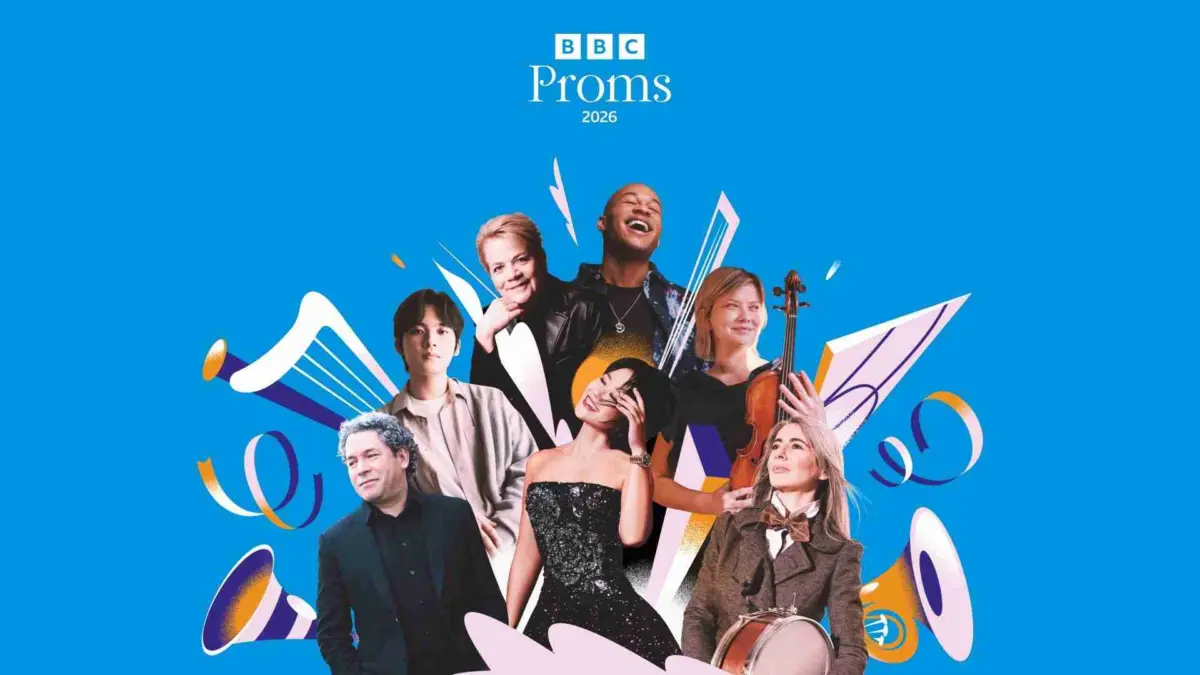
Yet, it is the Last Night itself that encapsulates the spirit of the entire festival: a brilliant juxtaposition of high-art classical masterworks, cutting-edge contemporary commissions, and joyous, populist revelry. Under the baton of Chief Conductor Sakari Oramo, the BBC Symphony Orchestra and Chorus, alongside the peerless BBC Singers, will helm an eclectic programme. This year’s grand finale features world-class soloists including piano virtuoso Yuja Wang, acclaimed Scottish tenor Nicky Spence, and a star-studded tribute to the late Queen of Country, Dolly Parton.
For millions of viewers and listeners tuning in across the globe via BBC Radio 3, BBC Sounds, BBC Two, BBC One, and the iPlayer, the evening promises an unforgettable masterclass in musical unity. This comprehensive report explores the anatomy of the 2026 Last Night of the Proms, examining its rich musical repertoire, the striking digital metrics underpinning its success, official insights from the BBC’s leadership, and a forward-looking gaze toward the centenary of the world’s greatest classical music festival.
Detailed Chronology and Musical Programme
The Last Night of the Proms is structurally designed to take audiences on an emotional odyssey—moving from contemplative orchestral majesty and virtuosic brilliance to poignant tributes and, ultimately, the unbridled euphoria of the traditional patriotic finale.
Part I: Overtures, Masterworks, and World Premieres
The evening opens with the effervescent and sparkling Candide Overture by Leonard Bernstein, establishing an energetic baseline before plunging into the pastoral introspection of Foulds’s Keltic Suite (specifically the second movement, "Lament").
The vocal narrative begins in earnest with acclaimed Scottish tenor Nicky Spence taking the stage alongside the BBC Symphony Chorus and the BBC Singers. They will perform an evocative excerpt from Act I of Antonín Dvořák’s operatic masterpiece Rusalka ("Vidino divná, přesladká"). Following this, the orchestra will paint sweeping orchestral landscapes with Bedřich Smetana’s immortal symphonic poem Vltava from Má vlast.
A major focal point of the first half is the first of two world premieres commissioned by the BBC for the season: Canadian composer and conductor Samy Moussa’s Dithyramb, performed with full choral backing. This will be immediately followed by a breathtaking display of technical mastery from world-renowned pianist Yuja Wang, who delivers the Proms’ debut performance of Samuel Barber’s Pulitzer Prize-winning Piano Concerto.
Part II: The Dolly Parton Tribute and Contemporary Commissions
As the broadcast transitions to BBC One for the high-octane Finale from 9:00 pm, the atmosphere shifts toward genre-defying celebration. In a cultural highlight titled To Dolly, With Love—neatly arranged by Fiona Brice—an all-star cast of vocalists will pay homage to the late, great Dolly Parton.
- West End and television star Sheridan Smith will bring high-energy theatricality to a rendition of 9 to 5.
- Soul powerhouse Beverley Knight will deliver a soaring, emotionally charged interpretation of I Will Always Love You.
- Acclaimed country-pop duo Ward Thomas will infuse the Royal Albert Hall with authentic Nashville charm through a stirring performance of Jolene.
Following this country-music interlude, the programme balances symphonic grandeur with modern innovation. Gustav Holst’s The Planets offers the exuberant Jupiter, the Bringer of Jollity, before Yuja Wang returns to the stage for a dazzling second appearance, tackling Alexander Tsfasman’s jazz-infused Suite for Piano and Orchestra.
Nicky Spence returns for a spirited journey through Stuart Calvert’s arrangement of Scotch Snap, paving the way for the second BBC world premiere of the evening: Iris of Life by Academy Award-winning British composer Anne Dudley, performed alongside the BBC Singers.
The theatrical thread continues as Spence, the BBC Symphony Chorus, and the BBC Singers unite for a rousing rendition of "Sit Down, You’re Rockin’ the Boat" from Frank Loesser’s Guys and Dolls (arranged by Mark Cumberland).
Part III: The Traditional Festivities
No Last Night of the Proms would be complete without its sacred, time-honored rituals. The final stretch of the evening plunges headfirst into unadulterated British musical heritage:
- Henry Wood’s perennial crowd-pleaser, the Fantasia on British Sea Songs.
- Thomas Arne’s defiant Rule, Britannia! (arranged by Sir Malcolm Sargent).
- Sir Edward Elgar’s majestic Pomp and Circumstance March No. 1 (Land of Hope and Glory).
- Sir Hubert Parry’s spiritual anthem Jerusalem (orchestrated by Edward Elgar).
- Benjamin Britten’s soaring arrangement of The National Anthem.
- The traditional closing embrace of global solidarity and nostalgia: Robert Burns’s Auld Lang Syne (arranged by Paul Campbell).
Supporting Context & Metrics: A Record-Breaking Season
To fully appreciate the cultural weight of the Last Night of the Proms, one must examine the broader canvas of the 2026 season. Over eight transformative weeks, the BBC Proms solidified its status not merely as a concert series, but as a dynamic, cross-platform media event.
Live Audiences and Geographical Reach
While the Royal Albert Hall remains the spiritual and physical heartland of the festival—hosting 72 distinct Proms programmes—the 2026 season continued its vital mission of democratization and regional outreach. Fourteen concerts were staged at venues across the United Kingdom, bringing world-class orchestral music directly to diverse communities. In total, approximately 300,000 music lovers experienced the festival live in-venue.
Digital Dominance and Broadcasting Triumphs
The most striking narrative of the 2026 season is its explosive growth in the digital sphere. In an era where traditional arts institutions frequently struggle to capture younger or remote demographics, the Proms demonstrated an extraordinary capacity for reinvention and digital engagement.
- Account Reach: Interim figures indicate that 1.7 million unique accounts accessed Proms content across BBC Sounds and BBC iPlayer between 13 April and 6 September 2026. This represents a remarkable 32% increase year-on-year.
- Consumption Volume: This audience interaction generated 6.8 million total plays and amassed an astonishing 3.4 million listening and viewing hours.
- Radio 3 Momentum: The broader digital halo effect extended to BBC Radio 3. Weekly accounts on BBC Sounds surged by 10% during the week commencing 17 August 2026—a powerhouse week featuring guest performances from global elite ensembles including The Met Orchestra, the Oslo Philharmonic, and the Berlin Philharmonic.
Furthermore, the BBC ensured maximum accessibility by staggering the broadcast formats. Television audiences could view Part 1 on BBC Two and iPlayer starting at 7:10 pm, with the high-stakes Finale migrating to BBC One and iPlayer at 9:00 pm. Radio listeners enjoyed uninterrupted live coverage on BBC Radio 3 and BBC Sounds presented by Petroc Trelawny and Georgia Mann, while television presenting duties were deftly handled by Katie Derham and Nick Mohammed, complemented by Tina Daheley reporting live from the backstage corridors.
Official Statements
The profound success of the season and the immense anticipation surrounding the Last Night prompted reflections from key architects of the BBC’s arts and cultural programming.
Sam Jackson, Controller, Radio 3 and BBC Proms, shared his enthusiasm for the impending finale and the season at large:
"This year’s Last Night of the Proms promises to be a joyous celebration, bringing together world-class performers, much-loved repertoire and memorable musical moments. Across eight weeks, audiences have embraced the Proms in record numbers on our broadcast platforms, while around 300,000 people have joined us at the Royal Albert Hall and at venues across the UK. We very much look forward to the centenary of the BBC Proms next year, but for now, we can’t wait to celebrate the end of the 2026 season in style!"
Suzy Klein, Head of Arts and Classical Music TV, emphasized the festival’s unique ability to forge national and international connections:
"The BBC Proms has once again connected audiences across the UK and beyond through an extraordinary summer of live music. We’re incredibly proud of the range and quality of concerts across BBC television and BBC iPlayer, and the Last Night will provide the perfect finale to an unforgettable season. And while the season may be drawing to a close, audiences will be able to enjoy the Proms on BBC iPlayer for a whole year afterwards."
These statements underscore a dual institutional mission: honoring the hallowed traditions of classical music while aggressively pioneering multi-platform accessibility to ensure the art form remains vital for future generations.
Future Outlook: Looking Ahead to a Centenary Milestone
As the final strains of Auld Lang Syne fade into the London night on 12 September, and the streamers settle on the floor of the Royal Albert Hall, the festival machine will not rest for long. Behind the scenes, planning is already well underway for what promises to be a monumental cultural landmark: the centenary of the BBC Proms in 2027.
For nearly a century, the Proms have served as the heartbeat of British cultural life, surviving world wars, societal shifts, and technological revolutions while remaining steadfastly dedicated to Sir Henry Wood’s original vision of presenting the best classical music to the widest possible audience at affordable prices.
The record-breaking metrics of the 2026 season—particularly the 32% surge in digital accounts and millions of viewing hours—provide an exceptionally strong foundation as the festival marches toward its hundredth year. It proves beyond doubt that classical music, when presented with ambition, diversity, and modern technological integration, possesses an unwaning power to captivate the public imagination.
Until the celebrations for the centenary begin, music lovers have ample opportunity to savor the fruits of the current harvest. Audio broadcasts will remain available on BBC Sounds for 30 days post-broadcast, while the comprehensive suite of television programmes will reside on BBC iPlayer for a full year.
On Saturday night, however, all eyes—and ears—will be trained on the Royal Albert Hall, where the universal language of music will unite 300,000 live attendees and millions of remote viewers in one glorious, harmonious crescendo.