
Executive Overview
Teaching music is universally recognized as one of the most creatively fulfilling vocations in education, yet it remains intensely demanding. Behind every resonant concert hall, finely tuned marching band, and pristine choral arrangement lies a labyrinth of administrative burdens. Modern music educators are routinely tasked with managing complex rehearsals, tracking granular student progress, drafting nuanced assignments, and navigating individualized learning plans—all while racing against the relentless constraints of the academic clock.
For decades, this high-pressure environment fostered a culture of isolation. Solo directors often found themselves operating as isolated departments of one, reinventing the pedagogical wheel year after year. Even within larger programs, disparate grading systems, siloed schedules, and fragmented communication channels frequently created roadblocks to cohesive instruction.
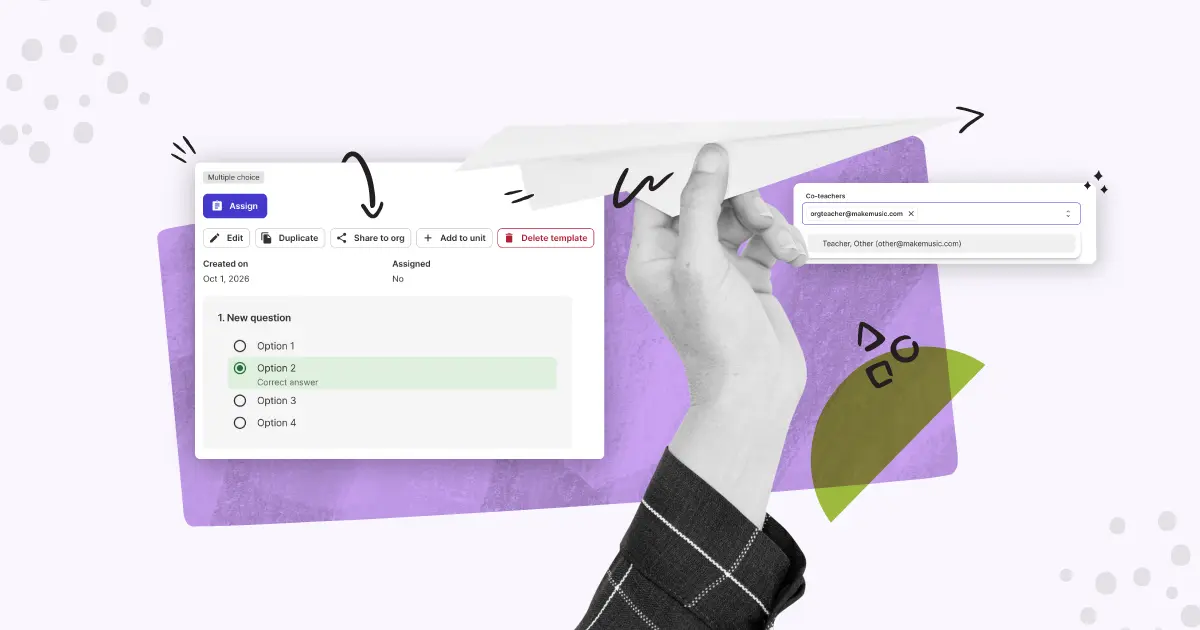
Recognizing this persistent industry pain point, MakeMusic has introduced a robust suite of collaborative features designed to dismantle these operational barriers. By integrating advanced co-teaching capabilities and streamlined intra-organizational assignment sharing into its flagship platform, MakeMusic Cloud, the company is bridging the gap between isolated classrooms. This article examines the technological mechanics of these new features, explores their profound impact on K-12 and collegiate music programs, and evaluates how collaborative pedagogy is forging a more sustainable future for music educators worldwide.
Detailed Chronology: The Evolution of Music Tech Collaboration
To understand the significance of MakeMusic’s latest updates, it is essential to trace the developmental timeline of digital music education tools over the past decade.
Phase 1: The Digitization of Practice (Early 2010s)
Initially, cloud-based music education software focused primarily on individual practice. Platforms like SmartMusic (the precursor to MakeMusic Cloud) revolutionized how students interacted with sheet music at home, providing real-time feedback on pitch and rhythm. While these tools were monumental for student development, they largely treated the classroom as a collection of isolated digital users rather than a collaborative ecosystem. Teachers still managed their grade books, lesson plans, and repertoire selections independently, often relying on cumbersome, workaround methods to share materials with colleagues.
Phase 2: The Rise of Digital Classrooms (Late 2010s – 2020)
As digital learning management systems (LMS) became ubiquitous, educators demanded greater connectivity. The onset of remote and hybrid learning in 2020 accelerated this need tenfold. MakeMusic expanded its platform architecture to support remote assignment distribution and digital submissions. However, these updates largely reinforced a one-to-many dynamic: Teacher to Student. The multi-teacher dynamic—crucial for large ensembles, co-directed marching bands, and special education integration—remained underserved.
Phase 3: The Introduction of Multiple-Choice Assessments (Early 2026)
Earlier this year, MakeMusic took a major step toward comprehensive curriculum management by rolling out Multiple Choices Assessments. This feature provided educators with a rapid, flexible mechanism to evaluate music theory comprehension, aural skills, and listening competencies via structured quizzes. While this solved the grading bottleneck for written components, it initially maintained a siloed user-to-library structure. Teachers created quizzes for their own classes, but replicating those materials across a departmental network still required manual duplication.
Phase 4: The Co-Teaching and Organization-Wide Sharing Era (Fall 2026)
Culminating in the recent rollout of advanced co-teaching and peer-to-peer assignment sharing, MakeMusic has officially shifted its platform philosophy from individual utility to collective synergy. Educators can now directly co-manage classes with real-time parity, while departments can instantly distribute curated quizzes and written resources across organizational boundaries. This evolution marks a turning point in how educational technology supports institutional continuity and pedagogical teamwork.
Supporting Context & Metrics: The Crisis of Educator Burnout and the Power of Shared Workflow
The urgency behind MakeMusic’s collaborative updates is underscored by mounting empirical data concerning educator attrition and workload distribution.
The Landscape of Music Educator Burnout
According to recent educational labor studies, music and fine arts teachers report higher rates of scheduling fatigue and administrative overload than many of their core-subject peers. Unlike traditional classroom teachers who may teach multiple sections of the same subject, music directors frequently manage diverse, multi-grade ensembles that require distinct repertoire, specialized equipment management, and rigorous performance calendars.
- Administrative Drag: National surveys indicate that music educators spend upwards of 35% of their working hours on non-instructional tasks—ranging from sheet music inventory management to score distribution and grading digital submissions.
- The "Island" Effect: Nearly 45% of secondary music educators report being the sole music specialist in their building. This lack of daily peer interaction deprives them of informal sounding boards, constructive feedback, and shared labor models.
Metrics of Efficiency: The ROI of Resource Sharing
By enabling organization-wide assignment sharing, MakeMusic addresses a massive efficiency gap. Internal platform analytics and beta-testing feedback reveal striking productivity gains when teachers share digital assets:
- Time Saved per Assessment: Designing a comprehensive multiple-choice music theory quiz from scratch averages 45 to 60 minutes of planning time. Utilizing a shared institutional copy reduces this preparation window to under five minutes.
- Curricular Alignment: High schools utilizing co-teaching and shared assessment models reported a 30% increase in grade-book consistency across parallel freshman and varsity band sections, ensuring equitable grading standards regardless of which director evaluated the performance.
Official Statements and Industry Perspective
Music education advocates and software developers alike have praised the strategic pivot toward collaborative ecosystems. Industry analysts note that modern edtech must evolve beyond mere digitization to actively foster human-to-human connectivity.
"Teaching music is inherently collaborative—we spend our days urging students to listen to one another, blend their tones, and work toward a unified artistic vision," noted a lead product developer at MakeMusic during the feature rollout. "Yet, for years, the professionals standing on the podium have been forced to work in isolation. With our new co-teaching and organization-wide sharing updates, we are finally building software that mirrors the collaborative spirit of the ensemble room."
Educators participating in the early access program have echoed these sentiments, highlighting the practical relief the tools provide in high-stress environments.
- "As a head director managing a sprawling program with two assistant directors and a constant rotation of student teachers, trying to keep everyone aligned on MakeMusic was a logistical puzzle," shared a high school fine arts department chair in the Midwest. "Being able to add co-teachers with full platform access has eliminated our communication lag entirely. We are reading from the exact same musical page—both literally and figuratively."
Furthermore, special education advocates have lauded the inclusion of multi-teacher access. In inclusive ensemble settings, intervention specialists and paraprofessionals can now view assignment parameters, track student submission histories, and provide targeted accommodations without requiring administrative workarounds or shared login credentials.
Future Outlook: The Next Movement in Music Technology
As educational technology continues to mature, the boundary lines between individual software accounts and institutional collaboration will continue to blur. What does the future hold for platforms like MakeMusic Cloud?
1. Inter-District Collaborative Networks
While current sharing capabilities operate within defined organizational boundaries, the future points toward broader pedagogical cooperatives. Imagine regional networks where rural school districts—often resource-constrained—can securely share specialized theory quizzes, composition prompts, and historical listening modules with neighboring districts. This democratization of curriculum design could drastically elevate the baseline of music education accessibility nationwide.
2. Enhanced Mentorship Pipelines
The integration of student teachers into cloud platforms via co-teaching models establishes a blueprint for modern teacher preparation. Future iterations of these tools may incorporate structured reflection logs, built-in mentor feedback loops, and competency-tracking dashboards specifically tailored for higher education music education departments supervising student teachers in the field.
3. AI-Assisted Curricular Co-Creation
As artificial intelligence increasingly intersects with music notation and instructional design, future collaborative tools will likely enable co-teachers to prompt platform AI for tailored arrangements, differentiated sight-reading exercises, and customized rubrics simultaneously. Both teachers will be able to edit, annotate, and deploy these AI-generated assets instantly across shared class rosters.
Conclusion: Making Music Is Better Together
The fundamental truth of music-making is that beauty is born from unity. A single voice or instrument possesses power, but an ensemble achieves transcendence through coordination, shared effort, and mutual support.
MakeMusic’s latest suite of collaborative updates brings this core philosophy from the concert stage to the educator’s desk. By breaking down administrative silos through intuitive co-teaching integration and seamless intra-organizational assignment sharing, the platform ensures that educators no longer have to navigate the complexities of modern music instruction alone.
Whether you are a solo director seeking validation and innovative ideas within online communities like the Teaching with MakeMusic Cloud Facebook group, a large-ensemble team synchronizing grades across multiple directors, or a veteran mentor guiding the next generation of educators, the tools for a more sustainable, connected workflow are now at hand.
The profession remains demanding, but with the right collaborative infrastructure, the burden lightens. You don’t have to do this alone—and in the modern musical landscape, you never should.
Ready to transform how your department collaborates? Experience a smarter, more connected approach to music education by exploring MakeMusic Cloud today.