
Executive Overview
In an era defined by rapid technological advancement, houses of worship continually strive to create environments that are both spiritually enriching and physically welcoming. Yet, one of the most prevalent barriers to a fully immersive worship experience remains largely invisible: hearing loss. For millions of congregants globally, attending a traditional church service involves navigating a maze of acoustic challenges—ranging from cavernous architecture and reverberant echo chambers to distant sound sources and ambient background noise.
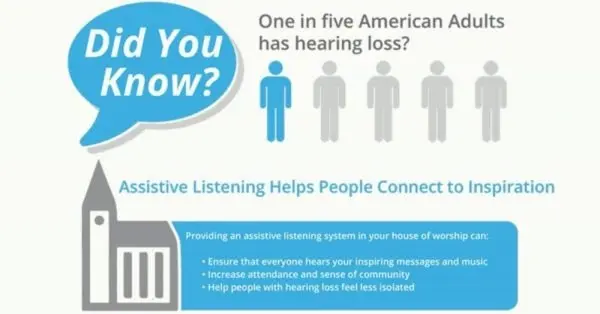
When individuals cannot clearly hear sermons, prayers, or musical performances, they often experience a profound sense of isolation. Over time, this disconnect can lead to decreased participation, dwindling attendance, and, ultimately, a retreat from the spiritual community altogether.
Addressing this critical issue requires more than simply turning up the main sanctuary volume—a solution that often creates distortion and overwhelms those with normal hearing. Instead, forward-thinking faith communities are increasingly turning to advanced Assistive Listening Systems (ALS). These specialized technologies deliver customized, crystal-clear audio directly to the listener’s ear, bridging the acoustic gap and ensuring that every spoken word and musical note is received with pristine clarity.
Implementing an assistive listening system is not merely an exercise in regulatory compliance or technical upgrades; it is a profound pastoral ministry of inclusion. By thoughtfully deploying these systems, churches can restore the joy of connection for aging populations, hard-of-hearing members, and visitors seeking a welcoming spiritual home.
This comprehensive report explores a strategic, four-step framework designed to help religious organizations assess their needs, evaluate technological options, train dedicated personnel, and cultivate broad congregation-wide awareness. Drawing upon industry insights and expert resources—such as the Listen Technologies Church Assistive Listening Toolkit—this guide serves as an authoritative roadmap for any house of worship committed to ensuring that its message truly reaches every heart and mind.
Detailed Chronology: The Four-Step Implementation Roadmap
Successfully introducing an assistive listening system into a worship facility requires a methodical, step-by-step approach. Rushing the process or failing to account for the unique acoustic and cultural dynamics of a congregation can lead to underutilized equipment and unmet expectations. Industry leaders recommend a structured, four-phase implementation chronology to ensure maximum impact and seamless integration.
Phase 1: Understand Your Needs — Assessing the Congregation
Before evaluating hardware specifications, gathering price quotes, or selecting a vendor, leadership must first diagnose the actual listening challenges within the congregation. Assumptions regarding who needs help and what technologies they prefer can often lead to wasted resources.
The most effective starting point is a comprehensive, congregation-wide survey. This data-gathering initiative should be designed to capture quantitative and qualitative insights into the worship experience. Key questions to include are:
- How would you rate your ability to hear and understand the spoken word and music during our services?
- Do you currently use hearing aids or cochlear implants?
- If you wear hearing aids, are they equipped with a telecoil (t-coil) receiver?
- What specific areas of the sanctuary or service present the greatest auditory challenges (e.g., during the sermon, congregational singing, or fellowship time)?
By actively inviting feedback, church leadership not only gathers vital operational data but also signals to the congregation that their physical and spiritual comfort is a top priority. Analyzing survey results allows administrative and audio-visual (AV) teams to quantify the scope of the need—identifying, for instance, whether the demographic leans heavily toward t-coil compatibility or if standalone receivers with earbuds will be required for visitors without hearing aids.
Phase 2: Fully Understand Your Options — Budgeting and Technology Selection
Once the congregation’s needs are clearly mapped, the next phase involves exploring the marketplace for the right technical solutions. Modern assistive listening technologies generally fall into a few primary categories: Radio Frequency (RF) systems, Infrared (IR) systems, and Audio Induction Loop (hearing loop) systems. Each technology comes with distinct cost structures, installation requirements, and user experiences.
Estimated costs will vary depending on the size of the sanctuary, the number of receivers required, and the existing sound system infrastructure. Because navigating these technical specifications can be daunting for volunteer-led AV committees, professional guidance is invaluable. Organizations such as CCI Solutions offer specialized assistance in this area, including complimentary consultations designed to help church leadership build realistic expense projections and operational budgets.
To offset initial capital expenditures, churches should also explore targeted fundraising efforts, capital campaign allocations, or dedicated memorial gifts. Framing the acquisition of an assistive listening system as a ministry of inclusion often inspires generous giving from congregants who recognize the immediate, life-changing impact the technology will have on their fellow church members.
Phase 3: Prepare for Success — Training and Operational Readiness
Purchasing state-of-the-art equipment is only half the battle; ensuring that the equipment is utilized effectively depends entirely on the operational readiness of staff and volunteers. Without proper training, even the most advanced assistive listening system can sit gathering dust in a storage closet.
Churches must designate and train key staff members and hospitality volunteers to act as "Assisted Listening Ambassadors." These individuals are responsible for managing the inventory, maintaining the equipment, and distributing receivers before services begin.
Preparation protocols should include:
- Comprehensive Staff Training: Volunteers must understand the technical functions of each device, how to pair them with various accessories (such as neck loops or integrated earbuds), and how to troubleshoot minor issues on the fly.
- Personalized User Instruction: When a congregant requests a device, the ambassador should take a few moments to demonstrate its operation, ensure a comfortable fit, and verify that the audio is clear before the service starts.
- Visual Troubleshooting Guides: To minimize confusion at the welcome desk or distribution counter, keep a laminated, easy-to-read sheet containing answers to Frequently Asked Questions (FAQs) prominently displayed.
By demystifying the technology and offering a warm, high-touch distribution process, churches can eliminate the intimidation factor that often prevents individuals from trying new assistive devices.
Phase 4: Create Awareness — Marketing and Community Outreach
Even the most robust assistive listening system will fail to fulfill its purpose if the congregation and the surrounding community do not know it exists. The final phase of the implementation chronology focuses on aggressive, multi-channel communication.
- Prominent Signage: Install clear, internationally recognized signage at all major entrances, welcome centers, and check-in desks, indicating that Assisted Listening Devices are available and directing visitors to where they can be obtained.
- Print and Digital Reminders: Incorporate a brief, welcoming notice regarding the availability of listening systems into every weekly bulletin, digital newsletter, and pre-service multi-media slide presentation.
- Live Demonstrations and Training: Consider hosting a dedicated session or a brief, post-service live orientation where congregants can try out the receivers, ask questions, and familiarize themselves with the technology in a low-pressure environment.
- Community Outreach: Broaden the message beyond current members. Advertise the church’s commitment to accessibility within the local community through social media, local print media, and partnerships with senior centers or audiologists. Many individuals with hearing loss have abandoned attending in-person services altogether; learning that a local church has invested in their ability to hear can be the catalyst that brings them through the doors.
Supporting Context & Metrics: The Hidden Impact of Hearing Loss
To fully appreciate the necessity of investing in assistive listening systems, decision-makers must examine the broader socio-acoustic context of modern worship spaces and the statistical realities of hearing impairment.

The Acoustic Reality of Worship Facilities
Historically, houses of worship have been constructed with high ceilings, hard reflective surfaces (such as stone, hardwood, and plaster), and expansive open spaces. While these architectural elements contribute to majestic aesthetics and resonant acoustics for traditional choral music, they create a hostile environment for the spoken word.
Reverberation—the persistence of sound in a space after the original sound is stopped—causes distinct syllables to blur together. For a listener with normal hearing, the brain can often filter out this acoustic mud. However, for an individual with sensorineural hearing loss or age-related presbycusis, reverberation destroys speech intelligibility. Turning up the house sound system only amplifies the echoes, exacerbating the problem rather than solving it.
Demographic Demographics and Statistical Imperatives
Data from public health organizations consistently highlights the pervasive nature of hearing loss:
- According to the World Health Organization (WHO), over 1.5 billion people globally experience some degree of hearing loss, a figure projected to rise significantly in the coming decades.
- In aging populations—which make up a substantial demographic in many traditional and contemporary churches—the incidence of hearing impairment increases dramatically, affecting nearly one-third of adults aged 65 and over.
- Despite these high numbers, studies indicate that a vast majority of individuals who could benefit from assistive listening technologies or hearing aids either do not own them or fail to use them consistently in public spaces.
When churches provide dedicated assistive listening systems, they effectively neutralize architectural and biological barriers, creating an equitable acoustic environment that honors every congregant’s right to participate fully in the life of the church.
Official Statements and Industry Insights
Industry experts, accessibility advocates, and manufacturers of audio-visual solutions have long championed the integration of assistive technologies in public venues. Their collective insights underscore that accessibility is an essential component of modern organizational leadership.
Audio engineers and accessibility consultants frequently emphasize that compliance with baseline regulatory standards—such as the Americans with Disabilities Act (ADA) in the United States—should be viewed as a starting point rather than the ultimate goal. True pastoral care goes beyond minimum legal requirements, striving for an environment of radical hospitality.
Manufacturers of professional audio systems, including Listen Technologies, point out that technological advancements have made assistive listening more reliable and discreet than ever before. Modern receivers are lightweight, ergonomic, and capable of integrating seamlessly with personal smartphones and modern hearing aid t-coils.
Furthermore, pastoral leadership training programs increasingly stress that effective communication is the lifeblood of spiritual community. As one industry white paper on house of worship accessibility notes:
"Reaching out to those who feel disconnected from your community due to hearing loss is central to sharing the message of inclusion. Genuinely compassionate service involves being aware of and caring for the needs of everyone, especially those dealing with impairments. Make sure they are able to hear the beauty and emotion of the spoken word in your church by providing them with the equipment they need to stay connected."
This sentiment resonates deeply with ministry leaders who view every technical upgrade through the lens of mission alignment and pastoral stewardship.
Future Outlook: The Horizon of Inclusive Worship Technology
Looking ahead, the landscape of assistive listening and sanctuary accessibility is poised for transformative growth. As audio technology continues to converge with consumer electronics, several emerging trends are set to redefine how houses of worship serve hard-of-hearing congregants:
1. Integration with Personal Smart Devices
Future iterations of assistive listening are moving increasingly toward Wi-Fi-based streaming architectures. Rather than relying exclusively on dedicated, venue-owned receivers, upcoming systems allow congregants to stream pristine, low-latency audio directly to their own smartphones or personal listening devices via a downloadable app. This approach not only reduces hardware management overhead for church volunteers but also removes the potential social stigma associated with asking for a specialized device at the welcome desk.
2. Advanced Bluetooth LE Audio and Auracast™
The advent of Bluetooth Low Energy (LE) Audio and broadcast audio technologies like Auracast™ represents a massive leap forward in universal accessibility. In the near future, sanctuaries equipped with compatible transmitters will be able to broadcast audio streams directly to any Auracast-enabled hearing aid, cochlear implant, or wireless earbud within range. This creates a friction-free experience where congregants can seamlessly connect to the church’s audio feed with a simple tap on their personal devices.
3. Artificial Intelligence in Sound Management
Artificial intelligence (AI) and machine learning are beginning to influence professional sound reinforcement and assistive listening calibration. Next-generation digital signal processors (DSPs) can dynamically analyze sanctuary acoustics in real-time, automatically compensating for shifting crowd sizes, humidity levels, and reverberation patterns to deliver optimized speech clarity to every listener, regardless of where they are seated.
Conclusion and Actionable Next Steps
Investing in an Assistive Listening System is a profound declaration of a church’s values. It proclaims that every individual—regardless of age, physical ability, or sensory impairment—is an valued, essential member of the body of faith. By following a structured implementation path—understanding congregation needs, evaluating technical options, training dedicated ambassadors, and driving robust awareness campaigns—churches can eliminate auditory barriers and foster a truly inclusive community.
For leadership teams seeking deeper resources, comprehensive toolkits are readily available. To access sample surveys, signage templates, weekly announcement guides, and detailed equipment selection criteria, download a copy of the Listen Technologies Church Assistive Listening Toolkit.
If your worship facility is ready to take the next step toward comprehensive accessibility, reach out to industry specialists to discuss how an assistive listening solution can be tailored to your unique architectural and ministry needs. Ensure that every member of your congregation can fully experience the beauty, power, and emotion of the spoken word.