
Executive Overview
The Broadway engagement of Downstate, the provocative and critically acclaimed drama by Tony Award-winning playwright Bruce Norris, has encountered yet another scheduling hurdle. Producers announced that the production’s first preview performance—initially slated for October 17 at the Booth Theatre—has been postponed for a second time due to widespread illness within the cast. Originally pushed to October 19, the curtain is now expected to rise on October 20.
Despite these early logistical setbacks, the production’s trajectory toward its official opening night on November 15 remains steadfast. Downstate is scheduled for a strictly limited engagement through January 10, 2027. Under the direction of Tony winner Joe Mantello, this new staging breathes fresh theatrical life into a work that has previously commanded attention in Chicago, London, and Off-Broadway. However, beyond the artistic merits of the play itself, the production serves as a focal point for broader industry discussions. It highlights the fragile nature of live theatre production schedules post-pandemic, the high-stakes financial mechanics of commercial Broadway, and the controversial theatrical comeback of producer Scott Rudin, who is partnering with media mogul Barry Diller on this venture and its high-profile companion piece, Small Mouth Sounds.
Detailed Chronology: From First Delays to the Booth Theatre Bow
The timeline leading up to the Broadway previews of Downstate has tested the adaptability of the show’s stage management and producing teams.
- October 17: The original target date for the first public preview performance at the Booth Theatre. Production personnel announced a brief 48-hour delay, citing acute cast illness that made safe, full-company technical rehearsals impossible.
- October 19: The first revised preview date. As company members continued to recover under strict medical advisories, the timeline was pushed back an additional 24 hours to ensure that understudies and principal actors alike could deliver fully realized performances without risking further health complications.
- October 20 (Projected): The revised date for the inaugural public performance at the Booth Theatre.
- November 15: The locked-in official opening night. Despite the initial four-day aggregate loss in preview performances, producers have maintained the gala opening date, adjusting the preview performance work schedule to compress technical fine-tuning.
- January 10, 2027: The scheduled final performance of the limited engagement.
Stagehands, front-of-house staff, and ticket holders have experienced the ripple effects of these calendar shifts. While minor preview adjustments are not historically uncommon in commercial theatre, consecutive delays heighten the financial pressure on a limited-run play, making every single preview performance crucial for word-of-mouth generation and technical optimization.
Thematic Depth and Production Pedigree
Downstate arrives on Broadway bearing a formidable pedigree. The play made its world premiere in 2018 at Chicago’s renowned Steppenwolf Theatre Company before transferring to London’s National Theatre in 2019 and completing an acclaimed, highly charged Off-Broadway run at Playwrights Horizons in 2022.
The Narrative Core
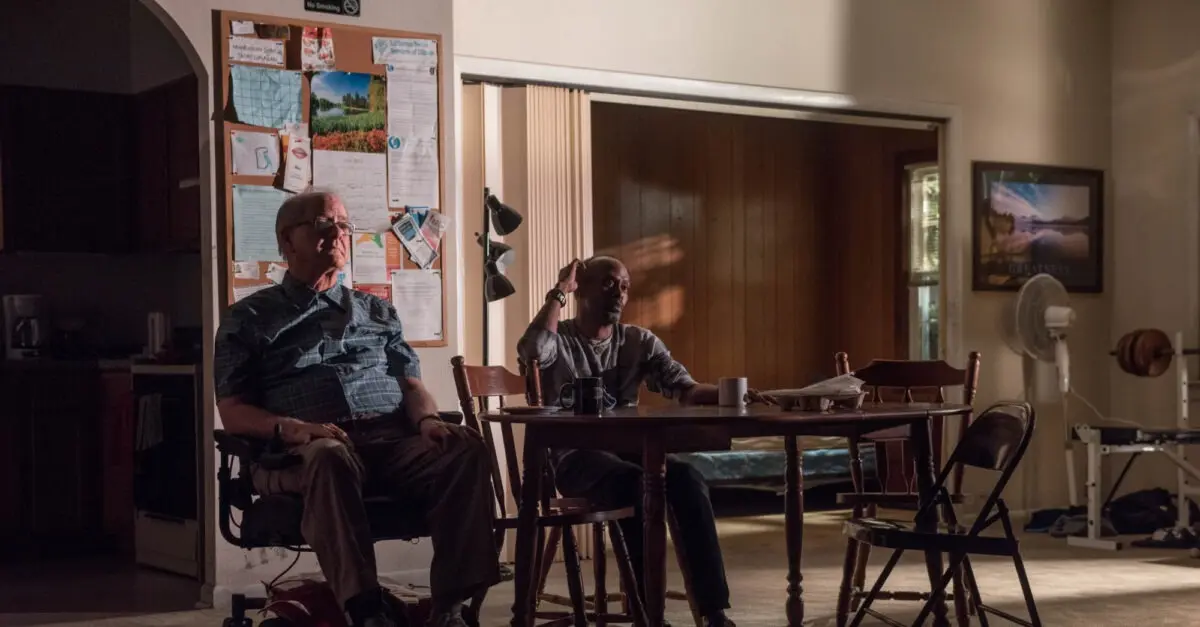
Written by Bruce Norris—whose razor-sharp social commentary previously earned him a Pulitzer Prize and a Tony Award for Clybourne Park—Downstate confronts uncomfortable societal questions head-on. The story is set in an Illinois halfway house and centers on four men convicted of sexual offenses against minors. The narrative dynamic shifts violently when one of their former accusers, now an adult, returns to confront them years later.
Norris’s script refuses easy moral categorization, opting instead to examine the complexities of institutional punishment, accountability, human empathy, and social ostracization. The work does not invite sympathy for its subjects; rather, it forces audiences to bear witness to the grinding gears of rehabilitation, stigma, and the enduring trauma carried by victims.
The Broadway Staging and Creative Ensemble
For its Broadway bow, Downstate features a completely reimagined staging helmed by Joe Mantello, whose directorial credits run the gamut from iconic musicals like Wicked and Assassins to heavy dramatic revivals, including Arthur Miller’s Death of a Salesman.
The production bridges past iterations of the play with a fresh vision by retaining several members of the original ensemble alongside new talent.
- Returning Cast Members: K. Todd Freeman and Francis Guinan reprise their acclaimed performances, bringing deep familiarity with the psychological terrain of Norris’s script.
- New Additions: The expanded Broadway company features an illustrious lineup of stage and screen actors, including Cassie Beck, Adrian Martinez, Al’Jaleel McGhee, Thomas Sadoski, Ivy Wolk, and recent Tony Award winner Liza Colón-Zayas.
The Design Syndicate
To bring the bleak, institutional world of the Illinois halfway house to life on the historic Booth Theatre stage, Mantello has assembled an elite tier of Broadway designers:
- Scott Pask (Scenic Design), known for crafting environments that balance hyper-realism with metaphorical resonance.
- Ann Roth (Costume Design), an Academy Award and Tony-winning legend whose character-defining work grounds every actor in authentic wear.
- Heather Gilbert (Lighting Design), whose previous Tony-winning work on The Inheritance showcases her mastery of atmospheric tension.
- Mikaal Sulaiman (Sound Design), whose innovative soundscapes amplify the psychological undercurrents of the narrative.
Supporting Context & Metrics: The Rudin-Diller Partnership and the Small Mouth Sounds Incentive
Beyond its artistic ambitions, Downstate occupies a complex space within the political and economic landscape of contemporary Broadway, owing largely to its producing team: Scott Rudin and Barry Diller.
Scott Rudin’s Return to Broadway
This production marks Scott Rudin’s second consecutive season producing on Broadway following a self-imposed hiatus from theatre and film production. Rudin stepped away from the industry amid widespread allegations of workplace abuse, intimidation, and toxic behavior that surfaced in investigative journalism reports. While his return has been met with quiet industry acceptance by some commercial stakeholders, it remains deeply controversial among union workers, advocacy groups, and theatregoers who argue that the Broadway ecosystem has failed to enact lasting structural accountability for powerful producers.
The Small Mouth Sounds Cross-Promotional Strategy
Rudin and Diller are simultaneously producing another high-profile Broadway venture this season: a revival of Small Mouth Sounds, starring Hollywood heavyweights Julia Roberts and Paul Rudd.
Because Downstate tackles dark, challenging subject matter and features an ensemble cast without the immediate, blockbuster marquee value of a Julia Roberts vehicle, the producing team has deployed an aggressive, highly unconventional marketing incentive to stimulate ticket sales:
- The Incentive Mechanism: Patrons who purchase full-priced tickets to Downstate for performances running through November 22 receive an exclusive, single-use access code.
- The Perk: This code grants the holder the exclusive right to purchase premium tickets to Small Mouth Sounds for a flat rate of $250 each.
Market analysts view this strategy as a calculated effort to leverage the immense star power of Small Mouth Sounds to drag foot-traffic and institutional curiosity toward the riskier, more challenging dramatic fare of Downstate. Critics, however, point out that tying ticket sales of a difficult social drama to the allure of Hollywood movie stars underscores the immense financial anxieties plaguing non-musical plays on modern Broadway.
Official Statements and Industry Reactions
As the revised preview date approaches, statements from the production office and industry observers reflect a mixture of logistical pragmatism and heightened scrutiny.
A spokesperson for the production released a brief statement regarding the recent health-related delays:
"Due to unforeseen and widespread cast illness, the producing team has made the necessary decision to postpone the first preview performance of Downstate to Monday, October 20. The health and well-being of our company remain our absolute highest priority. We appreciate the patience and understanding of our ticket holders and look forward to welcoming audiences to the Booth Theatre very soon."
Industry unions, including Actors’ Equity Association, have monitored the situation closely, emphasizing the importance of adherence to health protocols and mandatory understudy rehearsals to protect performers from burnout and contagion during rigorous technical weeks.
Meanwhile, theatrical economists have analyzed the cross-promotional bundling of Downstate and Small Mouth Sounds. Writing in various trade publications, commentators have debated whether the $250 code incentive signals an innovative survival tactic for straight plays in an increasingly hostile, tourism-dependent Broadway market, or whether it simply highlights the widening chasm between star-driven mega-hits and challenging, thought-provoking drama.
Future Outlook: What Lies Ahead for Downstate
As the cast of Downstate clears the final hurdles of recovery and steps onto the Booth Theatre stage on October 20, the production enters a critical window. The compressed preview period leaves little room for error, requiring the creative team to lock in technical cues, pacing, and emotional beats with maximum efficiency before critics file their reviews for the November 15 opening night.
For Bruce Norris, the Broadway bow represents the culmination of a multi-city journey for a play that refuses to pander to comfort. For audiences, the production offers a rare opportunity to engage with uncompromising contemporary drama performed by a stellar ensemble. Yet, the shadow cast by its producing apparatus—marked by the industry-dividing return of Scott Rudin and the aggressive commercial mechanics of the Small Mouth Sounds ticketing incentive—ensures that Downstate will be judged as much by its off-stage narrative as by its power in the spotlight.
As the curtain finally rises on October 20, the theatre world will be watching to see whether the sheer power of Norris’s writing and Mantello’s direction can transcend the turbulence of its preview delays and claim its rightful place in the current Broadway pantheon.