
Executive Overview
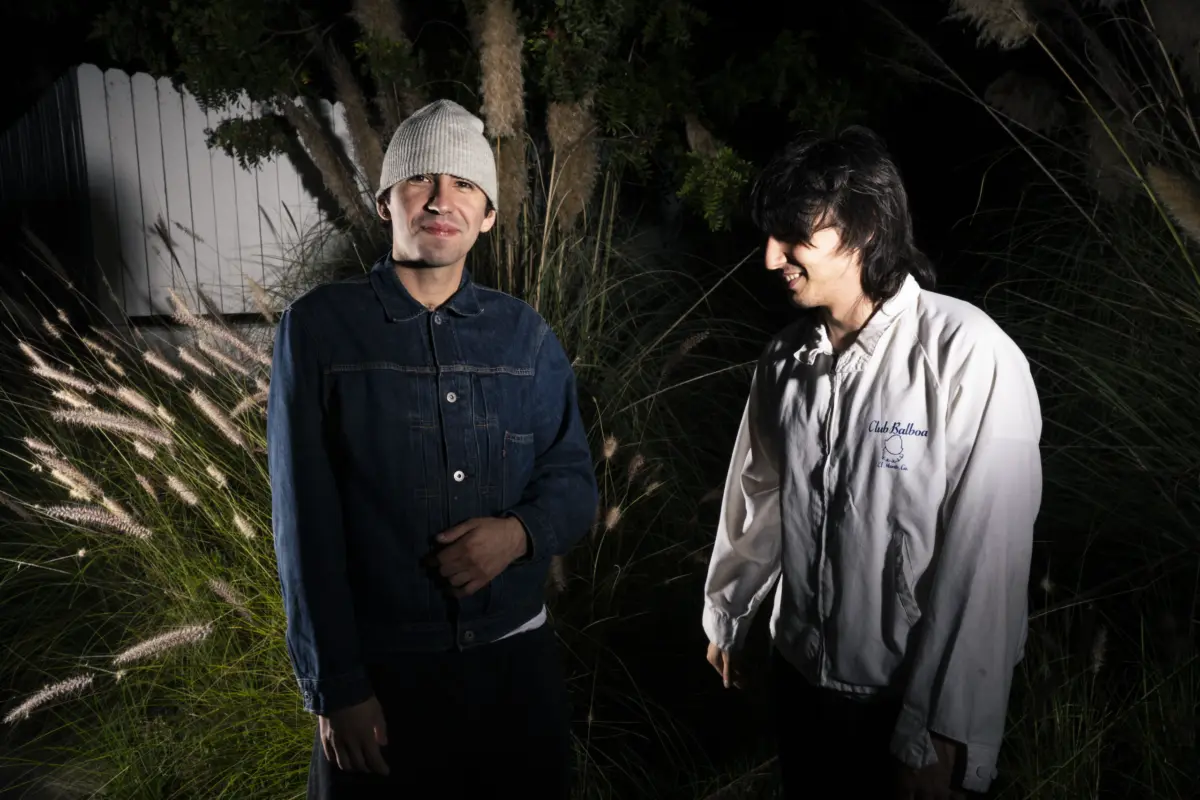
In an era dominated by hyper-compressed digital pop and algorithmic trend-chasing, the arrival of a debut record that genuinely prioritizes texture, patience, and geographic identity is a rare cultural event. Enter the newly minted collaborative duo of producer-turned-artist Charlie Ziman and multi-instrumentalist Nathan Tsunoda. While Ziman has spent the past several years quietly operating behind the scenes—most notably serving as the sonic architect and producer for viral Los Angeles-based songwriter Malcolm Todd—he and Tsunoda have officially shifted their creative ambitions toward the foreground.
The result of this collaborative pivot is 1+1, a sprawling, stylistically adventurous full-length album that serves as the follow-up to their critically appreciated 2023 EP, Supernova. Eschewing the slick, high-gloss pop sensibilities that currently define much of the contemporary commercial landscape, the duo has instead engineered a deliberate, organic, and deeply nostalgic production style. Drawing heavily from their shared Californian roots, the record weaves together the sun-baked, genre-defying ethos of legacy acts like Sublime with the psychedelic, warped fidelity of modern trailblazers like Tame Impala.
Far from treating this release as a transient streaming-era offering, the duo harbors generational ambitions. "Hopefully, the record will become a classic in 20 years," Ziman remarks, encapsulating a rare long-game mentality in an industry fixated on weekly chart metrics.
At the center of this campaign is the album’s ambitious lead single, "Wish 4," a sprawling, seven-minute epic that pushes past traditional radio formats to explore deep philosophical territory—specifically, the jarring juxtaposition between the serenity of the present moment and the anxiety-inducing "what ifs" regarding its inevitable conclusion. Yet, despite dropping in the middle of a broader cultural fixation on the "indie sleaze" revival, Ziman and Tsunoda are quick to distance themselves from lazy nostalgia trips. Rejecting the geographic and stylistic constraints of East Coast revivalism, the pair has managed to forge a singular path that honors indie rock’s past while aggressively mutating it for the future. With a robust 14-track tracklist set to unfold, 1+1 stands as one of the most intriguing indie debuts of the decade.
Detailed Chronology: From Underground Collaborations to 1+1
To truly understand the weight and sonic diversity of 1+1, one must trace the winding trajectory that brought Charlie Ziman and Nathan Tsunoda together. For years, the modern Los Angeles music scene has functioned as a massive crucible, churning out bedroom pop stars, TikTok-adjacent phenomenons, and behind-the-scenes producers who often remain anonymous to the broader public. Charlie Ziman was firmly planted in this ecosystem, operating primarily as a studio engineer and producer. His most notable partnership during this foundational era was with Malcolm Todd, a rising LA-based songwriter whose viral acoustic-and-soul-inflected tracks captured the imagination of Gen Z listeners worldwide. Ziman’s hands-on work in shaping Todd’s crisp, engaging sound earned him substantial underground acclaim, establishing him as a young producer with an intuitive grasp of groove and melody.
However, behind the scenes, Ziman was quietly stockpiling a different kind of material—work that didn’t necessarily fit the tidy, digestible structures of modern viral pop. This parallel creative track found a kindred spirit in Nathan Tsunoda. Bound by a mutual appreciation for organic instrumentation, unconventional song structures, and the sprawling cultural topography of California, Ziman and Tsunoda began trading ideas, instrumentals, and field recordings.
The first public indicator of this creative partnership arrived in 2023 with the release of their debut collaborative EP, Supernova. While Supernova functioned largely as a stylistic sandbox—a way for the duo to test the waters of their creative compatibility—it laid the groundwork for a more cohesive, immersive artistic statement. The EP demonstrated an innate ability to blend electronic production techniques with organic instrumentation, but it left listeners wondering where the duo would take their sound next.
That question is comprehensively answered with 1+1. Rather than rushing to capitalize on the fleeting momentum of their EP, Ziman and Tsunoda spent months retreating into the studio to refine their aesthetic. They systematically stripped away the hyper-polished sheen of contemporary pop production, favoring tape saturation, live drum breaks, washed-out guitars, and atmospheric room acoustics. The resulting chronology—culminating in the sprawling 14-track running order of 1+1—represents a deliberate evolution from side-project curiosity to fully realized artistic partnership.
Supporting Context & Metrics: Navigating the "Indie Sleaze" Disconnect and Californian Roots
The release of 1+1 occurs against a fascinating backdrop of contemporary music criticism, particularly the ongoing obsession with the "indie sleaze" revival. Over the past few seasons, cultural commentators, fashion houses, and music bloggers have fixated on the resuscitation of the mid-2000s indie rock aesthetic—characterized by messy hair, skinny jeans, blog-house synthesizers, and the gritty, unvarnished guitar work of bands like The Strokes, The Yeah Yeah Yeahs, and LCD Soundsystem.
Naturally, critics and early listeners have attempted to categorize Ziman and Tsunoda’s raw, guitar-driven output within this trending cultural narrative. Yet, in interviews surrounding the album’s rollout, Ziman has been remarkably candid in his rejection of the label.
"We never really meant to dig into the whole indie sleaze thing," Ziman explains, addressing the genre tag with a mixture of amusement and skepticism. "I’m also not in New York. I think people are actually having a lot of fun there."
By explicitly grounding his perspective in geography, Ziman highlights a crucial disconnect between the New York-centric revivalism currently dominating cultural discourse and the West Coast reality of his and Tsunoda’s daily lives. While East Coast revivalists often double down on the hyper-urban, cigarette-stained grit of Manhattan clubs, Ziman and Tsunoda’s sonic vocabulary is deeply informed by the vast, sun-bleached expanses of California. Their music feels less like a basement club in the Lower East Side and more like a late-night drive down the Pacific Coast Highway, where the ocean air mixes with the exhaust of vintage sedans.
Furthermore, Ziman offers a sharp critique of blind imitation within contemporary music. Addressing the legions of acts currently attempting to recreate the exact sonic footprint forged by The Strokes two decades ago, he poses a provocative question: "Why?"
"I think you should do that and put a twist on it, and mesh it into your own thing," Ziman asserts.
This philosophy serves as the guiding manifesto for 1+1. The duo acknowledges the foundational brilliance of early 2000s indie rock and the classic songwriting of their Californian forebears, but they refuse to act as historical reenactors. Instead, they take those disparate elements—the swagger of garage rock, the sprawling psychedelia of Tame Impala, the laid-back groove of Sublime, and modern production techniques—and weld them into a singular, unclassifiable hybrid.
Official Statements: Deconstructing "Wish 4" and the Philosophy of the Epic
At the heart of the 1+1 campaign is the album’s audacious lead single, "Wish 4." In an era where streaming algorithms reward short, punchy tracks designed to capture attention within the first three seconds, Ziman and Tsunoda have done the unthinkable: they have released a seven-minute lead single that demands active, sustained listening.
According to official statements released by the duo, "Wish 4" is an exercise in emotional and temporal contrast. The track specifically explores "the contrast between the peace of the present moment and the ‘what ifs’ of how it will end."
This thematic dichotomy manifests brilliantly in the song’s sonic architecture. Rather than maintaining a static tempo or predictable verse-chorus-verse structure, "Wish 4" ebbs and flows like a tide. The opening movements of the track are characterized by an almost meditative stillness—warm, enveloping synthesizer pads, understated basslines, and a vocal delivery that feels conversational and intimate. It captures the fleeting sensation of absolute contentment: a specific afternoon, a specific room, a specific feeling of peace.
However, as the track progresses past the standard four-minute mark, the underlying tension begins to fracture that peace. Guitars grow sharper, percussion becomes more urgent, and the mix begins to swell with layered harmonies and atmospheric noise. It sonically represents the intrusion of human anxiety—the nagging, inevitable thought of how transient all beauty truly is, and how this current moment will eventually draw to a close. By stretching this narrative arc across seven minutes, the duo avoids cheap emotional shortcuts, allowing the listener to physically and mentally inhabit the duality of joy and impermanence.
This commitment to depth over brevity runs counter to prevailing commercial pressures, but it aligns perfectly with the duo’s long-term artistic goals. They are not merely trying to secure a spot on a background playlist; they are attempting to craft a permanent cultural artifact.
Future Outlook: The Road Ahead for 1+1 and Its 14-Track Journey
With the release of "Wish 4" serving as the opening salvo, attention now turns to the full rollout of 1+1. The complete tracklist reveals an expansive, deeply textured journey that spans fourteen distinct musical movements:
1+1 Tracklist
- "Cosmos"
- "I Am No One"
- "Mental Health Day"
- "Wish 4"
- "In The Stars"
- "The Truth!"
- "Myriad"
- "Halfway"
- "Wiretooth"
- "Twisted"
- "Price2Pay"
- "You"
- "Lil Song"
- "Destroy My Life"
This robust tracklist suggests that 1+1 is not a front-loaded collection of singles, but a cohesive, novelistic album designed to be experienced from front to back. Titles like "Mental Health Day," "Price2Pay," and "Destroy My Life" hint at a lyrical exploration of modern psychological weight, burnout, and introspection, balanced against cosmic and interstellar imagery in tracks like "Cosmos" and "In The Stars."
As Charlie Ziman transitions further into his role as a primary recording artist alongside Nathan Tsunoda, the industry will be watching closely to see if their organic, defiant approach can successfully capture the public imagination on a grand scale. They are stepping out from behind the mixing boards and production credits of others to stake a claim of their own.
If "Wish 4" and the uncompromising ethos behind 1+1 are any indication, Ziman and Tsunoda have successfully engineered an album that bridges the gap between past nostalgia and future innovation. Whether the record ultimately achieves Ziman’s lofty goal of becoming a recognized classic in twenty years remains to be seen, but one thing is certain: they are playing a very different game than anyone else in contemporary indie music—and they are playing it remarkably well.