
Executive Overview
The contemporary recorded classical music landscape exists in a perpetual state of dynamic tension. On one side stands the monumental edifice of historical masterworks—centuries-old sacred polyphony, symphonic behemoths, and canonical song cycles interpreted through modern archival remasters. On the other lies a restless, boundary-pushing avant-garde characterized by institutional milestones, contemporary operatic explorations of dark literary themes, and cross-genre cultural synthesis.
This week’s release cycle offers a masterclass in this duality. Across international labels, digital streaming platforms, and physical media drops, listeners are presented with a breathtaking breadth of sonic artistry. Major institutional heavyweights are marking historic anniversaries: the Beth Morrison Projects (BMP) celebrates two decades of avant-garde operatic disruption with a sweeping two-volume compendium, while legendary choral ensembles like St. John’s College, Cambridge, and the Choir of Clare College receive pristine digital remasters that preserve decades-old acoustic magic.
Simultaneously, vocal artists are carving out intensely personal spaces through thoughtfully curated recital albums. Noteworthy entries include baritone Andrè Schuen’s intimate traversal of Gustav Mahler’s piano-backed Lieder, debut recital offerings exploring maritime themes by Beth Taylor and Hamish Brown, and South African tenor Ongama Mhlontlo’s bridge-building Echoes project. Orchestral and operatic recordings push theatrical boundaries further still, ranging from Solveig Sørbø’s unflinching contemporary opera Heroin Chic—a searing exploration of addiction based on Maria Kjos Fonn’s novel—to pioneering early music ventures like Alpha Classics’ launch of a dedicated Bach cantata series featuring the recorder.
This report provides an exhaustive, critical analysis of this week’s most significant releases, categorizing them into thematic movements while evaluating their artistic merit, musicological significance, and structural place in the modern classical ecosystem.
Detailed Chronology & Release Analysis
Part I: Institutional Milestones and Contemporary Operatic Frontiers
BMP: SONGBOOK Volume I & Volume II (Beth Morrison Projects)
Marking its twentieth anniversary of reshaping the contemporary lyric theater landscape, the Beth Morrison Projects (BMP) has issued a definitive audio retrospective. Originally made available digitally in January, BMP: SONGBOOK Volume I & Volume II brings together over two dozen selections culled from two decades of daring commissioning, incubation, and staging. BMP has long stood as an incubator for risk-taking, dismantling traditional operatic hierarchies to champion a new generation of American composers.
This retrospective features landmark contributions from avant-garde luminaries including Missy Mazzoli, Kamala Sankaram, Paola Prestini, David T. Little, and Nico Muhly. The resulting albums serve as both a historical archive of twenty-first-century operatic innovation and a testament to BMP’s enduring cultural footprint. By capturing these excerpts—ranging from gritty chamber operas to ethereal sonic explorations—the release underscores how contemporary lyric theater continues to bleed into adjacent artistic disciplines, challenging audiences to rethink the boundaries of the human voice in dramatic contexts.
Heroin Chic – Solveig Sørbø (Solsnu / Diger)
Few releases this week match the visceral theatrical and literary weight of Norwegian composer Solveig Sørbø’s Heroin Chic. Distributed via Diger across digital, 2CD, and double-vinyl formats, this landmark recording brings Sørbø’s acclaimed contemporary opera to a wider international audience.
Based on the unflinching, critically acclaimed novel by Norwegian author Maria Kjos Fonn, Heroin Chic dives headfirst into the abyss of modern addiction, self-destruction, identity fragmentation, sexuality, and mortality. The libretto and score carefully interrogate the fragile tension between innocence and raw physicality. The performance features a formidable cast of vocal soloists—including Susanna Wolff, Sofia Neacsu, Siv Misund, Ivar Magnus Sandve, and Johannes Nikolai Aas—supported by Ensemble Oslo under the incisive baton of conductor Hans Petter Mâhle. Engineered and produced by Trond Kjelsås of LydFest, the recording captures the dark, claustrophobic atmosphere of the narrative, utilizing modernist instrumental textures to mirror the psychological disintegration of its central characters.
Part II: Vocal Recitals, Intimate Lieder, and Cross-Cultural Journeys
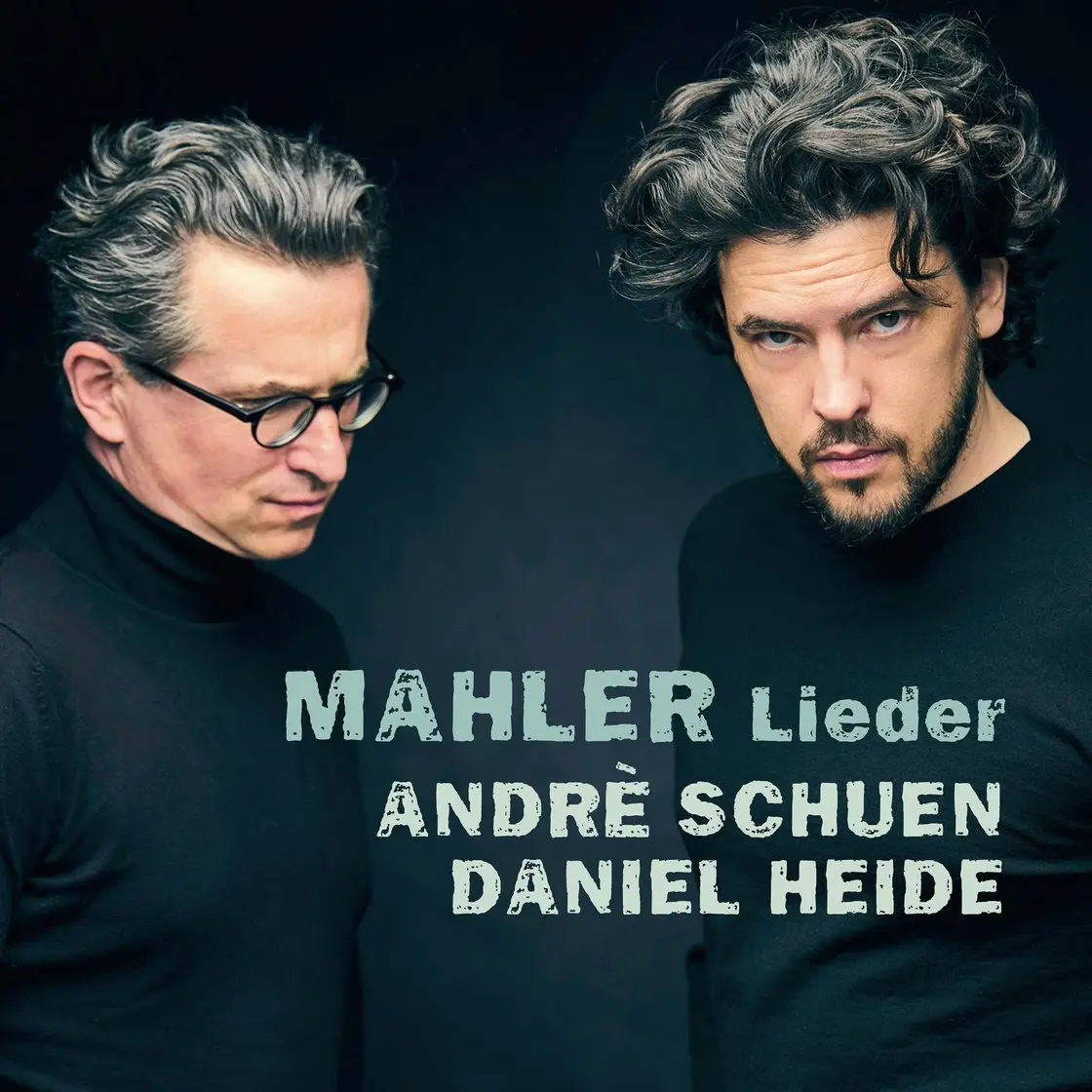
MAHLER Lieder – Andrè Schuen and Daniel Heide (CAvi Music)
The interpretation of Gustav Mahler’s song repertoire is a perennial test of an artist’s emotional transparency and stylistic control. On their new CAvi Music release, MAHLER Lieder, celebrated baritone Andrè Schuen and collaborative pianist Daniel Heide strip away the massive sonic architecture of Mahler’s orchestral scores to reveal the vulnerable core of these masterpieces.
The album gathers four iconic song cycles and individual Lieder: Lieder eines fahrenden Gesellen ("Songs of a Wayfarer"), Kindertotenlieder ("Songs on the Death of Children"), the Rückert-Lieder, and "Urlicht" from Des Knaben Wunderhorn, heard here in their rare and demanding versions for voice and piano. Schuen, renowned for his lustrous tone and deeply intelligent phrasing, finds a sympathetic partner in Heide. Without the cushion of a full symphony orchestra, every nuance of dynamic shading, textual delivery, and harmonic tension is laid bare, offering listeners an intensely intimate, chamber-scale encounter with Mahler’s existential angst and transcendent lyricism.
The Deeps Have Music – Beth Taylor and Hamish Brown (LINN Records)
The sea has long served as a boundless muse for composers, evoking themes of isolation, longing, mystery, and immense power. Mezzo-soprano Beth Taylor and pianist Hamish Brown explore this aquatic fascination in their debut recital album, The Deeps Have Music, released by LINN.
The program opens with the hauntingly evocative "My Lagan Love," arranged by Hamilton Harty, setting a dark, folkloric tone. From there, the duo navigates a meticulously curated transatlantic and pan-European maritime landscape: Hedwige Chrétien’s delicate Petits Poèmes du Bord de l’Eau, Ethel Smyth’s surging Three Moods of the Sea, and Edward Elgar’s richly textured Sea Pictures. Interspersed among these canonical works are atmospheric songs by Franz Schubert and Alma Mahler, alongside a major contemporary addition: the world premiere recording of Cameron Biles-Liddell’s The Breakers. Taylor’s commanding yet supple vocal delivery, buoyed by Brown’s crystalline pianism, establishes this release as a standout vocal recital of the season.
Of Love and Transience – Paula Sides and Sergey Rybin
Soprano Paula Sides and pianist Sergey Rybin turn their attention to the twilight of the late Romantic era and the dawn of modernism with Of Love and Transience. This thoughtfully assembled collection captures the haunting beauty of early twentieth-century art song, focusing on works by Alban Berg, Viktor Ullmann, Erich Korngold, and Richard Strauss. The program reflects an era caught between the collapsing structures of European empire and the terrifying birth of the modern world, translating historical trauma and profound romantic yearning into soaring vocal lines.
Echoes – Ongama Mhlontlo
Bridging geographical and cultural divides, South African tenor and composer Ongama Mhlontlo—currently based in New York City—unveils his debut project, Echoes. The album represents a fascinating synthesis, integrating the formal traditions of European art song with non-traditional cultural idioms. Mhlontlo’s dual identity as both interpreter and creator informs a project that seeks to expand the linguistic and stylistic boundaries of the classical vocal recital.
Her Only Light: Songs of Connie Converse – Emmy Bean and Ronnie Kuller (Sono Luminus)
In one of the season’s most intriguing archival-meets-contemporary crossover projects, vocalist Emmy Bean and composer-arranger Ronnie Kuller make their recording debut with Her Only Light, released worldwide on Sono Luminus. The album pays homage to the enigmatic mid-century American songwriter Connie Converse, whose brilliant, proto-folk compositions languished in obscurity before achieving cult status decades after her mysterious disappearance. Bean and Kuller approach Converse’s delicate, idiosyncratic output with deep reverence, blending chamber-folk instrumentation with vocal styling that honors the quiet melancholy of the originals.
Part III: Orchestral Masterworks and Historical Reissues
Gustav Mahler: Symphony No. 2 in C minor, “Resurrection” – Bavarian Radio Symphony Orchestra & Sir Simon Rattle (BR Klassik)
Few partnerships in contemporary orchestral music command the immediate authority of Sir Simon Rattle and the Bavarian Radio Symphony Orchestra. BR Klassik’s release of their live 2026 performance of Gustav Mahler’s colossal Symphony No. 2, the “Resurrection,” is an event of major symphonic importance.
Recorded live, the performance benefits from the peerless technical precision and warm acoustic envelope of the BRSO. Rattle, a lifelong Mahlerian, conducts with a characteristic blend of architectural clarity and shattering emotional release. The sprawling sonic canvas is anchored by stellar vocal contributions from soprano Louise Adler and mezzo-soprano Beth Taylor, alongside the titanic choral forces of the Bavarian Radio Chorus. The climactic Auferstehn finale is rendered with a seismic dynamic range that captures both the terror of dissolution and the blinding light of spiritual rebirth.
Haydn: Die Schöpfung (The Creation) – Sir Colin Davis & London Symphony Orchestra (Alto)
The late Sir Colin Davis’s affinity for the choral-orchestral masterworks of the classical era remains a gold standard of late-twentieth and early-twenty-first-century performance practice. Alto has issued a 2026 remastered edition of Davis’s magnificent 2007 live recording of Joseph Haydn’s oratorio The Creation (Die Schöpfung), captured at the Barbican in London.
Featuring the London Symphony Orchestra and Chorus at the height of their powers, the recording boasts an illustrious trio of vocal soloists: soprano Sally Matthews, tenor Ian Bostridge, and baritone Dietrich Henschel. Davis approaches Haydn’s pictorial score—from the chaotic primordial void of the Representation of Chaos to the exuberant, sunlit creation of light and animal life—with a transparent, buoyant touch that highlights the youthful exuberance of Haydn’s late-career masterpiece. The 2026 remaster breathes new life into the Barbican acoustics, sharpening choral diction and expanding instrumental warmth.
Komm! Bach Cantatas with Recorder – Andrzej Kosendiak & Wroclaw Baroque Ensemble (Alpha Classics)
The early music revival continues to yield fascinating programmatic explorations. Alpha Classics launches a groundbreaking new series dedicated to presenting Johann Sebastian Bach’s sacred cantatas through a specific instrumental lens: the inclusion of the recorder.
Under the direction of Andrzej Kosendiak, the debut volume features recorder virtuoso Giovanni Antonini, the NFM Boys’ Choir, and the Wrocław Baroque Ensemble. The album presents three profoundly moving cantatas: Gottes Zeit ist die allerbeste Zeit BWV 106 (commonly known as the Actus Tragicus), Komm, du süße Todesstunde BWV 161, and Himmelskönig, sei willkommen BWV 182. The reedy, pastoral timbre of the recorder introduces an air of fragile transience and rustic intimacy to Bach’s theological explorations of death, grief, and divine welcome, offering a refreshing corrective to heavier, nineteenth-century-inflected approaches to the master’s church music.
Opera Arias: Donizetti, Bellini, Rossini – Wang Huandong (Brilliant Classics)
Bel canto aficionados have a new name to watch with tenor Wang Huandong’s debut album on Brilliant Classics. Accompanied by the Orchestra Filarmonica della Calabria under the baton of conductor Filippo Arlia, Huandong tackles the treacherous, high-flying vocal acrobatics of the nineteenth-century Italian repertoire. Showcasing selections from Gaetano Donizetti, Vincenzo Bellini, and Gioachino Rossini, the recording highlights Huandong’s agile phrasing, soaring upper register, and stylistic command of florid coloratura.
Part IV: Choral Traditions, Sacred Polyphony, and Contemporary Ensembles
Choral Treasures from Cambridge: St. John’s College and Clare College (Alto)
The choral tradition of the University of Cambridge represents one of the crown jewels of British musical heritage. Alto bolsters this legacy with two significant archival releases.
First is a 2026 digital remaster of The Very Best of St. John’s College Choir Cambridge, capturing 19 choral favorites recorded in the College Chapel in June 1996 under the visionary direction of Christopher Robinson. The program spans four centuries of sacred mastery, encompassing monumental works by Haydn, Gabriel Fauré, Wolfgang Amadeus Mozart, Anton Bruckner, Sergei Rachmaninoff, and Maurice Duruflé. The acoustic signature of St. John’s Chapel—famous for its soaring vault and warm reverberation—is preserved with stunning clarity in this new digital transfer.
Complementing this is Alto’s remastered collection of English sacred choral music performed by the Choir of Clare College, Cambridge, under the direction of Timothy Brown. This release zeroes in on the Tudor and early Baroque eras, gathering meditative, intricately voiced settings of grief, lamentation, and spiritual supplication that showcase the pristine blend and textual sensitivity for which the Clare College ensemble is globally renowned.
Between Love and Law – University of Memphis University Singers (Navona Records)
Representing the vibrant pulse of contemporary American collegiate choral excellence, Navona Records presents Between Love and Law, the debut recording of the University of Memphis University Singers under the direction of Dr. Francis Cathlina. The album draws its repertoire from two major conference performance sets: Isaac Asimov’s 3 Laws of Robotics (premiered at the 2024 Tennessee Music Education Association conference) and the 5 Love Languages (featured at the 2026 Southern American Choral Directors Association conference). The project bridges speculative science fiction and deep psychological interiority, proving that university choral ensembles remain vital testing grounds for newly commissioned American vocal writing.
Legends, Romances and Lullabies – James Adler (CiMA Streams)
Rounding out this week’s releases is a deeply personal instrumental offering from New York-based composer and pianist James Adler. Released via CiMA Streams and recorded at the Yamaha Artist Services Piano Studio in New York City by engineer Jeanne Velonis, Legends, Romances and Lullabies functions as an evocative musical diary.
Adler’s own compositions are placed in dialogue with works by Sergei Rachmaninoff, Isaac Albéniz, and Henco Espag. The recording benefits immensely from the participation of esteemed guest soloists, including soprano Shana Farr, flutist Denise Koncelik, and cellist Igor Zubkovsky. Together, they weave a delicate tapestry of memory, imagination, dance, and dreamwork across the keyboard.
Supporting Context & Metrics
To contextualize the sheer volume and diversity of this week’s releases, we can analyze the distribution of projects across genres, physical mediums, and geographical origins:
[Genre Distribution of Current Week's Releases]
==================================================
Vocal Recitals / Lieder / Art Song:  ████████████ 35%
Orchestral & Symphonic Masterworks:  ████████ 22%
Choral & Sacred Polyphony:           ████████ 22%
Contemporary Opera & Stage Works:    ██████ 14%
Instrumental / Piano Solos:          ███ 7%
==================================================- Physical vs. Digital Formats: While streaming-first releases (such as digital remasters and contemporary singles) continue to dominate volume, physical media remains remarkably resilient. Operatic and large-scale symphonic releases—notably Solveig Sørbø’s Heroin Chic (offered in 2CD and double-vinyl packages) and Beth Morrison Projects’ physical CD boxes—demonstrate that classical and avant-garde collectors still place a high premium on tangible, high-fidelity physical artifacts, liner notes, and immersive packaging.
- Geographical Diversity: This week’s slate reflects a decentralized global industry. Centers of excellence span from Eastern Europe and Scandinavia (Norway’s Solsnu, Germany’s BR Klassik and CAvi Music) to the United Kingdom (LINN, Alto, Alpha Classics) and North America (Sono Luminus, Navona Records, CiMA Streams, and Beth Morrison Projects).
Official Statements & Industry Perspectives
The convergence of institutional milestones and radical artistic departures this week has drawn commentary from leading figures across the international classical music sector:
-
On Institutional Longevity and Avant-Garde Disruption:
Reflecting on the release of the BMP Songbooks, a spokesperson for Beth Morrison Projects noted:"For twenty years, our mission has been to disrupt complacency in the lyric arts. These albums are not merely a look backward at two decades of premiered works; they are a manifesto for the future of opera as a living, breathing, socially engaged medium."
-
On Intimacy vs. Grandeur in Vocal Interpretation:
Discussing the artistic decision to record Mahler song cycles in their piano-reduced versions, baritone Andrè Schuen observed:"When you remove the orchestra, you lose the protective coloring of the brass and strings. You are left entirely exposed with the poetry and the pianist. It requires a completely different psychological approach—one of absolute confession."
-
On the Resurgence of Early Music Specialization:
Speaking on the launch of Alpha Classics’ recorder-focused Bach cantata series, conductor Andrzej Kosendiak emphasized musicological authenticity:"The recorder in Bach’s sacred scores is never a mere decorative gimmick; it carries deep theological and emotional symbolism, often associated with grief, pastoral innocence, and spiritual transcendence. Restoring these instruments to their rightful place in the cantatas changes our entire auditory relationship with Bach’s theology."
Future Outlook
As the classical recording industry looks toward the remainder of 2026, several clear trends emerge from this week’s release cycle that will likely dictate market trajectories for the rest of the year:
- The Democratization of Archival Remasters: With digital restoration technology becoming increasingly sophisticated, boutique labels like Alto are unlocking mid-to-late-twentieth-century analog tape archives with unprecedented fidelity. Expect a continued surge in "definitive edition" remasters of historical radio broadcasts and institutional choral recordings from British and European collegiate chapels.
- The Expansion of Operatic Realism: Contemporary composers are increasingly turning toward difficult, socially urgent subject matter—such as addiction, mental health, and modern alienation (exemplified by Sørbø’s Heroin Chic). Operatic recording is shedding its historical reputation as an elitist, museum-piece art form, pivoting aggressively toward contemporary psychological drama.
- Genre Fluidity in Recital Programming: Modern vocalists are moving away from rigid, single-composer recital albums. Projects like Beth Taylor and Hamish Brown’s The Deeps Have Music prove that audiences respond enthusiastically to thematic, cross-historical programming that juxtaposes traditional art song with world-premiere commissions and folk idioms.
Ultimately, this week’s releases reaffirm the vitality of the classical and operatic ecosystem. Whether through the pristine digital transfer of a 1996 Cambridge chapel recording or the jagged, uncompromising modernist soundscapes of a contemporary Norwegian opera, the human voice and the acoustic instrument continue to serve as our most enduring mirrors of the human condition.