
Executive Overview
The contemporary jazz recording industry exists in a state of perpetual tension, caught between the commodification of nostalgic tropes and the pursuit of unyielding sonic exploration. Recent releases from three distinct artists—the Ben Crosland Quintet, Jason Robinson, and Francesca Han—offer a compelling cross-section of this tension, illuminating how modern practitioners negotiate tradition, innovation, and commercial viability.
While mainstream promotional budgets frequently favor derivative iterations of late-20th-century crossover jazz, underground and independent labels continue to nurture works of profound artistic integrity. Ben Crosland’s North York Skies (Jazz Cat JCCD 121) champions an unpretentious, melodically rich post-bop ethos, utilizing understated craftsmanship to deliver an effective stress-buster for the modern listener. Conversely, Jason Robinson’s sprawling, conceptually ambitious Blue Salience: For Yusef Lateef (Circumvention Music 059) bypasses chronological continuity to embrace the exploratory spirit of its dedicatee, yielding a dense, multifaceted orchestral journey. Meanwhile, Francesca Han’s piano-trio release Sisyphus (Hanji HJCD004) underscores the risks of over-refinement, walking a delicate line between polite contemporary craftsmanship and stylistic derivative fatigue.
This review synthesis examines the structural, performance-based, and ideological dynamics of these three significant additions to the modern jazz discography, evaluating their contributions against the broader backdrop of current critical standards.
Detailed Chronology and Session Breakdowns
To fully appreciate the artistic merits and methodological approaches of these albums, one must examine the specific recording timelines, personnel arrangements, and structural frameworks that brought them to fruition.
Ben Crosland Quintet: North York Skies
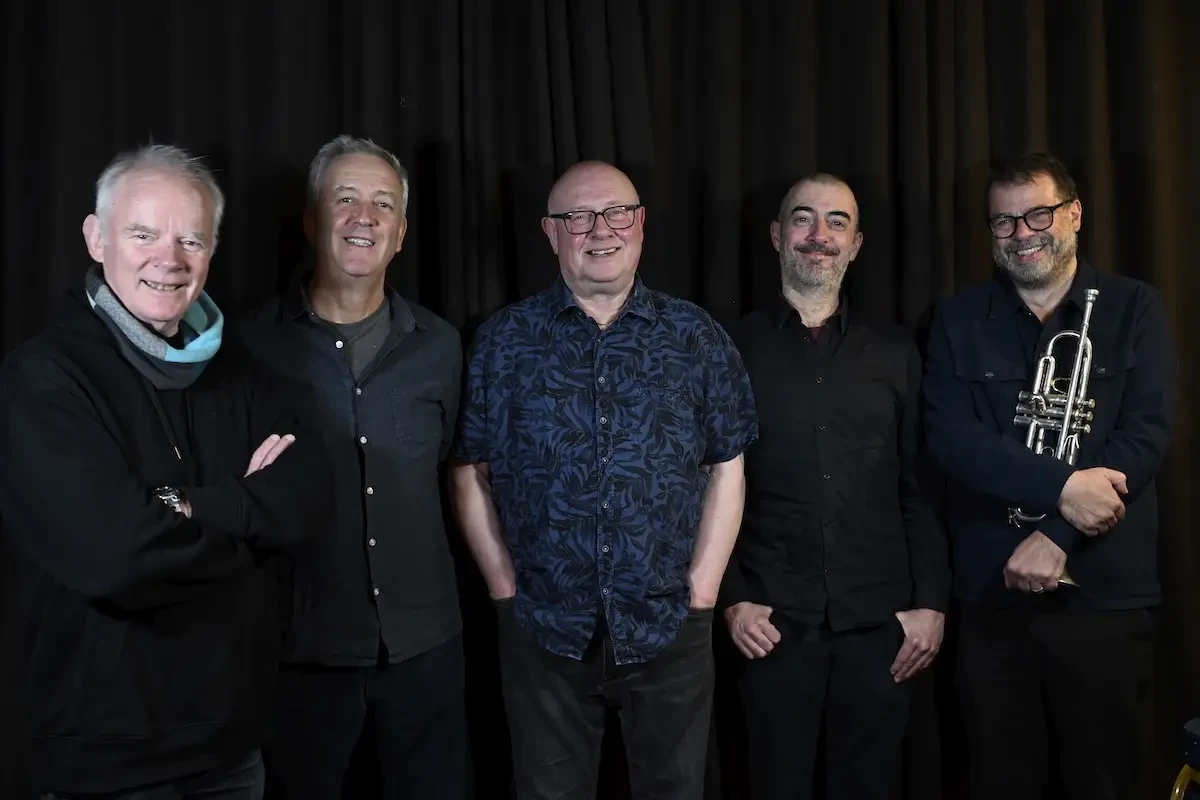
Recorded between April 2 and April 4, 2023, at Temple Music Studio in Sutton, North York Skies captures a quintet of seasoned British jazz figures operating at the peak of intuitive synergy. Bandleader and bassist Ben Crosland assembled a lineup comprising Steve Waterman on trumpet and flugelhorn, Steve Lodder on piano, electric piano, and organ, Chris Allard on guitar, and Nic France on drums.
- The Session Environment: The studio environment fostered a relaxed yet highly focused atmosphere. Rather than chasing clinical perfection through endless takes, the ensemble favored a finely rehearsed yet breathable approach.
- Track Architecture: The 67-minute, 12-track program—featuring pieces such as The Optimist, Howardian Undulations, Ballad Of Lilla Howe, The Blakey Lions, George And Monty, Breathing Space, Fat Betty, Purple Is The Colour, Vigilamus, The View From Room Twelve, and Ain Howe Farewell—prioritizes melodic clarity over technical display.
- Performance Highlights: On key tracks like Breathing Space, Steve Waterman states the primary theme with a rare elegance, unburdened by the athletic technique-for-its-own-sake prevalent in many contemporary recordings. His subsequent solo mirrors the economy of phrasing championed by the late Art Farmer. Crosland anchors the ensemble by drawing warm, acoustic-like resonance from his bass guitar, successfully demonstrating the instrument’s viability within a straightahead jazz context.
Jason Robinson: Blue Salience: For Yusef Lateef
Representing a monumental logistical and creative undertaking, Jason Robinson’s double-album project was captured live in the studio at the Fraser Performance Studio, WGBH, Boston, across three intensive days from May 12 to May 14, 2025. Robinson, a veteran saxophonist, multi-instrumentalist, and professor of music at Amherst College, curated an expansive, star-studded ensemble to honor the exploratory philosophy of the late, great Yusef Lateef.
- The Ensemble: The recording features a massive roster of brass, woodwind, and rhythm section players. The trumpet chair is shared by Bijon Watson, Mike Piepman, Haneef Nelson, and Zoe Murphy; trombones are manned by Randy Pingrey, Chris Gagne, and Michael Dessen (appearing specifically on Fathom (Remembering Water)); bass trombones are covered by Angel Subero and Bill Lowe (who also handles tuba and spoken word); while the reed section boasts Allan Chase, Marty Ehrlich, Felipe Salles, Ian Buss, and Brian Landrus. The rhythm and texture departments are anchored by Kevin Harris (piano), Eric Hofbauer (guitar), Avery Sharpe (bass), and Richie Barshay (drums, percussion, timpani, gong, and samba whistle), with special guest Terry Jenoure on violin and vocals for Horizon. Robinson himself contributes percussion, tenor saxophone, alto flute, tubular bells, cuica, synthesizer, clavinet, train whistle, and sleigh bells.
- Structural Division across Two CDs:
- CD1 (71.37 minutes) encompasses The Curved Path, Soul Keepers (Title Sequence 1), Blue Salience, Fathom (Remembering Water), Bright Spirits, Equipoise, and The Cabin.
- CD2 (63.43 minutes) features Horizon, Manifold Oneness, Fifth Saga, The Heron, Gates Of Truth, and The Golden Hue.
- Pivotal Shifts: A defining moment in the program occurs around the 4.30 mark of Manifold Oneness, where the ensemble executes a dramatic sea change from predetermined compositional frameworks to spontaneous, highly demanding collective improvisation.
Francesca Han: Sisyphus
Captured on March 21, 2017, at Studio Dede, pianist Francesca Han’s trio session features bassist Takashi Sugawa and drummer Shun Ishiwaka. Distilling its statement into a concise 42 minutes and 39 seconds, the album comprises seven original or interpreted movements: Petit Soleil, Chrysanthemum (For Kikuchi), Sisyphus, Circle, Cowelessi, Count Yourself, and Detour.
- Aesthetics of Restraint: Throughout the majority of the tracklist, Han’s trio maintains an ultra-refined, polite, and exceptionally quiet posture.
- Stylistic Deviations: While tracks like Cowelessi and Detour briefly elevate the tempo and dynamic threshold, and Chrysanthemum (For Kikuchi) adopts a solemn, funereal pacing reminiscent of historic ECM piano trios, the album largely operates within a restrained, highly cautious emotional palette. It is only during the title track, Sisyphus, initiated by a solo bass intro evoking the spirit of Barre Phillips, that the trio steps outside its self-imposed boundaries, letting the music breathe through a slight increase in volume and engagement.
Supporting Context & Metrics
Evaluating these three releases requires examining broader quantitative and qualitative metrics within the modern jazz ecosystem, particularly regarding production values, distribution realities, and stylistic saturation.
Commercial Realities and the Hype Machine
The commercial disparity between manufactured trends and authentic artistry remains a persistent challenge for jazz journalists and consumers.
- Major marketing budgets and industry accolades continue to flow toward commercial smooth-jazz pastiches—often repackaging the tropes of Grover Washington Jr., Eric Gale, and Lonnie Liston Smith through earnest, younger ensembles.
- Conversely, albums requiring active, attentive listening—such as Crosland’s North York Skies and Robinson’s Blue Salience—rely on word-of-mouth and dedicated independent distribution networks (such as Jazz Cat and Circumvention Music).
Aesthetic Metrics: Economy vs. Over-Refinement
| Release | Primary Aesthetic | Key Instruments Featured | Primary Challenge / Critique |
|---|---|---|---|
| Ben Crosland Quintet (North York Skies) | Melodically rich post-bop; understated swing | Flugelhorn, bass guitar, electric piano | Danger of flying under the commercial radar due to lack of aggressive self-promotion. |
| Jason Robinson (Blue Salience) | Dense, exploratory chamber jazz / modern orchestral | Multi-horn orchestration, tubular bells, synths | Demands high listener endurance across a sprawling 135+ minute double-CD format. |
| Francesca Han Trio (Sisyphus) | Polished, ECM-adjacent minimalist contemporary jazz | Acoustic piano, upright bass, trap set | Risk of stylistic saturation, timidity, and a perceived lack of distinct compositional identity. |
Official Statements and Critical Perspectives
The critical reception of these works highlights a broader debate concerning what contemporary jazz ought to achieve. Critics evaluating these releases have emphasized the necessity of balancing technical proficiency with genuine emotional resonance.
- On Understatement and Craftsmanship: Reviewers of the Ben Crosland Quintet have noted that true musical substance often hides behind understatement. Crosland’s project demonstrates that a band does not need to reinvent harmonic language to achieve relevance; rather, a finely rehearsed, unpretentious ensemble can deliver essential stress-buster music for an anxious era. As noted in critical commentary, the music "needs no hype, in the sense that it could sell itself to many people fortunate enough to hear it."
- On Conceptual Dedication and Lineage: Addressing Jason Robinson’s homage to Yusef Lateef, academic and critical consensus underscores how tributes frequently fail by prioritizing imitation over innovation. Robinson successfully avoids this trap. By channeling Lateef’s exploratory spirit rather than his specific stylistic idioms, Robinson constructs a musical world unto itself. The integration of sparse yet rich orchestration—highlighted by powerful trombone contributions from Michael Dessen and Bill Lowe—elevates the project beyond a conventional tribute album into an essential study in modern ensemble dynamics.
- On the Limits of Refinement: Conversely, critiques of Francesca Han’s Sisyphus raise vital questions about the limits of contemporary chamber jazz polish. While the execution is undeniably exquisite, critics caution against an emerging aesthetic saturation point where politeness supersedes personality. When contemporary piano trios hew too closely to established ECM precedents without injecting personal artistic friction, the resulting sound risks disengaging the listener.
Future Outlook
As the global jazz community looks toward the remainder of the decade, the trajectories of artists like Crosland, Robinson, and Han point toward distinct paths for the genre’s evolution.
- The Resilience of Independent Straightahead Jazz: Projects like Ben Crosland’s prove that there remains a steadfast, dedicated audience for straightahead, post-bop music that prioritizes melody, tone, and organic interplay over algorithmic trend-chasing. Independent labels specializing in this niche will continue to serve as vital sanctuaries for veteran musicians who refuse to compromise their artistic visions for commercial expedience.
- The Expansion of Interdisciplinary and Large-Ensemble Explorations: Jason Robinson’s work indicates that large-ensemble creative jazz is shifting toward deep, conceptual exploration. By blending structured orchestration with spontaneous, high-stakes improvisation, artists are pushing the boundaries of what chamber jazz can express, pointing toward a future where historical legacies are honored not through mimicry, but through fearless, forward-looking experimentation.
- Navigating Stylistic Saturation: Francesca Han’s release serves as a cautionary tale for upcoming generations of minimalist improvisers. As contemporary jazz production standards grow increasingly homogenous, artists will face mounting pressure to inject distinct, disruptive elements into their work to avoid stylistic fatigue and listener disengagement.
Ultimately, these three releases—ranging from the comforting post-bop warmth of Crosland’s quintet to the uncompromising orchestration of Robinson and the quiet introspection of Han—illustrate a genre vibrantly alive with contradictions, urging both creators and audiences to listen more deeply.