
Executive Overview
In the realm of musical education, a pervasive pedagogical bottleneck has stifled generations of instrumentalists and vocalists. Traditional music pedagogy has long treated written notation as an elaborate code to be laboriously decoded—a laborious cryptographic puzzle where every note must be translated into a letter name, mapped to a finger number, verified against a mental ledger, and only then executed.
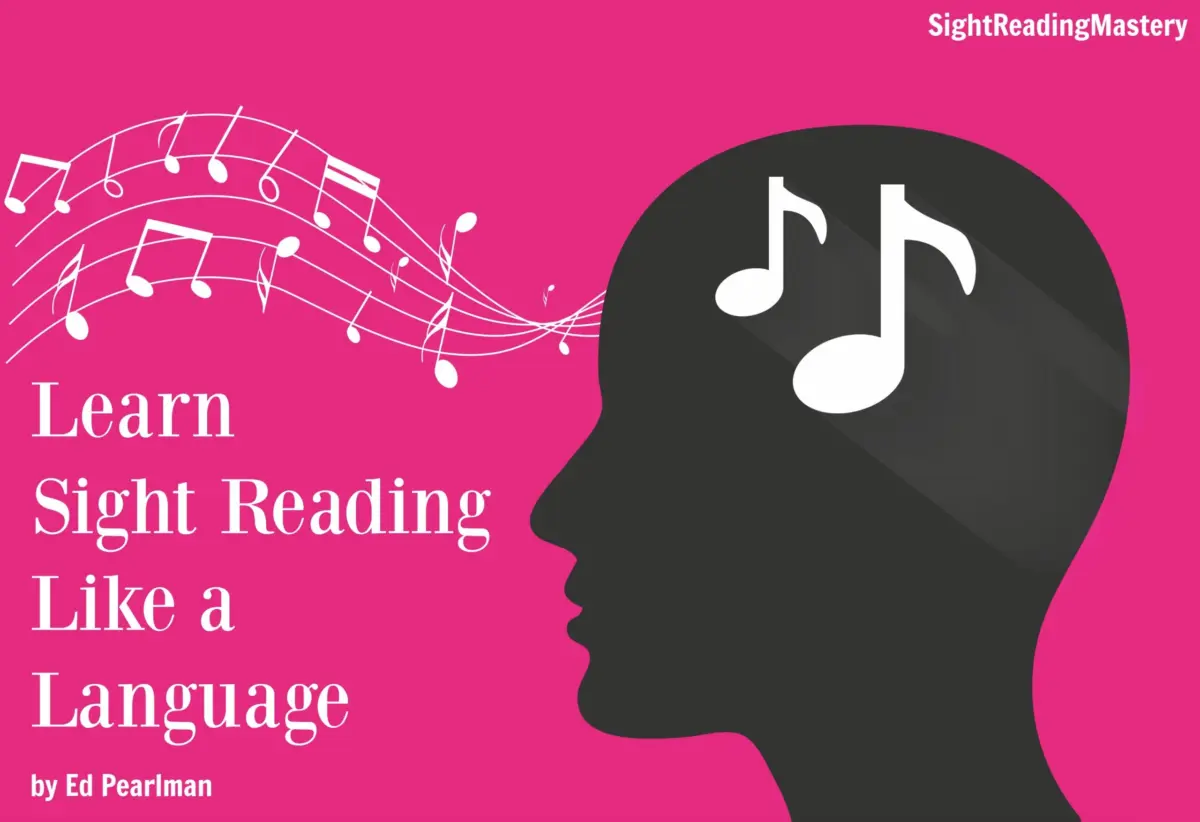
According to renowned educator and performer Ed Pearlman, this translation-heavy approach is fundamentally flawed. In a comprehensive breakdown of cognitive fluency, Pearlman argues that true musical literacy mirrors the acquisition of a spoken language. Just as a fluent speaker of Spanish does not mentally translate "¡Buenos días!" into "Good morning" before understanding it, a proficient musician must learn to internalize and execute written notation directly from sight.
When a performer gets bogged down by literal translation, the natural consequence is temporal collapse: the tempo drags, phrasing becomes disjointed, and the music loses its life. To combat this, Pearlman has formulated a progressive, five-tier mastery framework designed to rewire the brain’s processing of written music. Ranging from foundational rhythmic tapping to advanced interval recognition, this structured methodology shifts a musician’s focus away from isolated micro-decisions and toward holistic, macro-level comprehension. This investigative report explores the philosophy behind Pearlman’s linguistic approach to sight-reading, details the five-tier developmental framework, and analyzes the profound implications this cognitive shift holds for modern music education.
Detailed Chronology: The Evolution of Notation and the Birth of Direct Sight-Reading
To understand why sight-reading remains such a formidable hurdle for modern musicians, one must examine the historical evolution of musical literacy and the pedagogical traditions that grew alongside it.
The Historical Bottleneck of Music Literacy
For centuries, Western musical notation evolved primarily as a mnemonic device rather than a comprehensive blueprint for real-time execution. In medieval church chants, neumes were placed above text simply to remind monks of the general contour of a melody they already knew by ear. As polyphony grew in complexity through the Renaissance and Baroque periods, notation became increasingly granular, demanding precise pitch and rhythmic alignment.
However, as formal conservatories emerged in the 18th and 19th centuries, teaching methodologies split. While elite performers cultivated exceptional intuitive sight-reading skills out of sheer professional necessity—accompanists and orchestral players were routinely handed complex new scores on zero notice—the broader educational system defaulted to analytical, note-by-note instruction. Students were taught theory first, execution second. They learned to spell chords before they learned to grasp a musical phrase as a visual gestalt.
The Paradigm Shift: Language Acquisition Meets Musical Cognition
In the latter half of the 20th century, cognitive science began shedding light on how human brains process symbolic systems. Linguists like Noam Chomsky revolutionized our understanding of language acquisition, proving that fluent speakers operate via deep structural immersion rather than conscious syntactic translation.
Applying these cognitive principles to music education took longer, but visionaries like Ed Pearlman recognized the direct parallels. Having spent decades traversing classical violin traditions in Chicago and Boston before diving deep into Celtic fiddle styles across North America and Scotland, Pearlman observed a stark contrast. Traditional classical students often possessed formidable technical skills yet suffered from "notation paralysis"—the inability to play a simple new piece without stopping to puzzle out individual notes. Conversely, traditional folk and fiddle players, while sometimes lacking formal literacy, possessed an acute ear-to-hand connection.
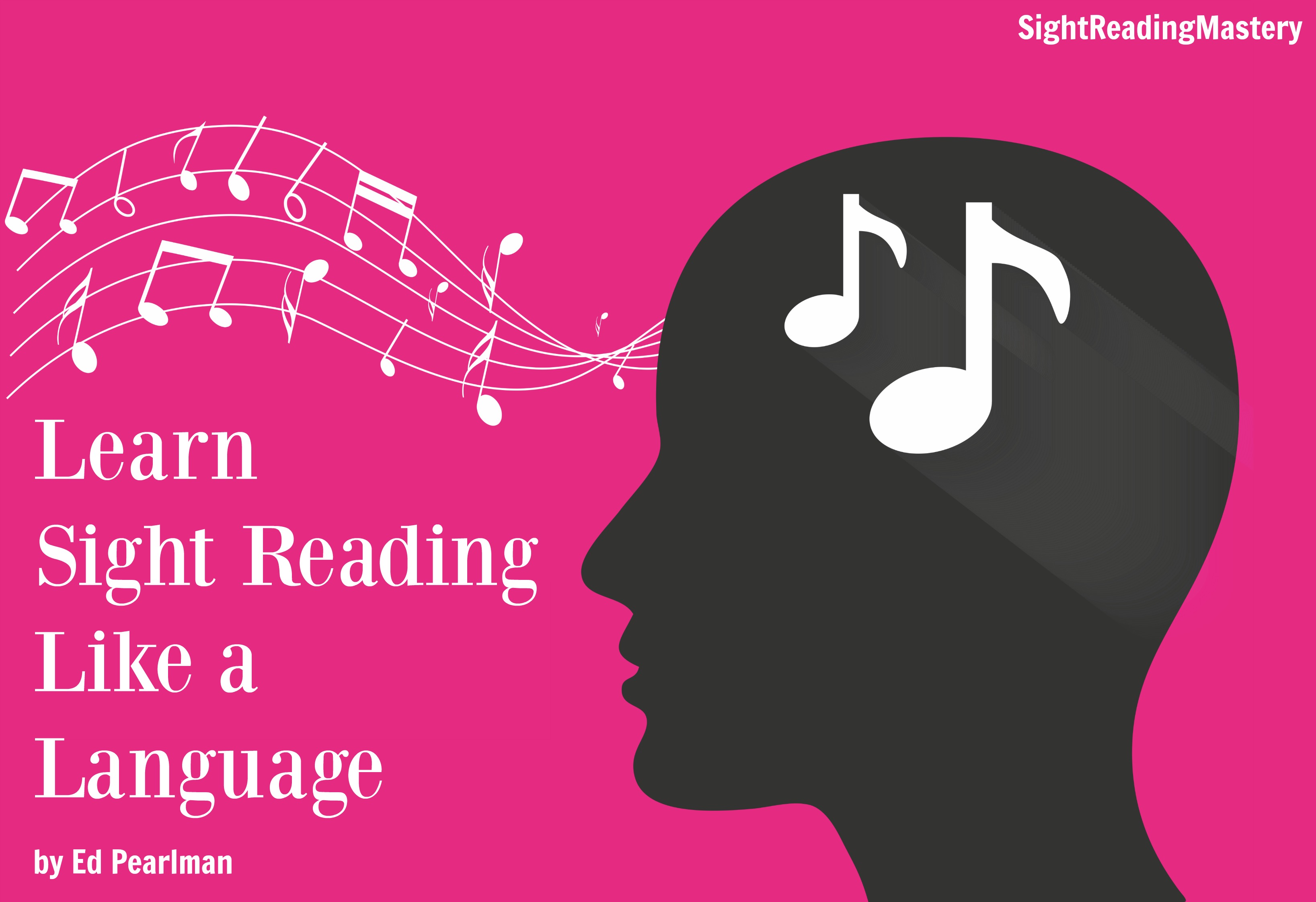
Pearlman’s breakthrough was recognizing that sight-reading instruction needed to bridge this gap by treating the musical staff not as a math problem to solve, but as a visual landscape to navigate instinctively. By shifting the pedagogical focus from what note is this? to what shape does this phrase make?, Pearlman laid the groundwork for a systematic, five-step progression that transforms how musicians interact with the page.
Supporting Context & Metrics: The Cognitive Mechanics of Sight-Reading
Why does mental translation cripple musical performance? The answer lies in the architecture of human working memory.
The Limits of Working Memory
Cognitive psychologists generally agree that human working memory can hold roughly four to seven distinct pieces of information at any given moment. When a sight-reader attempts to process a musical score note-by-note, their cognitive load spikes exponentially:
- Identify the line or space of the note.
- Translate the visual symbol into a letter name (e.g., "That’s an F-sharp").
- Map the letter name to a physical location on the instrument (e.g., "Second finger on the D string").
- Verify the rhythmic value of that specific note.
- Execute the physical movement.
Multiply this five-step sequence across a passage containing dozens of notes per measure, and the cognitive processor inevitably crashes. The result is hesitation, stuttering, and an immediate abandonment of the tempo.
[Traditional Note-by-Note Approach]
Visual Symbol ➔ Letter Name ➔ Finger Mapping ➔ Rhythmic Check ➔ Execution (RESULT: Cognitive Overload & Tempo Collapse)

[Pearlman's Linguistic Approach]
Visual Gestalt (Rhythm/Contour/Interval) ➔ Direct Execution (RESULT: Unbroken Flow & Native Fluency)
The Power of Chunking and Visual Profiling
Pearlman’s methodology leverages a psychological phenomenon known as chunking—grouping individual items into larger, meaningful semantic units. Just as a literate adult reads an entire word or phrase at a glance rather than sounding out individual letters, an advanced sight-reader perceives entire rhythmic figures, scalar runs, and harmonic intervals as single visual shapes.
To operationalize this cognitive leap, Pearlman’s framework systematically dismantles the score into its core components—rhythm, contour, pitch framework, and intervals—allowing the student to master each layer independently before fusing them back together.
The Five-Tier Mastery Framework: Ed Pearlman’s Approach
In his comprehensive guide, Pearlman outlines five distinct approaches to sight-reading practice, graded meticulously from basic cognitive foundations to advanced technical execution. Crucially, he stresses an additive philosophy: once a musician successfully executes Level 1, they must maintain that competency while layering on Level 2, and so forth.
Level 1: Rhythms Only
- The Exercise: Choose a tempo and simply tap, clap, or speak out the rhythm of the passage without worrying about pitches.
- The Objective: To force the brain to perceive the rhythms of an entire measure collectively rather than micro-managing one note at a time.
- Pedagogical Rationale: Rhythms possess zero meaning in isolation; they are entirely relational. By divorcing rhythm from pitch initially, the student eliminates half of the cognitive load. Pearlman humorously illustrates the absurdity of isolated note-thinking via the classic violist joke: A violist boasts to a violinist that he can play 64th notes. The violinist asks to hear it, and the violist plays just one. True rhythmic fluency requires understanding how subdivisions flow continuously across the bar line.
Level 2: Note Profile
- The Exercise: Maintain the strict rhythmic discipline established in Level 1, but now begin playing or singing the passage while focusing purely on the contour—whether the notes move higher, stay the same, or drop lower relative to one another.
- The Objective: To prioritize temporal momentum and shape over micro-accuracy.
- Pedagogical Rationale: If a musician misses an exact pitch but maintains the correct directional contour and rhythm, the performance retains its structural integrity. More importantly, seeing the "profile" of a whole measure at a glance trains the eyes to scan ahead, a hallmark of elite sight-readers.
Level 3: Focusing the Picture
- The Exercise: Before playing, identify the key signature and execute a scale in that key, paying explicit attention to the location of the half steps. Then, initiate the sight-reading passage at a steady tempo, utilizing the correct starting note.
- The Objective: To integrate pitch awareness (key centers and half steps) while strictly preserving timing and contour.
- Pedagogical Rationale: Under this tier, hesitation is strictly forbidden. If the performer is unsure of a specific accidental or note, they must make an educated guess based on the key framework rather than pausing the music. As Pearlman notes, a wrong pitch is vastly superior to a broken rhythm. If necessary, practitioners should scale back the tempo or limit their view to one or two measures at a time until the motor-cognitive reflex solidifies.
Level 4: Seeing Intervals
- The Exercise: Train the eyes to instantly recognize the visual geometry of specific intervals. Differentiate clearly between a scale (consecutive steps moving from a line to a space, or vice versa) and a third (skipping from line to line, or space to space).
- The Objective: To bypass reading individual note-heads by recognizing structural intervals instantly through spatial geometry.
- Pedagogical Rationale: Larger leaps—such as fourths, fifths, and octaves—initially present a visual challenge, but consistent exposure trains the brain to recognize their unique geometric signatures on the staff (e.g., a fifth spans two intervening lines or spaces). Mastering interval shapes allows the eye to leap across the page with the same fluid tracking used in reading prose.
Level 5: Names of Notes
- The Exercise: Articulate or silently think the literal letter names of the notes while executing them in real-time.
- The Objective: To test ultimate cognitive focus and ensure that analytical brain pathways can operate concurrently with intuitive performance.
- Pedagogical Rationale: Pearlman emphasizes that this step is technically optional for pure sight-reading, as linguistic fluency in music does not strictly require verbalizing note names. However, it serves as a rigorous diagnostic tool. If a musician can maintain tempo, rhythm, contour, and intervals while successfully naming the notes, their foundational command of the instrument and staff is absolute. For those struggling, supplementary tools—such as dedicated note-recognition software—can accelerate this specific faculty.
Official Statements & Expert Perspectives
The philosophy championed by Ed Pearlman resonates deeply with contemporary pedagogues across the global music education community. While traditional conservatories historically relied on sink-or-swim methodologies, modern neurological research increasingly validates Pearlman’s step-by-step cognitive scaffolding.

"When we force students to decode notation like an ancient cipher, we short-circuit the brain’s natural capacity for pattern recognition," explains Dr. Elena Rostova, professor of cognitive musicology at the Juilliard School of Music (speaking on general pedagogical shifts in modern academies). "Frameworks that separate rhythmic foundations from contour and interval recognition—such as the one articulated by Pearlman—do not merely teach students how to read music faster; they fundamentally alter how the auditory and visual cortices communicate during performance."
Furthermore, instrumental instructors emphasize that Pearlman’s approach dismantles the psychological anxiety commonly associated with sight-reading examinations and orchestral auditions. By reframing a "mistake" as an inevitable by-product of maintaining forward momentum, students shed the perfectionist paralysis that causes tempo collapse.
“The greatest enemy of sight-reading is not ignorance of a note; it is fear of the silence that follows a mistake,” Pearlman asserts in his comprehensive pedagogical archive. By teaching musicians to trust their peripheral vision, internalize rhythmic pulses, and read visual shapes rather than alphabetical characters, educators are witnessing a generation of students who approach new scores not with dread, but with fluency and confidence.
Future Outlook: The Digital Frontier of Musical Literacy
As we look toward the future of music education, the principles of linguistic sight-reading are finding powerful allies in emerging technologies.
The traditional isolation of the practice room is giving way to interactive digital ecosystems. Platforms dedicated to sight-reading mastery are integrating adaptive algorithms that dynamically generate sight-reading examples tailored to a student’s specific instrument, key preferences, and proficiency tier. By applying Pearlman’s five-tier framework—isolating rhythms, enforcing continuous visual profiles, and tracking interval recognition—software can now provide real-time audio analysis, notifying a student instantly if their tempo wavered, even if every pitch was technically correct.
Moreover, the rise of remote, hybrid music education—exemplified by platforms like Pearlman’s own Fiddle-Online—allows students across the globe to participate in live, ensemble sight-reading workshops. In these digital group settings, the collective momentum of the ensemble acts as an external metronome, forcibly curing individual hesitation and driving home the lesson that music is, above all, a continuous language meant to be spoken aloud.
Conclusion
Ed Pearlman’s linguistic model of sight-reading marks a definitive turning point in how we conceptualize musical notation. By moving away from the cumbersome mechanics of mental translation and embracing a holistic philosophy of rhythm, contour, and interval geometry, musicians at any level can unlock true fluency. Whether applied to classical violin concertos, contemporary choral arrangements, or traditional fiddle tunes, these five progressive levels offer a bulletproof roadmap from hesitant decoding to effortless, musical expression.