
Executive Overview
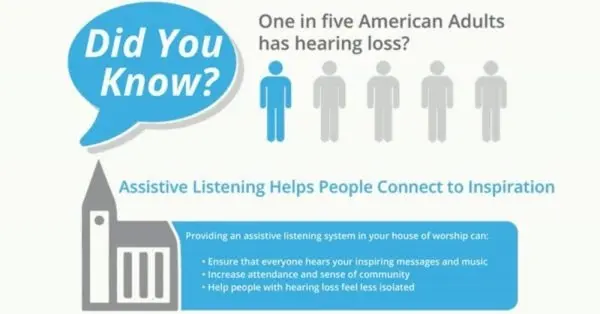
In an era where houses of worship strive to foster environments of radical hospitality, inclusivity, and community engagement, one critical barrier to participation is frequently overlooked: hearing loss. For millions of congregants globally, attending a weekly service, listening to a sermon, or partaking in communal prayer is fraught with frustration. Acoustic challenges inherent in traditional sanctuaries—such as high ceilings, expansive open spaces, long reverberation times, and complex sound system configurations—often combine to create an auditory landscape where speech is unintelligible, even for individuals with mild-to-moderate hearing impairments.
The implementation of an Assistive Listening System (ALS) is no longer merely an ADA (Americans with Disabilities Act) compliance checkbox or an afterthought; it is a vital ministry tool. By bridging the acoustic gap between the speaker’s podium and the listener’s ear, an ALS restores the profound emotional, spiritual, and communal connection that forms the bedrock of faith-based gatherings.
However, purchasing and installing equipment is only half the battle. True ministry integration requires a strategic, methodical approach that spans community assessment, financial planning, comprehensive staff and volunteer training, and aggressive awareness campaigns. This report examines the four foundational pillars necessary for successfully deploying an Assistive Listening System in a house of worship, drawing upon industry best practices, expert consultations, and actionable implementation frameworks designed to ensure that no member of the congregation is left isolated in silence.
Detailed Chronology: A Four-Phase Implementation Roadmap
Successfully introducing an assistive listening infrastructure requires a deliberate, step-by-step rollout. Rushing the process often leads to underutilized equipment, frustrated users, and wasted financial resources. Below is the chronological blueprint for achieving optimal deployment.
Phase 1: Understand Your Needs (Assessment and Data Gathering)
The journey toward an acoustically inclusive worship environment begins long before any hardware is unboxed. The initial phase demands a rigorous, data-driven assessment of the congregation’s actual demographic and auditory needs.
Too often, leadership committees assume they know the extent of hearing loss within their community, relying on guesswork rather than concrete metrics. The most effective way to eliminate ambiguity is to survey the congregation directly. This survey must be comprehensive, gentle, and specifically tailored to uncover hidden barriers. Key metrics to capture during this phase include:
- Overall Service Experience: How well can congregants hear during various elements of the service (e.g., spoken prayers, scripture readings, contemporary or traditional music, and sermon delivery)?
- Hearing Aid Adoption: What percentage of the congregation currently wears hearing aids or cochlear implants?
- Technological Compatibility: Of those who use hearing aids, how many are equipped with telecoils (t-coils)? Understanding this is critical because modern loop systems transmit audio directly to t-coil-enabled devices, rendering external receivers unnecessary for many users.
By compiling this data, leadership can move forward with absolute clarity regarding the scale of the system required, the preferred receiver styles, and the specific trouble spots within the auditorium or sanctuary architecture.
Phase 2: Fully Understand Your Options (Financial Planning and Sourcing)
Once the congregation’s specific requirements have been mapped, the focus shifts to evaluating technological and financial options. The market offers a wide array of Assistive Listening Systems—ranging from traditional FM and infrared systems to cutting-edge Wi-Fi-based audio streaming and Audio Frequency Induction Loop Systems (AFILS). Each technology presents unique benefits, spatial limitations, and cost structures.
Estimating the cost of an ALS that genuinely meets your church’s needs requires careful balancing of upfront capital expenditure against long-term maintenance and user adoption rates. Houses of worship do not have to navigate this complex technological landscape alone. Specialized audio-visual integrators, such as CCI Solutions, provide invaluable expertise in this area, offering complimentary consultations specifically tailored to expense mapping, acoustic evaluation, and budgeting purposes.
Furthermore, budgeting constraints should not halt an inclusivity initiative. Congregational leaders should actively consider targeted fundraising efforts, dedicated capital campaign allocations, or foundation grants specifically designated for accessibility upgrades. Framing the ALS as a vital community-building initiative often inspires generous donor participation, as members recognize the immediate, deeply personal impact the technology will have on their fellow worshippers.
Phase 3: Prepare for Success (Training and Operational Readiness)
The finest audio technology in the world will fail if the staff and volunteers operating it are unprepared. The third phase of implementation focuses heavily on operational readiness, transforming everyday ministry workers into zealous advocates for accessibility.
Staff, ushers, and greeting volunteers must receive thorough, hands-on training on how to operate, maintain, sanitise, and distribute the assistive listening devices. Think of these frontline team members not merely as administrators, but as your official "Assisted Listening Ambassadors." Their warmth, competence, and readiness can make the difference between a hesitant first-time user and a grateful, lifelong participant.
When checking out a device to a congregant, ambassadors should never simply hand over the unit in silence. Instead, they should take the time to instruct the user on the device’s specific functions, volume controls, and compatibility accessories (such as neck loops or ear buds). To ensure consistency and reduce anxiety among volunteers, leadership should compile and laminate a clear, concise sheet of Frequently Asked Questions (FAQs) to keep permanently stationed at the welcome desk or distribution counter.
Phase 4: Create Awareness (Communication and Community Outreach)
The final phase of the rollout addresses the timeless marketing truth: even the best product or service is ineffective if nobody knows it exists. Once the system is installed and the team is trained, it is time to broadcast the good news to both the existing congregation and the surrounding geographic community.
Visibility is paramount. Proper, universally recognized signage must be displayed prominently throughout the facility, explicitly stating that Assisted Listening Devices are available and directing visitors precisely to where they can be collected. Digital and print media must also be leveraged:
- Include a recurring, friendly reminder in every weekly worship bulletin.
- Feature graphics and announcements in multi-media pre-service countdown presentations.
- Consider hosting a specialized live training session or orientation during a fellowship hour, allowing curious congregants to test drive the technology in a low-pressure environment.
Beyond the walls of the church, outreach matters. Advertising your accessibility efforts to the wider community sends a powerful, unambiguous message of radical welcome. Many individuals who have dropped out of church attendance due to hearing fatigue or embarrassment will return—or visit for the very first time—when they hear about a community that has intentionally altered its environment to include them.
Supporting Context & Metrics: The Human and Architectural Cost of Silence
To fully appreciate the urgency of deploying an Assistive Listening System, one must examine the broader socio-acoustic context of modern religious architecture and the psycho-social impacts of hearing loss.

The Acoustic Paradox of Worship Spaces
Houses of worship present unique acoustical challenges that commercial spaces rarely encounter. Traditional sanctuaries are frequently designed with soaring vaulted ceilings, hard reflective surfaces like stone, hardwood, and stained glass, and large cubic volumes. While these architectural choices enhance the reverberation of pipe organs, choirs, and acoustic singing, they wreak havoc on speech intelligibility.
Acousticians measure this phenomenon using metrics like the Speech Transmission Index (STI) and Reverberation Time ($RT_60$). In a poorly treated sanctuary, an unamplified or improperly managed voice can cause sound waves to bounce continuously for several seconds. For an individual with normal hearing, the brain can filter out much of this ambient muddying; for an individual with sensorineural hearing loss, however, the direct sound and the reflected sound merge into an unintelligible blur. Words bleed into one another, turning an inspiring homily into an exhausting wall of noise.
The Psychology of Hearing Isolation
The consequences of unaddressed hearing loss extend far beyond missing a few spoken words. Audiological research consistently links untreated hearing impairment in older adults to social isolation, depression, cognitive decline, and a rapid deterioration of community ties.
In a church setting, this manifests as a slow withdrawal. When a congregant can no longer comfortably follow the sermon, engage in responsive readings, or catch the whispered conversations during fellowship time, attending services becomes an exercise in alienation rather than spiritual rejuvenation. They sit in a crowded room, physically present yet entirely disconnected. Installing an ALS directly combats this isolation, restoring agency, dignity, and full participation to individuals who might otherwise slip quietly away from the community.
Official Statements and Industry Insights
Industry leaders, accessibility advocates, and acoustic engineers universally emphasize that inclusivity must be proactive rather than reactive.
Organizations specializing in worship technology note a distinct paradigm shift in how church leadership views audio systems. In decades past, sound reinforcement was considered complete when the front-of-house speakers were loud enough to fill the room. Today, modern audio design philosophy recognizes that volume is not synonymous with clarity.
According to accessibility advisory frameworks provided by major assistive technology developers like Listen Technologies:
"Reaching out to those who feel disconnected from your community due to hearing loss is central to sharing the message of inclusion. Genuinely compassionate service involves being aware of and caring for the needs of everyone, especially those dealing with impairments. Make sure they are able to hear the beauty and emotion of the spoken word in your church by providing them with the equipment they need to stay connected."
Furthermore, legal standards underscore the necessity of these installations. While older buildings may benefit from grandfather clauses under certain regional codes, the ethical mandate to provide equal access far surpasses minimum legal requirements. True pastoral care demands that houses of worship outpace mere compliance, viewing accessibility upgrades as sacred investments in human dignity.
Future Outlook: The Next Generation of Sanctuary Accessibility
As audio engineering and telecommunication technologies continue to evolve at a breakneck pace, the future of assistive listening in houses of worship points toward hyper-personalization, seamless integration, and the eradication of social stigma associated with wearing specialized receiver equipment.
The Rise of Bring-Your-Own-Device (BYOD) Solutions
Historically, assistive listening relied heavily on bulky, dedicated FM or IR receivers handed out by ushers. While these devices remain exceptionally reliable, a growing trend in sanctuary design favors Wi-Fi-based streaming solutions. These systems allow congregants to stream pristine, low-latency audio directly to their own smartphones, tablets, or Bluetooth-enabled hearing aids using a dedicated church app.
The advantages of BYOD (Bring Your Own Device) architecture are manifold:
- Reduced Stigma: Users do not need to request a specialized device at a public desk, eliminating any perceived embarrassment associated with acknowledging a hearing impairment.
- Personalized Audio Tuning: Smartphone integration allows users to adjust volume levels, apply custom graphic equalizers, or even utilize real-time speech-to-text transcription directly on their personal screens.
- Lower Maintenance Overhead: Churches save valuable volunteer hours and equipment replacement costs associated with managing, sanitizing, and charging fleets of physical hardware receivers.
Holistic Universal Design
Looking ahead, the conversation around church architecture is shifting toward "Universal Design"—the philosophy of designing buildings, products, and environments to be inherently accessible to all people, regardless of age, size, or ability, without the need for adaptation or specialized design.
In future sanctuary construction and renovation projects, acoustic modeling will happen concurrently with structural design, incorporating hidden induction loop arrays beneath flooring materials and smart-surround sound dampening panels that absorb unwanted reverberation before it ever reaches the congregation’s ears.
Conclusion and Actionable Next Steps
Implementing an Assistive Listening System is a transformative undertaking that breathes new life into a congregation’s commitment to community, compassion, and uncompromising inclusivity. By methodically progressing through the four essential phases—understanding needs through direct surveys, evaluating tailored technological and financial options with expert guidance, preparing frontline staff to act as compassionate ambassadors, and launching robust awareness and outreach campaigns—churches can dismantle the invisible walls of hearing loss.
For church leaders, administrators, and AV technicians ready to take the next step, a wealth of educational resources is readily available. To secure detailed information on choosing the right system, alongside practical tools to ensure absolute success—including sample congregational surveys, standardized signage templates, and bulletin announcements—leadership is encouraged to download comprehensive reference guides, such as the Listen Technologies Church Assistive Listening Toolkit.
Does your worship facility currently possess the infrastructure needed to reach every ear in your congregation? Take the time to evaluate your audio ministry today, consult with experienced integration partners, and ensure that the powerful, emotional message of your services is heard clearly, vibrantly, and inclusively by all.