
Executive Overview
The contemporary recorded jazz landscape exists in a perpetual state of tension between archival excavation and revisionist reinterpretation. On one hand, record labels sift through decades-old master tapes to unearth lost sessions from the golden age of creative improvised music; on the other, modern ensembles test the elastic limits of the Great American Songbook and mid-century pop repertoires. Two recent releases—one a historic 1972 European concert recording of titan proportions, and the other a contemporary studio exploration of 1960s pop anthems—offer a compelling cross-section of this dichotomy.
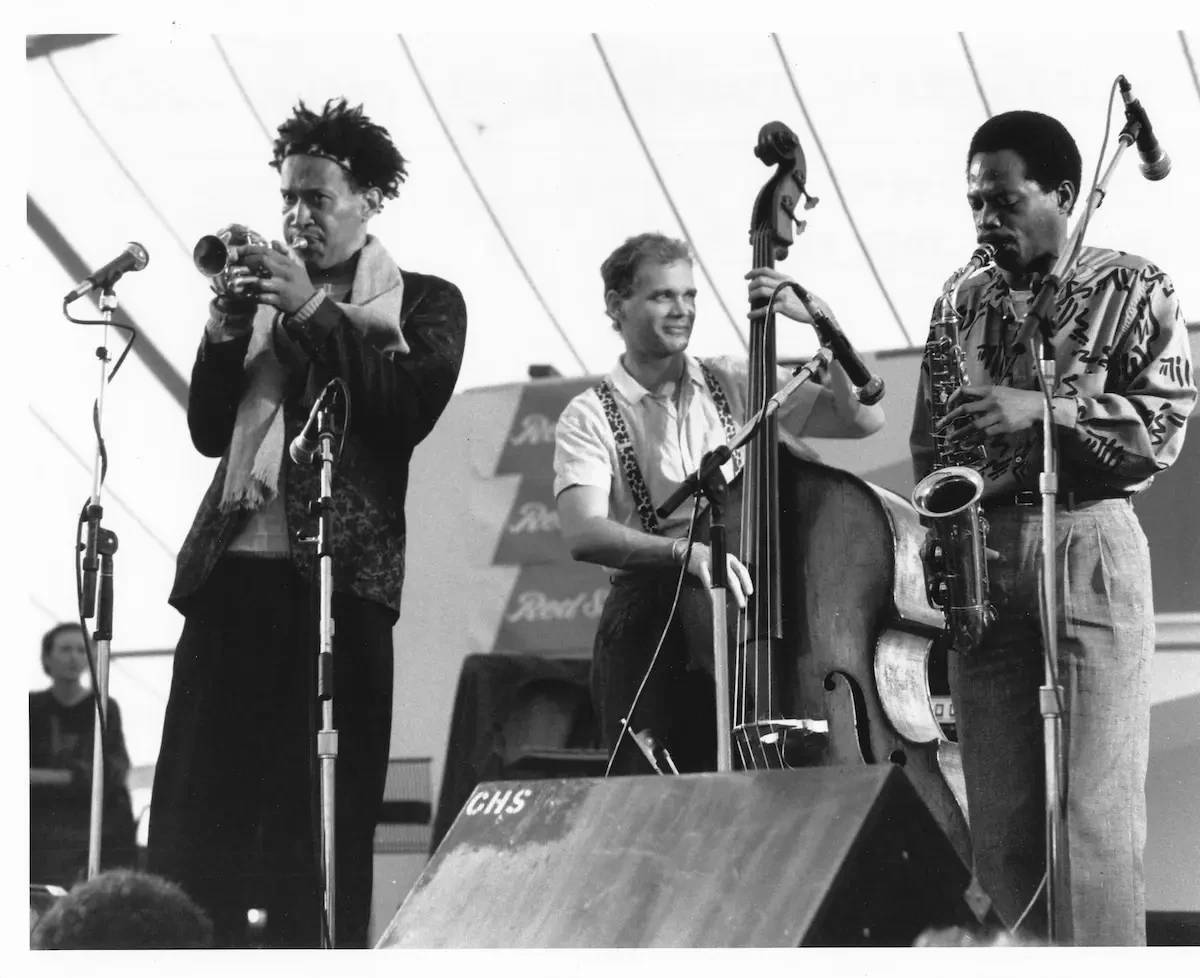
First, the long-overdue international reissue of The Third World-Underground, capturing a formidable trio led by pianist Dollar Brand (later known as Abdullah Ibrahim), alongside trumpeter Don Cherry and saxophonist/flutist Carlos Ward, brings to light a legendary live performance originally locked away on a Japanese imprint. Recorded live at Copenhagen’s famed Jazzhus Montmartre, this document captures three vanguard artists at the height of their powers, navigating the liminal space between free jazz exploration, Ellingtonian sophistication, and South African township groove.
Conversely, contemporary guitarist James Chadwick’s Walrws steps into the contentious arena of pop-to-jazz adaptation, assembling a quintet to reinterpret thirteen definitive 1960s classics—dominated by the immortal songwriting catalog of Lennon and McCartney. While the conceptual framework of reharmonizing canonical pop staples is a time-honored jazz tradition, Chadwick’s execution illuminates the perilous line between reverence and inert replication.
Examining these releases in tandem provides a comprehensive window into the mechanics of jazz historiography. Where Brand, Cherry, and Ward bend structures to their collective will through spontaneous combustion and deep-rooted cultural memory, Chadwick’s project grapples with the challenges of breathing new life into melodies so deeply etched into the global consciousness that they threaten to resist reinvention.
Detailed Chronology
Phase I: The Copenhagen Summit (November 14, 1972)
To understand the historical weight of The Third World-Underground, one must trace the trajectory of its primary architects leading up to the autumn of 1972. Dollar Brand was well into his self-imposed exile from apartheid-era South Africa, having established a formidable presence in Europe and the United States. Though he had converted to Islam four years prior, adopting the name Abdullah Ibrahim, commercial releases from this period frequently preserved his birth moniker, as seen with the album’s original 1974 pressing on Japan’s Trio Records.
Don Cherry, meanwhile, was the itinerant ambassador of the global avant-garde. Having co-pounded the structural foundations of free jazz alongside Ornette Coleman, Cherry spent the late 1960s and early 1970s absorbing folk traditions from across the globe, incorporating pocket trumpet mastery, percussion, and vocalization into his expansive stylistic vocabulary. Carlos Ward, a virtuosic alto saxophonist and flutist, had forged a deep creative synergy with Brand, operating as an empathetic foil to the pianist’s dense, percussive harmonic clusters.
On November 14, 1972, this triumvirate converged upon the hallowed stage of the Jazzhus Montmartre in Copenhagen, Denmark—a venue that had long served as a European sanctuary for American jazz expatriates and international modernists. The resulting performance was not merely a concert, but a masterclass in telepathic interplay.
The recording captures the ensemble mid-stride, plunging straight into the fiery momentum of Don Cherry’s Don’s Song. Brand’s ferocious piano vamp establishes an immediate urgency, superseded by Cherry’s characteristically fractured, brilliant tone. Rather than maintaining a predictable verse-chorus symmetry, the performance dissolves and morphs abruptly into Brand’s Cherry, a medium-tempo exercise where the pianist’s rhythmic ostinatos anchor the soaring, melodic explorations of the horns.
The chronological flow of the set list highlights a seamless dialogue between African rhythmic consciousness and avant-garde abstraction. On Bra Joe From Kilimanjaro, Brand’s left hand acts as a tectonic plate, grounding blues-infused vamps with rhythmic polyphony. The transitions between pieces are swift and unceremonious—such as the jolting leap into Jabulani-Easter Joy, where Cherry and Ward engage in rapid-fire sonic sparring. Interspersed with rare vocal chants on pieces like Waya-Wa-Egoli and Swazi, the performance culminates in Victor Ndilzwana’s stately Wayeah-Wayeah-O, bringing a tightly packed 40-minute arc to a profound, culturally resonant close.
Phase II: The Studio Translation (September 3–4, 2025)
Fast-forward over half a century to the pastoral surroundings of Abergavenny, Wales, where a very different chapter of jazz interpretation was being written. On September 3 and 4, 2025, a newly minted quintet led by guitarist and arranger James Chadwick entered the studio to record an ambitious project designed to bridge the gap between 1960s pop culture and contemporary small-group jazz.
The historical relationship between jazz and popular song is nearly as old as recorded music itself. From Louis Armstrong’s transformation of Tin Pan Alley show tunes to John Coltrane’s psychedelic reinvention of My Favorite Things, the practice of plundering the pop charts for raw harmonic material is a cornerstone of the jazz canon. Chadwick’s stated objective for Walrws—stylized with a deliberate typographical nod that would later plague the physical packaging of the CD—was to present "60s Pop Classics with a Jazz Twist."
The tracklist reads like a pop-radio time capsule of the late 20th century. Of the thirteen selections, over half are drawn directly from the Lennon-McTheCartney songbook, including iconic compositions such as I Am The Walrus (misspelled on the physical release case as I Am The Walrys), Eleanor Rigby, Blackbird, Penny Lane, and Fool On The Hill. These are supplemented by transatlantic pop touchstones: Simon & Garfunkel’s The Sound Of Silence, Bob Dylan’s Mr. Tambourine Man, Burt Bacharach’s Walk On By, and The Beach Boys’ towering spiritual masterpiece, God Only Knows.
The chronological realization of these sessions relied on Chadwick’s detailed arrangements, interpreted by a band featuring Mark Sambell on piano, Aidan Thorne on upright bass, Liz Exell on drums, and Josh Heaton on tenor saxophone. Yet, unlike the organic, high-wire acts of 1970s free-bop pioneers, Chadwick’s studio approach sought meticulous, structured reharmonization. The musicians labored to strip away the pop nostalgia of the original recordings, attempting to re-contextualize the familiar melodies within modern post-bop harmonic frameworks.
Supporting Context & Metrics
Comparative Analytical Metrics
| Analytical Parameter | The Third World-Underground (1972/2024) | Walrws (2025) |
|---|---|---|
| Genre / Style | Post-Bop, Avant-Garde Jazz, World/Township Groove | Contemporary Jazz, Pop Reinterpretation, Post-Bop |
| Ensemble Configuration | Trio (Piano/Vocals, Trumpet/Percussion, Alto Sax/Percussion) | Quintet (Guitar/Arrangements, Piano, Bass, Drums, Tenor Sax) |
| Primary Compositional Source | Original compositions by Brand, Cherry, and Ndilzwana | 1960s Pop Repertoire (Lennon/McCartney, Bacharach, Dylan, etc.) |
| Acoustic Environment | Live Concert Setting (Jazzhus Montmartre, Copenhagen) | Controlled Studio Environment (Abergavenny, Wales) |
| Total Runtime | 40 minutes, 03 seconds (Compact, high-intensity) | 69 minutes, 44 seconds (Expansive, extensive tracklist) |
| Improvisational Approach | Spontaneous, high-risk, free-flowing transitions | Structured, arrangement-driven, thematic adherence |
| Label & Catalog Number | Wewantsounds (WWSCD125) | 33 Records (33JAZZ321) |
The Mechanics of Cross-Cultural Synthesis
To fully appreciate the achievement of Dollar Brand, Don Cherry, and Carlos Ward, one must contextualize the socio-political climate of 1972. The global jazz community was undergoing a massive paradigm shift. As African-American artists embraced Black Nationalism and explored their ancestral roots, expatriate South African musicians brought an entirely distinct rhythmic consciousness to the avant-garde.
Dollar Brand’s music was structurally defined by the convergence of American jazz heavyweights—most notably Thelonious Monk and Duke Ellington—with the infectious, syncopated rhythms of the marabi and mbaqanga township music of his homeland. When paired with Don Cherry, whose concept of "organic music" dismantled artificial boundaries between classical, jazz, and world folk idioms, the result was a music of profound liberation.
In contrast, James Chadwick’s Walrws operates within a safer, more academically rigorous tradition. The challenge of covering Lennon and McCartney in a jazz setting has been attempted by hundreds of artists, from George Benson’s swinging soul-jazz interpretations to Brad Mehldau’s introspective, melancholic piano deconstructions. The metric for success in this sub-genre relies on transformation: can the ensemble make the listener forget the original vocal line and engage entirely with the newly constructed harmonic architecture?
Herein lies the critical friction point for Chadwick’s quintet. While the musicians demonstrate technical proficiency, the ensemble sections frequently suffer from a lack of forward momentum. The rhythm section, anchored by Thorne and Exell, maintains a steady pulse, but the overarching arrangements occasionally prioritize faithful harmonic translation over bold reinvention. Consequently, the solos tread familiar post-bop pathways, failing to subvert the listener’s expectations in the manner that pop-to-jazz crossovers demand.
Official Statements & Critical Reception
Archival Exhumation: Rescuing History from Obscurity
The release of The Third World-Underground by the reissue specialists at Wewantsounds has been greeted by international jazz critics with widespread acclaim. The album represents a vital missing link in the discographies of all three participants, particularly during a transitional window when jazz was absorbing global influences at an unprecedented rate.
In an official label statement accompanying the international rollout, representatives for Wewantsounds emphasized the cultural significance of releasing the master tapes outside of Japan:
"For decades, this masterpiece remained locked within the collector market of Japanese import LPs, a hidden gem from Trio Records’ golden era. Making this available globally for the first time allows a new generation to witness the telepathic synergy between Dollar Brand, Don Cherry, and Carlos Ward. It is a document of rare spiritual intensity—music that defies easy categorization and bridges the gap between the avant-garde underground and the ancestral soul of African jazz."
Jazz historians have similarly lauded the release for preserving the raw, unadorned brilliance of the Montmartre engagement. Unlike polished studio albums that sanitize the edges of free improvisation, this recording captures the musicians taking calculated risks in front of a discerning European audience. The abrupt transitions between tracks—such as the breathless leap from Bra Joe From Kilimanjaro to Jabulani-Easter Joy—are celebrated as evidence of an ensemble operating without a net, driven entirely by collective intuition and shared musical heritage.
Contemporary Revisionism: Navigating the Pop-Jazz Divide
Reaction to James Chadwick’s Walrws has been more measured, reflecting the inherent skepticism that greets contemporary jazz albums reinterpreting classic pop canons. While the project has garnered praise for its warm acoustic production values and the melodic clarity of tenor saxophonist Josh Heaton, critical consensus points to structural timidity as its primary stumbling block.
In reviews distributed across contemporary jazz journals, critics have noted the disparity between the ambition of the project and its ultimate execution. While acknowledging the band’s earnest attempt to expand upon the rich source material provided by Lennon, McCartney, Bacharach, and others, reviewers have pointed out that the ensemble sections occasionally lack the necessary rhythmic drive to elevate the material beyond pleasant background listening.
Furthermore, physical production choices have drawn minor scrutiny from reviewers. Notably, the typographical error on the physical CD packaging—which misspells I Am The Walrus as I Am The Walrys—has been singled out as emblematic of a broader editorial carelessness that occasionally undermines the dignity of contemporary independent jazz releases. Despite these shortcomings, the album remains an interesting case study in the ongoing commercial and artistic allure of the pop-jazz crossover, proving that while the impulse to reharmonize the 1960s songbook remains universal, the execution requires an extraordinary degree of daring to truly captivate the modern listener.
Future Outlook
The Trajectory of Jazz Archivalism
As physical record sales continue to evolve alongside streaming ecosystems, the appetite for high-quality archival releases shows no sign of abating. Labels specializing in unearthing historical tapes—such as Resonance Records, Elemental Music, and Wewantsounds—play a crucial role in preserving the ephemeral history of improvised music.
The successful global rollout of The Third World-Underground establishes a compelling precedent for future excavations of 1970s European broadcast and club recordings. As master tapes age, archival engineers are increasingly utilizing advanced digital restoration techniques to rescue historically significant performances from deteriorating media. Moving forward, the industry can expect an increased focus on cross-cultural collaborations from this era, as contemporary listeners and scholars seek to understand how jazz evolved from an insular American art form into a truly global, transnational language.
Moreover, the enduring legacy of artists like Abdullah Ibrahim and Don Cherry continues to exert a profound influence on contemporary improvised music. Young vanguard artists across London, New York, and Johannesburg regularly draw inspiration from the spiritual intensity and rhythmic fluidity championed by the Third World-Underground lineup, ensuring that these historical methodologies remain vital and active components of the modern jazz vernacular.
The Evolution of Pop-Informed Jazz
For contemporary bandleaders like James Chadwick, the path forward in reinterpreting pop repertoires requires an increasingly sophisticated approach to avoid the traps of pastiche and routine execution. As the barrier between genres dissolves further in the digital age, audiences are no longer satisfied with simple jazz-inflected covers of pop songs; they demand radical deconstruction and complete harmonic re-imagination.
Future projects within the pop-jazz crossover sub-genre will likely need to push beyond traditional post-bop idioms, incorporating electronic soundscapes, ambient textures, and polyrhythmic complexities to breathe new life into hyper-familiar melodies. While Walrws serves as a sobering reminder of the difficulties inherent in matching the iconic status of 1960s pop anthems, it simultaneously highlights the unending fascination that these compositions hold for modern jazz improvisers.
Ultimately, both The Third World-Underground and Walrws demonstrate that the dialogue between jazz and its external influences—whether those influences are African township rhythms or British Invasion pop songs—remains the beating heart of the music’s evolution. Whether through the fire of spontaneous creation captured in a Copenhagen jazz club or the meticulous, quiet planning of a Welsh studio session, the unending quest to reinvent sound continues to define the uncompromising spirit of jazz.