
Executive Overview
Two decades after its initial release, the cultural imprint of Amy Winehouse’s Back to Black remains as indelible as the heavy black eyeliner and towering beehive that defined her iconic persona. On a crisp autumn evening in October 2026, the historic London Roundhouse in Camden served as the epicenter of a monumental global tribute. Organized to commemorate the 20th anniversary of the masterwork that permanently altered the landscape of modern pop, soul, and R&B, the one-night-only event was far more than a nostalgic exercise. It was a communal exorcism, a celebration of raw artistic genius, and a poignant homecoming in the very London borough that shaped her soul.
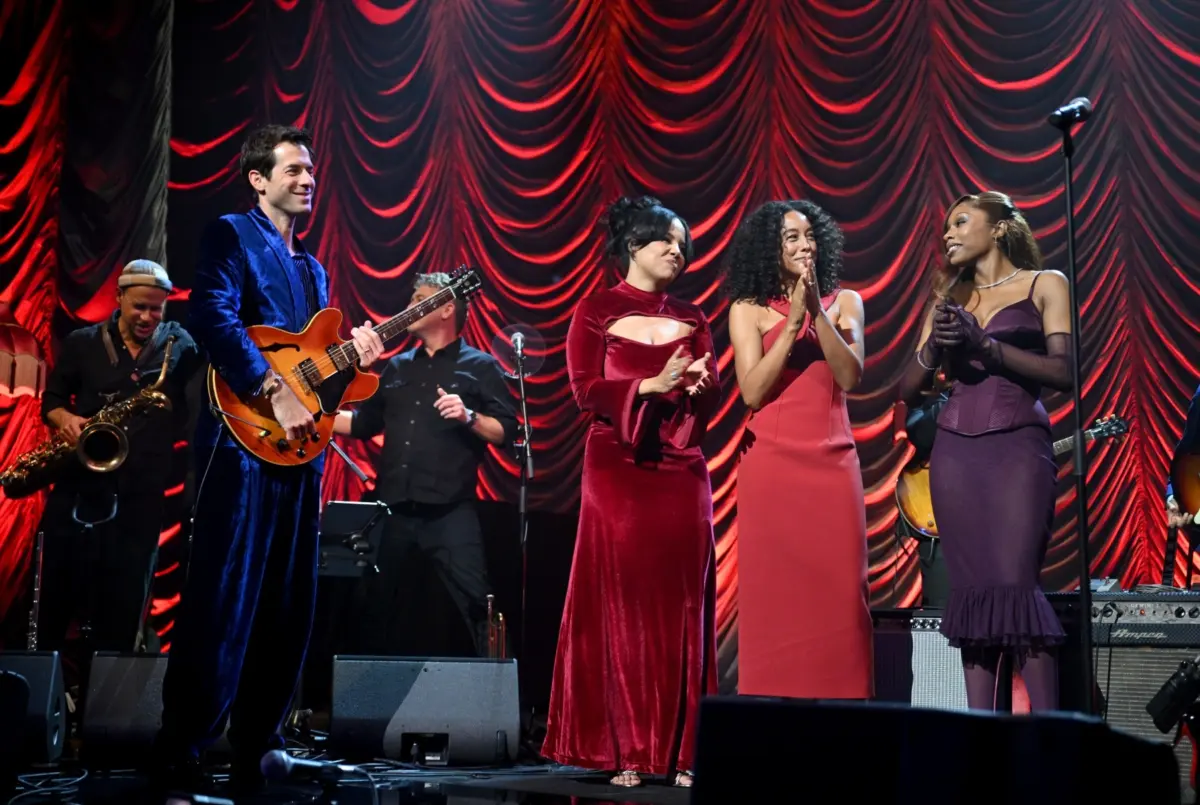
The evening brought together an unprecedented roster of contemporary musical royalty—including Jorja Smith, FLO, Sasha Keable, Corinne Bailey Rae, Lianne La Havas, and Yebba—who stood shoulder-to-shoulder with Winehouse’s original touring band. Spearheaded by longtime musical director Dale Davis, producers Mark Ronson and Salaam Remi, and key industry figures, the concert sought to answer a singular, tantalizing question: How do the defining anthems of heartbreak, addiction, and resilience resonate when filtered through the voices of a new generation of female artists?
The result was a triumph of live performance that completely avoided the traps of cheap imitation. Instead, it offered a reverent, soul-stirring reimagining of a record that not only dominated global charts in the mid-2000s but continues to serve as a masterclass in vulnerable, unfiltered songwriting. As the performances prepare to reach a broader audience via a forthcoming U.K. television broadcast, this retrospective looks at how Camden welcomed its most famous daughter back home, charting the legacy of an album that bridged the gap between vintage Brooklyn soul and modern British heartache.
Detailed Chronology: From the Pubs of Camden to the Roundhouse Stage
To understand the emotional gravity of the October 2026 tribute, one must trace the geography of Amy Winehouse’s life and career. Camden has always belonged to Amy. It was the gritty, vibrant North London borough where she lived, loved, drank, and ultimately left an immortal cultural footprint. As producer Mark Ronson declared from the Roundhouse stage under the flicker of stage lights, "This is her house." In a neighborhood where her face peers down from brick-wall murals and a bronze statue stands in Stables Market as a permanent sentinel, no one in the packed auditorium was inclined to argue.
The venue itself carried a haunting, dual significance. Long before it hosted major global acts, the Roundhouse served as a touchstone for Winehouse’s mercurial career trajectory. While her 2003 jazz-infused debut album, Frank, firmly established her credentials among London’s purist R&B and jazz cognoscenti, it was also at the Roundhouse that Winehouse made her final public appearance. In July 2011, she stepped out of the shadows to support her goddaughter, Dionne Bromfield, encouraging her from the wings during the iTunes Festival. Just three days later, on July 23, 2011, the music world lost one of its most transcendent voices when Winehouse passed away at the tragic age of 27 from accidental alcohol toxicity.
When the house lights went down on Wednesday night, October 21, 2026, the spirit of that final appearance hung heavily in the air, rapidly transforming into a celebration of survival, legacy, and artistic triumph. Hosted by BBC Radio 2’s Jo Whiley, the evening was meticulously curated by a team that included Ronson, Remi, Paul O’Duffy, pnut, and former Island Records president Darcus Beese OBE. Hand-picking a diverse array of vocalists to tackle Back to Black* from front to back, the organizers ensured that the setlist honored the album’s complex emotional sequencing—from the swaggering defiance of "Rehab" to the devastating, late-night despair of "Love Is a Losing Game."
The line-up bridged generational divides, pulling together established luminaries such as Corinne Bailey Rae, Lianne La Havas, Jessie Reyez, Terri Walker, and Baby Rose alongside ascendant rising voices like Nia Smith, Skye Newman, and the chart-dominating girl group FLO. Rather than attempting to mimic Winehouse’s idiosyncratic, bruised contralto, these artists brought their own distinctive tonal colors to the material. Salaam Remi noted prior to the show his curiosity regarding "what these ladies bring to their versions" of the tracks. The answer was resounding: they brought reverence, technical mastery, and an emotional authenticity that proved Winehouse’s compositions are truly timeless standards.
Supporting Context & Metrics: The Making and Monumental Impact of a Masterpiece
While the emotional and lyrical essence of Back to Black was inextricably rooted in the smoky pubs and turbulent relationships of Camden, its sonic architecture was forged across the Atlantic in Brooklyn, New York. It was within the confines of the Dap-Kings’ all-analog Daptone Studios that Winehouse, alongside producers Ronson and Remi, struck gold. Together, they engineered a brassy, lush, retro-futuristic jazz-club grandeur that instantly set the record apart from the heavily digitalized pop landscapes of 2006.
Released on October 27, 2006, the record struck a chord with a global public starved for organic, visceral storytelling. Back to Black eventually peaked at No. 2 on the Billboard 200 chart in the United States and garnered a historic haul of five Grammy Awards at the 50th Annual ceremonies in 2008, including Song of the Year and Record of the Year for "Rehab," as well as Best Pop Vocal Album.
In the United Kingdom, the statistics are staggering. Back to Black ranks definitively among the best-selling albums in British chart history, having accumulated well over 4.6 million chart units to date. Its transatlantic crossover was swift and decisive; American audiences embraced her raw candor everywhere from indie-heavy showcases at SXSW to a legendary, sun-soaked 2007 Coachella festival set. Reflecting on that era, Dap-Kings saxophonist Neal Sugarman recalled to Billboard U.K. that Winehouse arrived at Coachella and instantly became "the toast of the festival," effortlessly bridging the gap between indie-rock hipsters and traditional soul aficionados.
The 20th-anniversary tribute concert served as a timely reminder of why these metrics matter. They are not merely cold commercial milestones, but markers of a profound cultural shift. Winehouse ripped open the doors for the modern wave of British female soul and R&B artists—from Adele and Duffy in the late 2000s to modern luminaries like Jorja Smith and FLO—proving that commercial viability and uncompromising personal vulnerability could coexist at the very top of the global charts.
Official Statements and Curatorial Vision
Bringing a project of this scale to life required an intricate dance between the Winehouse estate, original collaborators, and the modern music industry. The coordination behind the scenes was as deliberate as the vocal arrangements performed on stage.
Speaking on the collaborative ethos of the anniversary event, co-producer Salaam Remi emphasized the deliberate choice to avoid a static museum-piece tribute. Instead, the objective was to let the songs breathe through new interpreters. "I was genuinely curious to see what these ladies bring to their versions of these songs," Remi shared ahead of the performance. This curatorial philosophy proved successful; the evening was remarkably devoid of the stilted impersonations that often plague posthumous revues. There was no theatrical costuming meant to evoke a cheap caricature; rather, the performers stood under the spotlight in their own right, letting Winehouse’s peerless songcraft do the heavy lifting.
Behind the instrumentation was the beating heart of the original recording sessions: the Amy Winehouse Band, anchored steadfastly by musical director and bassist Dale Davis. Having navigated the dizzying highs and devastating lows of Winehouse’s touring years, Davis and his fellow bandmates provided a masterclass in restraint and pocket-groove precision. Their presence ensured that the night remained tethered to the actual sonic DNA of the tracks.
The booking committee—comprising industry heavyweights including Darcus Beese OBE, who originally signed Winehouse to Island Records—worked meticulously to curate a roster that reflected the breadth of Winehouse’s contemporary influence. From R&B harmony groups to jazz-adjacent singer-songwriters, every artist on the bill represented a distinct lineage tracing back to the stylistic blueprint Winehouse and her producers laid down in 2006.
Future Outlook: Preserving a Legacy for Generations to Come
As the echoes of the Roundhouse tribute fade from the walls of Camden, the cultural conversation surrounding Amy Winehouse pivots toward the future of her enduring catalog. The anniversary celebrations are designed not merely to look backward in grief, but to cement her status alongside twentieth-century legends like Billie Holiday, Nina Simone, and Etta James—artists whose personal turmoil ultimately served to amplify the eternal beauty of their artistic output.
For fans unable to secure a golden ticket to the one-night-only Camden spectacular, the legacy will be broadcast to living rooms across the nation, ensuring that the 20th-anniversary milestone reaches an even wider demographic. As the U.K. television broadcast prepares to air, it will introduce these timeless arrangements to younger demographics who may only know Winehouse through streaming algorithms or historical retrospectives.
Furthermore, the success of the Roundhouse concert raises tantalizing questions about the future preservation of Winehouse’s unreleased recordings, demo tapes, and live archives. While the estate has historically guarded her catalog with stringent care, events like this prove that the most potent way to keep Amy Winehouse alive is through live performance. When Jorja Smith leaned into the microphone to deliver the bruised confessionals of Back to Black, or when the horn section swelled during the climactic chorus of "You Know I’m No Good," it was abundantly clear: Amy Winehouse’s music does not belong to the past. It belongs to the eternal present, echoing perpetually through the cobblestone streets of Camden and out into the wider world she conquered on her own uncompromising terms.