
Executive Overview
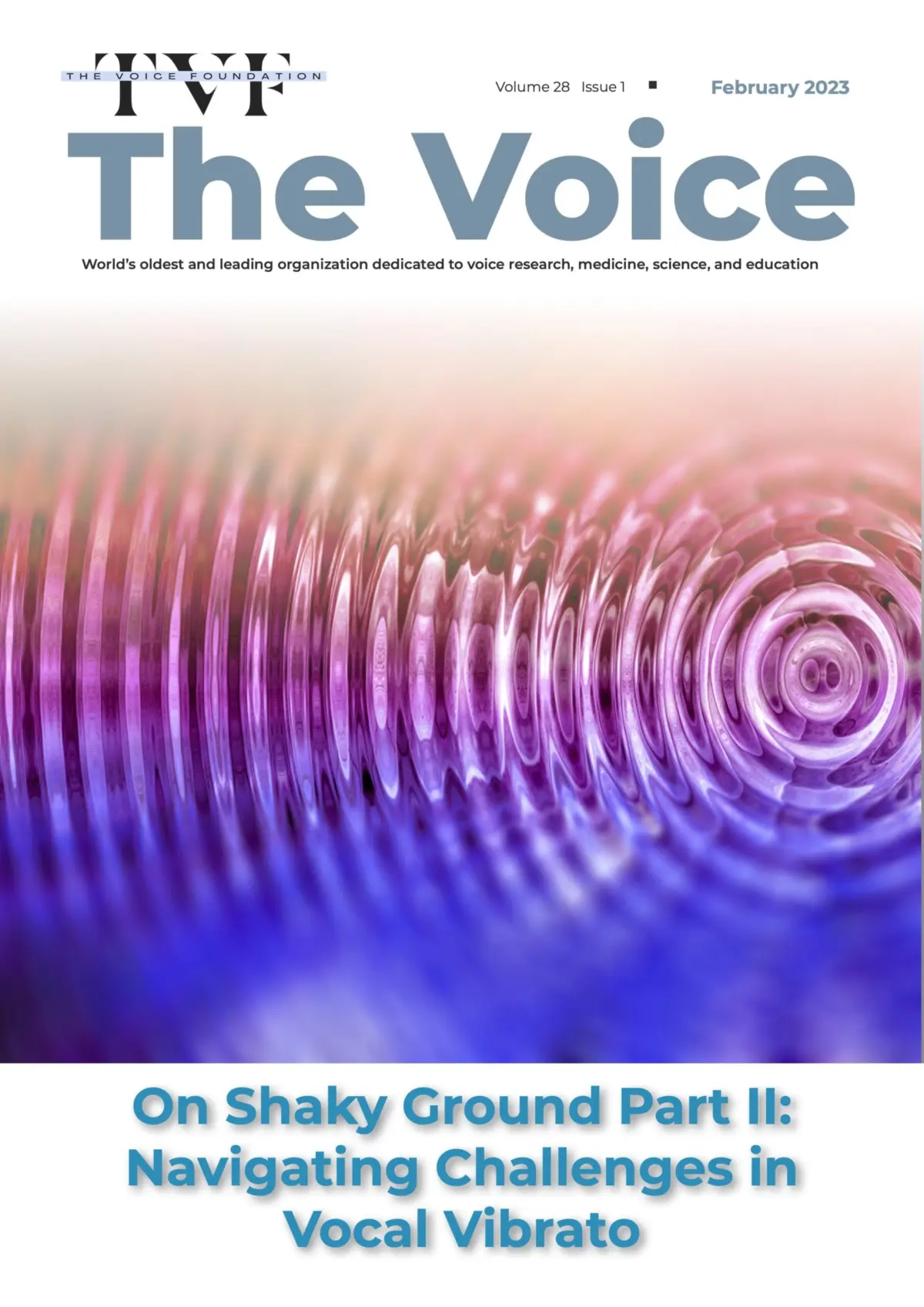
The human voice remains one of nature’s most sophisticated and complex instruments—a dynamic interplay of neurology, respiratory mechanics, and acoustical physics. For decades, researchers, educators, and medical clinicians have sought to decode the precise mechanisms that allow the vocal folds to produce speech, emotion, and sublime musical art. In February 2023, The Voice Foundation took another monumental step forward in this ongoing exploration with the release of its flagship publication. Authored by Ian DeNolfo and published on February 24, 2023, this edition centers around a compelling and multifaceted theme: "On Shaky Ground Part II."
At the heart of this installment is an in-depth examination of vocal vibrato—a hallmark of expressive singing that has long captivated audiences while mystifying scientists and pedagogues alike. By bridging the gap between empirical research, practical vocal pedagogy, and clinical treatment, the February 2023 newsletter provides a comprehensive roadmap for understanding how vibrato functions, why it fluctuates, and how professionals can address instability or irregularities in the singing voice.
This comprehensive report offers an analytical deep-dive into the themes presented in the February 2023 publication, exploring the physiological underpinnings of vibrato, the intersection of teaching and medicine, and the broader implications for the global community of vocal scientists, otolaryngologists, speech-language pathologists, and professional performers.
Detailed Chronology: The Evolution of Voice Science and the February 2023 Release
To fully appreciate the significance of the February 2023 newsletter, it is essential to contextualize its release within the broader historical trajectory of The Voice Foundation and the rapidly advancing field of voice science.
The Genesis of Modern Voice Research
Founded to advance the understanding, treatment, and training of the human voice, The Voice Foundation has long served as the premier international clearinghouse for multidisciplinary vocal research. For centuries, pedagogical traditions relied heavily on empirical imagery and subjective sensations ("singing into the mask," "supporting from the diaphragm"). However, the advent of high-speed laryngeal imaging, electroglottography, and acoustic analysis in the late 20th and early 21st centuries revolutionized how vocal production is understood.
Despite these technological leaps, certain phenomena have remained stubbornly complex. Among them is vocal vibrato—a periodic oscillation of pitch, intensity, and timbre that adds warmth, richness, and expressive depth to the sustained vocal tone. While classical pedagogy traditionally viewed vibrato as an automatic byproduct of healthy, tension-free vocal production, modern voice science has revealed it to be a far more nuanced neuromuscular event.
The Buildup to "On Shaky Ground Part II"
The thematic designation "On Shaky Ground" suggests a deliberate focus on vocal instability—specifically, the breakdown, irregularity, or complete loss of a stable, aesthetically pleasing vibrato. Part I of this series laid the groundwork by examining the physiological and neurological triggers that cause vibrato to falter, whether due to fatigue, aging, neurological conditions, or technical pedagogical flaws.

By February 24, 2023, when Ian DeNolfo officially published the newsletter, the discourse had evolved from merely identifying the problem to exploring multidisciplinary solutions. The February 2023 edition synthesized current insights from three distinct pillars of the vocal arts:
- Research: Quantitative analysis of laryngeal muscle tremors, acoustic regularity, and respiratory coordination.
- Teaching: Studio methodologies for cultivating natural vibrato and correcting "straight-tone" rigidity or excessive oscillation (such as a wobble or tremolo).
- Treatment: Clinical interventions by laryngologists and voice-specialized speech-language pathologists (SLPs) dealing with pathological causes of vibratory instability.
Supporting Context & Metrics: Unpacking Vocal Vibrato
To understand the weight of the discussions featured in the February 2023 newsletter, one must examine the core mechanics of vocal vibrato through the lens of modern voice science and quantifiable metrics.
The Physics and Physiology of Vibrato
Vibrato is scientifically defined as a rhythmic fluctuation in pitch (frequency modulation), loudness (amplitude modulation), and timbre (spectrum modulation). In a healthy, professionally trained classical voice, standard vibrato typically operates within a specific frequency range:
- Rate: Approximately 5.5 to 7.0 oscillations per second (Hz).
- Extent (Amplitude): A pitch variation of roughly a quarter-tone to a half-tone (around $pm 50$ to $pm 100$ cents).
When this delicate balance is disrupted, vocalists experience deviations that fall outside the aesthetic norm. A rate dropping below 5.0 Hz is generally perceived as a wobble (often associated with laryngeal fatigue or muscle laxity), while a rate exceeding 7.5 Hz or an excessively narrow extent manifests as a tremor (frequently linked to neurological conditions, aging, or excessive muscular tension).
The Triad of Research, Pedagogy, and Treatment
The February 2023 newsletter underscores the necessity of a collaborative approach among three distinct professional groups:
| Professional Domain | Primary Focus in Vibrato Management | Key Methodologies / Tools |
|---|---|---|
| Research | Quantifying laryngeal kinematics and acoustic stability | Spectrographic analysis, electroglottography (EGG), electromyography (EMG) |
| Pedagogy | Developing balanced phonation and respiratory support | Breath management exercises, onset adjustments, resonance tracking |
| Treatment | Diagnosing and rehabilitating pathological vocal tremors | Laryngeal botulinum toxin injections, vocal therapy, neurological evaluation |
This triad ensures that a singer experiencing vibrato instability does not merely receive a superficial pedagogical fix when the root cause might be muscular fatigue, laryngeal pathology, or neurological signaling issues.
Official Insights and Perspectives
While the February 2023 newsletter serves as a concise yet powerful dispatch, its content echoes the broader consensus of leading voices within The Voice Foundation’s global network.
Bridging the Gap Between Art and Science
For generations, vocal pedagogues and voice scientists operated in isolated silos. Pedagogues often viewed scientists as overly clinical and disconnected from the aesthetic realities of the singing studio, while scientists occasionally viewed traditional teaching methods as anecdotal and unscientific.
Publications like "On Shaky Ground Part II" represent a vital philosophical shift. By bringing research, teaching, and medical treatment into a unified dialogue, The Voice Foundation champions a holistic view of the human instrument. As highlighted in the February 2023 issue, understanding vibrato requires recognizing that a singer’s acoustic output is the direct result of complex biological machinery operating under precise neuromuscular control. When that machinery experiences "shaky ground"—whether due to pedagogical missteps, psychological stress, or organic pathology—all three disciplines must converge to restore equilibrium.
Future Outlook: The Next Frontier in Voice Science and Pedagogy
As we look beyond the findings published in the February 2023 newsletter, the field of voice science continues to accelerate at a remarkable pace. Several key trends and future directions are shaping the landscape of vocal research, teaching, and clinical care:
1. Advanced Neuromuscular Mapping
Future research is increasingly focusing on the central nervous system’s role in vocal production. While historical voice science concentrated heavily on the mechanical properties of the vocal folds (the source) and the vocal tract (the filter), neuroimaging and real-time brain activity tracking are beginning to shed light on how the motor cortex orchestrates complex acts like vibrato. Understanding the neurological pathways of vocal tremor will open doors to more targeted treatments for neurological voice disorders like spasmodic dysphonia or essential voice tremor.
2. Integration of AI and Real-Time Acoustic Biofeedback
The modern voice studio and clinical office are rapidly adopting artificial intelligence and advanced acoustic software. Real-time visual feedback tools allow singers and speech pathologists to monitor vibrato rate and extent instantly on a digital display. This technological integration bridges subjective sensation with objective data, enabling singers to train faster and rehabilitate injuries more precisely.
3. Interdisciplinary Education Programs
There is a growing movement toward cross-training voice professionals. More speech-language pathologists are acquiring deep knowledge of singing voice pedagogy, and more vocal coaches are receiving formal education in laryngeal anatomy and pathology. This multidisciplinary cross-pollination—championed consistently by organizations like The Voice Foundation—ensures that the next generation of performers receives safer, more effective guidance.
Conclusion
The February 2023 newsletter, authored by Ian DeNolfo, is far more than a routine organizational update; it is a snapshot of an evolving scientific and artistic dialogue. By tackling complex topics like vocal vibrato through the combined lenses of research, teaching, and medical treatment, The Voice Foundation continues to illuminate the path forward for vocal health and artistic excellence. As technology advances and interdisciplinary collaboration deepens, our understanding of the human voice will only grow richer, ensuring that singers, speakers, and clinicians remain on solid ground for generations to come.