
Executive Overview
The contemporary jazz landscape exists in a perpetual state of geographical and stylistic expansion. As boundaries blur between traditional regional folkways and avant-garde improvisation, modern bandleaders are increasingly tasked with curating disparate sonic elements into a cohesive artistic statement. This review examines three distinct, highly anticipated releases from prominent international artists who navigate this complex terrain through disparate yet compelling lenses: multi-instrumentalist Tal Mashiach’s collaborative masterwork Who’s Around? (Anzic Records); French soprano saxophonist Émile Parisien’s globe-trotting exploration Floating (ACT Records); and Danish drummer Emil de Waal’s cathartic, transformative project Novelties by Old News (April Records).
While each release hails from a fundamentally different European and transatlantic vantage point, collectively they address a singular contemporary artistic challenge: how to honor historical lineage while relentlessly pursuing cross-cultural and emotional innovation. Mashiach manages an army of international collaborators with rare compositional grace; Parisien dissolves the rigid lines between classical jazz tonality and world music textures; and de Waal transforms the profound grief of losing a foundational bandmate into a haunting, impressionistic sonic tapestry.
This comprehensive report offers an authoritative analysis of these recordings, breaking down their structural methodologies, personnel metrics, conceptual frameworks, and the broader industry implications of their creative directions.
Detailed Chronology and Artistic Analysis
1. Tal Mashiach: Who’s Around? (Anzic Records)
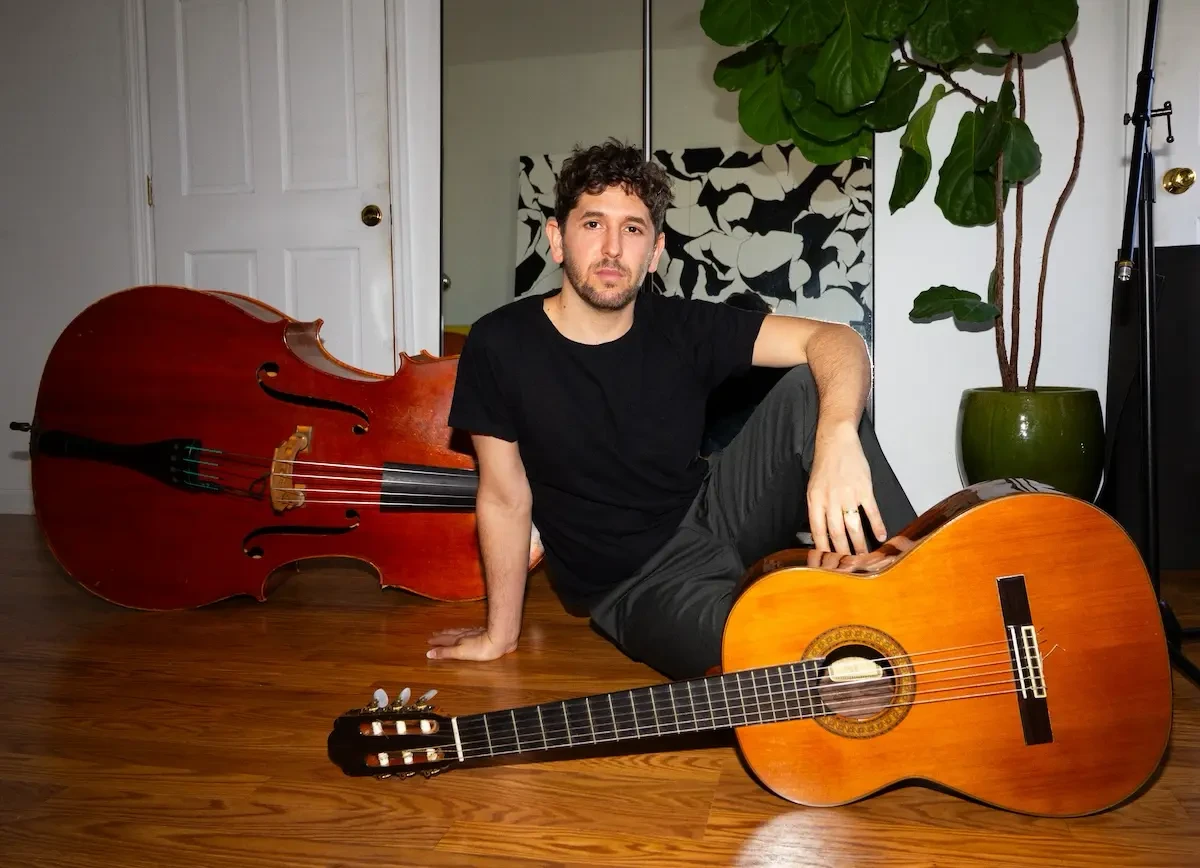
For any artist assembling a large, multi-national ensemble, the primary hazard is tonal congestion—the proverbial "too many cooks" dilemma where competing aesthetic ideologies dilute the core message. On Who’s Around? (released via Anzic Records), bassist, guitarist, and conceptual architect Tal Mashiach sidesteps this pitfall entirely, constructing a remarkably unified record out of an impressively vast mosaic of global sounds.
Navigating the Global Soundboard
From the opening moments of the album, Mashiach establishes a deliberate volatility in tempo and emotional texture. The track Tito bursts forth with an uncontained, kinetic energy, serving as a high-octane introduction to the project’s virtuosic capabilities. Conversely, Paco adopts a more subdued posture. Crucially, however, this restraint never devolves into melancholy; instead, it offers a breathing space, highlighting Mashiach’s deft hand at dynamic sequencing.
Throughout the tracklist, the listener is transported across a dizzying array of cultural landscapes. Mashiach weaves Israeli, Brazilian, Greek, Georgian, Spanish, and Puerto Rican idioms into the fabric of modern jazz. Yet, it is his careful, almost architectural leadership that keeps these distinct flavors from clashing. For instance, when Creta steps forward, it sings with an unmistakably Greek soul. Although it marks a distinct shift away from the preceding mood, the transition feels entirely organic rather than jarring.
Genre Hybridization and the Rhetorical Question
Mashiach’s cross-pollination avoids the trap of pastiche. On Pinto, Latin grooves collide with a muscular, funky jazz sensibility, creating a definitive album highlight that anchors the project’s multifaceted identity. This dance-like momentum is seamlessly sustained by subsequent tracks like Ajaruli.
Though Mashiach’s formal discography as a primary leader remains relatively selective, Who’s Around? reads as a profound flexing of his compositional and arranging muscles. The album’s title itself functions as a rhetorical challenge directed at the broader jazz canon. By opening the floor to such a massive roster of diverse voices and allowing them uninhibited expression, Mashiach demonstrates an elevated musical maturity and an egalitarian leadership style.
Complete Track Listing & Personnel Metrics
- Recording Location: New York City, NY (Recording date unconfirmed)
- Label: Anzic Records
- Track List:
- Intro Titu
- Titu
- Paco
- Intro Creta
- Creta
- Pinto
- Ajaruli
- Baião Mediterrâneo
- Lama Ken Lama Lo
- Duo (Total Runtime: 38:53)
- Ensemble Personnel: Tal Mashiach (guitars, bass, percussion, electric guitar); Ofri Nehemya (drums); Gadi Lehavi (piano, organ, keyboards); Panagiotis Andreou (bass, vocals); Anat Cohen (clarinet); Maya Belsitzman (cello); Itamar Borochov (trumpet); Konstantinos Révelas (bouzouki); Vagelis Karipis, Victor Pablo (percussion); Yonathan Peled (trombone); Itai Kriss (flute); Khondzi (saxophone, vocals); Elibo Imerlishvili (doli); Benjamin Furman (piano); Gabriel Chakarji (piano, keyboards); Dana Herz (vocals).
2. Émile Parisien: Floating (ACT Records)
French saxophonist Émile Parisien has enjoyed a fruitful, decade-long partnership with Germany’s prestigious ACT Records, establishing himself as one of the most distinctive voices in contemporary European jazz. Known for a gentle, liquidity of tone and an insatiable appetite for cultural synthesis, Parisien turns his sights eastward and southward on his latest studio effort, Floating, recorded at the legendary Studio Gil Evans.
Dismantling Classical Constraints
On Floating, Parisien deliberately sheds the formal, academic constraints often associated with the soprano saxophone. Rather than adopting the stiff, starched-collar presentation of traditional classical or mainstream jazz idioms, Parisien opts for something more kinetic and exotic—reminiscent, as critics have noted, of a sonic snake-charmer.
This stylistic shift is anchored by standout compositions such as Badhra, El Toro, and Portal. The latter track, in particular, showcases an intricate rhythmic framework wherein the saxophone abandons standard diatonic safety nets in favor of microtonal bends and vocalized inflections. These international flavors are propelled by the formidable rhythm section of pianist Yaron Herman and double bassist Linda May Han Oh, whose dynamic interplay allows the material to continuously slip between the boundaries of contemporary jazz and world-music traditions.
Subtle Textures and Spatial Awareness
While Floating stretches past the fifty-minute mark—a runtime that occasionally risks wandering—the journey remains consistently rewarding. Intimate compositions like Ruth reveal the softer, deeply reflective underbelly of the ensemble’s collective ethos.
Much of the album’s structural integrity rests upon the understated brilliance of percussionist Prabhu Edouard. Eschewing flashy solos, Edouard provides a shimmering undercurrent of subtle percussive textures that elevate the material from standard quartet fare into an immersive sensory experience. Ultimately, Floating succeeds because its participants prioritize active listening, allowing spatial dynamics and intercultural dialogue to dictate the music’s natural ebb and flow.
Complete Track Listing & Personnel Metrics
- Recording Location: Studio Gil Evans, Amiens, France (Recorded March 14–15, 2026)
- Label: ACT Records
- Track List:
- Asian Songs & Rhythms, No. 40
- Bonbon
- Olive Branch
- Badhra
- Portal
- 66
- Ruth
- Nusrat
- As It Comes And As It Goes
- El Toro
- Arco (Total Runtime: 51:10)
- Ensemble Personnel: Émile Parisien (soprano saxophone); Yaron Herman (piano); Prabhu Edouard (percussion, vocals); Linda May Han Oh (bass, vocals).
3. Emil de Waal Old News: Novelties (April Records)
The loss of a foundational band member is a watershed moment for any ensemble. When Danish jazz outfit Old News lost their beloved clarinetist, Elith “Nulle” Nykjær, in 2023, the group faced an existential crossroads. Rather than disbanding or attempting to replicate the past, Danish drummer and bandleader Emil de Waal paused for necessary reflection, choosing to channel grief into reinvention on the striking new album Novelties (April Records).
Processing Grief Through Collaborative Sound
Comprising entirely original compositions, Novelties functions as a poignant sonic diary of collective mourning, resilience, and transformation. Halfway through the sequence, the track Lim emerges as a masterclass in emotional restraint. It is undeniably melancholy, yet it avoids cheap sentimentality, capturing instead a deep, resonant ache of longing.
However, de Waal’s vision is not confined to rainy afternoons. The inclusion of vocalist Randi Laubeck injects a distinct, weathered grit into the ensemble’s sonic palette. Laubeck’s vocals carry a captivating warble and vibration that ground the avant-garde tendencies of the band. On tracks like Forgotten Anne, the tempo picks up, yet the atmosphere remains deliberately hazy—shrouded in a sonic mist that suggests emotional processing is rarely linear.
Tension, Impressionism, and New Tricks
The album’s instrumental architecture further emphasizes this internal duality. Pieces such as Tightrope and Flod open with cascading piano lines that evoke a mystical, impressionistic mood, establishing palpable tension. Hovering above these flowing harmonic structures are solo instruments carrying a distinctly dolorous tone. Through these juxtaposed forces, de Waal articulates a fundamental psychological truth: the human mind is a complex ecosystem of competing emotions.
While Novelties occupies a niche, challenging space that may not appeal to casual listeners, it leaves an indelible impression of artistic perseverance. Old News has firmly proven that, despite profound loss, they have mastered new creative vocabularies and remain a vital force in Scandinavian jazz.
Complete Track Listing & Personnel Metrics
- Recording Location: The Village Recording, Copenhagen, Denmark (Recorded June 2025)
- Label: April Records
- Track List:
- Hellen
- Scrap Rag
- I Am Nobody
- Flod
- Last Millenium When We Were Young
- Lim
- Forgotten Anne
- Tightrope
- Forgotten, Not Forgiven
- Nuntii Veteres (Total Runtime: 39:52)
- Ensemble Personnel: Emil de Waal (drums, percussion); Henrietta Groth (clarinet); Gustaf Ljunggren (contrabass clarinet, viola, bass, guitar); Jacob Anderskov (piano, spinet); Randi Laubeck (vocals, guitar).
Supporting Context & Comparative Metrics
To fully appreciate the scope of these three releases, it is instructive to view them through a comparative analytical framework. Each album represents a distinct operational model within contemporary independent jazz:
| Artist / Project | Primary Genre Focus | Key Cultural Influences | Geographic Origin of Production | Runtime & Scale | Primary Emotional Motif |
|---|---|---|---|---|---|
| Tal Mashiach (Who’s Around?) | Global Jazz / Fusion | Israeli, Brazilian, Greek, Georgian, Spanish, Puerto Rican | New York City, USA | 38:53 / 17 Musicians (Large Ensemble) | Celebration of cultural synthesis & egalitarian collaboration |
| Émile Parisien (Floating) | Contemporary European Jazz | Middle Eastern, African, Asian, World Music | Amiens, France (Studio Gil Evans) | 51:10 / 4 Musicians (Quartet) | Fluidity, exploration, and boundary-dissolution |
| Emil de Waal (Novelties) | Nordic Jazz / Chamber Jazz | Scandinavian Folk, Impressionism, Avant-Garde | Copenhagen, Denmark | 39:52 / 5 Musicians (Quintet) | Catharsis, resilience, and transformation through grief |
While Mashiach scales upward by incorporating a massive roster of guest soloists to achieve a global carnival of sound, Parisien distills international influences into an agile, four-piece touring unit. Conversely, de Waal looks inward, utilizing a tight-knit Scandinavian quintet to process localized grief through impressionistic chamber jazz.
Official Statements and Industry Reception
Industry analysts and critics have noted a significant shift in how international jazz labels are marketing cross-cultural projects in the post-pandemic era.
Representatives from Anzic Records highlighted Tal Mashiach’s unique administrative and artistic feat on Who’s Around?:
"In an era where modern jazz often retreats into insular academic circles, Tal has managed to build an open house. He doesn’t just invite musicians from diverse traditions; he hands them the blueprints and trusts their vernaculars. The result is a masterclass in contemporary cosmopolitan composition."
From the European vantage point, ACT Records executives emphasized the continuous evolution of Émile Parisien’s career trajectory:
"Émile has been a cornerstone of the label for over a decade precisely because he refuses to stagnate. With Floating, he steps away from traditional European chamber idioms and embraces a nomadic identity. It proves that jazz can absorb the musical DNA of three continents without losing its core improvisational integrity."
Meanwhile, April Records released a joint statement regarding Emil de Waal’s courageous pivot on Novelties:
"Losing Elith ‘Nulle’ Nykjær was a heavy blow to the Danish jazz community. What Emil and the band have achieved on this record is nothing short of heroic. They didn’t try to fill an impossible void; instead, they expanded the room, allowing new voices like Randi Laubeck and fresh acoustic textures to redefine what Old News could be."
Future Outlook
The trajectories of Mashiach, Parisien, and de Waal signal encouraging trends for the future of recorded improvised music. As physical and digital borders continue to interact at unprecedented speeds, the traditional gatekeeping definitions of "jazz" are increasingly untenable.
- The Rise of Borderless Ensembles: Tal Mashiach’s sprawling collaborative model points toward a future where large-scale jazz projects operate more like global artist collectives, drawing fluidly on non-Western modal systems and indigenous instrumentation without relying on superficial exoticism.
- Globalized Chamber Jazz: Émile Parisien’s work demonstrates that small ensembles can achieve massive stylistic breadth through acute listening and timbre manipulation, proving that world-music integration does not require large-scale orchestration to be effective.
- Music as Emotional Processing: Emil de Waal’s Novelties underscores the vital role of art as a vehicle for communal mourning and rebirth. As foundational figures of older jazz generations pass on, contemporary bandleaders are finding innovative ways to honor their lineage while forging ahead into uncharted sonic territories.
Ultimately, these three releases confirm that the pulse of modern jazz remains extraordinarily strong. Whether orchestrating a multi-national summit in New York, charting nomadic soundscapes in Amiens, or mourning and rebuilding in Copenhagen, these artists prove that music remains our most reliable vessel for human connection across divides.