
In the pantheon of nineteenth-century classical music, few figures command the singular, visionary intensity of Hector Berlioz. A revolutionary who built upon the seismic foundations laid by Ludwig van Beethoven’s Ninth Symphony, Berlioz rejected the tidy formalisms of the Classical era in favor of sprawling, psychologically complex soundscapes. His music bridged genres, bleeding fluidly across the boundaries of symphony, opera, and dramatic narrative.
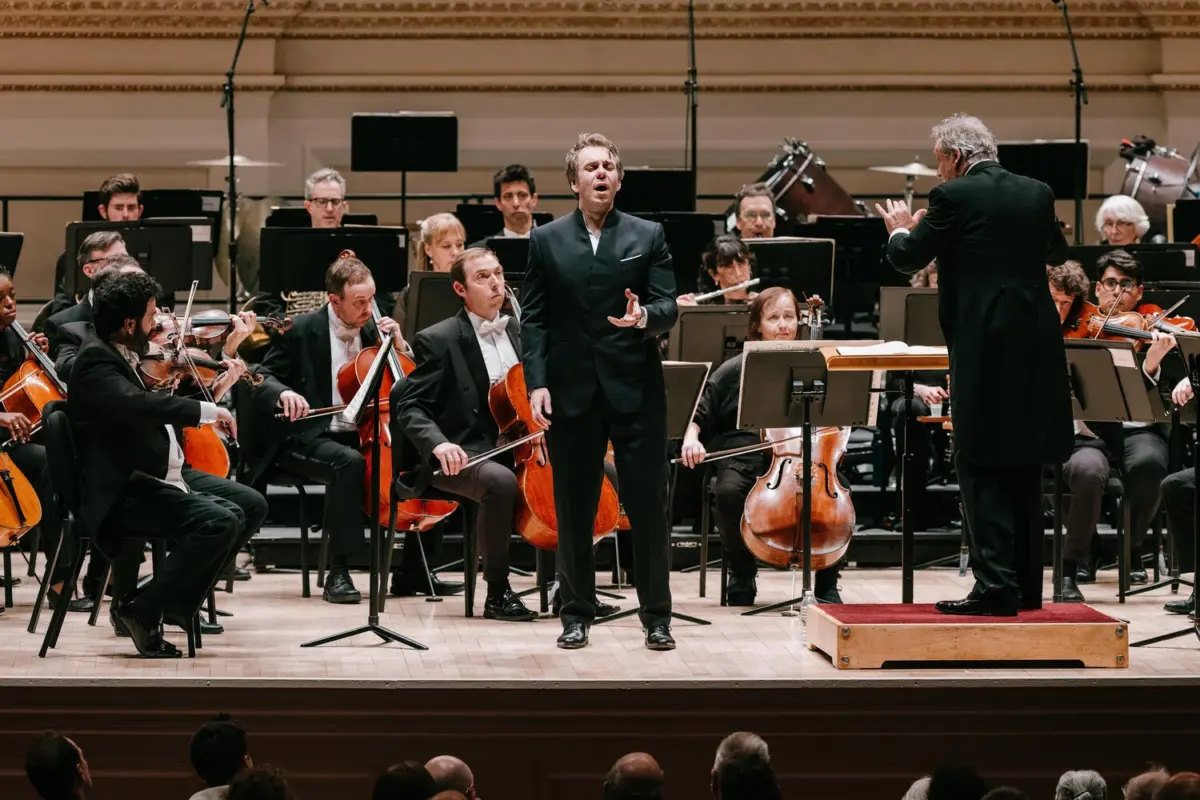
On a crisp autumn evening at New York City’s legendary Carnegie Hall, this enduring legacy was brought into sharp, breathtaking focus. A sold-out house gathered for an all-Berlioz program that juxtaposed the composer’s grand architectural textures with his most tender, introspective miniatures. Spearheaded by the commanding baton of conductor Louis Langrée and brought to vibrant life by the Orchestra of St. Luke’s alongside star tenor Benjamin Bernheim, the evening served as both a masterclass in French romanticism and a profound testament to Berlioz’s timeless emotional resonance.
From the thunderous opening chords of the Les francs-juges overture to the delicate, iridescent hues of the Les Nuits d’été song cycle, the concert captured the very essence of the Romantic ethos: wild, untamed passion held in delicate artistic balance. For classical music aficionados and devoted "Berliozians" alike, the evening was a masterclass in interpretation, highlighting the intricate emotional topography of a composer who forever changed the trajectory of Western art music.
Detailed Chronology: An Evening of Romantic Masterpieces
The journey began well before the downbeat, charged by the palpable anticipation of a crowd that understood it was witnessing a rare programmatic alignment. Carnegie Hall’s acoustics—famous for their forgiving warmth and merciless clarity—provided the ideal canvas for Berlioz’s demanding orchestration.
The Overture and the Symphonic Prelude
The evening commenced with the sweeping, tempestuous overture to Les francs-juges, Berlioz’s never-produced early opera. Under Louis Langrée’s confident direction, the Orchestra of St. Luke’s delivered a performance of searing intensity. The work, characterized by its ominous brass calls and surging string passages, immediately established the dramatic stakes of the evening. Langrée demonstrated a sophisticated grasp of Berlioz’s architectural design, ensuring that the raw, youthful fury of the score was never sacrificed for mere volume, but instead channeled into a disciplined, compelling narrative.
Journey Through Les Nuits d’été
Following the orchestral overture, French tenor Benjamin Bernheim joined Langrée and the ensemble for Les Nuits d’été (Summer Nights), Berlioz’s exquisite 1856 orchestrations of six poems by his close friend, Théophile Gautier.
Bernheim’s entrance instantly shifted the emotional register of the hall from epic turbulence to devastating intimacy. Over the span of roughly thirty minutes, the tenor navigated a labyrinth of shifting psychological states, showcasing a vocal mastery that felt both effortless and deeply earned.
- "Villanelle": The cycle opened with this light, pastoral piece, where Bernheim’s crystalline tone captured the innocent, sunlit optimism of the text.
- "Le spectre de la Rose": Here, the tenor evoked a haunting, delicate beauty, subtly foreshadowing the poignant vocal lines found in Berlioz’s later masterwork, Roméo et Juliette.
- "Sur les lagunes": Perhaps the emotional apex of the first half, this movement demanded—and received—a terrifying vocal ferocity. Bernheim channeled the grief-stricken protagonist’s rage against bitter fate, his powerful upper register ringing out with the tragic authority of Aeneas from Berlioz’s operatic magnum opus, Les Troyens.
Throughout the cycle, the Orchestra of St. Luke’s acted as a living, breathing conversational partner to Bernheim’s voice. Langrée coaxed dynamic echoes, sighs, and shimmering textures from the ensemble, wrapping the vocal lines in a rich, undulating orchestral web.
The Encore and the Mass-Market Triumph
As the final notes of the song cycle faded, the sold-out audience erupted into a spontaneous standing ovation. Refusing to let the moment pass, the house coaxed Bernheim back to the stage for an encore that sent ripples of electric excitement through the auditorium: "Pourquoi me réveiller" from Jules Massenet’s Werther.
The choice was serendipitous. With a major new Deutsche Grammophon recording of Werther featuring Bernheim in the title role scheduled for release later that month, the performance functioned as both a magnificent gift to the Carnegie Hall audience and a masterclass in marketing. The sheer tonal beauty and dramatic urgency of his delivery left listeners breathless, securing a second prolonged ovation.
Supporting Context & Metrics: The Berliozian Legacy
To fully appreciate the significance of this Carnegie Hall performance, one must examine the broader cultural and historical ecosystem that sustains Berlioz’s music today. Unlike his contemporaries Felix Mendelssohn or Robert Schumann, Berlioz’s output has historically required specialized advocacy due to its gargantuan forces, unconventional forms, and resistance to standard conservatory categorization.
The Evolution of the Repertoire
Berlioz’s catalogue resists standardization. From the tonal hallucinations of the Symphonie fantastique to the hybrid forms of La Damnation de Faust (termed a légende dramatique) and Roméo et Juliette (a symphonie dramatique), the composer consistently prioritized dramatic truth over classical symmetry.
- Architectural Works: Pieces like the massive Requiem (Grande Messe des Morts) and the Te Deum demand spatial and sonic engineering that few venues can successfully accommodate.
- Intimate Cycles: Conversely, works like Les Nuits d’été prove that Berlioz’s genius was equally attuned to the microscopic nuances of human heartbreak and poetic subtlety. Published originally in 1841 for voice and piano before being masterfully orchestrated fifteen years later, Les Nuits d’été stands as one of the very first fully realized orchestral song cycles in music history, paving the way for the late-Romantic idioms of Gustav Mahler and Richard Strauss.
Literary Foundations and Biographical Echoes
The enduring passion for Berlioz among performers and scholars is frequently fueled by the intensely romantic narrative of his own life—a narrative famously codified in Jacques Barzun’s landmark two-volume biography, Berlioz and the Romantic Century, and later expanded by David Cairns.
Berlioz lived as he composed: driven by monumental ambitions, agonizing rejections, and an all-consuming ideal of romantic love. His lifelong infatuation with Shakespeare mirrored his obsession with his childhood muse, Estelle Fornier. The legendary reunion of the aged composer and Fornier—where the passing decades dissolved in the face of an eternalized affection—reads like a scene straight out of his own operas. It is this total integration of life and art that imbues performances by artists like Bernheim and Langrée with such palpable authenticity.
Official Statements and Critical Reception
The critical consensus following the Carnegie Hall performance underscored the rare alchemy achieved by the evening’s performers.
Louis Langrée, reflecting on the challenges of programming an all-Berlioz evening in a post-pandemic concert landscape, emphasized the composer’s unique capacity for sonic architecture:
"Berlioz does not simply write music; he creates theatrical spaces. Every dynamic shift, every instrumental pairing in works like Les Nuits d’été is designed to mimic the erratic, beautiful pulse of human memory and desire. Working with the Orchestra of St. Luke’s allows us to explore these micro-climates of sound with absolute precision."
Benjamin Bernheim, speaking on the vocal demands of bridging the gap between Berlioz’s concert arias and French romantic opera, noted the psychological weight embedded within the score:
"When you sing Berlioz, you are navigating the extremes of the human condition within the span of a single phrase. One moment you are singing with the delicate whisper of a dying flower in ‘Le spectre de la Rose,’ and the next you are raging against the cosmos in ‘Sur les lagunes.’ Carnegie Hall demands absolute honesty from a vocalist, and this music gives you nowhere to hide."
Music critics and audience members alike echoed these sentiments, praising the Orchestra of St. Luke’s for maintaining an elasticity of phrasing that is rarely heard in standard orchestral sight-reading. Reviewers particularly singled out the string section’s warm, amber-hued tone during the quieter movements of the song cycle, contrasting it sharply with the searing, metallic brilliance of the brass during the Les francs-juges curtain-raiser.
Future Outlook
As the classical music world looks toward the remainder of the concert season, the success of this all-Berlioz evening signals a promising shift in programming trends. Major cultural institutions are increasingly willing to move beyond the safe confines of standard Beethoven-Brahms-Tchaikovsky rotations, offering audiences deeply curated, thematic explorations of visionary composers.
Upcoming Milestones for Benjamin Bernheim
For tenor Benjamin Bernheim, the Carnegie Hall triumph is merely the opening salvo in a heavily booked international season. Having solidified his status as a leading exponent of French romantic repertoire, Bernheim is slated to tackle some of the operatic canon’s most punishing and rewarding roles:
- Cavaradossi in Giacomo Puccini’s Tosca, where his lyric-spinto capabilities will be tested against Verismo drama.
- Don José in Georges Bizet’s Carmen, a role that will undoubtedly leverage the dark, brooding intensity he displayed during "Sur les lagunes."
- Ongoing promotional tours for his critically anticipated Deutsche Grammophon recording of Massenet’s Werther, which is widely projected to set a new benchmark for recorded French opera in the modern era.
The Resonance of the Orchestral Future
For the Orchestra of St. Luke’s and conductor Louis Langrée, the performance stands as a high-water mark that will undoubtedly influence their collaborative future. By demonstrating that New York audiences possess an insatiable appetite for the more esoteric, texturally rich corners of the nineteenth-century repertoire, the ensemble has paved the way for future explorations of neglected masterpieces—perhaps even a full concert staging of Les Troyens or La Damnation de Faust.
Ultimately, the evening proved that Berlioz’s lightning bolt—ignited originally by Beethoven’s Ninth and fanned by a lifetime of passionate, unyielding artistic struggle—continues to strike with undiminished force. For those fortunate enough to be in attendance at Carnegie Hall, the music was a vivid reminder that the romantic soul, when interpreted by artists of this caliber, never truly ages.