
Executive Overview
In the realm of musical performance, pedagogy, and lifelong musicianship, few competencies are as universally acknowledged yet notoriously difficult to master as sight reading. At the very heart of this discipline lies note recognition—the fundamental cognitive and visual skill of instantly identifying a musical note as it appears on the staff and translating that visual stimulus into a physical action on an instrument. Whether a beginner is struggling to differentiate between lines and spaces or an advanced concert pianist is navigating complex contemporary scores, the speed and accuracy of note recognition dictate the fluency of the performance.
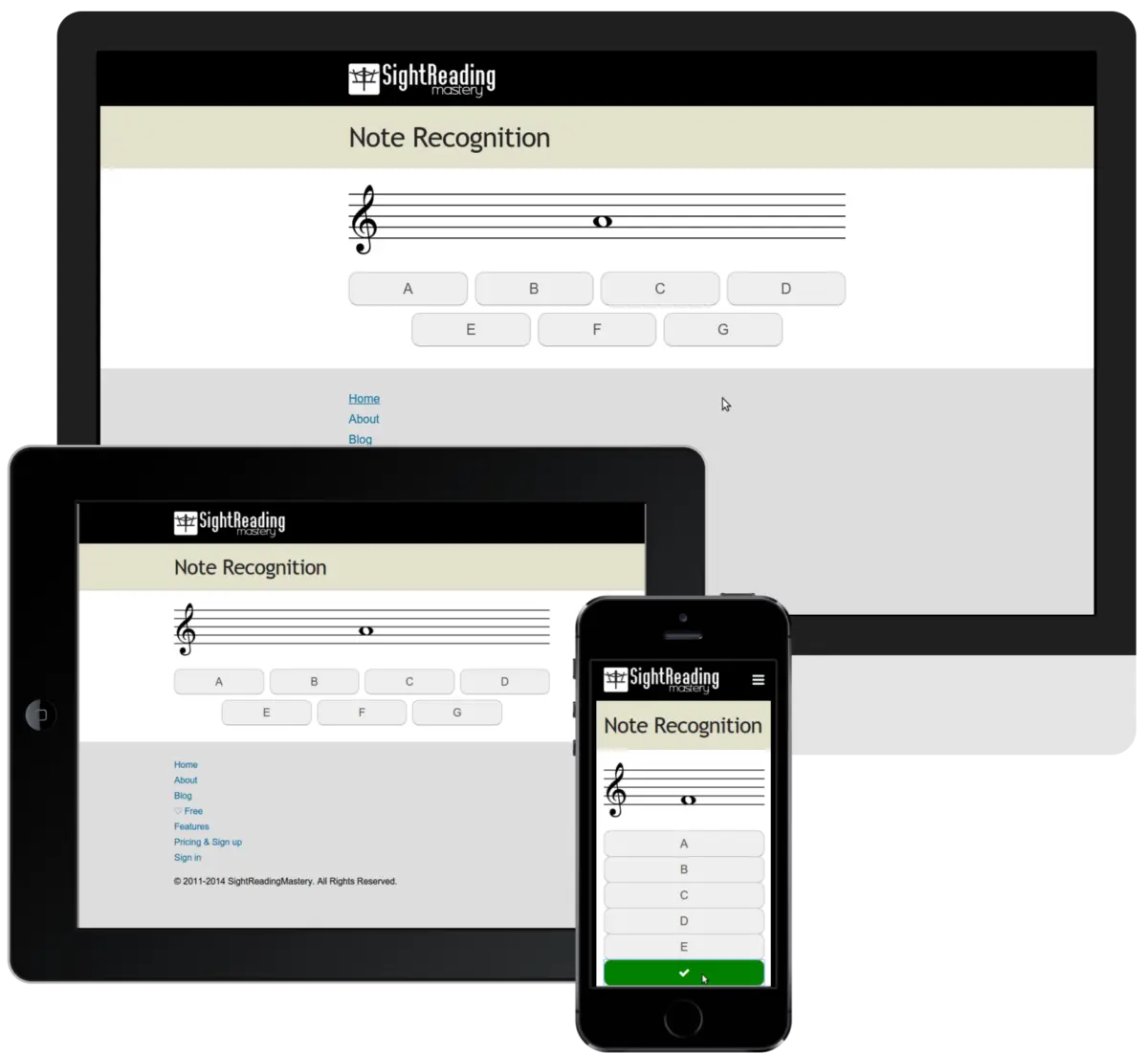
Recognizing a persistent bottleneck in traditional music education, software engineer, musician, and educator Evan R. Murphy launched a specialized, free online utility designed to accelerate this exact cognitive process: the SightReadingMastery Note Recognition App. Initially introduced to the public in May 2015 and subsequently refined through substantial updates in 2018, this tool bridges the gap between tedious flashcard-style memorization and dynamic, digital-first music pedagogy.
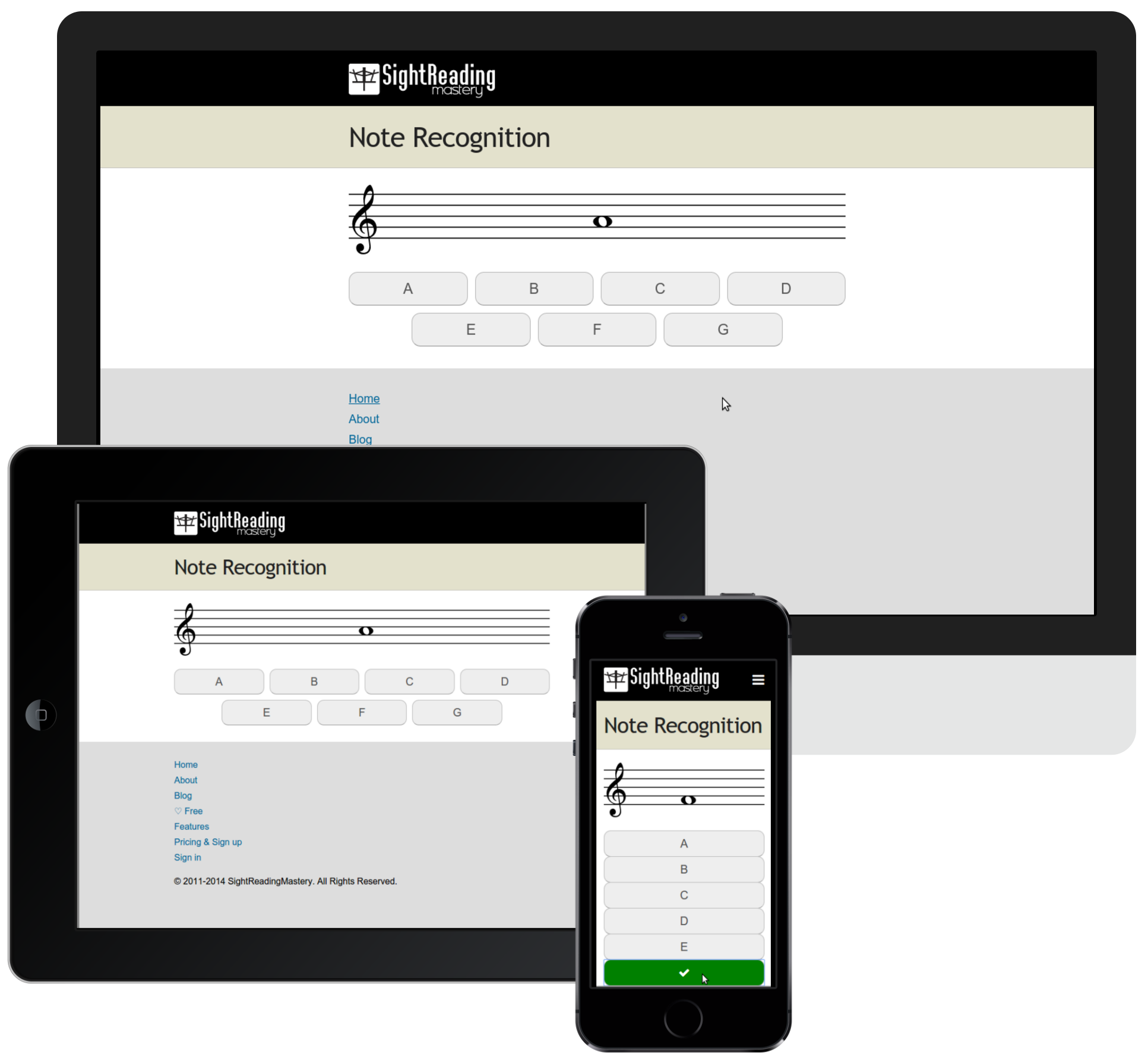
Designed with cross-platform accessibility in mind, the tool transitioned from a limited, treble-clef-only web utility into a comprehensive practice environment supporting both treble and bass clefs, as well as ledger lines. By allowing musicians to train seamlessly across smartphones, tablets, and desktop computers, the application democratizes access to high-yield sight-reading practice. This report provides a detailed examination of the app’s origins, its technical evolution, the cognitive science behind note recognition, and its enduring impact on contemporary music education.
Detailed Chronology: From Concept to Comprehensive Tool
The journey of the SightReadingMastery Note Recognition App is a testament to iterative software development driven by user feedback and pedagogical necessity. Understanding its trajectory requires a chronological examination of its release, expansion, and ongoing integration into the broader digital music education ecosystem.
May 1, 2015: The Genesis of Digital
Note Recognition
When Evan R. Murphy officially published the Note Recognition App on May 1, 2015, the digital landscape for music education was fragmented. While various desktop applications and physical flashcard systems existed, few web-based tools offered instant, frictionless access to rapid-fire note identification directly within a browser window.
The initial release was intentionally streamlined. Recognizing that building a robust algorithmic training tool requires rigorous testing, the first iteration focused entirely on the fundamentals. However, this minimalist approach came with notable constraints. At launch, the application was restricted solely to the treble clef, omitting the bass clef entirely. Furthermore, it lacked support for ledger lines—the vital extensions above and below the staff that are essential for intermediate and advanced sight-reading proficiency. Despite these early limitations, the web app garnered immediate praise for its clean user interface, mobile responsiveness, and instantaneous feedback loop.
September 2018: Major Architectural and Pedagogical Overhauls
As user adoption grew, so did the demand for a more versatile training environment. Musicians across various instruments—particularly pianists and multi-instrumentalists who must navigate grand staves—demanded broader clef support.
Addressing these requests, Murphy and his development team rolled out a series of significant updates in September 2018:
- September 14, 2018: The platform underwent a vital code refactoring and interface expansion, setting the stage for multi-clef integration.
- September 23, 2018: In a definitive update that transformed the application’s utility, official support was added for the bass clef and ledger lines.
This update marked a watershed moment for the application. By incorporating the bass clef, the tool became immediately viable for pianists, cellists, bassoonists, and left-hand practice routines. The addition of ledger lines meant that advanced players could finally use the app to sharpen their reading skills in extreme registers, moving beyond the standard five-line staff.
Supporting Context & Metrics: The Cognitive Science of Sight Reading
To fully appreciate the value of the SightReadingMastery Note Recognition App, one must examine the cognitive mechanics of reading music. Sight reading is not merely a mechanical translation of symbols; it is a complex neurocognitive process involving visual perception, pattern recognition, working memory, and motor execution.
The Cognitive Bottleneck: Working Memory vs. Automaticity
When a novice musician looks at a staff, their brain engages in a laborious decoding process: “Every Good Boy Does Fine” for treble clef lines, or “FACE” for the spaces. This step-by-step logical deduction is known as conscious note identification.
However, advanced sight reading cannot rely on conscious deduction. The human working memory is severely limited, capable of holding only a few chunks of information at a time. If a musician has to consciously calculate every single note, cognitive overload occurs immediately when faced with rapid tempos, complex rhythms, or dense harmonies.
True fluency requires automaticity—the ability to recognize a note on the staff as instantly and unconsciously as an adult reads a printed word in their native language. When a person looks at the word "CAT," they do not sound out the letters c-a-t; they instantly recognize the semantic concept. Similarly, an elite sight reader perceives a note on the staff as an immediate, visceral trigger for a specific physical movement on their instrument. The Note Recognition App was engineered specifically to bridge the gap between conscious decoding and subconscious automaticity through rapid, repeated exposure and immediate feedback.
Cross-Platform Accessibility and Modern Pedagogical Integration
In the modern educational landscape, practice habits have fundamentally shifted. Traditional desk-bound metronomes and physical flashcards have largely been supplanted by mobile devices. Recognizing this paradigm shift, the developers built the app to be fully responsive across smartphones, tablets, and full-size computers.
This multi-device compatibility addresses a core challenge in music education: consistency. By ensuring that a student can pull out their smartphone during a commute, between classes, or while waiting for a rehearsal to start, the app lowers the barrier to entry for daily practice. Micro-learning—engaging in short, focused 5-to-10-minute training sessions multiple times a day—has been repeatedly shown in cognitive psychology to yield superior retention rates compared to marathon weekend study sessions.
Official Statements and Vision: Behind the Code with Evan R. Murphy
To understand the philosophy guiding the development of the Note Recognition App, one must examine the background and vision of its creator, Evan R. Murphy.

As a multifaceted professional—functioning concurrently as a musician, music teacher, software engineer, and entrepreneur—Murphy brought a unique dual perspective to the creation of SightReadingMastery in 2011. Operating out of Seattle, Washington, where he resides with his wife Rebecca, Murphy founded the platform after recognizing a glaring deficiency in how students were taught to approach music reading.
The Vision of SightReadingMastery
Murphy’s core thesis has always been that sight reading is the ultimate master key in musicianship. Without it, learning new repertoire is a slow, arduous chore of rote memorization. With it, a musician gains independence, unlocking a vast universe of musical literature, professional opportunities, and collaborative ease.
In various essays and pedagogical guidelines published through the SightReadingMastery ecosystem, Murphy frequently emphasizes that sight reading should not be viewed as an innate, mystical talent that one either possesses or lacks. Instead, it is a discrete, highly trainable technical skill governed by the principles of neuroplasticity and deliberate practice.
The creation of the Note Recognition App was a direct manifestation of this philosophy. Rather than telling students to "practice more," Murphy and his team engineered a targeted digital intervention designed to isolate the foundational building block of sight reading—note identification—and strip away all extraneous cognitive friction. By making the tool entirely free and web-accessible, Murphy reinforced his commitment to lowering the barriers to musical literacy for students worldwide, regardless of their geographic location or financial standing.
Future Outlook: The Next Generation of Digital Music Pedagogy
As music technology continues to evolve at a rapid pace, tools like the SightReadingMastery Note Recognition App point toward a transformative future for music education. The integration of artificial intelligence, real-time audio analysis, and gamified cognitive training is reshaping how musicians interact with instructional software.
Expanding Beyond Visual Recognition: Audio Input and MIDI Integration
While the current web application excels at visual-to-cognitive training (prompting a note on the staff and requiring the user to click or type the correct letter name), the logical evolution of such tools lies in bi-directional interaction. Future iterations of digital sight-reading applications increasingly leverage microphone input or direct MIDI connections. By allowing musicians to play the actual note on a physical piano keyboard, violin, or wind instrument—which the software then detects and verifies in real time—the training loop becomes vastly more authentic. This bridges the gap between abstract visual-to-mental recognition and physical muscle memory.
The Rise of Adaptive Learning Algorithms
Another frontier in note-recognition software is the implementation of adaptive learning algorithms. By tracking a user’s historical response times and error rates across specific clefs, registers, and ledger-line thresholds, modern educational apps can dynamically adjust their internal curriculum. If a student consistently hesitates on high ledger-line notes in the bass clef, the algorithm can intelligently serve up more targeted repetitions of those specific pitches until mastery is achieved.
Conclusion
The evolution of the SightReadingMastery Note Recognition App—from its humble, treble-clef-only origins in May 2015 to its comprehensive incarnation supporting multiple clefs and ledger lines—exemplifies the power of combining software engineering with sound pedagogical principles. By tackling the fundamental bottleneck of note recognition, Evan R. Murphy and his team have provided musicians of all ages and abilities with an indispensable tool. As digital music pedagogy continues to mature, applications of this caliber will undoubtedly remain foundational to developing the fluid, confident sight readers of tomorrow.
Quick Reference Summary
- Tool Name: SightReadingMastery Note Recognition App
- Creator / Founder: Evan R. Murphy
- Launch Date: May 1, 2015
- Major Updates: September 14, 2018 & September 23, 2018 (Added Bass Clef and Ledger Line support)
- Accessibility: Free online web application optimized for smartphones, tablets, and desktop computers
- Core Purpose: To accelerate sight-reading fluency by improving the speed and accuracy of note recognition on the musical staff.