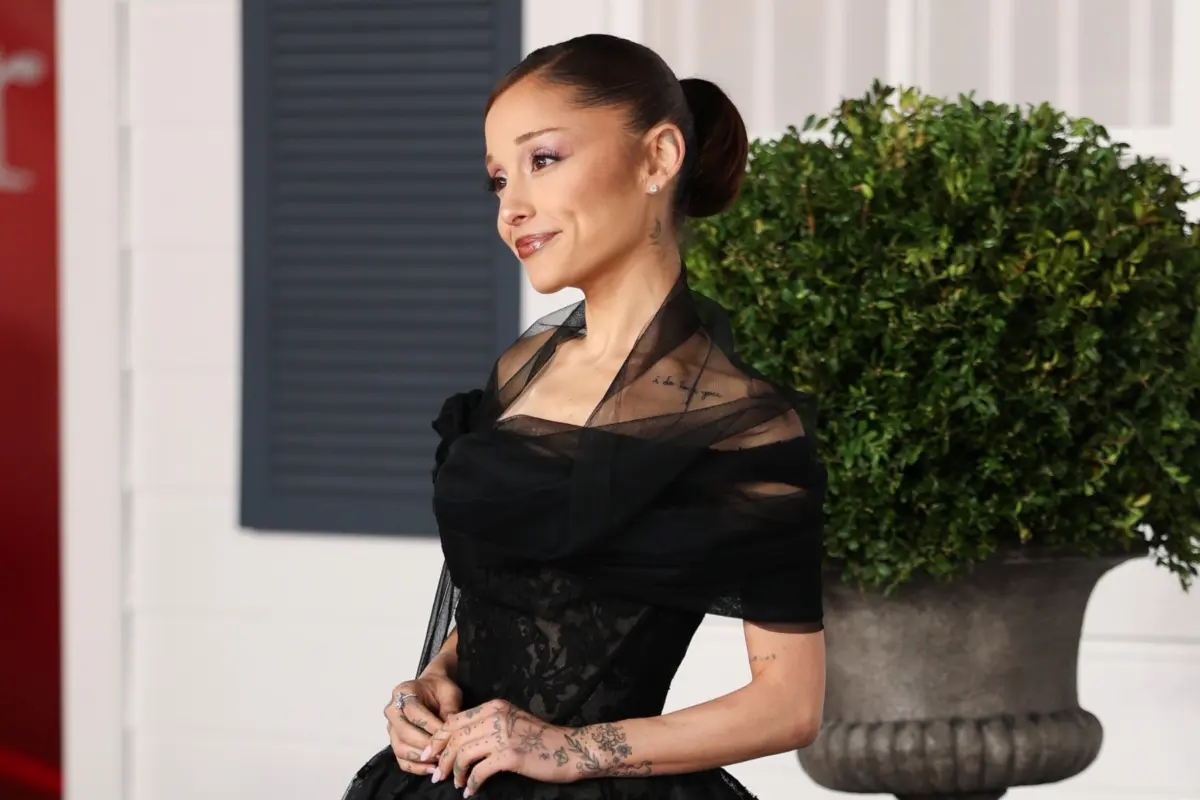
In the fast-paced world of contemporary pop culture and cinematic promotion, celebrity anecdotes often serve as the primary bridge between untouchable stardom and relatable human experience. Few artists have mastered this delicate balance quite like Ariana Grande. While embarking on the high-profile international promotional tour for her upcoming comedy film Focker-in-Law—slated for a theatrical release on November 25—Grande sat down alongside co-star Beanie Feldstein for an intimate, off-the-cuff video segment with Harper’s Bazaar.
Amidst a casual art-and-Q&A session that involved mutual portrait painting, Grande shared a delightfully awkward, deeply human anecdote that has since taken the internet by storm: the time she heard her own music playing in the background while receiving a bikini wax.
Beyond the immediate comedic value of the story, this viral moment highlights a fascinating intersection in Grande’s career. As she navigates a multi-hyphenate trajectory that seamlessly shifts from silver-screen comedy to chart-topping music—highlighted by four recent Grammy nominations, including a coveted Song of the Year nod for "hate that i made you love me"—her ubiquity in modern culture is absolute. This report provides an exhaustive look into the viral interview, the mechanics of celebrity self-awareness, Grande’s expanding cinematic footprint in the Meet the Parents universe, and the broader commercial metrics driving her current era of pop dominance.
Detailed Chronology: From the Treatment Room to the Viral Video Segment
The genesis of this viral pop-culture moment occurred in a controlled media environment designed to elicit candid, unscripted responses. Ahead of the November 25 cinematic opening of Focker-in-Law, Universal Pictures and various lifestyle publications coordinated a robust press junket. Among the standout features was a video interaction produced in collaboration with Harper’s Bazaar, featuring Grande and her co-star Beanie Feldstein engaging in a tactile, low-stakes painting activity while fielding rapid-fire personal and professional inquiries.
The Setup and the Question
As the cameras rolled, the relaxed atmosphere permitted a conversational cadence. Prompted by an off-camera interviewer, Grande was asked a question that every globally recognized recording artist eventually faces in some variation: "What’s the wildest place you’ve heard your own song playing?"
Without hesitation, Grande bypassed conventional answers—such as luxury retail boutiques, packed nightclubs, or international airports—and offered an instantly iconic response:
"Yeah, I was one time getting a bikini wax."
The immediate reaction from co-star Beanie Feldstein—a sharp, disbelief-laden "Stop it"—grounded the segment in a genuine display of comedic timing and peer camaraderie.
The Encounter Unfolded
Elaborating on the surreal scenario, Grande painted a vivid picture of the environment. Far from assuming the technician would recognize her under vulnerable circumstances, the pop star admitted to maintaining a baseline of profound humility.
"I didn’t think she knew who I was at all," Grande explained. "I never assume anyone does, and she was, you know, doing her work at her job and my song came on."
What followed was a masterclass in non-verbal communication. Grande reenacted the subtle, unspoken exchange that passed between her and the esthetician as the track drifted through the treatment room’s speakers. Rather than awkward panic or an overly formal introduction, the moment morphed into an unexpected display of working-class solidarity and pop-culture fandom.
According to Grande, the technician eventually bridged the silence by leaning into the surreal nature of the situation:
“And she was like, ‘And my kids love your show, by the way.’”
Grande’s internal response—a deadpan yet gracious "Oh, perfect"—underscored the inherent comedy of being recognized not necessarily for global chart dominance, but for television and cinematic projects that resonate with younger demographics. Reflecting on the encounter, Grande embraced the sheer humanity of the event:
"You know, it was just very, it was wonderful. I love women and being a woman. It was very bonding."
Supporting Context & Metrics: The Dual Reign of Music and Cinema
To view Ariana Grande’s waxing anecdote in isolation is to miss the larger structural narrative of her career trajectory in late 2026. Grande is currently executing one of the most successful dual-threat eras in modern entertainment history, balancing prestige feature film acting with elite-tier musical output.
The Focker-in-Law Phenomenon
Grande’s latest cinematic venture, Focker-in-Law, represents a major cultural milestone as the latest installment in the iconic Meet the Parents franchise. The film dives back into the chaotic family dynamics established by Robert De Niro’s patriarch Jack Byrnes and Ben Stiller’s perennial scapegoat Greg Focker.
In this new chapter, Grande steps into the cinematic universe as Olivia Jones, the sophisticated and sharp-witted fiancée of Greg’s now-adult son, Henry Focker (played by Skyler Gisondo). Meanwhile, co-star Beanie Feldstein rounds out the ensemble as Greg’s daughter, setting the stage for generational culture clashes and high-concept physical comedy. The film’s November 25 release date has positioned it as the definitive holiday comedy event of the season, driving substantial press engagement and cementing Grande’s transition from pop royalty to bankable box-office comedy star.
Grammy Dominance and Critical Acclaim
While Grande’s acting chops are receiving high praise on the silver screen, her musical footprint remains an unassailable commercial force. Just days before the Harper’s Bazaar video went viral, Grande dominated news cycles by securing four major Grammy nominations for the upcoming award cycle.
Chief among these accolades is a prestigious Song of the Year nomination for her emotional, critically lauded single, "hate that i made you love me." The track has served as a cornerstone of her recent musical output, combining vulnerable lyricism with the pristine vocal stacking that has defined her discography.
The juxtaposition of her high-art musical achievements with the grounded, earthy humor of her bikini wax anecdote illustrates the exact paradox that makes Grande so enduringly popular: a global icon capable of commanding elite artistic circles while remaining remarkably self-deprecating and relatable.
Official Statements and Industry Reception
The public reaction to Grande’s interview segment was swift and overwhelmingly positive, reflecting a broader shift in how modern celebrities manage their public personas. In an era where hyper-curated, PR-managed perfection often alienates audiences, candid admissions of mundane vulnerability act as powerful currency for human connection.
Industry Commentary
Media analysts and pop culture commentators have pointed to the Harper’s Bazaar segment as a masterclass in promotional synergy. By allowing her personality to shine through unscripted humor, Grande effectively cut through the media fatigue typically associated with major film junkets.
Beanie Feldstein’s involvement was similarly highlighted as a key driver of the segment’s success. The undeniable chemistry between the two actresses—who also share screen time in Focker-in-Law—transferred effortlessly off-screen, providing viewers with an authentic look at their behind-the-scenes dynamic.
Fan Engagement and Social Media Impact
Within hours of the clip dropping across YouTube, TikTok, and X (formerly Twitter), snippets of Grande’s reenactment generated millions of impressions. Fans quickly seized on the phrase "Oh, perfect" as a new reaction meme, while beauty and wellness professionals took to social media to share their own humorous stories of recognizing clients in awkward professional settings.
This organic engagement demonstrates the power of vulnerability in celebrity branding. By humanizing an environment as inherently vulnerable as a waxing salon, Grande leveled the playing field, reassuring her global fanbase that even Grammy-winning, box-office-topping superstars experience the same everyday awkwardness as anyone else.
Future Outlook: What’s Next for Grande and Feldstein
As Focker-in-Law officially hits theaters on November 25, the promotional cycle transitions into box-office tracking and awards-season forecasting. For Ariana Grande, the coming months promise a whirlwind of high-stakes public appearances, culminating in the Grammy Awards ceremony where she stands as a frontrunner in multiple major categories.
Cinematic Expansion
Following her performance as Olivia Jones, industry insiders are closely watching Grande’s next cinematic moves. Her seamless integration into a legacy comedy franchise like Meet the Parents proves her viability outside of the musical theater and fantasy genres, opening doors for broader comedic roles in major studio releases.
Musical Trajectory
On the music front, the momentum generated by her four Grammy nods—anchored by "hate that i made you love me"—positions her for a potential live performance at the upcoming ceremony. As fans dissect every lyric and interview for clues regarding her next studio project, Grande continues to prove that she can dictate the cultural conversation across multiple mediums simultaneously.
Ultimately, whether she is walking international red carpets, commanding the global music charts, or laughing through the unexpected strains of her own voice echoing out of a treatment room speaker, Ariana Grande remains a definitive fixture of modern pop culture—one whose charm lies entirely in her ability to embrace the unexpected.