
Executive Overview
In an era defined by rapid technological advancements and specialized medical breakthroughs, the field of otolaryngology—particularly voice preservation, restoration, and rehabilitation—has experienced a profound paradigm shift. On October 28 and 29, 2023, the global medical community turned its attention toward Hyderabad, India, for the landmark 17th Phonosurgery Course and International Workshop.
Designed as a pioneering hybrid event, this prestigious symposium bridged geographical divides by combining cutting-edge virtual lectures and live surgical demonstrations with intensive, hands-on clinical training. Organized under the visionary leadership of Prof. V. Phaniendrakumar, Emeritus Professor of ENT and a towering figure in global laryngology, the event served as a melting pot for world-class surgical expertise, innovative medical device applications, and collaborative academic discourse.
The symposium was hosted in strategic association with several esteemed institutions, including the Association of Phonosurgeons of India (APSI), the India Chapter of The Voice Foundation (USA), the Association of Otolaryngologists of India (AOI) Telangana, the Telangana Speech Language Pathologist (SLP) Association, the Sri Sathya Sai Institute of ENT, and the Melody Voice Clinic, Guntur.
This comprehensive report explores the multifaceted dimensions of the 17th Phonosurgery Course, detailing its innovative hybrid architecture, live surgical breakthroughs, hands-on anatomical laboratories, and its broader implications for the future of vocal health and surgical education globally.
Detailed Chronology and Structural Design of the Event
The 2023 symposium was meticulously engineered to optimize delegate engagement, time management, and financial efficiency—a critical consideration for modern medical professionals balancing demanding clinical schedules. By pioneering a dual-format structure, the organizing committee established a new benchmark for Continuing Medical Education (CME) in South Asia.
[Day 1: October 28, 2023]
 ├── Virtual Global Conclave (via Zoom)
 ├── Didactic Lectures by National & International Faculty
 └── Live Surgical Demonstrations: Office-Based Laryngeal Surgeries & Phonomicrosurgeries

[Day 2: October 29, 2023]
 ├── In-Person Hands-On Training (Century Hospital, Banjara Hills, Hyderabad)
 ├── Wet Lab Dissections (Goat Larynx Model)
 ├── Specialized Techniques: Thyroplasty, Arytenoid Adduction, Injection Laryngoplasty
 └── Clinical Application & Mentorship Sessions
Day 1 (October 28, 2023): Virtual Conclave and Live Surgical Mastery
The first day of the workshop was conducted entirely via a high-definition virtual platform (Zoom), allowing hundreds of delegates from diverse time zones to participate without the immediate overhead of international travel.
The day commenced with a series of comprehensive, didactic lectures delivered by an elite roster of national and international faculty members. These sessions laid down the theoretical foundations of modern phonosurgery, addressing nuanced topics such as vocal fold biomechanics, mucosal wave physiology, diagnostic stroboscopy, and the indications for surgical intervention in professional voice users (singers, actors, broadcasters, and public speakers).
A defining highlight of Day 1 was the real-time transmission of Live Surgical Demonstrations. Broadcast directly from state-of-the-art operating suites, these procedures showcased two distinct paradigms in modern vocal fold management:

- Office-Based Laryngeal Surgeries: Highlighting minimally invasive procedures performed under local anesthesia using transnasal flexible and rigid laryngoscopes. These procedures—such as vocal fold augmentation and laser-assisted lesion ablation—demonstrated how patient recovery times can be drastically reduced while avoiding general anesthesia risks.
- Phonomicrosurgeries: Illustrating high-magnification microlaryngeal techniques utilizing specialized micro-instruments and lasers to excise benign vocal fold pathologies (nodules, polyps, cysts, and Reinke’s edema) with absolute preservation of the delicate lamina propria.
Day 2 (October 29, 2023): Clinical Immersion and Cadaveric Wet Labs
Transitioning from digital theory to tactile execution, Day 2 brought delegates directly to the clinical floors of Century Hospital, located on Road No. 12, Banjara Hills, Hyderabad.
This in-person session was dedicated to intensive, supervised Hands-On Training utilizing biological models (goat larynx) to simulate human laryngeal anatomy. Under the direct mentorship of seasoned phonosurgeons, attendees practiced complex reconstructive and therapeutic interventions:
- Thyroplasty (Medialization Laryngoplasty): Delegates learned the precise mechanical adjustments required to medialize paralyzed vocal folds, restoring glottic closure and vocal strength in patients suffering from recurrent laryngeal nerve palsy.
- Arytenoid Adduction Technique: Often paired with medialization thyroplasty, this intricate procedure was taught step-by-step to correct posterior glottic gaps.
- Injection Laryngoplasty: Clinicians gained proficiency in transoral and percutaneous delivery of various biocompatible filler materials to temporarily or permanently augment vocal fold volume.
- Office-Based Laryngeal Procedures: Practical guidance was provided on setting up clinical suites for awake, in-office interventions, significantly expanding the therapeutic repertoire of participating ENTs.
Supporting Context, Metrics, and Global Significance
The Evolution of Phonosurgery
Phonosurgery—the surgical modification of the phonatory mechanism to improve, alter, or restore the human voice—has evolved dramatically over the past three decades. Historically, laryngeal surgery focused primarily on the eradication of disease (such as cancer or large benign growths) with little regard for the fine mechanical properties of the vocal fold mucosa.
Today, the philosophy of voice surgery is rooted in the preservation of the superficial lamina propria, the vibrating layer of the vocal cord responsible for sound wave generation. Damage to this delicate tissue can result in permanent dysphonia (hoarseness), effectively ending professional voice careers.
Events like the Hyderabad workshop are crucial in disseminating these micro-dissection philosophies to a wider audience of practicing otolaryngologists, ensuring that modern surgical standards are uniformly applied across developing and developed healthcare ecosystems alike.
The Hybrid Innovation: Saving Time and Resources
One of the most praised aspects of the 17th Phonosurgery Course was its economic and logistical efficiency. Medical conferences traditionally require attendees to travel for days, shutting down their clinical practices and incurring substantial travel, lodging, and registration expenses.
By utilizing a hybrid framework:
- Knowledge dissemination was decoupled from physical geography, enabling global experts to lecture and interact with delegates in real-time via digital streams.
- Physical presence was strictly reserved for high-value tactile training (wet labs and direct mentorship), maximizing the utility of the two-day investment.
Industry observers have noted that this dual-concept model is likely to become the gold standard for specialized surgical training workshops in the post-pandemic era, offering an optimal balance between theoretical depth and practical skill acquisition.

Institutional Leadership and Collaborative Synergy
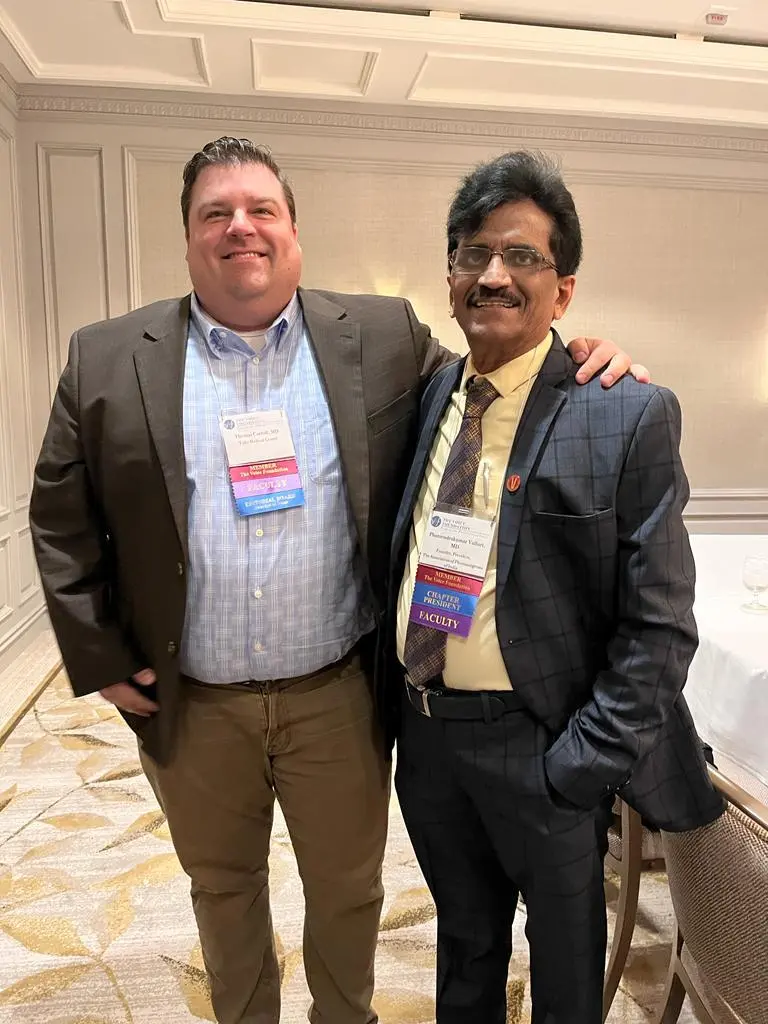
The success of the 17th Phonosurgery Course was deeply anchored in the extensive academic pedigree and leadership of its organizing committee, spearheaded by Prof. V. Phaniendrakumar.
Prof. V. Phaniendrakumar: A Legacy of Excellence
As the Organizing Chairman and Course Director, Prof. Phaniendrakumar brings decades of clinical and academic distinction to the forefront of Indian and international otolaryngology. Holding titles such as Emeritus Professor of ENT, Director of the Sri Sathya Sai Institute of ENT and Melody Voice Clinic (Guntur, Andhra Pradesh, and Hyderabad, Telangana), Founder President of the Association of Phonosurgeons of India (APSI), and President of the India Chapter of The Voice Foundation, his career has been dedicated to elevating voice care standards.
Reflecting on the milestone 17th iteration of the course, Prof. Phaniendrakumar remarked:
"With all our sincere efforts and your co-operation, we hope we can make this Course a memorable scientific event. Looking forward to your gracious participation."
A Network of Cohesive Medical Associations
The breadth of the workshop’s impact was amplified by its multi-institutional backing. The collaboration between surgical societies (APSI, AOI Telangana), international research bodies (The Voice Foundation, USA), allied health professions (Telangana SLP Association), and specialized clinical centers (Sri Sathya Sai Institute of ENT and Melody Voice Clinic) underscored the multidisciplinary nature of modern voice care.
Voice restoration is rarely a solo endeavor; it requires a harmonious alliance between otolaryngologists (phonosurgeons), speech-language pathologists (SLPs), singing voice specialists, and neurologists. By bringing these stakeholders into a shared educational ecosystem, the workshop fostered an environment of holistic, patient-centered care.
Future Outlook and the Horizon of Voice Medicine
As the curtains closed on the 17th Phonosurgery Course and International Workshop, the discussions and technical skills imparted in Hyderabad set a high bar for future academic symposia.
Key Takeaways for the Future of Phonosurgery:
- Expansion of In-Office Procedures: The shift toward local anesthesia, transnasal endoscopy, and office-based laser or injection therapies is accelerating. Patients benefit from reduced costs, faster recovery times, and avoidance of general anesthesia risks, while hospitals optimize operating room utilization.
- Technological Integration: Future iterations of workshops will likely incorporate augmented reality (AR) and virtual reality (VR) simulations for laryngeal micro-dissection, allowing trainees to practice complex tissue handling with haptic feedback before touching biological models.
- Interdisciplinary Protocols: The active participation of speech-language pathologists alongside surgeons emphasizes that surgical correction is only half the battle; intensive voice therapy is essential for achieving optimal functional outcomes.
- Global Accessibility: The hybrid model demonstrated in Hyderabad proves that high-level subspecialty education can be democratized, allowing clinicians from Tier-2 and Tier-3 cities to access international expertise without prohibitive logistical barriers.
Conclusion
The 17th Phonosurgery Course and International Workshop transcended the boundaries of a traditional medical conference. It served as a dynamic educational nexus that combined the precision of modern micro-laryngeal surgery with the accessibility of digital innovation. Under the stewardship of Prof. V. Phaniendrakumar and his esteemed collaborators, the event not only empowered a new generation of phonosurgeons but also reinforced India’s growing prominence as a global hub for advanced otolaryngological education and clinical excellence.