
Executive Overview
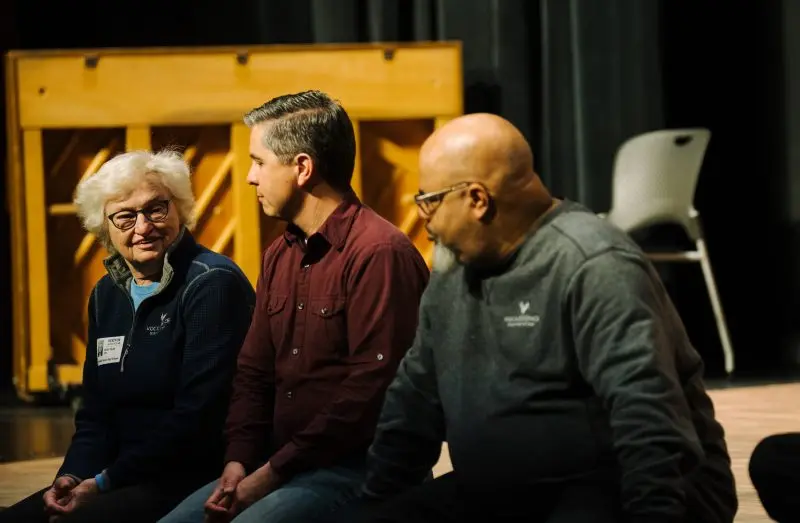
For over two decades, the VocalEssence WITNESS School Program has served as a pivotal educational initiative across Minnesota, utilizing choral music and performance art to illuminate the contributions of African American creators. At the center of this transformative movement is veteran pianist and music director Anita Ruth, whose 20-year tenure as a VocalEssence Teaching Artist has redefined the boundary between traditional music education and therapeutic engagement.
Working alongside celebrated Twin Cities performer T. Mychael Rambo, Ruth has spent decades bringing the history of enslaved Africans, the profound depth of African American spirituals, and contemporary choral works into elementary and secondary classrooms. What began as a chance meeting at a downtown Minneapolis cabaret evolved into a sustained artistic collaboration that has impacted thousands of students, including neurodivergent children and those with severe emotional and learning disabilities.
Through interactive workshops, localized classroom residencies, and tailored performances, Ruth and Rambo demonstrate how music operates not merely as aesthetic enrichment, but as a primary medium for historical literacy, emotional breakthrough, and cross-cultural empathy. This report examines the evolution of Ruth’s work, the pedagogical metrics behind the VocalEssence WITNESS program, and the profound social outcomes recorded in Twin Cities schools.
Detailed Chronology: From Ruby’s Cabaret to Classroom Transformation
  Late 1980s/Early 1990s          Mid-1990s                      2000s–Present
  [Ruby's Cabaret Meeting] ----> [Plymouth Music Series] ----> [VocalEssence WITNESS]
  Anita Ruth meets T.             Ruth invited as pianist;       20+ years of active
  Mychael Rambo in                pivots from accompanist        teaching artist residencies
  downtown Minneapolis.           to Teaching Artist.            in local schools.
The Genesis at Ruby’s Cabaret
The foundation of this multi-decade partnership was laid approximately thirty years ago at Ruby’s Cabaret, a prominent nightlife and performance venue in downtown Minneapolis. Anita Ruth, an accomplished pianist and musical director, met vocalist and actor T. Mychael Rambo during a local production. Rambo’s warm vocal presence and audience rapport made an immediate impression on Ruth, sparking a professional acquaintance that would soon reshape both of their career trajectories.
Transitioning from Accompanist to Teaching Artist
Shortly after their meeting at Ruby’s Cabaret, Rambo recruited Ruth to accompany him for a series of educational auditorium shows sponsored by the Plymouth Music Series—the organization founded by conductor Philip Brunelle that would later rebrand as VocalEssence.
During these early educational performances, Ruth served strictly as a background accompanist. However, during an auditorium show, Rambo paused the performance, turned to Ruth onstage, and directly challenged her role: "What are you doing behind that piano?"
This improvised intervention marked a turning point. Encouraged by Rambo’s mentorship and vocal advocacy, Ruth transitioned from a passive accompanist into an active, co-leading Teaching Artist. She formally joined the outreach roster of the WITNESS program, embarking on a structured path of classroom residencies, workshop facilitation, and curriculum development.
Decades of Residencies and Educational Impact
Over the subsequent twenty-plus years, Ruth and Rambo constructed a collaborative educational model within the VocalEssence WITNESS School Program. Their joint work expanded from large-scale auditorium lectures into intimate, highly focused classroom residencies. Together, they developed curricula centered on the history of African American spirituals, incorporating live instrumentation, vocal interpretation, and historical storytelling into public, private, and specialized school districts throughout the Minneapolis–St. Paul metropolitan area.
Supporting Context & Metrics: The Pedagogical and Therapeutic Power of Music
Addressing Educational Disparities Through Cultural History
The VocalEssence WITNESS School Program was established to address significant gaps in standard primary and secondary social studies curricula regarding African American history and cultural production. By utilizing performance art as an entry point, the program delivers culturally responsive pedagogy that contextualizes the underground railroad, oral traditions, and the socio-political origins of African American music.
+-------------------------------------------------------------------------------+
|                    VocalEssence WITNESS Educational Model                     |
+-------------------------------------------------------------------------------+
|  1. Historical Contextuation  | Analysis of spirituals as codes and history   |
|  2. Interactive Vocal Work    | Direct engagement through melody and rhythm   |
|  3. Inclusive Classroom Space | Integration of special education & neurodiverse|
|  4. Collaborative Facilitation| Multi-artist, teacher-supported environments  |
+-------------------------------------------------------------------------------+
African American spirituals—crafted by enslaved Africans as expressions of faith, codes for liberation, and emotional endurance—serve as the core repertoire for Ruth and Rambo’s workshops. Rambo’s vocal interpretations, paired with Ruth’s arrangement and piano accompaniment, allow students to analyze music as primary historical source material.
Music as a Bridge for Neurodivergent and Special Education Classrooms
A significant portion of Ruth and Rambo’s residencies take place in specialized educational environments, including classrooms dedicated to students with severe emotional, behavioral, and learning disabilities. In these settings, standard instructional strategies often encounter significant barriers to student participation.
A prominent case study from Ruth’s tenure illustrates the clinical and psychological efficacy of their musical intervention:
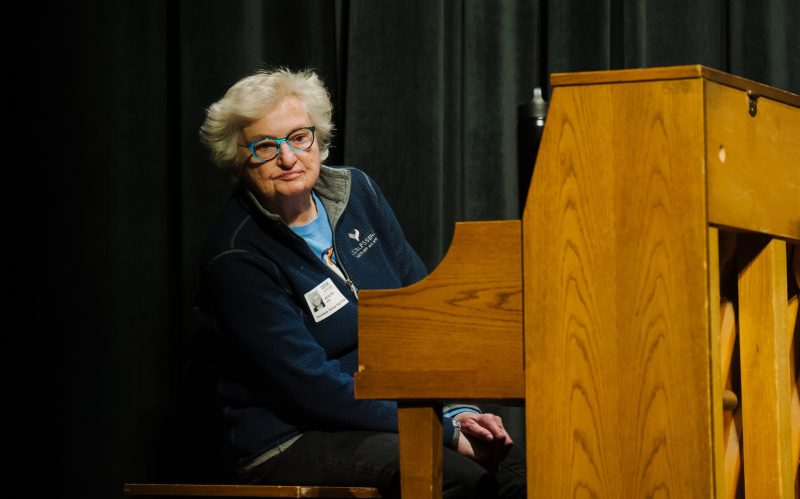
- The Classroom Setting: A fourth-grade specialized education classroom containing students with severe emotional and learning challenges.
- The Student: A female fourth-grader characterized by selective mutism and non-participation. The student routinely refused to speak, interact with peers, or join group educational activities, choosing instead to sit isolated in the corner of the room looking out the window.
- The Musical Catalyst: During a workshop built around a song by modern folk and choral composer Melanie DeMore, Ruth and Rambo engaged the group in call-and-response rhythm exercises.
- The Progression: Over a ten-minute period, the sound of live piano and vocal rhythms drew the isolated student across the room. Edging closer to the piano, she was noticed by Ruth, who gently invited her to share the piano bench.
- The Breakthrough: The student responded verbally with a direct "Yes!", took a seat on the bench alongside Ruth, selected a tambourine, and actively joined the ensemble in performance.
Educators on site noted that this moment represented an unprecedented breakthrough in the child’s behavioral record, demonstrating the capacity of live music to bypass defense mechanisms and non-verbal barriers in academic environments.
[Student Isolated at Window]
          │
          ▼ (10 minutes of live music/Melanie DeMore piece)
[Gradual Physical Approach to Piano]
          │
          ▼ (Direct invitation from Anita Ruth)
[Verbal Acceptance ("Yes!")]
          │
          ▼
[Active Participation via Tambourine Ensemble]
Official Statements and Firsthand Testimonies
Reflecting on her more than twenty years with the organization, Anita Ruth emphasized the transformative personal and professional impact of her collaboration with T. Mychael Rambo and VocalEssence:
"While doing a show at Ruby’s Cabaret in downtown Minneapolis some thirty years ago, I met a lovely gentleman. T. Mychael Rambo was his name, a man with a sweet voice and a lovely regard for anyone he met. Little did I know that he would change my life and we would become lifelong friends.
T. Mychael asked me to accompany him during some auditorium shows he was doing for the then Plymouth Music Series (now VocalEssence) WITNESS program. After doing a few of these performances, he turned to me onstage and said, ‘What are you doing behind that piano?’ That was the day my life changed—so much for the better.
Together with T. Mychael, we were able to bring the true history of enslaved Africans to the students who needed to know this story. And best of all, we brought the story to hundreds of students through music! T. Mychael is a wonderful interpreter of the songs created by enslaved Africans—the Spirituals. The effect of the enrichment of African American history that VocalEssence Teaching Artists provide is invaluable."
Ruth also reflected on the unique power of music when working alongside classroom educators such as Jason Etten during specialized school workshops:
"We were fortunate to have the gift of music to share in our communications. In one particular instance, we were told that a young girl, a fourth grader, refused to speak or participate in any activities in the classroom… As we were teaching, I could see she was edging closer to the group. After ten minutes she had worked her way to the piano. I asked if she wanted to sit with me on the bench, and she said ‘Yes!’ The teacher was amazed at that, but even more so when she picked up a tambourine and started to play with us! It was truly an example of the power of music."
Future Outlook: The Evolution of Arts Outreach in Modern Curricula
As school districts across the United States navigate evolving educational standards, budget reallocations, and an increasing focus on student mental health, the VocalEssence WITNESS model presents a sustainable framework for integrative arts education.
+-------------------------------------------------------------------------------+
|                       Future Strategic Objectives                             |
+-------------------------------------------------------------------------------+
|  1. Curriculum Expansion    | Integrating contemporary socio-historical works |
|  2. Special Ed Integration  | Formalizing music-based neurodivergent strategies|
|  3. Digital & Hybrid Reach  | Scaling artist workshops to rural MN districts  |
|  4. Intergenerational Links | Pairing veteran artists with emerging mentors   |
+-------------------------------------------------------------------------------+
Sustaining the Legacy of Teaching Artists
The long-term viability of programs like WITNESS relies heavily on the retention and mentorship of veteran Teaching Artists. The model established by Ruth and Rambo demonstrates the importance of multi-decade stability in community outreach. VocalEssence continues to recruit and pair legacy artists with emerging musicians to ensure that historical knowledge, pedagogical techniques, and relational approaches to teaching are preserved.
Expanding Neuroinclusive Arts Programming
The documented successes of musical engagement in special education classrooms have prompted arts organizations to refine their outreach strategies. Future iterations of the WITNESS School Program aim to incorporate specialized training for Teaching Artists, equipping them with trauma-informed teaching tools and neuroinclusive practices. By standardizing these methods, organizations can maximize both the educational and socio-emotional returns on investment for partner schools.
Preserving Oral and Choral Traditions
As digital media increasingly dominates classroom environments, the tactile, immediate nature of live vocal and piano performance offers a necessary counterweight. VocalEssence remains committed to funding school residencies that bring direct, face-to-face artistic experiences into urban, suburban, and rural classrooms, ensuring that the legacy of African American spirituals and the transformative power of live music remain accessible to future generations of learners.